Roof Replacement in Dayton, OH, Torn Off and Rebuilt Right
We tear your old roof down to the boards, replace soft decking, rebuild ventilation and flashing, and send you a photo report of every slope before the last shingle goes on. A person answers 24/7.
- Answered 24/7
- Photo report on every visit
- Dayton and the Miami Valley
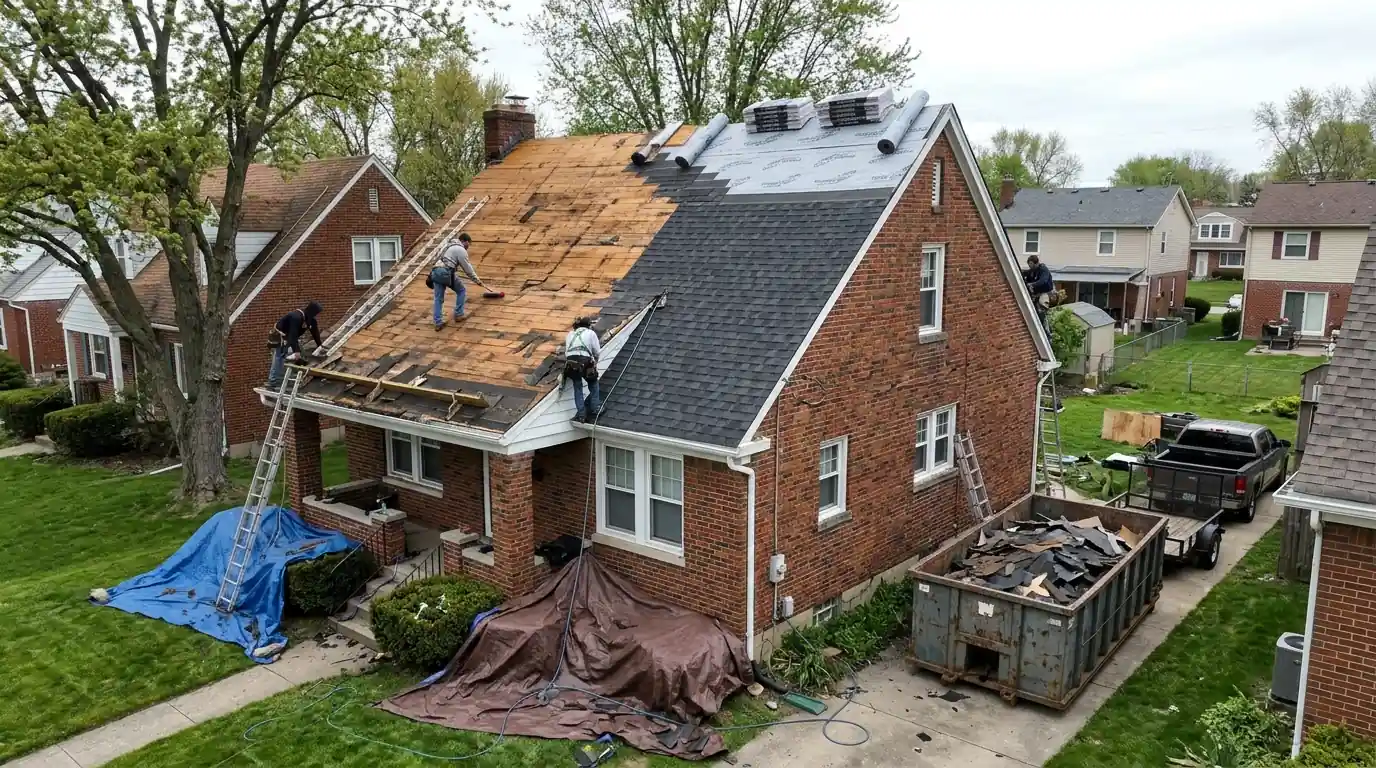
A full roof replacement on a typical Dayton-area house runs about $11,840 to $19,670 with architectural shingles, depending on size, pitch, layers to remove and decking condition. The job includes tear-off to the deck, new underlayment and ice barrier, drip edge, flashing, ventilation and cleanup. Most homes are finished in one or two working days once materials arrive.
A replacement is the biggest roofing check most homeowners ever write, so we treat the estimate like the job itself. Our estimator walks the attic first, because the underside of the deck tells you more than the shingles do: dark rings around nails, delaminated plywood, daylight at the ridge. Then we measure every plane, count layers at the eaves, and photograph the flashing at chimneys, walls and pipes so you can see what you're paying to fix.
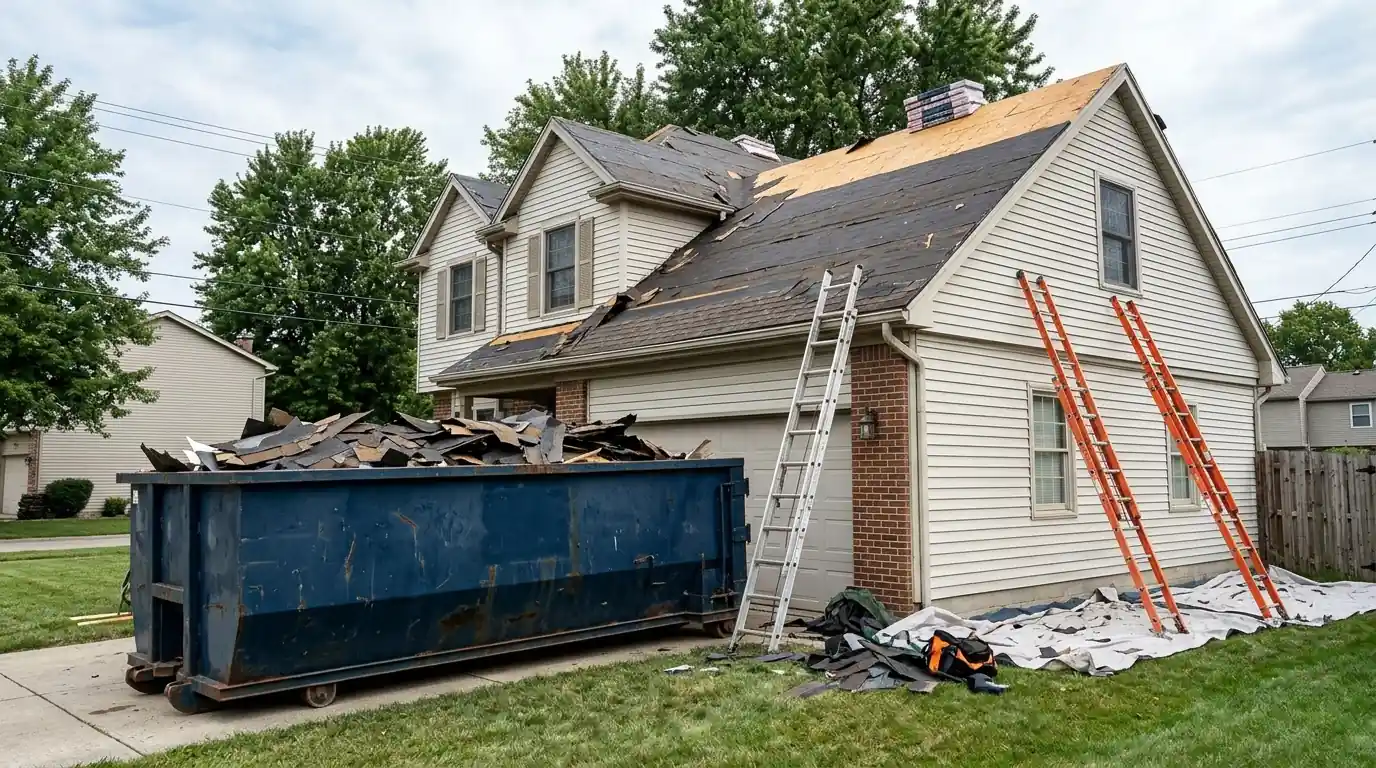
On tear-off day we strip everything down to bare wood. That's the only way to find the rotted sheet under the old valley or the plank deck that needs an overlay before new nails will hold. You get a running photo log as the crew works, a clear note on any extra decking before we install it, and a yard that has been swept with a magnet twice. If you want to see how a replacement compares with patching first, read our repair or replace guide.
Insurance-funded replacement versus paying out of pocket
Many Dayton replacements start with a storm. If hail or wind did the damage, the job may be covered under your homeowners policy, minus the deductible. If the roof simply wore out, it's a maintenance cost and comes from your budget. The roof itself often tells the story: hail bruises and fresh creases look different from twenty years of sun.
When there's a claim, we document the damage slope by slope with dated photos and test squares, and we can be on the roof when your adjuster inspects. We don't decide what the policy covers, and we never promise a claim outcome. What we can do is make sure the adjuster sees the same bruised mats and torn tabs we saw, then build the roof to the scope your carrier approves.
Out-of-pocket replacements give you more room to time the work. Late summer and early fall are the easiest months for scheduling and shingle sealing, while late winter can be quieter if you're flexible about weather days. For the claim side in more detail, see Ohio storm claim steps or our insurance claim roof inspection.
Why we fix the attic ventilation during a replacement
A lot of the early shingle failure we see around Dayton has nothing to do with the shingles. It comes from an attic that cooks in July and sweats in January. Heat bakes the asphalt from below, and winter moisture condenses on the cold deck, rusting nails and softening the wood.
Tear-off is the cheapest moment to correct it, because the deck is open and the ridge is already off. We check how much soffit intake you have, whether insulation is blocking the soffit vents, and whether the old roof mixed box vents with a ridge vent, which can short-circuit airflow. Then we balance intake and exhaust for the attic size.
- Cut a continuous ridge vent slot and cap it with matching shingles
- Remove or close off competing box vents and old turbine vents
- Add intake where soffits are solid or painted over
- Install baffles where insulation is packed against the roof deck
Choosing the roofing material before you sign
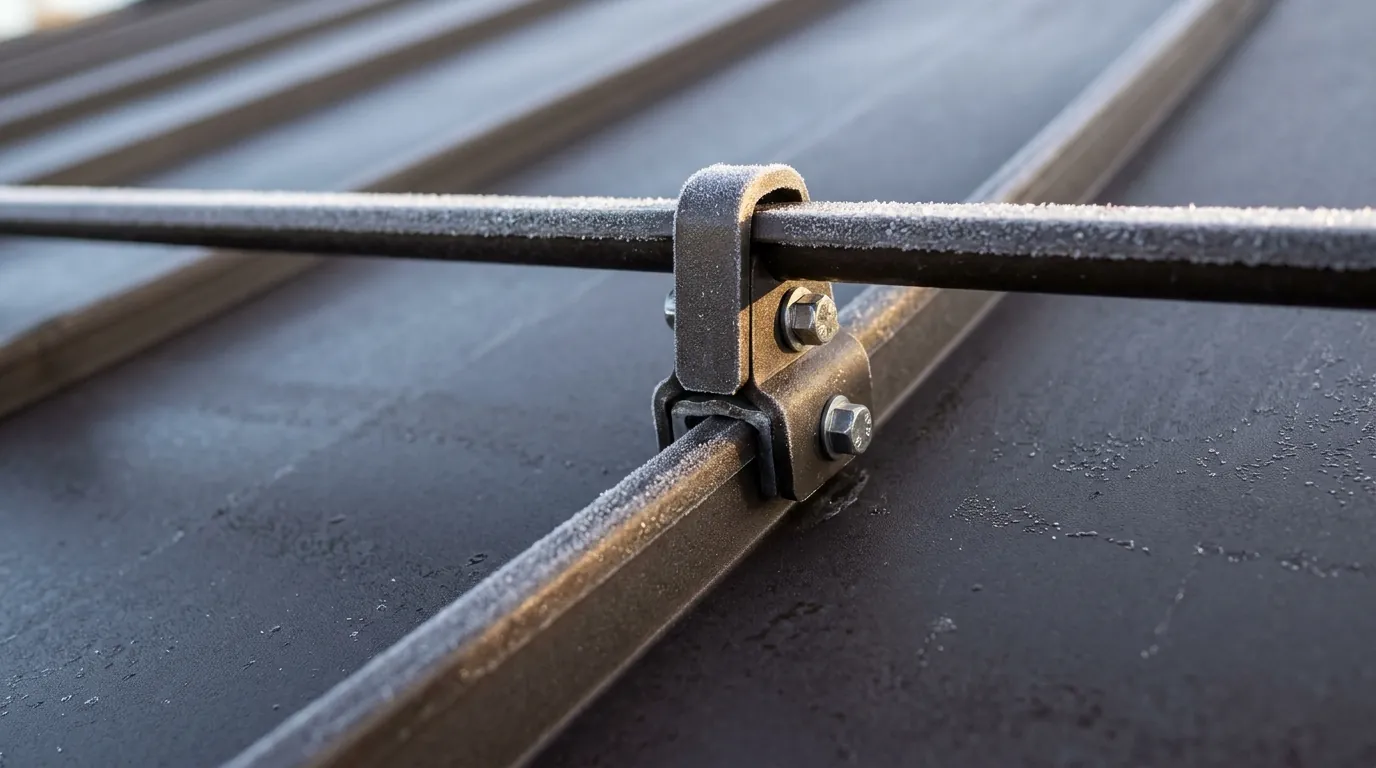
Most of our replacements are architectural asphalt shingles, because they suit the price and style of most Miami Valley houses. They're not the only option. If you plan to stay twenty-plus years, a metal roof costs more up front but can outlast two shingle roofs. If hail claims keep coming, impact-rated shingles are worth pricing side by side.
We'll quote two options on the same measurements so you can compare apples to apples. Our asphalt shingle roofing page covers shingle grades, and metal versus asphalt for Dayton lays out the long-term math.
Color and profile matter more than people expect. A dark shingle on a south-facing roof runs hotter in July, and a heavy shadow-line profile can look busy on a small Cape Cod. We bring full-size samples, not thumbnail chips, and we'll hold them against your brick or siding in daylight. Look at the samples on an overcast day too, since gray Ohio light changes how a color reads.
What a full roof replacement typically costs around Dayton in 2026
These are typical Dayton-area ranges for complete tear-off replacements. Your number depends on what we measure and find.
| Job | Typical range | What it covers |
|---|---|---|
| Ranch or small Cape Cod, 14 to 18 squares | $8,960 to $13,450 | Tear-off of one layer, architectural shingles, underlayment, ice barrier, ridge vent, cleanup |
| Two-story colonial, 20 to 26 squares | $11,840 to $19,670 | Same scope, steeper walkable pitch, more flashing at walls |
| Steep or cut-up roof, 26 to 34 squares | $17,350 to $28,940 | Multiple valleys, dormers, harness work, extra staging |
| Additional layer removed | $65 to $115 per square | Second layer of shingles, extra dumpster weight |
| Decking replacement | $78 to $112 per sheet | 4x8 OSB or plywood, installed after tear-off |
| Plank deck overlay | $1.85 to $2.95 per sq ft | Plywood over old board decking so nails hold |
These are typical Dayton-area ranges for planning, not a quote. Your price comes after we measure the roof and inspect the attic, and it can change only if hidden decking damage turns up. See more on our Dayton roofing price guide.
- Roof size in squaresA square is 100 square feet of roof. Measurement includes overhangs and every dormer face, so it's often larger than the floor plan suggests.
- Pitch and accessRoofs steeper than about 8/12 need harnesses, roof jacks and slower work. A house tight to the neighbor or behind a fence adds hauling time.
- Layers and debris weightEach extra layer adds labor and dumpster tonnage. Old cedar under asphalt is more work again, because it has to come off before a solid deck goes down.
- Decking conditionWe can't price rotten sheets until the shingles are off, so the scope lists a per-sheet price rather than guessing a total.
- Shingle line and accessoriesStandard architectural shingles cost less than designer or impact-rated lines. Matching hip and ridge caps, starter and underlayment from one manufacturer add a bit but keep warranty options open.
What tear-off day and the days around it look like at your house
A replacement is a short, loud project with a lot of moving parts. Here's the order we run it in.
Measure, photograph and write the scope
We measure each roof plane, count existing layers, inspect the attic and photograph problem areas. Your written scope lists shingle line, underlayment, ventilation changes and a per-sheet price for any decking we find rotten.
Protect the property before the first shingle comes off
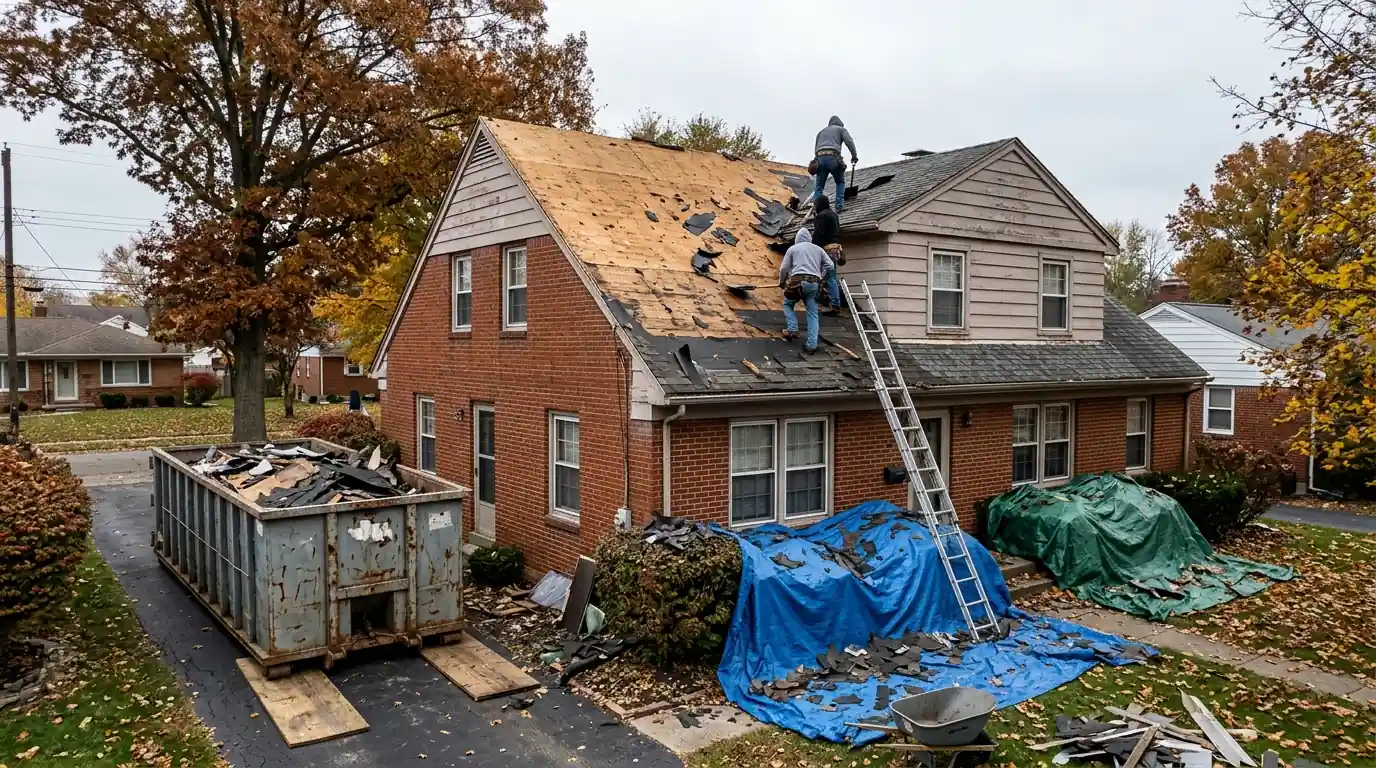
Tarps go over shrubs, the AC unit and window wells, and plywood leans against siding near the dumpster. We park the dumpster on boards so it does not rut a driveway or crack a thin apron.
Strip to the deck and inspect every sheet
The crew removes all shingles, underlayment, old flashing and nails. Our crew lead walks the bare deck, marks soft spots with paint, and photographs them so you see each replaced sheet before it's covered.
Dry in with ice barrier and synthetic underlayment
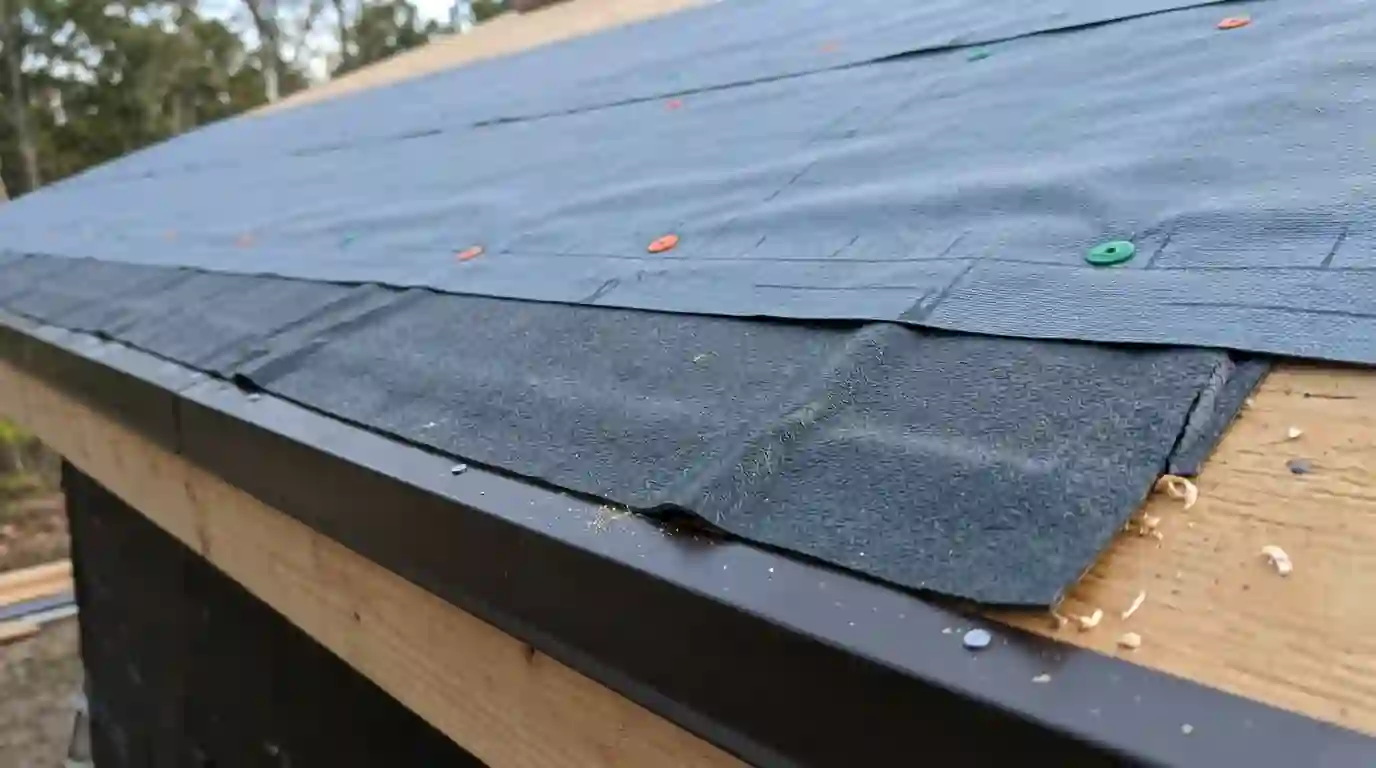
Ice and water membrane goes along eaves, in valleys and around penetrations, with synthetic underlayment across the field. New drip edge goes on at eaves and rakes so water clears the fascia.
Rebuild flashing and ventilation
Step flashing, counterflashing and pipe boots are replaced rather than reused. We cut or extend the ridge vent and balance it with soffit intake so the attic can actually breathe.
Install shingles to the manufacturer's nailing pattern
Starter strip, field shingles, hip and ridge caps go on with the nail count and placement the manufacturer calls for. That matters for wind resistance and for keeping the material warranty valid.
Clean up, magnet sweep and photo report
We haul the debris, run magnetic sweepers across the lawn, beds and driveway twice, and send a photo report of the finished roof. Where the product allows it, we register the manufacturer warranty in your name.
When patching stops paying off and a Dayton roof needs replacing
One leak rarely means a new roof. A cluster of these, especially on a roof past 18 years, usually does.
Granules collecting at downspouts
A handful after a storm is normal. Gutters that fill with sand-colored grit every spring mean the asphalt underneath is baking out and the shingles are near the end of their useful life.
Curled tabs and cupped edges
Shingles that curl up at the corners or dip in the middle have lost their flexibility. They lift in wind, crack in cold snaps, and no amount of sealant brings them back.
Repairs on more than one slope
If you've paid for patches on the front, the back and around the chimney in the same few years, the roof is failing as a system, not in one spot.
Spongy feel or sagging between rafters
A deck that gives underfoot or shows a wave from the street has absorbed water for a long time. Shingles laid over it will not lie flat or seal.
Two layers already on the house
The residential code generally caps an asphalt roof at two layers, so a second failing layer means a full tear-off is the only legal path forward.
Attic stains and frost on the nails
Brown rings on the sheathing and frost on nail tips in January point to leaks and trapped moisture that a replacement with new ventilation can correct.
Where Dayton-area roofs are coming due for replacement now
A lot of the Miami Valley was reroofed in waves. Houses that got new shingles after the hail of the early 2000s and after the Memorial Day 2019 tornadoes are on very different clocks, and that shows from street to street. In Trotwood, Harrison Township and Old North Dayton, many 2019 storm roofs are still young, while untouched houses a block away are past twenty years.
Postwar ranch neighborhoods in Kettering and brick ranches across Huber Heights tend to have simple gable roofs, often with a second layer from the 1990s. Those are straightforward replacements, but the extra layer and plank decking on older homes add cost. Further south, many Centerville houses from the 1980s and 1990s have steeper, cut-up roofs with multiple valleys and skylights, so labor and flashing drive the price more than square footage.
Freeze-thaw winters, spring hail and summer thunderstorms all age shingles faster on south and west slopes here. We often see one face of a roof worn out while the north side still looks decent. That isn't a reason to replace half a roof, but it's why we photograph every slope rather than judging from the driveway.
Where we do roof replacement most often
These neighborhoods, suburbs and cities make up most of our roof replacement calls. Each link opens the local page with its ZIP.
Questions about roof replacement in Dayton
How many days does a full roof replacement take on a Dayton house?
Most single-family homes around Dayton take one to two working days once materials are delivered. A simple ranch is often done in a day. Steep two-story homes, multiple layers, or a lot of rotten decking can push it to three. Rain delays the start rather than stopping a roof halfway, because we only open what we can dry in the same day.
Do I need to be home while you replace my roof?
You don't need to be home, but we like to walk the property with you before we start and again at the end. We'll need access to the attic if ventilation changes are in the scope, and the driveway needs to be clear for the dumpster. Pets are happier inside or away for the day, because tear-off is loud.
Can you put new shingles over my old roof instead of tearing off?
Sometimes it's allowed, but we rarely recommend it. A layover hides decking rot, keeps old flashing in place, and adds weight. If there are already two layers, a third isn't permitted under the residential code. A layover can also shorten the life of the new shingles because they sit on an uneven, heat-holding surface.
What happens if you find rotten decking after the old roof comes off?
Our crew lead marks and photographs every soft or delaminated sheet, then we text or call you before replacing it. The per-sheet price is already in your written scope, so there's no surprise number. On most Dayton homes we replace somewhere between zero and a handful of sheets, often near valleys, chimneys and eaves where water sat.
Will a roof replacement crack my driveway or wreck my landscaping?
We set the dumpster on boards, cover shrubs and the AC unit, and lean plywood against siding near the drop zone. Thin or already cracked concrete aprons are the main risk, so we'll talk through placement if yours is fragile. After the job we run magnets over the lawn, beds and driveway twice for nails.
Is late fall too late in the year to replace a roof in the Miami Valley?
No. We replace roofs into November and through mild winter stretches. Self-sealing strips on shingles need warmth to bond, so on cold days we hand-seal edges where needed and the rest seals on the first warm, sunny days of spring. We avoid installing in freezing rain or snow, and we'll reschedule rather than rush.
Other roofing work that often goes with this job
Asphalt Shingle Roofing
Roof Replacement & New Roofs
See asphalt shingle roofingRoof Decking Replacement
Inspections, Ventilation & Skylights
See roof decking replacementAttic Ventilation
Inspections, Ventilation & Skylights
See attic ventilationImpact-Resistant Shingles
Roof Replacement & New Roofs
See impact-resistant shingles
Product lines we install on roofs around Dayton include shingles from GAF, Owens Corning and CertainTeed, metal from Englert, membranes from Carlisle SynTec and skylights from VELUX.
Need roof replacement today?
Call any hour. A person answers, asks a few questions and sets a time for a roofer to come out.