TPO Roofing in Dayton, OH: White, Heat-Welded Membranes
We install white TPO membranes with hot-air welded seams on warehouses, retail buildings, schools and homes with sun-baked flat roofs. Our crew probe-tests every seam before we leave, and a person answers our phone 24/7.
- Answered 24/7
- Photo report on every visit
- Dayton and the Miami Valley
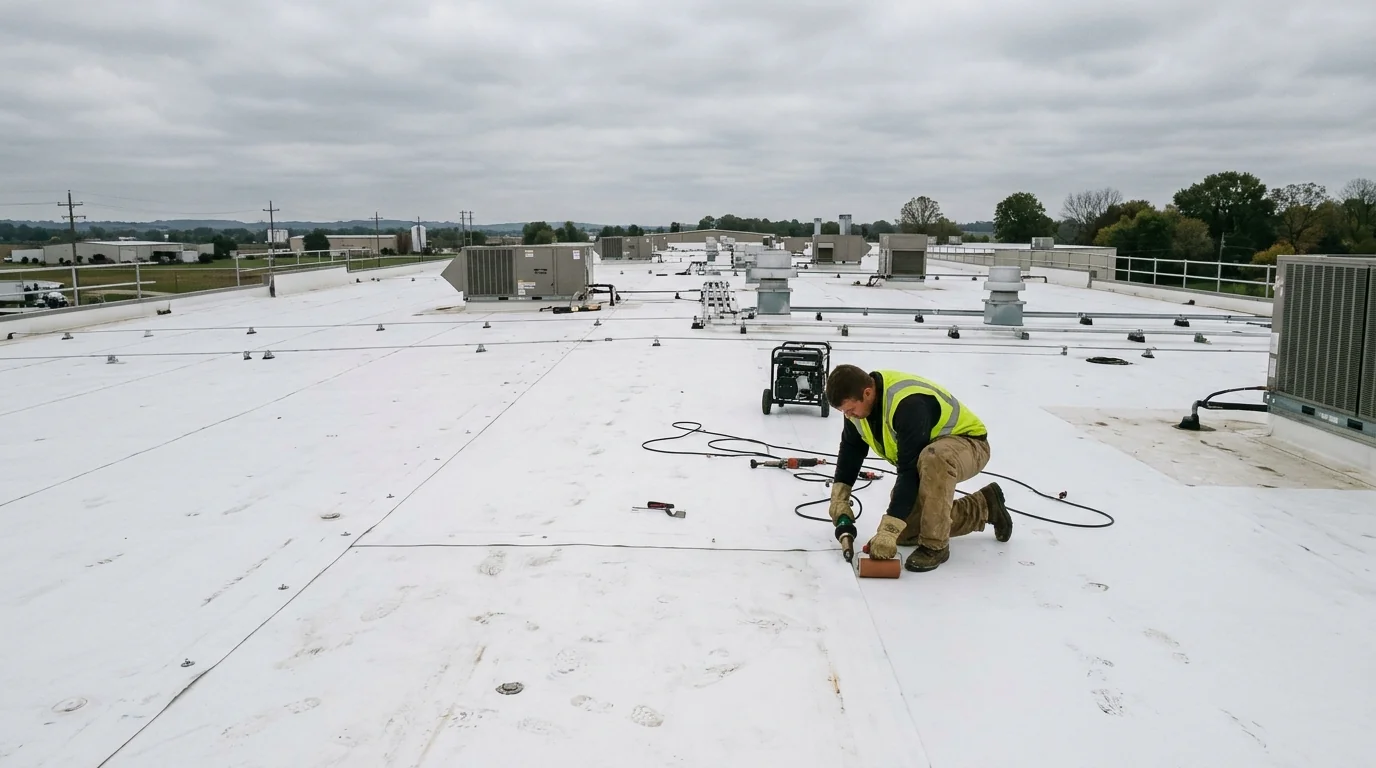
TPO roofing in the Dayton area typically costs $7.45 to $11.65 per square foot for a commercial tear-off with a mechanically attached 60-mil membrane, and $8.35 to $12.95 for a fully adhered system. Small residential TPO roofs usually run $9.35 to $14.85 per square foot. The work includes insulation, heat-welded seams, flashings at walls and rooftop units, and new edge metal.
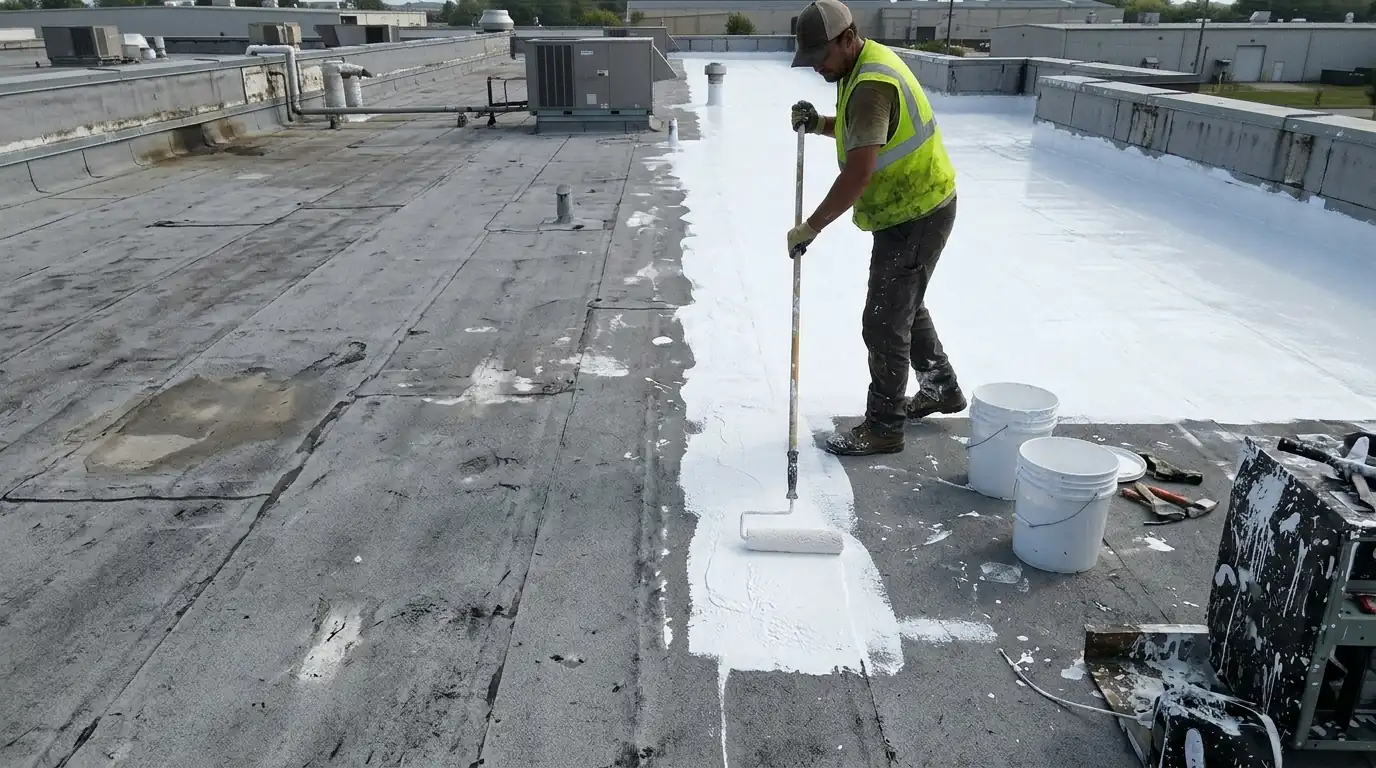
TPO is a single-ply membrane, usually white, that has become the most common choice for new low-slope commercial roofs. Its seams are fused with hot air rather than glued or taped, so a good weld turns two sheets into one continuous piece. The white surface reflects much of the summer sun, which keeps the roof deck cooler and takes some load off rooftop air conditioning units through Dayton's humid July and August stretches.
We install TPO on everything from 40,000-square-foot distribution buildings to a 300-square-foot roof over a second-floor bedroom that's always too warm. The material is the same; what changes is how it's attached, how thick it is and how the details around curbs, drains and walls are built. Our job is to match those choices to your building's wind exposure, foot traffic and budget, then weld it right. A TPO roof is only as good as its welds, so we test them on every job.
Mechanically attached, fully adhered or induction welded: which TPO system fits
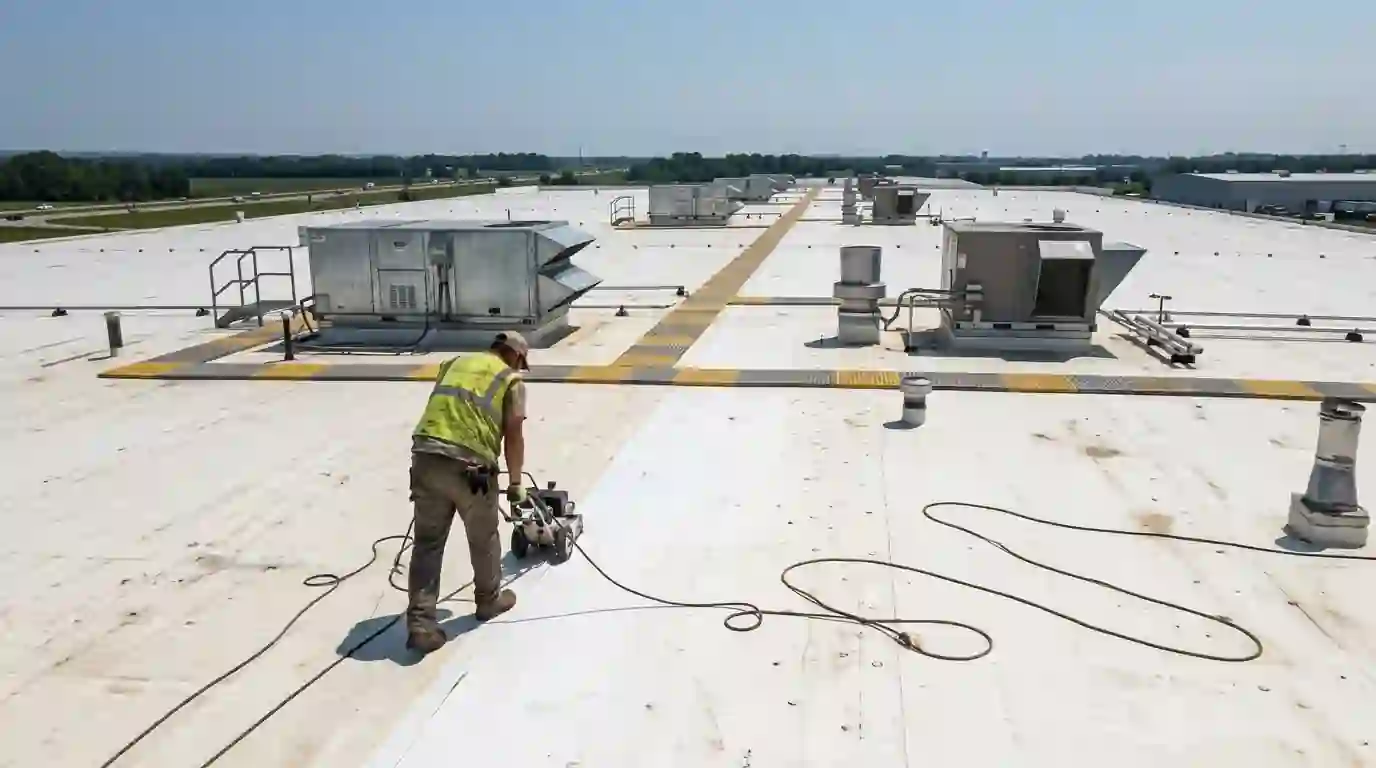
The way a TPO membrane is held down affects its cost, its wind performance and how it sounds and moves in a storm. Mechanically attached systems fasten the sheet through the insulation along the seams, and they're the most economical choice on big, simple roofs. In high winds, though, the membrane can billow between fastener rows.
Fully adhered systems glue the membrane to a cover board across its whole surface. They cost more but lie flat, resist wind uplift evenly and handle foot traffic well, so we often recommend them for schools, churches and retail buildings with frequent service visits. Induction welding uses special plates under the sheet that are heated from above, bonding the membrane without fastening through it. That keeps the surface free of penetrations and suits many mid-size commercial roofs.
- Mechanically attached: lowest cost, best for large, simple warehouse roofs
- Fully adhered: smooth surface, strong uplift resistance, good for busy roofs
- Induction welded: fewer penetrations, even attachment, good middle option
Keeping TPO reflective and leak-free between service visits
A white roof only keeps buildings cooler if it stays reasonably clean. Dust from nearby traffic, pollen and leaf debris dull the surface over a few seasons, and a gentle cleaning with low-pressure water and a mild cleaner restores much of the reflectivity. Avoid harsh solvents and pressure washers held close to the surface, since both can damage the membrane.
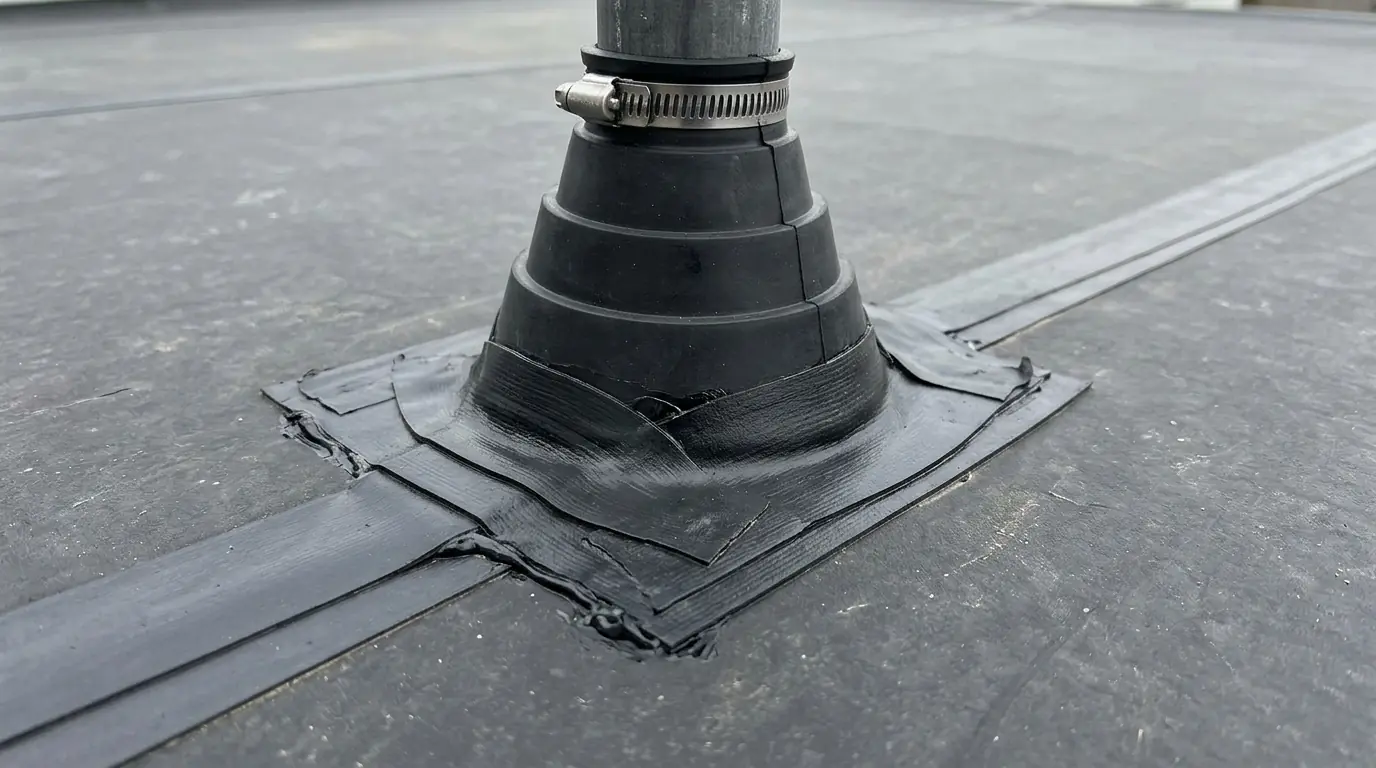
Most TPO leaks we're called about come from mechanical work, not the membrane itself. Dropped screws, sharp sheet metal scraps and tools left on the roof puncture it, and new equipment gets set without proper flashing. Requiring contractors to use walkway pads and clean up after themselves prevents a lot of trouble. When damage does happen, TPO is easy to fix by welding a new patch over the cleaned area, and our commercial leak repair service handles that any hour. Regular roof inspections in spring and fall catch small punctures and open welds before they wet the insulation.
TPO roof pricing for Dayton commercial buildings and homes
These are typical Dayton-area ranges. Building size, attachment method and the amount of flashing around rooftop equipment shape the final number.
| Job | Typical range | What it covers |
|---|---|---|
| Commercial tear-off, 60-mil mechanically attached | $7.45 to $11.65 per sq ft | Tear-off, polyiso insulation, membrane, flashings, edge metal |
| Commercial tear-off, 60-mil fully adhered | $8.35 to $12.95 per sq ft | Adhered membrane, cover board, flashings |
| Recover over an existing dry roof | $5.85 to $9.35 per sq ft | Cover board, new TPO, where code and moisture survey allow |
| Residential TPO roof | $9.35 to $14.85 per sq ft | Smaller roof areas, tear-off, insulation, flashings |
| Upgrade to 80-mil membrane | $0.65 to $1.35 per sq ft added | Thicker sheet for longer service life and puncture resistance |
These ranges are typical for Dayton-area projects in 2026 and are not a quote; we price your building after a roof survey and core samples. See more on our Dayton roofing price guide.
- Roof sizeLarge open warehouse roofs cost less per square foot than small roofs broken up by curbs, hatches and parapets.
- Attachment and wind exposureTaller buildings and open sites near fields or highways may need tighter fastening patterns or full adhesion.
- Existing roof conditionWet insulation found during core cuts must come out, which can shift a recover project into a full tear-off.
- Rooftop equipmentEvery HVAC curb, exhaust fan and pipe penetration needs welded flashing, and units sometimes must be lifted for proper curb height.
- Membrane thickness45-mil is the minimum we'd consider, 60-mil is standard, and 80-mil costs more but adds durability on busy roofs.
How we install and weld a TPO roof
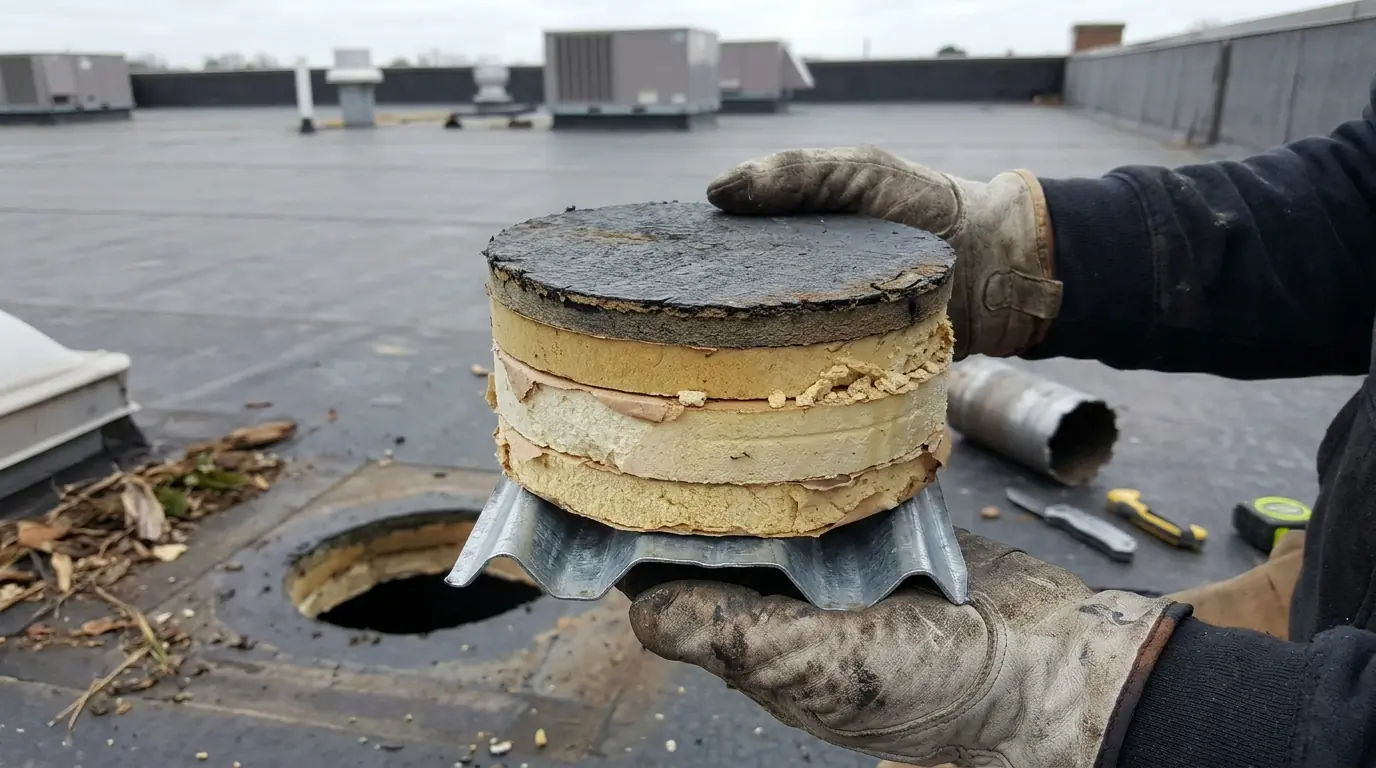
Good TPO work comes down to clean substrate, the right attachment for the wind zone, and welds that are tested rather than assumed.
Core cuts and roof survey
Before pricing, we cut small test cores to see what's under the existing roof and check for wet insulation. That tells us whether we can recover or need a full tear-off.
Tear-off and deck repair
We remove old roofing in sections so the building is never left open overnight. Damaged steel or wood decking gets repaired or replaced before insulation goes on.
Insulation and cover board
Polyiso insulation is laid in staggered layers, often tapered toward drains, then topped with a cover board in high-traffic areas. Plates and screws are spaced according to the manufacturer's wind requirements.
Membrane attachment
We mechanically fasten, fully adhere or induction-weld the membrane, depending on the building's height, exposure and warranty requirements. Edges and corners get tighter fastener spacing.
Hot-air welding and probe testing
Seams are welded with automatic and hand welders, then checked along their full length with a probe to find any gaps. We cut test welds each morning to adjust for temperature and humidity.
Flashing, walkways and closeout
Curbs, drains and walls get welded TPO flashing and metal terminations, and walkway pads go down where service crews travel. You receive a photo report, and we register the manufacturer's material warranty where the product allows.
Buildings where a white TPO roof pays off
TPO isn't automatically the right answer, but these are the cases where we find it fits best around the Miami Valley.
Warehouses and distribution buildings
Large open roofs with few penetrations go down quickly with wide TPO sheets, keeping the cost per square foot competitive.
Retail and office buildings with rooftop units
The reflective surface helps rooftop HVAC run less hard, and walkway pads protect the membrane where technicians travel.
Schools and churches with large low-slope wings
TPO's long sheets and welded seams suit gymnasiums, classroom wings and fellowship halls with broad, open roofs.
Hot rooms under residential flat roofs
A bedroom or office under a black roof can run several degrees cooler with a white TPO membrane and better insulation.
Roofs where seams have been the weak point
If an old roof kept leaking at glued seams, heat-welded TPO laps remove that failure point.
Owners comparing energy costs over time
Building owners planning to hold a property for years often choose TPO for its reflectivity and simple repairability.
Where TPO roofs are going up around Dayton and the I-75 corridor
Along I-75 and I-70, the area around Vandalia and the Dayton International Airport has seen steady growth in logistics and distribution buildings, and many of their roofs are white TPO. Older industrial buildings in Moraine and along the Great Miami River corridor are also being reroofed with TPO as their original built-up and EPDM roofs reach the end of their service life. Many of those roofs have steel decks that need spot repair at old drains and rooftop unit openings before new insulation goes down.
Retail strips, medical offices and newer schools across Beavercreek and the south suburbs tend to have TPO as well. Our weather plays into the choice: hot, humid summers reward the reflective surface, while freeze-thaw winters and spring hail test the welds and the attachment. We size fastening patterns to wind exposure, add cover boards where hail risk is high and plan drainage so water doesn't freeze in low spots and stress the seams.
Where we do tpo roofing most often
These neighborhoods, suburbs and cities make up most of our tpo roofing calls. Each link opens the local page with its ZIP.
Questions about tpo roofing in Dayton
Does a white TPO roof actually lower cooling costs for a Dayton warehouse?
It usually helps, especially on buildings with large air-conditioned areas directly under the roof. The white surface reflects much of the summer sun, so the deck and the space beneath stay cooler. The savings depend on how much the building is cooled, how much insulation is in the roof and how clean the membrane stays. Unconditioned warehouses see less benefit than climate-controlled offices or retail space.
How do you verify that the heat-welded seams on a new TPO roof are sealed?
We test welds on scrap pieces each morning and whenever the weather changes, peeling them apart to confirm the weld is strong. On the roof, our crew runs a probe along every seam to find any gaps or cold spots and re-welds them on the spot. We photograph seam work as part of the closeout report, so you have a record of how the roof was built.
Should our Miami Valley building get 60-mil or 80-mil TPO?
Sixty-mil is the standard for most commercial buildings and a solid choice for typical traffic. Eighty-mil costs a bit more but adds thickness above the reinforcing scrim, which helps with long-term weathering and punctures. We usually suggest 80-mil for roofs with lots of rooftop equipment, frequent service traffic or owners planning to hold the building long term.
Will a white TPO roof stay white near the dust and traffic of I-75?
Not perfectly. Roofs near highways, rail lines and industrial sites collect dust and soot faster, and the surface will look gray within a few years. Most of that grime washes off with a careful low-pressure cleaning, which restores much of the reflectivity. We can include cleaning as part of a maintenance plan if keeping the roof reflective matters for your energy budget.
Can TPO be used on a small flat roof over a bedroom in my house?
Yes. TPO works well on residential flat roofs, and its white surface is a good fit for rooms that run hot in summer. On a house, we usually fully adhere the membrane over insulation or a cover board, weld the seams and flash it into the walls. The price per square foot is higher than on a large commercial roof because there's more detail work in a smaller area.
How does a TPO roof hold up to hail during a Dayton spring storm?
TPO generally handles typical hail well, especially when installed over a firm cover board that keeps stones from crushing the insulation beneath. Very large hail can puncture or fracture the membrane, particularly on older roofs that have lost flexibility. After a serious hailstorm, we inspect for bruising and punctures, document damage with photos and help you understand whether repairs or an insurance claim make sense.
Other roofing work that often goes with this job
Product lines we install on roofs around Dayton include shingles from GAF, Owens Corning and CertainTeed, metal from Englert, membranes from Carlisle SynTec and skylights from VELUX.
Need tpo roofing today?
Call any hour. A person answers, asks a few questions and sets a time for a roofer to come out.