Gutter Guards in Dayton, OH Matched to Your Trees
We pick gutter guards based on what actually falls on your roof, from maple seeds to pine needles, then clean and flush the gutters before fastening guards to the lip. Call any hour and a person answers.
- Answered 24/7
- Photo report on every visit
- Dayton and the Miami Valley

Gutter guards around Dayton typically cost $4.35 to $7.85 per linear foot for perforated aluminum screens, $9.15 to $15.70 for stainless micro-mesh, and $11.60 to $19.40 for reverse-curve hoods, installed. A house with about 140 feet of gutter often runs $1,385 to $2,240 for micro-mesh. Installation includes cleaning, flushing downspouts, checking pitch and fastening guards without disturbing the shingles.
Gutter guards don't make gutters maintenance-free, and anyone who promises that is overselling. What a good guard does is keep the bulk of leaves, seeds and twigs out of the trough so water keeps moving and downspouts stay open. That matters more to your roof than it seems. A clogged gutter overflows behind itself, soaks the fascia, and in winter fills with ice that backs meltwater up under the first row of shingles. Keeping gutters clear is one of the cheapest ways to protect the roof edge.
The right guard depends on your trees. Dayton yards drop a mix of maple helicopters, oak tassels and acorns, sweetgum balls, pine needles and, near the rivers, cottonwood fluff. Each one beats a different style of guard. We look at what's growing over the house, how steep the roof is, and how the gutters are hung before recommending anything. If your gutters are sagging or undersized, we'll tell you to fix that first, since a guard on a bad gutter just hides the problem. In that case, gutter repair or new runs come before guards.
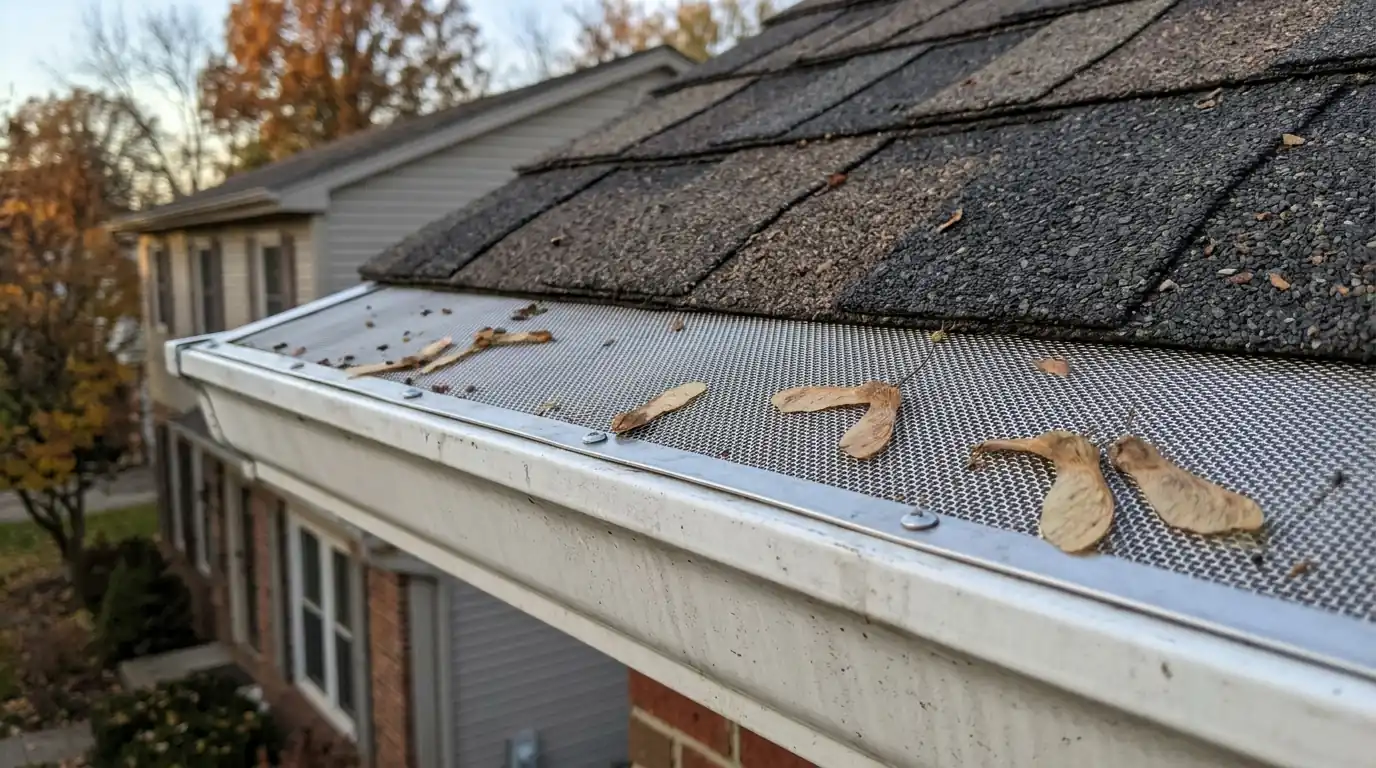
Is your house a good candidate for gutter guards?
Guards earn their cost on some houses and barely matter on others. These are the situations where we usually recommend them.
Trees taller than the roofline nearby
If branches hang over or near the house, your gutters fill every fall and often again in spring when seeds drop.
You clean gutters more than twice a year
Frequent clogs on a two-story house mean frequent ladder work. Guards cut that down to an occasional rinse of the surface.
Downspouts clog at the first elbow
Seeds and needles pack into the first bend of a downspout. Guards keep most of that material out of the outlet entirely.
Fascia stains or rot along one side
Overflow from clogged runs is a common cause of rot behind gutters. Guards help keep it from coming back once the board is repaired.
Ice fills the troughs every winter
Wet debris holds water that freezes first. Clean, guarded gutters drain better during thaws, though they won't stop ice dams caused by attic heat.
Birds or wasps nesting in the gutters
Debris-filled troughs make easy nesting spots. A fastened guard closes the opening.
Matching the guard to the trees over your roof
Every guard style handles some debris well and some poorly. Large leaves from maples and oaks are the easy part, since almost any guard sheds them. The harder material is small: maple helicopters, oak tassels in spring, pine needles, and the seed fluff from cottonwoods along the Great Miami and Stillwater rivers. That small stuff slips through perforated screens and packs into downspouts.
Stainless micro-mesh is our usual pick under mixed Dayton tree cover because the openings are too small for needles and seeds. It does need an occasional rinse, since pollen and roof grit can film over the mesh. Reverse-curve hoods work well on lower pitches with big leaves but can overshoot in heavy rain on steep roofs. Perforated aluminum is a fair budget option where the trees are mostly broadleaf.
- Mostly maples and oaks: micro-mesh or perforated aluminum
- Pines and spruces nearby: stainless micro-mesh
- Sweetgum balls and acorns: micro-mesh or a rigid perforated guard that won't dent
- Cottonwood fluff: micro-mesh, with a rinse in early summer
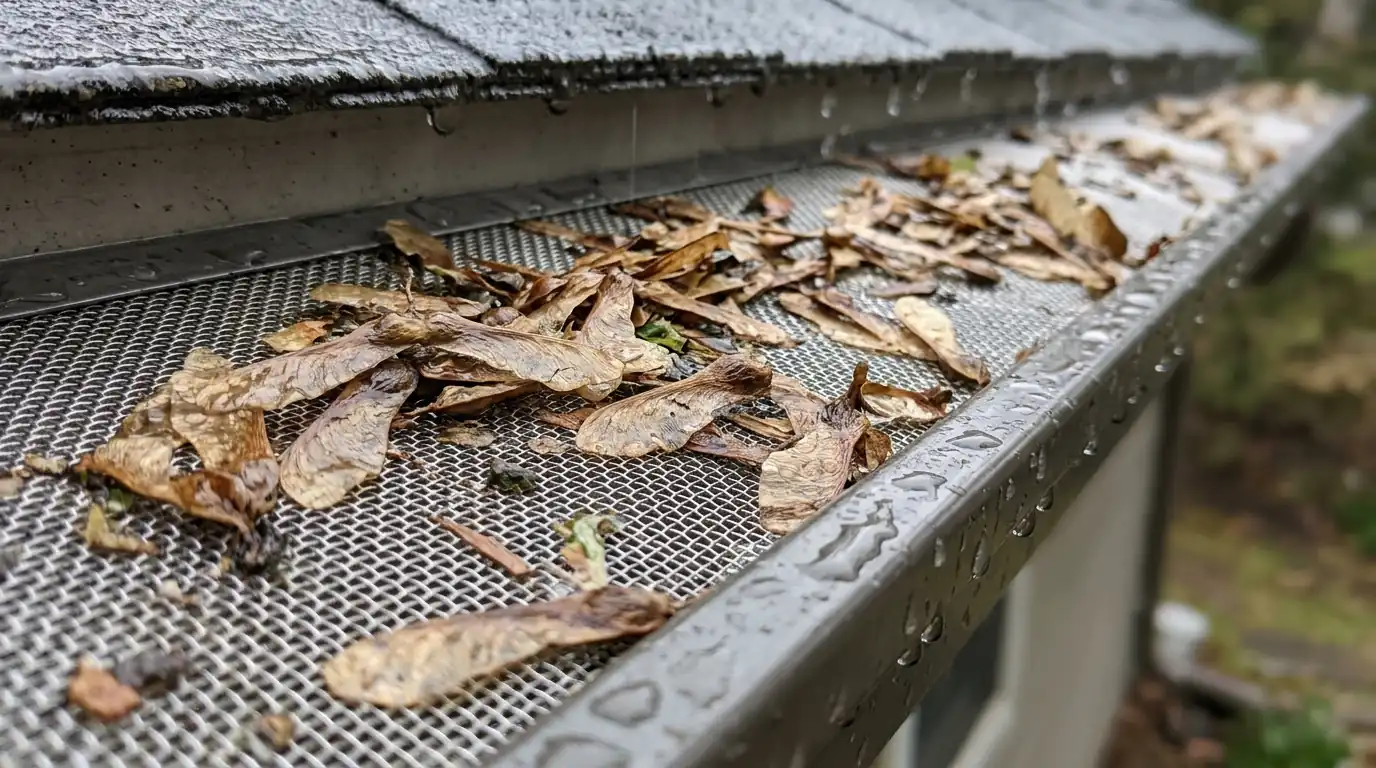
Do gutter guards make ice dams worse in a Dayton winter?
Guards don't cause ice dams. Ice dams build when heat from the attic melts snow higher on the roof and the water refreezes at the colder eave. That's a ventilation and insulation problem, explained in our Dayton ice dam guide. What guards can do is change how ice sits at the edge. Snow can pile on top of a flat guard, and during a freeze-thaw cycle a crust of ice may build across the mesh.
In practice, a clean gutter with a guard usually drains better during a thaw than an open gutter packed with frozen leaves. Problems show up when guards are tucked under shingles, which lifts the roof edge and gives meltwater a path underneath. We fasten guards to the gutter lip and keep the ice and water shield at the eaves intact. If your house dams every winter, fix the attic first with attic ventilation work, then add guards.
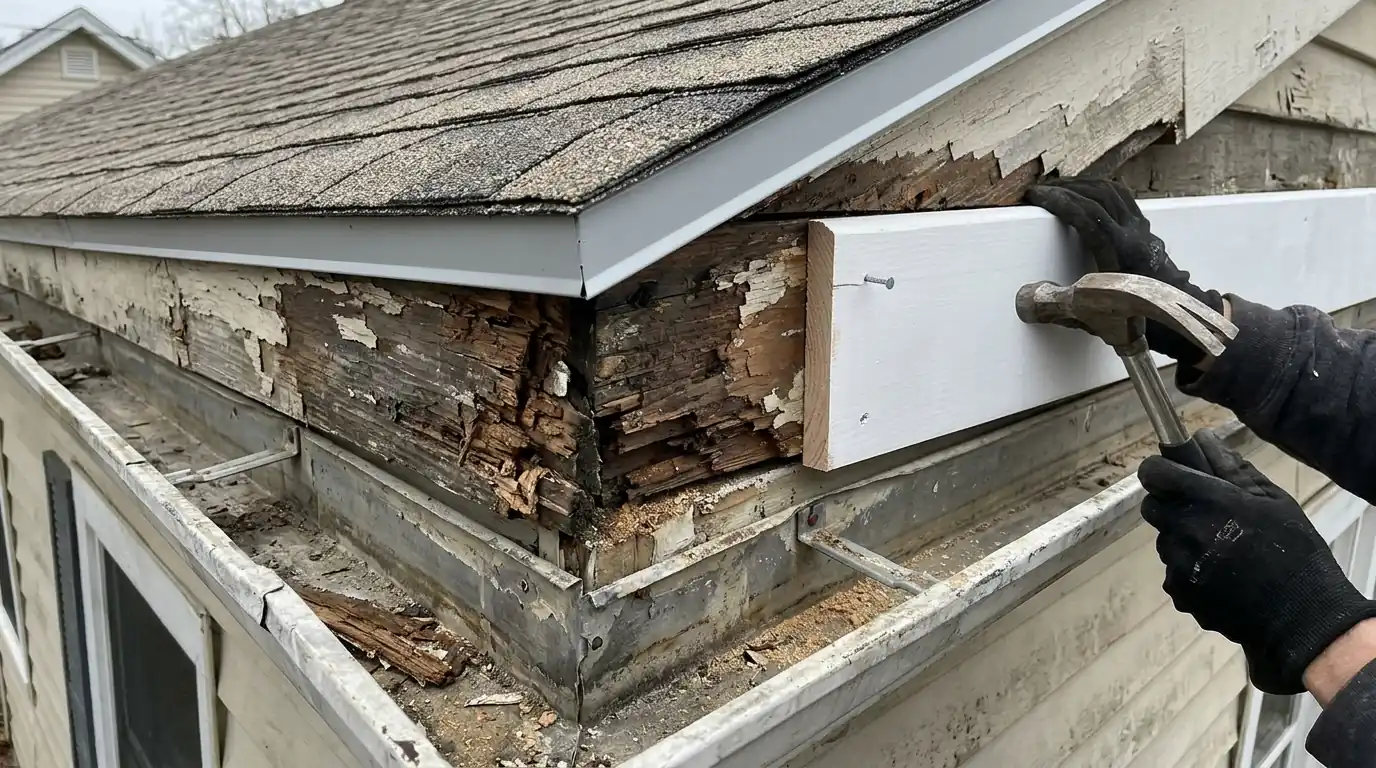
How we install gutter guards without harming the shingle edge
Most guard failures come from rushed installs: guards jammed under shingles, gutters left clogged underneath, or screens that pop loose in the first windstorm.
Identify the debris and the roof
We note the trees around the house and check roof pitch and shingle type. That narrows the choice to the one or two guard styles that will handle your debris.
Clean, flush and inspect
We clear the gutters by hand, flush every downspout, and look for leaking seams, flat spots and loose hangers. Problems get fixed or flagged before any guard goes on.
Correct pitch and hangers
A guard adds a little weight and hides the trough, so the gutter underneath has to drain well. We re-pitch sagging runs and add hangers where spacing is too wide.
Fasten guards to the gutter, not under the shingles
Most guards we install screw to the front lip and rest at the drip edge. We avoid lifting the first course of shingles, which can break the seal strip and invite wind damage.
Detail corners and valleys
Inside corners under valleys take the most water and debris. We trim guards to fit tight there and add a diverter where a valley would overshoot the gutter.
Water test and photo report
We run water across the guarded roof edge to confirm it enters the gutter. Then we send photos of each run with notes on anything we fixed underneath.
What gutter guards typically cost on a Dayton home
Guard prices vary more than most homeowners expect, mainly by material. These are typical installed ranges in the Dayton area for 2026.
| Job | Typical range | What it covers |
|---|---|---|
| Perforated aluminum screen | $4.35 to $7.85 per linear foot | Stops leaves and acorns, lets some seeds and needles through |
| Stainless micro-mesh | $9.15 to $15.70 per linear foot | Fine mesh on an aluminum frame, handles needles, seeds and grit |
| Reverse-curve hood | $11.60 to $19.40 per linear foot | Solid cover that sheds debris off the front, best on lower pitches |
| Typical 140-foot house, micro-mesh | $1,385 to $2,240 | Cleaning, flushing, minor re-pitching and full guard install |
| Cleaning and flush before install | $135 to $285 | Hand cleaning, downspout flush, seam and hanger check |
These are typical Dayton-area ranges, not quotes. Your price depends on the gutters, the house and the guard you choose, and we confirm it after seeing the roof edge. See more on our Dayton roofing price guide.
- Guard materialStainless mesh costs more than perforated aluminum but handles small debris far better under Dayton tree cover.
- Gutter condition underneathRe-pitching, resealing or new hangers add to the price, but a guard on a failing gutter is wasted money.
- Stories and roof accessTwo-story eaves and steep lots take longer to reach and work safely.
- Corners, valleys and gutter sizeLots of miters take extra trimming, and 6-inch gutters need wider guards than 5-inch.
- Fit with your shinglesSome guard styles need to sit a certain way at the drip edge. We match the method to your roof so the shingles stay sealed.
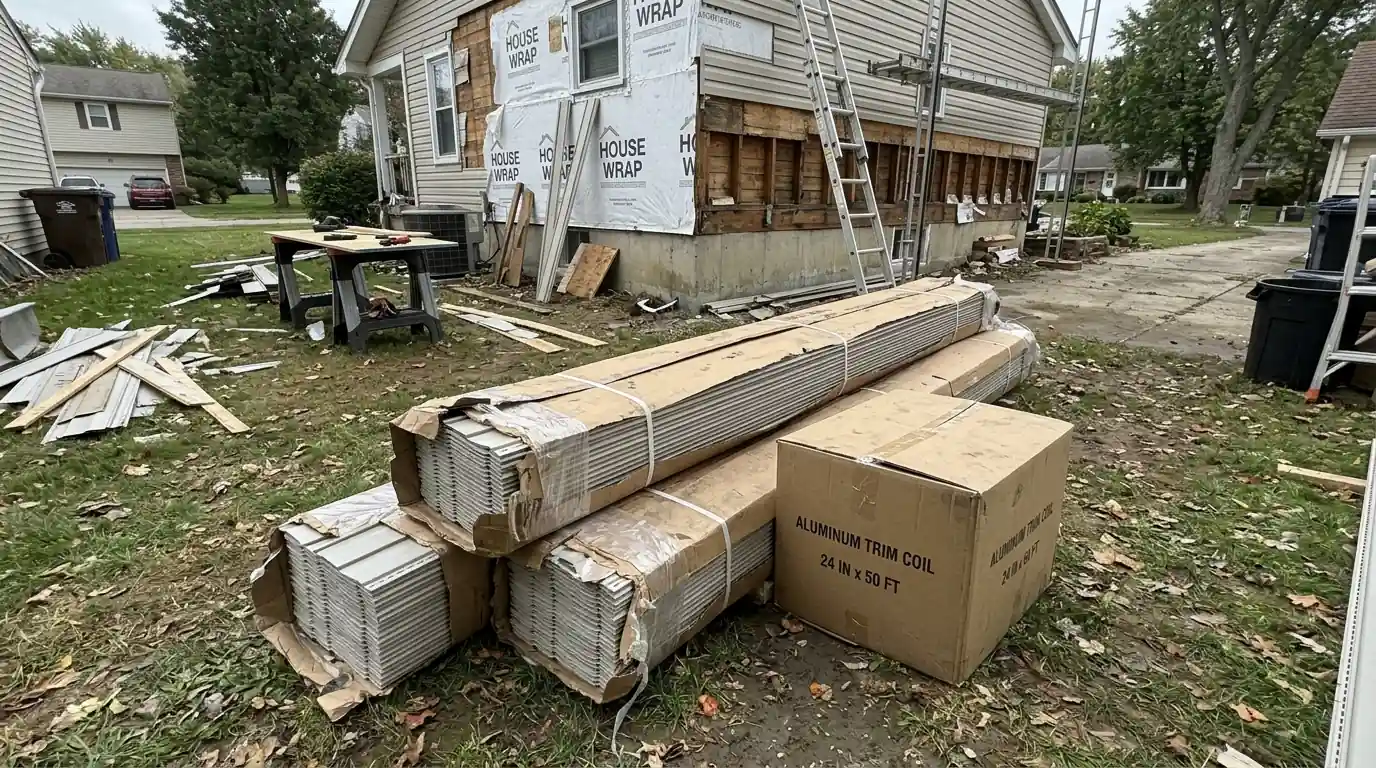
Why tree cover makes guards a common request in Dayton neighborhoods
The Miami Valley is heavily treed, and the older a neighborhood is, the bigger the canopy over its roofs. In Oakwood, mature oaks and maples tower over two-story homes along the side streets off Far Hills Avenue, and gutters there can fill in a single October week. Dayton View Triangle and Grafton Hill have the same kind of canopy over large prewar houses with tall eaves, where cleaning gutters means a long ladder and a careful setup.
Newer suburbs have a different problem. In Bellbrook and parts of Beavercreek, wooded lots and evergreen windbreaks drop needles year-round, which clog open gutters and slip through cheap screens. Along the river corridors through Riverside and Moraine, cottonwoods shed fluff each June. We fit the guard choice to the street and the trees in your yard, not to a single product pushed on every house.
Where we do gutter guards most often
These neighborhoods, suburbs and cities make up most of our gutter guards calls. Each link opens the local page with its ZIP.
Questions about gutter guards in Dayton
Which gutter guard holds up to maple helicopters and oak tassels in Oakwood?
Stainless micro-mesh handles both best. Helicopters and tassels are small enough to slip through perforated screens and wedge into downspout elbows, but they sit on top of fine mesh and blow off or dry out. Oakwood homes often have tall two-story eaves, so a guard that rarely needs attention saves a lot of ladder time each spring and fall.
Do gutter guards still need cleaning once they're installed?
Yes, but far less. Expect to brush or rinse the top of micro-mesh guards once or twice a year, especially after spring pollen and seed drop. Twigs can also sit on top and should be cleared. We recommend a quick look every fall, and many homeowners add it to a roof maintenance visit so the shingles get checked at the same time.
Can guards go on my existing gutters, or do I need new ones first?
If your gutters are aluminum, properly pitched and hung on solid fascia, guards can go right on them. If the runs sag, leak at many seams or are only 4 inches wide, fix or replace them first. A guard adds a little weight and hides the trough, so it makes a weak gutter harder to keep an eye on.
Do gutter guards that tuck under the shingles cause warranty trouble?
They can if they're installed the wrong way. Some guard designs slide under the first course of shingles, and shingle makers generally don't want their product lifted or nailed through at the edge. We fasten guards to the gutter lip and leave the shingle edge alone, which keeps the roof as the manufacturer intended. Check your warranty paperwork if you have it.
Do micro-mesh guards freeze over during a Dayton ice storm?
A thin glaze can build on top of the mesh during freezing rain, just as it does on the shingles. Water then runs over the front until the glaze melts, usually within a day or two. An open gutter packed with ice does the same thing. The bigger winter benefit is that guarded gutters aren't holding wet leaves that freeze solid.
Are foam or brush gutter inserts from the hardware store worth trying?
We don't recommend them for most Dayton homes. Foam inserts trap fine debris and seeds on top, sprout weeds, and hold moisture against the gutter. Brush inserts catch leaves in their bristles and have to be pulled out to clean. They're inexpensive, but under heavy tree cover they often end up in the trash within a few seasons.
Other roofing work that often goes with this job
Product lines we install on roofs around Dayton include shingles from GAF, Owens Corning and CertainTeed, metal from Englert, membranes from Carlisle SynTec and skylights from VELUX.
Need gutter guards today?
Call any hour. A person answers, asks a few questions and sets a time for a roofer to come out.