Insurance Claim Roof Inspection in Dayton, OH
After hail or wind, we photograph and measure the damage on every slope, write it up for your claim, and meet your adjuster on the roof if you'd like. We answer the phone 24/7 and can tarp an active leak the same day.
- Answered 24/7
- Photo report on every visit
- Dayton and the Miami Valley
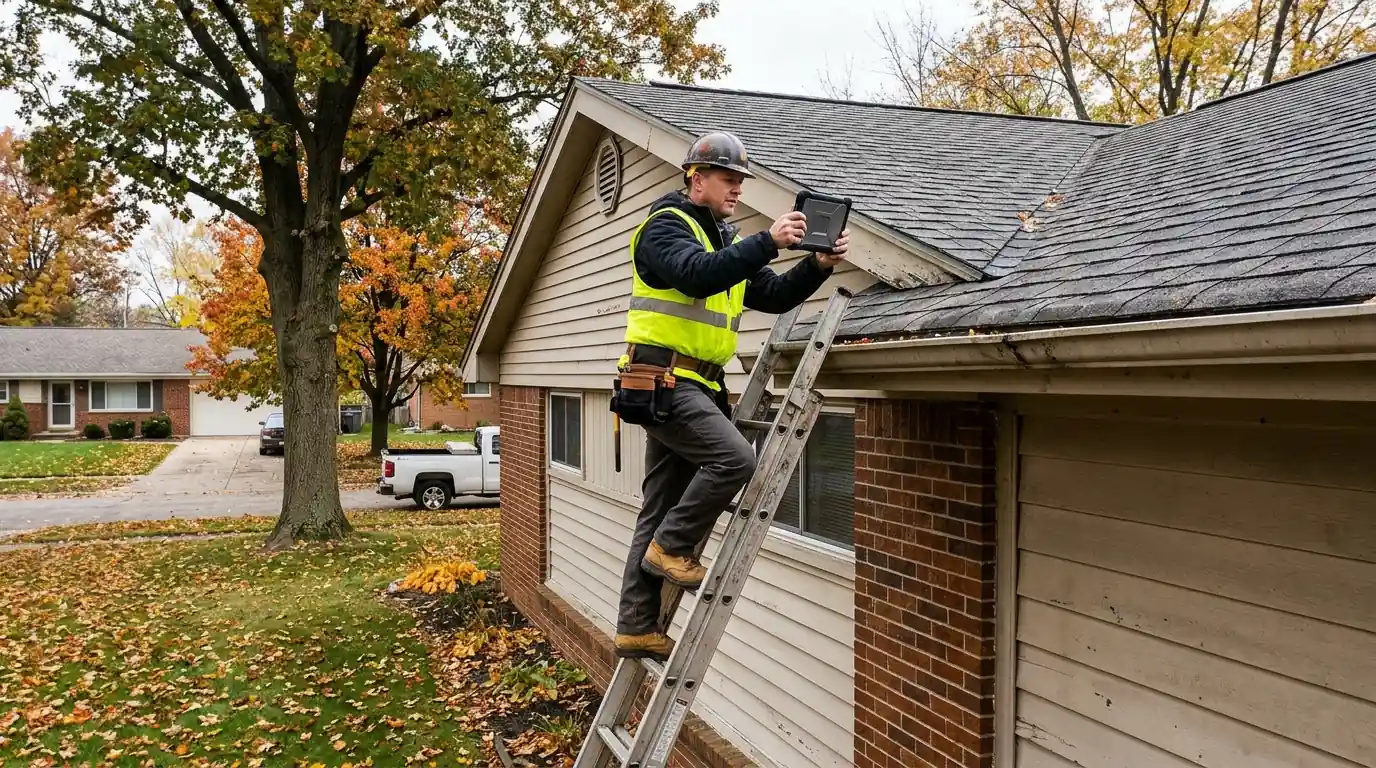
An insurance claim roof inspection documents storm damage so your adjuster sees the full picture. In the Dayton area it typically costs $165 to $345 for a dated photo report with test-square counts and measurements, and we can meet the adjuster at the house. We never promise a claim will be approved, and we never offer to waive or cover your deductible.
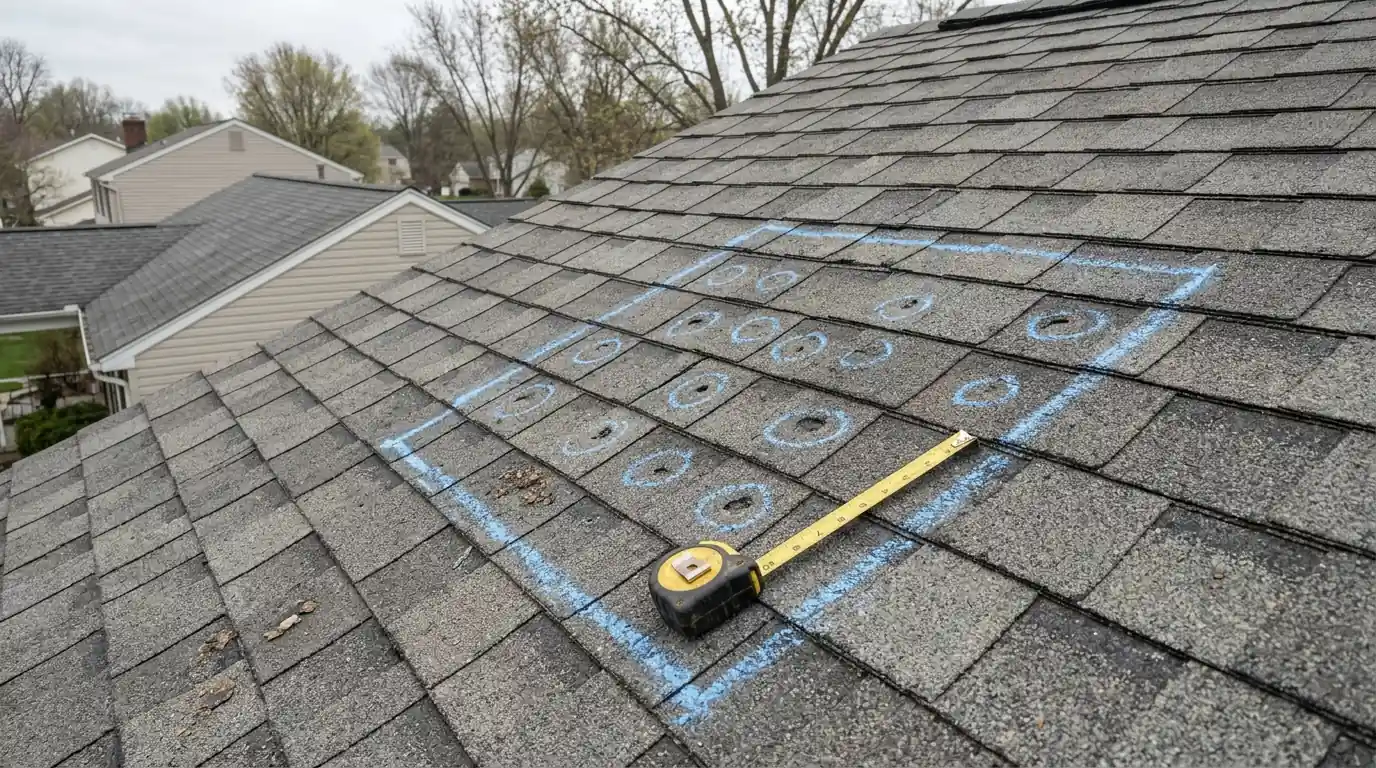
When a hailstorm rolls across the Miami Valley, most homeowners can't tell from the driveway whether their roof took damage. Adjusters can, but after a big storm they may cover many houses a day, and a rushed look can miss a slope or the soft metal on the vents. Our job is to document what's actually there. We photograph each slope, mark and count hits inside test squares, measure the roof, and record the dents on gutters, downspouts, siding and AC fins that help establish the storm's size.
We're straight about our role. We document damage, explain what we found, and meet your adjuster to point it out. The insurer decides what's covered, and Ohio law reserves negotiating a claim on your behalf for public adjusters, so we stay in our lane. We won't promise approval, and we won't touch your deductible. What we can promise is an honest, thorough record. If you want the whole sequence laid out, our Ohio claim walkthrough covers it step by step.
Storm clues that mean your roof needs claim documentation
Damage is easy to miss from the ground. These clues around the house usually mean it's worth having the roof documented before you call your insurer.
Dents on gutters, downspouts or vent caps
Soft metal shows hail clearly. If your aluminum gutters or the box vents on the roof have round dents, the shingles took hits too.
Spatter marks on decks, fences and siding
Fresh spatter marks and chipped paint on painted wood help confirm the size and direction of the hail.
Shingle pieces or tabs in the yard
Wind damage often shows up as torn tabs, exposed nail lines or shingles folded back on the windward slopes.
Flattened fins on the AC condenser
Hail flattens the thin fins on outdoor units, and adjusters often look there first to gauge the storm.
Granules washing out of downspouts
A sudden pile of granules after hail suggests the shingle surface was knocked loose, even before any leak appears.
Neighbors getting adjusters out
If houses on your street are filing, your roof faced the same storm and deserves a careful look.
A new leak or ceiling stain
Leaks after a storm need a tarp right away, since most policies expect you to prevent further damage once you know about it.
How we document storm damage for your insurance claim
A claim file is only as strong as its evidence. We build it the same way on every roof, so nothing depends on memory.
Note the date and the storm
We ask when the storm hit and what you noticed afterward. The date of loss matters to your insurer, and we match our findings to local weather reports where we can.
Collateral damage walk
Before climbing, we photograph dents on gutters, downspouts, window screens, siding, fences and the AC unit. These marks help show hail size and direction to the adjuster.
Test squares and slope photos
On each slope facing the storm, we chalk a 10 by 10 foot test square, count the hits inside it and photograph it with a tape for scale. We also document wind creases, missing tabs and damaged ridge cap.
Measurements and roof details
We measure the roof, count layers, and note drip edge, ice and water membrane and vent types. We record anything that affects repair scope, like slopes too steep to walk or decking that feels soft.
Write the photo report
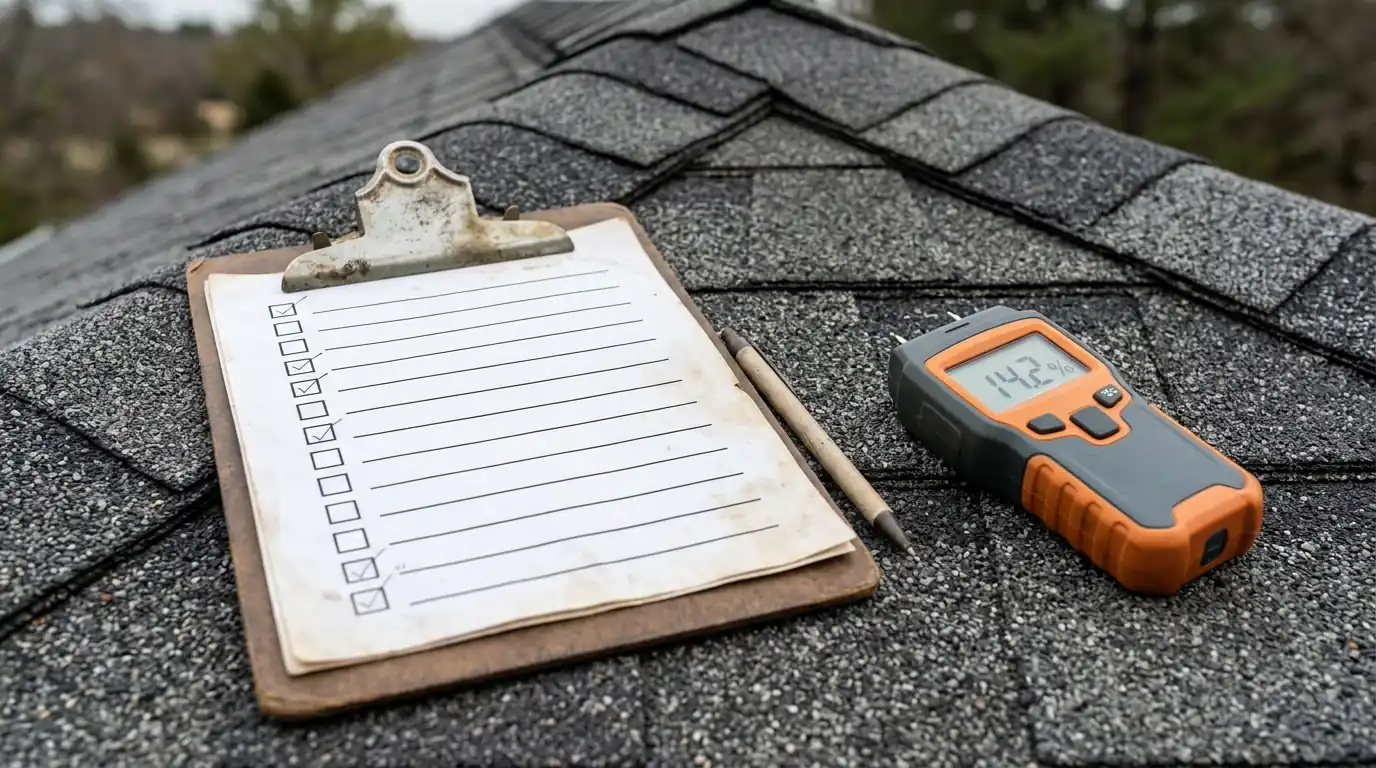
You get a dated report with labeled photos, test-square counts, measurements and a plain summary. You can share it with your insurer when you file, and we keep a copy.
Meet the adjuster on the roof
If you want us there, we meet your adjuster at the house, walk the slopes together and point out what we documented. The adjuster makes the coverage call, and we answer questions honestly.
Review the estimate with you
When the insurer's estimate arrives, we go through it line by line with you and flag anything that looks missed, such as a slope or a code-required item. You decide whether to raise it with your insurer.
What storm claim documentation costs in the Dayton area
Fees reflect time on the roof and the detail of the report. These are typical Dayton-area ranges and depend on the roof and the storm.
| Job | Typical range | What it covers |
|---|---|---|
| Storm damage inspection with photo report | $165 to $345 | Test squares, slope photos, measurements, collateral damage |
| Adjuster meeting at the property | $85 to $175 | On-roof walkthrough with your adjuster |
| Emergency tarp over an active leak | $385 to $1,240 | Tarp, battens and photos of the damage beneath |
| Re-inspection after a partial denial | $115 to $235 | Second look and updated photos if you choose to dispute |
Ranges are typical for the Dayton area in 2026 and depend on roof size, access and damage; your deductible and coverage are set by your policy, not by us. See more on our Dayton roofing price guide.
- Roof size and pitchSteep, tall roofs take more time and safety setup to photograph properly.
- Number of damaged elevationsHail that hit three sides of the house means more test squares and more photos than a storm from one direction.
- Material typeSlate, metal and cedar damage is documented differently from asphalt and can take longer.
- Leak protection neededAn active leak calls for emergency tarping before any paperwork.
- Timing after a regional stormIn the first days after a widespread hailstorm, demand spikes and schedules tighten, though we still answer 24/7.
Why we never promise approval or touch your deductible
After a big storm, door knockers often show up promising a free roof. A roof is never free. Your policy sets the deductible, and the insurer decides what damage is covered based on its own inspection and your policy language. No roofer can guarantee a claim, and anyone who promises one is guessing or worse. We tell you what we see, including when we see no storm damage at all, which happens more often than people expect.
Deductibles are the other trap. Some contractors offer to waive, absorb or rebate the deductible to win the job. That requires misstating the real cost of the work to your insurer, which Ohio law treats as insurance fraud, and the homeowner who signs can be exposed along with the roofer. We don't do it in any disguise, including fake discounts or padded line items. You pay your deductible, the insurer pays its share, and the paperwork matches the work.
- We never promise a claim will be approved
- We never waive, absorb or rebate a deductible
- We don't negotiate your claim; you and your insurer do
- We report a no-damage finding just as honestly as damage
Hail, wind or old age: telling storm damage from wear
Claims get denied most often because damage looks like wear, not a storm. We separate the two in the report. Hail leaves random, round bruises where the granules are crushed into the mat, and the spot feels soft when pressed. Blistering comes from heat and trapped moisture in the shingle and shows as raised pops that burst outward. Cracking and curling along the edges are age, and no storm caused them.
Wind damage has its own signature: creased tabs that folded back and lost their seal, missing shingles along the rakes and ridge, and nail lines exposed on the windward side. We photograph both the damage and the healthy shingles nearby, so the contrast is clear. If the evidence points to age rather than a storm, we say so and price the work for you directly. When it is storm damage, the same photos support hail damage repairs or wind repairs once your claim is settled.
Storm claims across the Miami Valley, from hail swaths to tornado paths
Spring and early summer bring most of our claim calls. Thunderstorm lines track across the region from the west, and hail can fall heavy on one street while the next neighborhood stays dry. That patchiness confuses homeowners and sometimes adjusters, which is why collateral damage and test squares matter so much here. Newer subdivisions in Beavercreek and Springboro have plenty of soft metal vents and gutters that record hail well.
The Memorial Day 2019 tornado outbreak showed the other side of Miami Valley storms. Roofs in Trotwood, Harrison Township, Old North Dayton, Northridge, Huber Heights, Riverside and Beavercreek took wind damage that ranged from a few lifted tabs to total loss. Claims after that kind of event take time, and clear photos from the first days help everyone. If your house sits along a known storm path, keep dated photos of your roof on hand, even when nothing is wrong.
Where we do insurance claim roof inspection most often
These neighborhoods, suburbs and cities make up most of our insurance claim roof inspection calls. Each link opens the local page with its ZIP.
Questions about insurance claim roof inspection in Dayton
Should I call my insurer or a roofer first after a Dayton hailstorm?
Either order works, but having the roof documented first helps you decide whether a claim makes sense. If our photos show little or no storm damage, you may avoid a claim on your record. If they show real damage, you call your insurer with dated evidence in hand. Tarp any active leak right away regardless.
Will your inspector walk the slopes alongside my insurance adjuster?
Yes, if you want us there. Tell us the appointment window and we'll meet the adjuster at the house, walk the slopes together, and point out the test squares and damage we documented. We stay factual and courteous. The adjuster makes the coverage decision, and we don't argue it on your behalf.
What can I do if my roof claim is denied after your inspection showed damage?
Ask your insurer for the denial reason in writing. If it cites wear or no storm damage and our photos show otherwise, you can request a re-inspection and share our report. Many policies also include an appraisal clause for disagreements about the amount of loss. We can re-inspect and update photos, but we can't promise a different outcome.
Will you lower your price to cover my insurance deductible?
No. Covering, waiving or rebating a deductible means misrepresenting the job's cost to your insurer, and Ohio law treats that as insurance fraud. Our price reflects the real work. If money is tight, ask us which repairs are urgent and which can wait, and we'll give you an honest answer.
Why does your claim report include my gutters, screens and AC unit, not just the shingles?
Soft metal and screens record hail size and direction more clearly than shingles do, so they help the adjuster connect roof damage to a specific storm. Damaged gutters, downspouts and siding may also be part of the same claim. We photograph them with a tape for scale, so the whole loss is on record in one report.
Does hail damage on my gutters mean the roof needs replacing?
Not by itself. Gutters and soft metal dent from smaller hail than it takes to damage most asphalt shingles. Dented gutters tell us hail fell and roughly how big it was, but the shingles still need their own inspection and test squares before anyone can say what the roof needs.
Other roofing work that often goes with this job
Product lines we install on roofs around Dayton include shingles from GAF, Owens Corning and CertainTeed, metal from Englert, membranes from Carlisle SynTec and skylights from VELUX.
Need insurance claim roof inspection today?
Call any hour. A person answers, asks a few questions and sets a time for a roofer to come out.