Siding Installation in Dayton, OH Planned With Your Roof
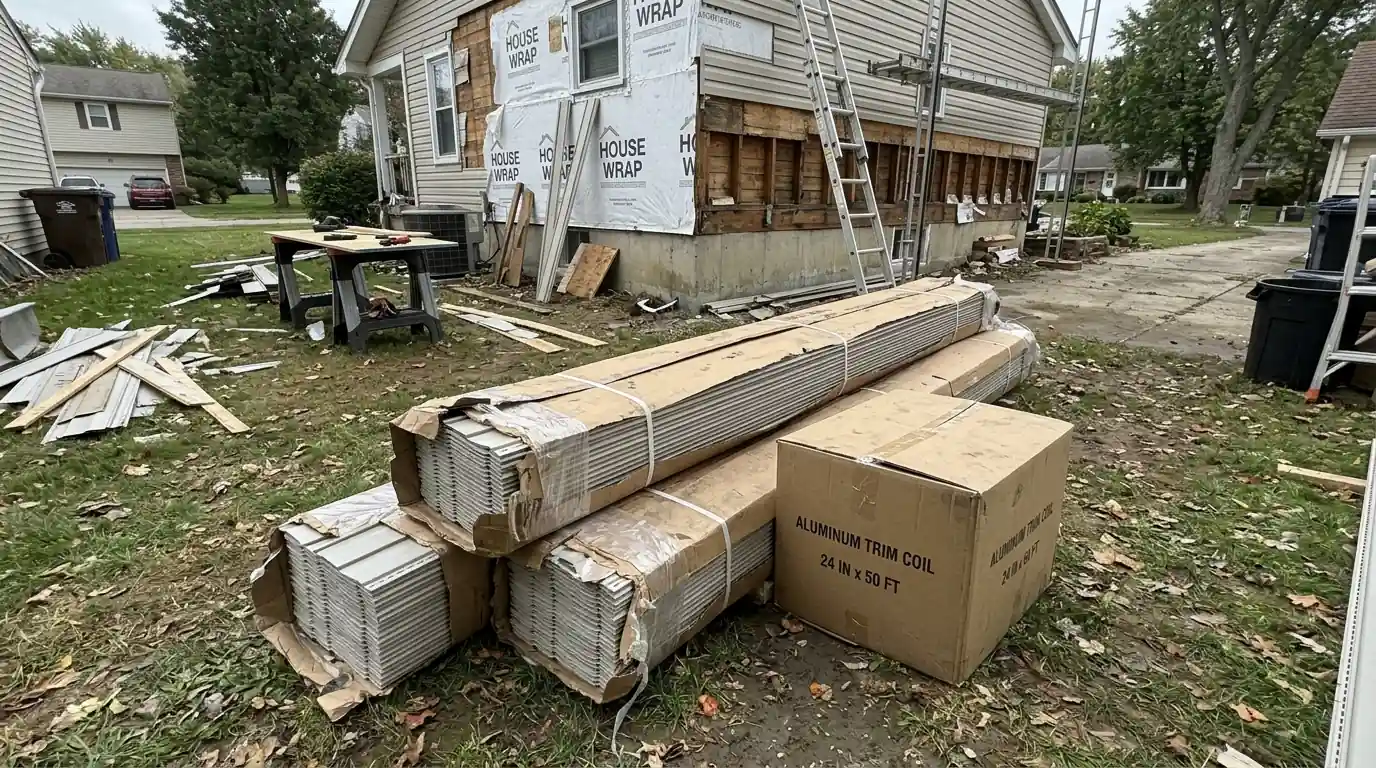
We strip the old siding, replace the step flashing and kickouts at every roof-to-wall line while the walls are open, and photograph the sheathing before new wrap goes on. Call any hour and a person picks up.
- Answered 24/7
- Photo report on every visit
- Dayton and the Miami Valley
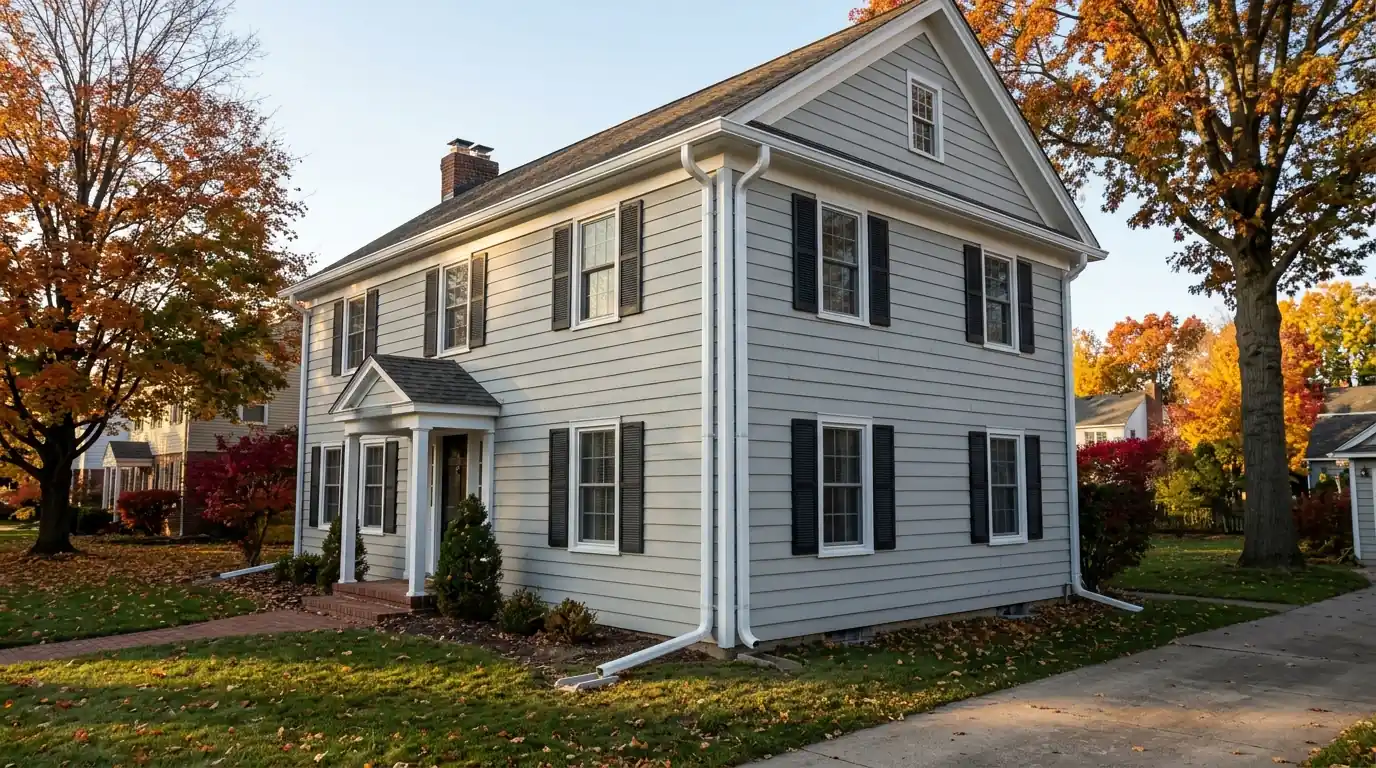
Siding installation in the Dayton area typically runs $5.85 to $9.45 per square foot of wall for standard vinyl, $8.35 to $12.70 for insulated vinyl, and $10.65 to $16.90 for fiber cement, tear-off included. A two-story home with about 1,900 square feet of wall often lands at $12,460 to $19,870 in vinyl. The job includes new house wrap, window flashing, trim and roof-to-wall flashing.
New siding is the one time in a house's life when the walls are fully open from the outside. Every window, door, dormer and roof-to-wall line is exposed, along with the sheathing and whatever house wrap was there before. We treat that as a chance to fix the details that cause leaks, not just to change the color. Most of the water damage we find behind old siding in Dayton starts at the roofline, where step flashing was cut short, reused from an older roof, or left out entirely.
That's why we plan a siding job around the roof. If your shingles are new, we work carefully around the existing step flashing and add kickouts where they're missing. If a roof replacement is due soon, we'll talk through which project should go first so flashing isn't installed twice. You'll pick from vinyl, insulated vinyl, fiber cement or engineered wood, and we'll explain how each behaves in Ohio's freeze-thaw winters and humid summers. You'll also see photos of the sheathing once the old siding is off.
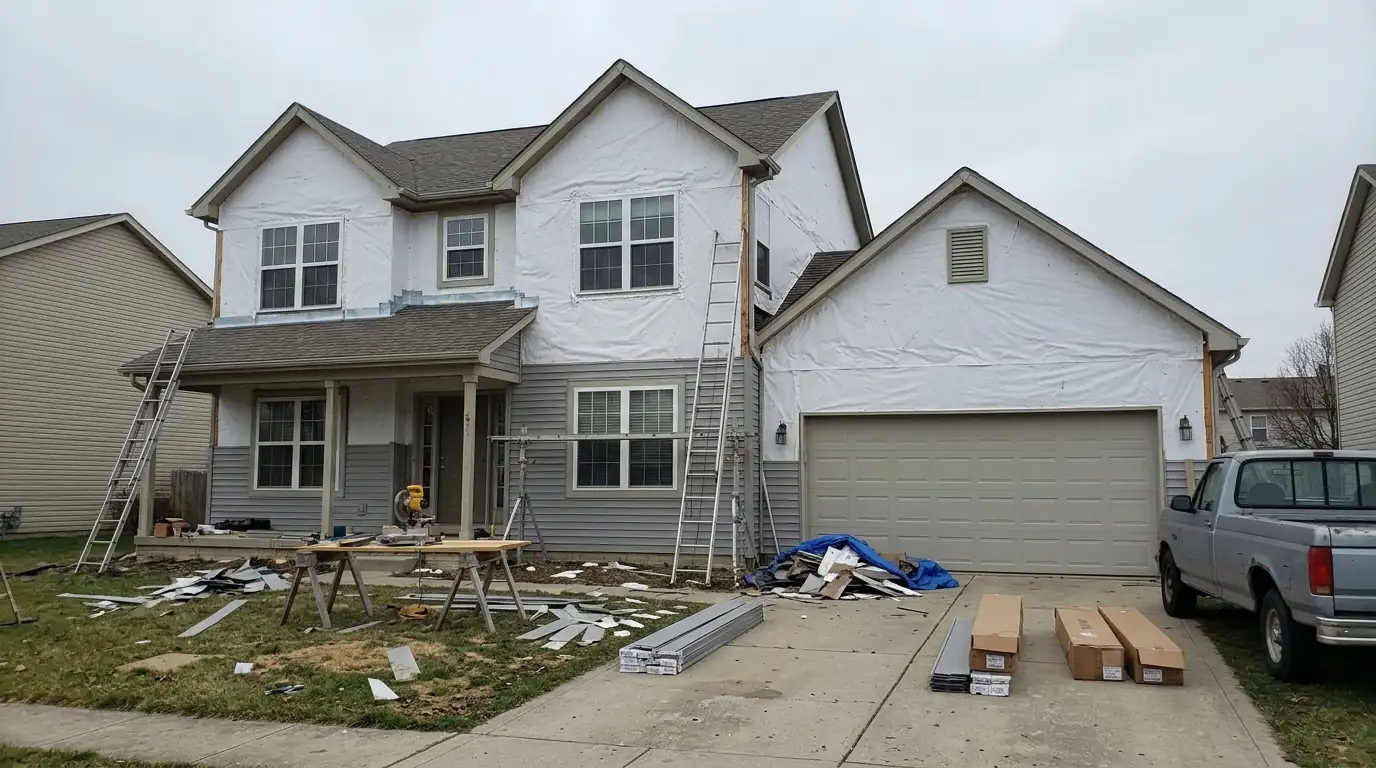
Roof first or siding first: sequencing the two projects
When both the roof and the siding are near the end of their life, the order matters. In most cases we recommend the roof first. Shingles and step flashing go on, the flashing legs are left up the wall, and then the siding goes on over them with the right clearance. Done in that order, nothing has to be pulled back or patched later, and the roof-to-wall joints get finished once.
If the siding is in worse shape, it can go first, but we'll plan ahead for the roof. That means installing new step flashing during the re-side so it can stay in place, or leaving the lowest courses of siding at roof-to-wall lines loose until the roof is done. Either way, someone has to own the flashing, and it should be decided up front. If you're weighing timing, our repair or replace guide helps you judge how much life the roof has left.
- Roof first: the usual order, with the cleanest flashing details
- Siding first: fine with planned step flashing at every roof line
- Same season: the easiest coordination, often sharing one dumpster
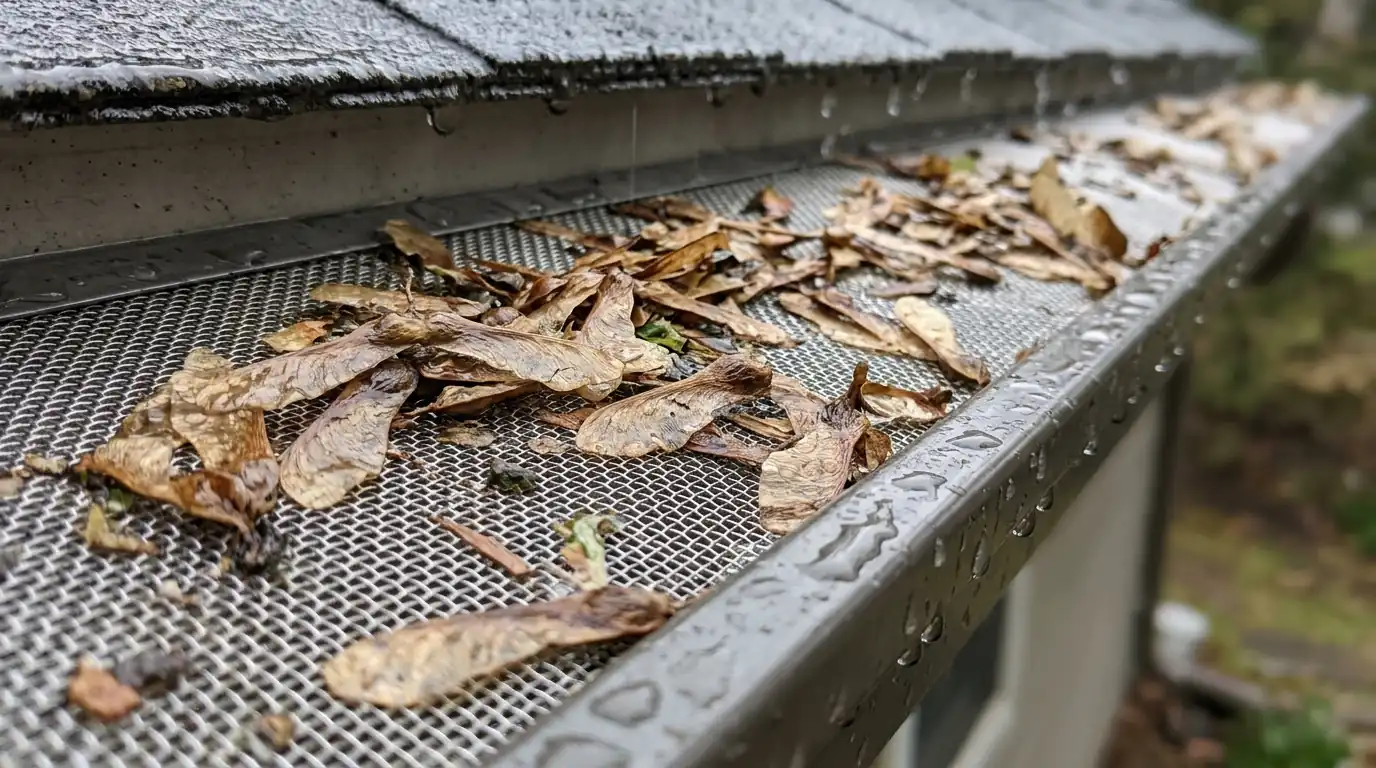
Vinyl, fiber cement or engineered wood on a Miami Valley house
Vinyl is the most common choice around Dayton because it's affordable, doesn't need paint and handles humidity well. Its weak spots are cold-weather hail, which can crack it, and fading on sunny walls. Insulated vinyl adds a foam backing that makes panels stiffer and quieter and adds a small amount of insulation.
Fiber cement is heavier and harder to install but holds up much better to hail and impact, and it suits older homes where a painted lap look fits the street. It needs caulking and paint over time unless you choose a factory finish. Engineered wood sits in between: lighter than fiber cement, with a wood look and good impact resistance, but it needs careful sealing at cut ends. If you're pairing new siding with impact-resistant shingles, fiber cement or engineered wood keeps the whole shell tougher against Ohio hail.
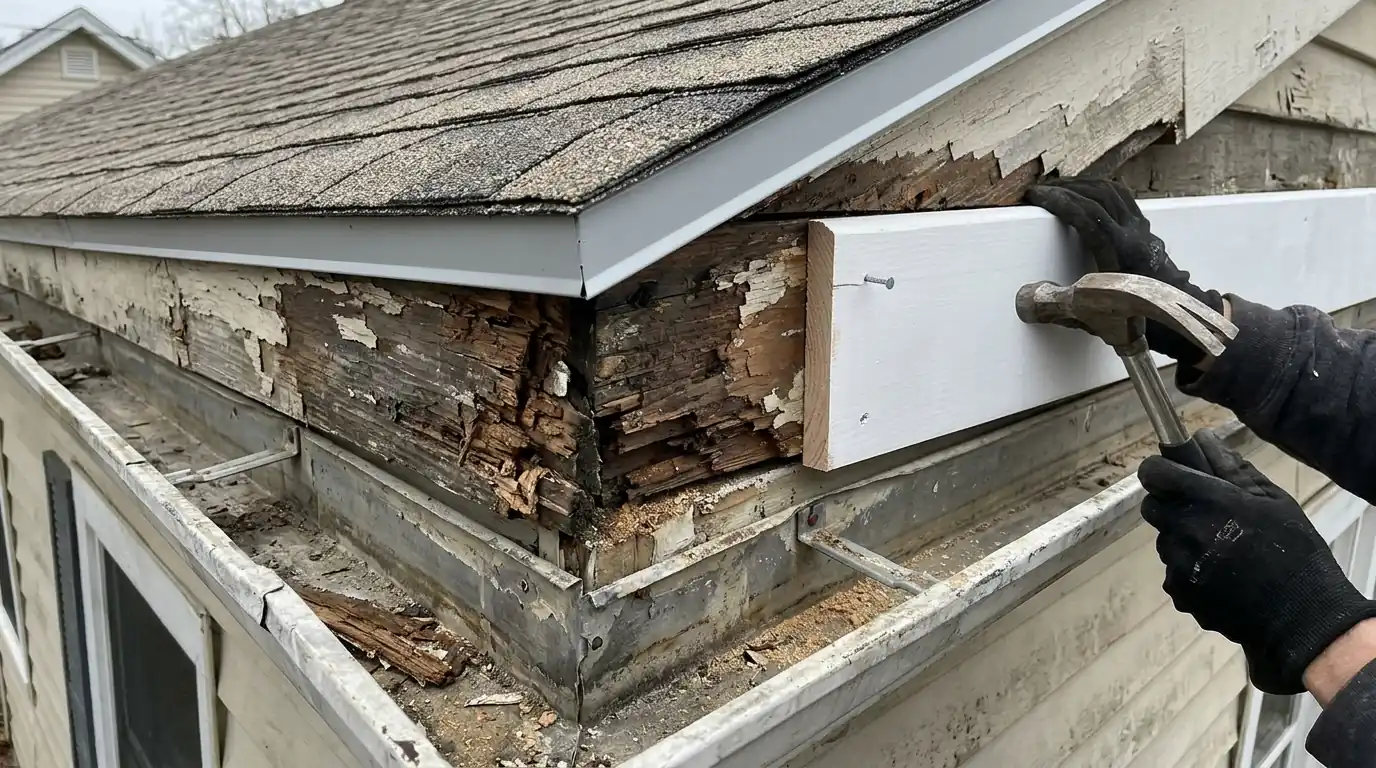
Permits and historic district review for re-siding around Dayton
Permit rules for siding vary from one Miami Valley city to the next. Some suburbs require a building permit or zoning sign-off for a full re-side, while others only ask for one when sheathing or framing is replaced. We check with the city or township before ordering material, so you don't find out about a requirement halfway through the job.
Historic districts add another layer. The City of Dayton has several, including South Park, St. Anne's Hill, the Oregon District and Dayton View, and exterior changes there go through review by the city's Landmarks Commission. In those districts a switch from wood clapboard to vinyl may not be approved, and siding profile, exposure and trim width often need to match the original house. Fiber cement or wood is usually the path that works. We help you put together photos and material samples for that review.
Typical siding installation costs for Dayton-area homes
Siding is priced by wall area, material and how much trim the house has. These are typical 2026 installed ranges around Dayton, tear-off included.
| Job | Typical range | What it covers |
|---|---|---|
| Standard vinyl | $5.85 to $9.45 per sq ft of wall | Tear-off, new wrap, trim and vinyl siding |
| Insulated vinyl | $8.35 to $12.70 per sq ft of wall | Vinyl with a laminated foam backing for stiffness and a little added R-value |
| Fiber cement | $10.65 to $16.90 per sq ft of wall | Factory-finished or primed boards, trim, painting if needed |
| Engineered wood | $9.15 to $14.35 per sq ft of wall | Prefinished lap siding with matching trim |
| Two-story home, about 1,900 sq ft of wall, vinyl | $12,460 to $19,870 | Full tear-off, wrap, window flashing, trim and roof-to-wall flashing |
| Sheathing replacement found during tear-off | $3.15 to $5.85 per sq ft | Cut out and replace rotted sheathing before wrap |
These are typical Dayton-area ranges, not a quote. We provide a written price after measuring the house and reviewing material options with you. See more on our Dayton roofing price guide.
- Wall area and storiesBigger and taller walls need more material and staging. Gable ends on two-story homes add ladder and scaffold time.
- Windows, doors and cornersEvery opening needs trim and flashing, so a house with many windows costs more per square foot than a plain box.
- Material choiceFiber cement and engineered wood cost more than vinyl and may need paint, but they stand up to hail and impact better.
- Hidden rotSheathing damage is the biggest unknown. We photograph it during tear-off and price repairs per square foot.
- Old siding layersAluminum over wood, or vinyl over old cement shingles, adds removal time. Siding that may contain asbestos has to be tested and properly abated first.
- Historic district rulesSome districts require specific materials or profiles, which can change the material choice and the price.
How a full re-side comes together on a Dayton home
A typical single-family re-side takes one to two weeks, depending on size, material and weather. These are the stages.
Measure, choose material and check permits
We measure every wall, help you choose a material and color, and check whether your city or historic district needs a permit or review before ordering.
Strip the old siding
Old siding comes off one wall at a time so the house is never left open overnight in bad weather. Debris goes straight into a dumpster, and we magnet-sweep the yard for nails.
Inspect and repair sheathing
With the walls bare, we photograph and probe the sheathing, especially below windows and at roof-to-wall corners. Soft areas are cut out and replaced.
Wrap, flash windows and redo roof-to-wall flashing
New house wrap is lapped shingle-style, and windows and doors get flashing tape in the right order. Step flashing and kickouts at every roof line are replaced or added.
Install trim, then siding
Corner posts, J-channel and window trim go up first, then siding from the bottom course upward. Fiber cement and engineered wood are nailed to the maker's schedule, and vinyl hangs loose enough to expand.
Detail, clean up and photo report
We seal penetrations, set roofline clearances, reinstall gutters and fixtures, and walk the property with you. You get before, during and after photos of each wall.
Signs it's time to reside instead of repairing again
Repairs make sense for isolated damage. These conditions usually mean the whole wall system is ready for replacement.
Repairs on a different wall every year
If you're calling about a new section every season, the siding has reached the end of its useful life.
Faded, brittle or chalky vinyl
Old vinyl cracks with every hail storm and stray baseball. Once it's brittle, patching tends to break the panels next to the repair.
Peeling paint on dented aluminum
Aluminum siding from the 1950s and 60s often has layers of paint flaking off and dents on every storm-facing wall.
Soft sheathing at several rooflines
Multiple soft spots at roof-to-wall corners, windows or doors mean water has been getting behind the siding for years.
Drafty rooms along exterior walls
Older homes with no house wrap and thin siding lose heat. New wrap and insulated siding help tighten the shell.
A roof or window project is coming
Coordinating siding with new shingles or windows lets the flashing at every opening and roof line tie together correctly.
Where re-siding projects are common across Dayton and its suburbs
The biggest wave of re-siding we see is on postwar homes. Ranches and Cape Cods in Kettering, Belmont and Moraine often still wear aluminum siding from the 1950s and 60s, painted once or twice and dented on every storm-facing wall. Owners there usually move to vinyl or insulated vinyl and take the chance to add house wrap that was never installed. Many also have thin, uninsulated walls, so insulated vinyl gets a close look.
Suburban homes from the 1980s and 90s in Centerville, Washington Township and Beavercreek are now on their first vinyl, and much of it is faded and brittle. These houses tend to have attached garages and porch roofs tied into two-story walls, so roof-to-wall flashing is a big part of the work. In the city's historic districts, residing is a different conversation centered on fiber cement or wood, as covered above.
Where we do siding installation most often
These neighborhoods, suburbs and cities make up most of our siding installation calls. Each link opens the local page with its ZIP.
Questions about siding installation in Dayton
Should a Dayton homeowner replace the roof or the siding first when both are due?
Usually the roof. New shingles and step flashing go on, and the siding is installed over the flashing with proper clearance, so roof-to-wall joints are finished once. If the siding is failing faster, it can go first as long as new step flashing is installed during the re-side. The worst outcome is two crews each assuming the other will handle the flashing.
How long does a full re-side take on a two-story house?
Most two-story homes take one to two weeks of working days, depending on wall area, material, number of windows and weather. Fiber cement takes longer than vinyl because the boards are heavier and need more cutting. Sheathing repairs found during tear-off can add a day or two. We give you a schedule once material is ordered and the start date is set.
Is insulated vinyl siding worth the extra cost in Ohio winters?
It can be, mostly for comfort and durability rather than big energy savings. The foam backing makes panels stiffer, so they resist wind and dents better and lie flatter on uneven older walls. The added insulation helps a little on homes with poorly insulated walls. If your budget is tight, standard vinyl with good house wrap and proper flashing does most of the work.
Can new siding go right over the old aluminum siding?
Sometimes it can, but we rarely recommend it. Covering old siding hides whatever rot, missing wrap or bad flashing is underneath, and it makes window and roofline trim harder to get right. Tearing off lets us see the sheathing, add wrap and fix roof-to-wall flashing. If only a few panels are bad, siding repair may be all you need for now.
Do I need city approval to reside a house in a Dayton historic district?
In most cases, yes. Exterior changes in districts like South Park, St. Anne's Hill and the Oregon District go through the city's historic review, and vinyl over original wood clapboard is often not approved. Fiber cement or wood siding in a matching profile is usually the workable route. Check with the city before choosing material, and we can help gather photos and samples.
What siding color hides fading best on a sunny south-facing wall?
Lighter and mid-tone colors fade less visibly than dark ones, because there's less pigment change to notice. Grays, tans and soft whites tend to age evenly on south and west walls. If you love a darker color, look at products with fade-resistant finishes and read the manufacturer's color warranty. Fiber cement with a factory finish also holds dark colors well.
Other roofing work that often goes with this job
Product lines we install on roofs around Dayton include shingles from GAF, Owens Corning and CertainTeed, metal from Englert, membranes from Carlisle SynTec and skylights from VELUX.
Need siding installation today?
Call any hour. A person answers, asks a few questions and sets a time for a roofer to come out.