EPDM Rubber Roofing in Dayton, OH for Homes and Buildings
We install and repair black EPDM rubber roofs on garages, porch roofs, rowhouses and low-slope commercial buildings. Every seam is primed and taped, and our crew photographs each one before we leave. A person answers 24/7.
- Answered 24/7
- Photo report on every visit
- Dayton and the Miami Valley
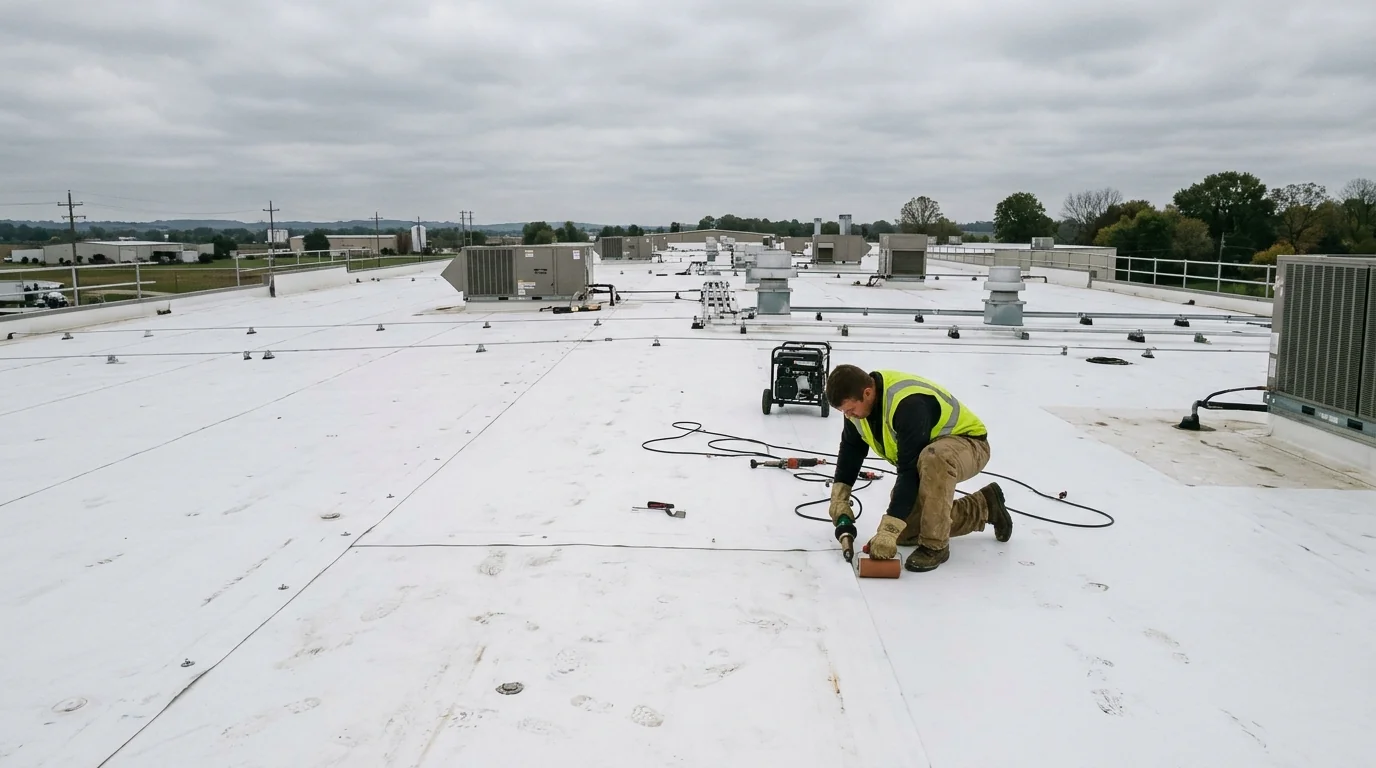
A new EPDM rubber roof in the Dayton area typically costs $7.85 to $12.65 per square foot on homes, or $2,870 to $6,430 for a detached garage or porch roof, including tear-off. Commercial EPDM usually runs $6.95 to $10.85 per square foot. Price depends on membrane thickness, how it's attached, deck condition and how many walls and penetrations need flashing.
EPDM is the black rubber sheet you've probably seen on garages and the back roofs of older houses. It has been used on low-slope roofs for decades, and it holds up well in a climate like Dayton's because it stays flexible in January cold and doesn't crack from summer heat the way old tar roofs did. Large sheets mean fewer seams, and on a simple porch or garage roof, a single piece can often cover the whole surface.
Where EPDM roofs go wrong is almost always at the details: seams, edges and the spots where the rubber turns up a wall. Older installations relied on liquid splice adhesive, and many of those seams are now letting go around the Miami Valley. Today's best practice is primed seam tape and pre-taped accessories at corners and pipes, which is how our roofers install every EPDM roof. We also repair existing rubber roofs, whether they were installed last decade or in the 1980s.
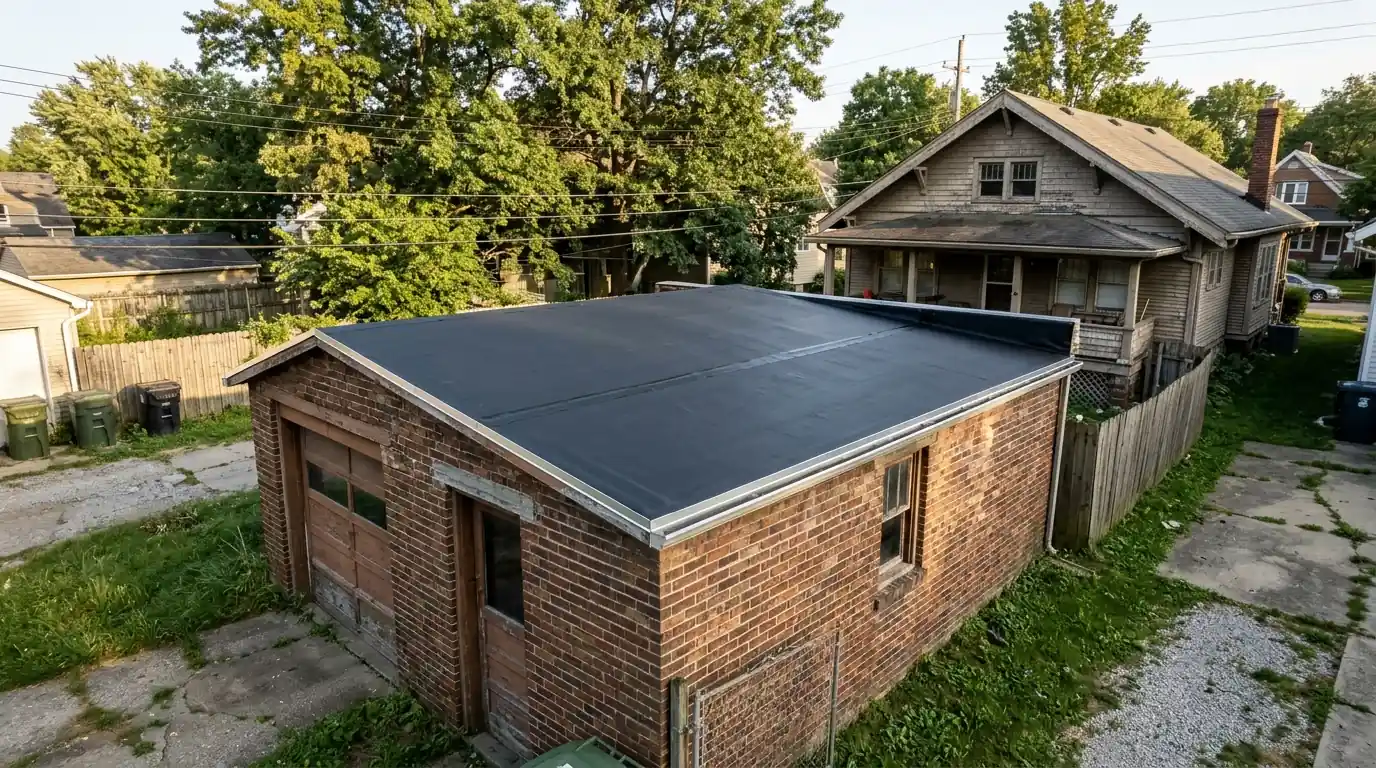
Glued seams, taped seams and why the difference matters on older rubber roofs
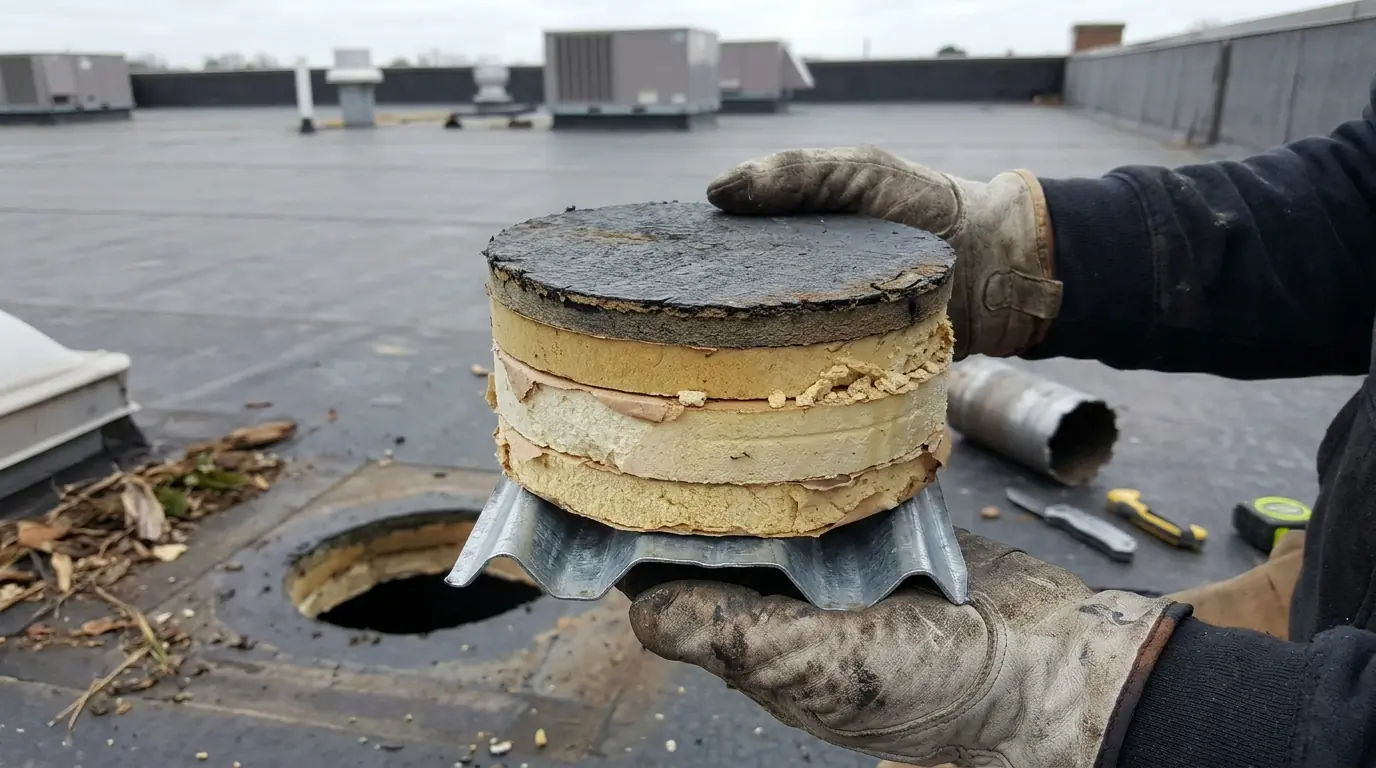
If your EPDM roof went on before the late 1990s, there's a good chance its seams were joined with liquid splice adhesive. That method worked when it was done carefully, but the adhesive dries out over time, and seam edges start peeling back. Water then wicks under the lap and into the insulation, often far from where it shows up inside.
Seam tape made the job more consistent. The tape is primed onto both sheets and rolled, creating a wider, more even bond that stays flexible. When we repair an older rubber roof, we often strip failing glued seams and re-tape them, which can add years to a roof that's otherwise in decent shape. If the membrane itself has shrunk away from walls or turned brittle, though, re-taping won't save it, and a full low-slope replacement is the better use of your money.
- Peeling seam edges you can lift with a fingernail
- Black adhesive residue squeezing out of laps
- Membrane pulled tight at walls, like a drum skin
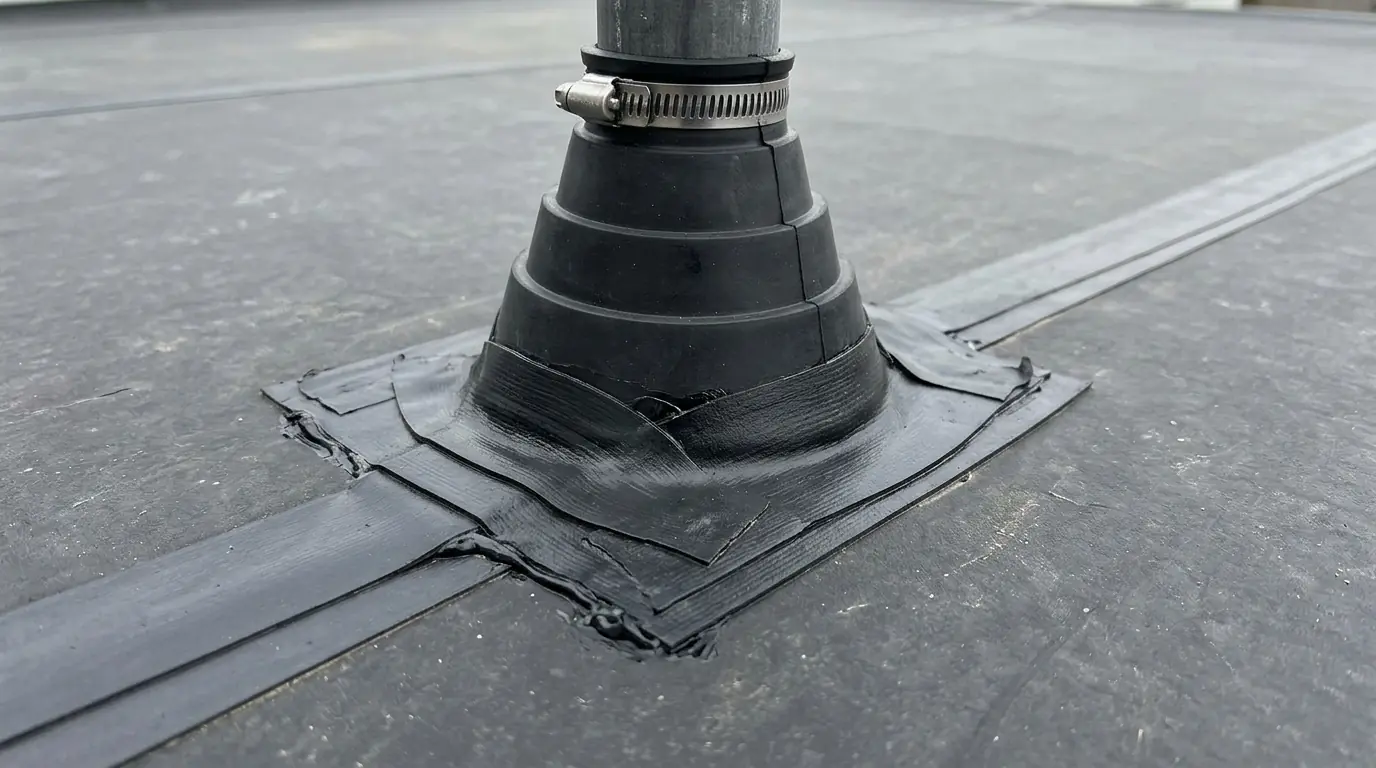
Keeping a rubber roof healthy through Ohio seasons
EPDM doesn't need much care, but what it needs matters. Keep leaves and branches cleared from drains and scuppers each fall, since debris holds water against the seams. Don't let anyone set ladders, grills or patio furniture directly on the rubber, and make sure HVAC technicians use a pad when they kneel or set tools down.
After a big storm, check for punctures from falling limbs. Hail rarely damages EPDM the way it damages shingles, but large stones can bruise the membrane over hard insulation. Every few years, a professional look at the seams and flashings catches small issues early, such as a lifting corner patch or a pipe boot that has split from UV exposure. Those are cheap fixes when they're found before water reaches the insulation. Our roof maintenance visits cover low-slope roofs as well as shingles, and if you notice anything between visits, we handle flat roof leak repairs on rubber roofs any time of year.
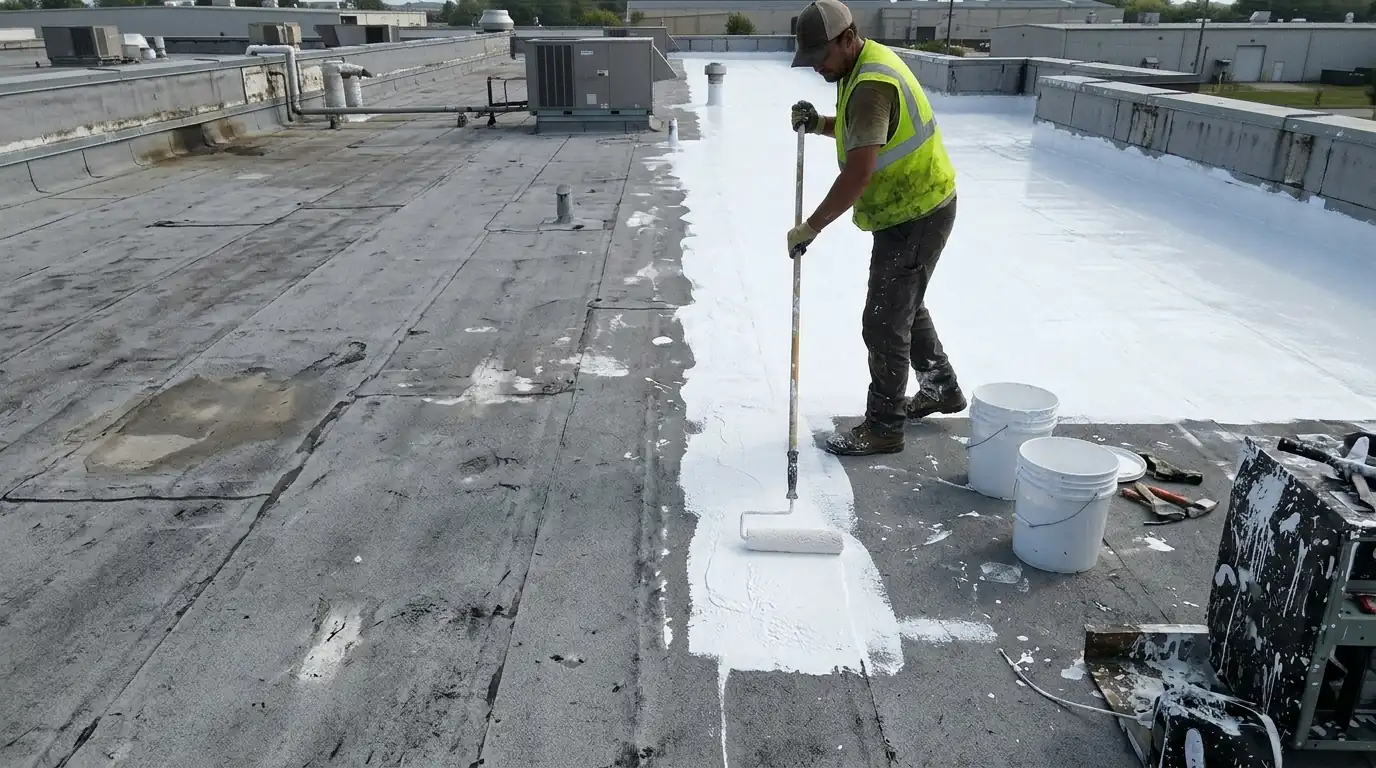
What an EPDM rubber roof costs in Dayton in 2026
Here are typical Dayton-area ranges for EPDM work. Thickness, attachment method and how much flashing the roof needs account for most of the spread.
| Job | Typical range | What it covers |
|---|---|---|
| Detached garage or porch roof, new EPDM | $2,870 to $6,430 | Tear-off, 60-mil membrane, edge metal, cleanup |
| Residential EPDM roof | $7.85 to $12.65 per sq ft | Fully adhered, insulation board, flashings |
| Commercial EPDM roof | $6.95 to $10.85 per sq ft | Adhered or mechanically fastened, larger areas |
| EPDM repair or patch | $265 to $785 | Puncture, split or small seam failure |
| Seam re-taping on an older roof | $11.40 to $19.65 per linear foot | Strip old adhesive seams, prime and tape |
These are typical Dayton-area ranges, not a quote; your actual price depends on what we find when we inspect and measure the roof. See more on our Dayton roofing price guide.
- Membrane thicknessWe usually recommend 60-mil EPDM for homes. Thicker 90-mil sheets cost more but resist punctures and aging better.
- Attachment methodFully adhered roofs cost more in adhesive and labor than mechanically fastened or ballasted roofs, but they handle wind better on small buildings.
- Tear-off depthRemoving one layer of rubber is quick, while removing buried tar and gravel underneath takes much longer.
- Flashing detailsWalls, chimneys, skylights and vent pipes each need flashing pieces, which add material and time.
- Insulation and slopeAdding tapered insulation to fix ponding raises the price but usually extends the life of the new rubber.
How we install an EPDM roof that keeps its seams sealed
Rubber roofs last when the substrate is clean and the details are right, so most of our time goes into preparation and flashing.
Tear-off and deck check
We remove the old roofing, inspect the deck and replace soft boards. Our crew photographs the decking so you can see what the new roof sits on.
Insulation or cover board
A smooth, firm base keeps the rubber from showing every board joint and protects it from fastener heads. Where water ponds, we add tapered insulation to create slope.
Sheet layout and relaxing
We unroll the membrane and let it relax in the sun before adhering it, which reduces wrinkles and long-term shrinkage at the edges.
Full adhesion
On most homes we fully adhere the membrane with bonding adhesive, rolling it into place so it won't flutter in wind. Larger commercial roofs may be mechanically fastened instead.
Primed, taped seams
Every seam gets cleaned, primed and joined with seam tape, then rolled with a hand roller. Corners, pipes and curbs get pre-molded or uncured flashing pieces.
Edge termination and inspection
Drip edge, termination bars and counterflashing finish every edge. We probe each seam, photograph the completed roof and walk you through what we installed.
Who EPDM rubber suits best, and when another membrane makes more sense
EPDM is a strong choice for many low-slope roofs, but not every one. These are the situations where we usually recommend it.
Simple, rectangular roofs
Garages, porch roofs and room additions with few penetrations can often be covered with one sheet, which means almost no field seams to maintain.
Roofs nobody walks on
Rubber holds up fine with occasional service traffic, but it's softer than modified bitumen, so it suits roofs that are mostly left alone.
Owners who value easy repairs
EPDM is simple to patch with compatible tape and primer, even decades after installation, which keeps long-term upkeep affordable.
Shaded or north-facing roofs
Black rubber absorbs heat, so it's at its best where trees or taller buildings keep the summer sun off it.
Buildings without kitchen exhaust on the roof
Grease and oils swell and soften EPDM, so restaurant tenant spaces usually need a different membrane or added protection.
Replacing an existing rubber roof
Buildings already designed around EPDM details, such as termination bars and edge metal, often convert most easily to a new EPDM system.
EPDM roofs on Dayton garages, rowhouses and storm-rebuilt buildings
Detached garages behind 1920s through 1950s homes are one of the most common places we install rubber, in neighborhoods like Belmont and throughout the east side. Many of those garages have shallow-pitched or flat roofs that were covered with rolled roofing, which wears out fast. A single sheet of EPDM is a cost-effective upgrade. Narrow driveways and alley access are common there, so we often carry rolls in by hand and keep the work area tidy for neighbors who share the alley.
On the commercial side, EPDM shows up on apartment buildings, small offices, churches and light industrial buildings. After the Memorial Day 2019 tornadoes, many damaged low-slope roofs in Trotwood and Harrison Township were rebuilt, and some of those were redone in EPDM. Throughout the region, the material handles freeze-thaw cycles well, though its black surface gets hot in sun-exposed spots. Where heat is a concern, we'll often suggest white TPO instead, or a reflective coating over the rubber.
Where we do epdm rubber roofing most often
These neighborhoods, suburbs and cities make up most of our epdm rubber roofing calls. Each link opens the local page with its ZIP.
Questions about epdm rubber roofing in Dayton
Is a black EPDM roof going to make the room underneath hotter in July?
It can make a noticeable difference in a room with little insulation above it, since black rubber absorbs a lot of summer heat. The fix is usually better insulation under the membrane, which we can add during replacement. If the room still runs hot, white EPDM or a reflective TPO membrane are good alternatives. On shaded garages and porch roofs, heat usually isn't a concern.
How can I tell whether my rubber roof's seams were glued or taped?
Taped seams usually show a clean, uniform edge about three inches wide, with a slight gray tint from primer along the lap. Glued seams often show dark adhesive along the edge, and on older roofs, the lap may be lifting or curling. If you can't tell from a window or photos, we'll check during an inspection and include close-up photos in your report.
Can new EPDM go right over the old rubber on my garage roof?
Sometimes, but we usually advise against it. If the old rubber is dry and there's only one layer, a recover with a new cover board is possible. More often, the old membrane has trapped moisture or the deck underneath has softened, and only a tear-off reveals it. On a small garage, tear-off adds little to the total cost and lets us repair the deck.
Why is grease from a restaurant exhaust fan damaging the rubber roof on our strip center?
EPDM is not resistant to oils and animal fats. Grease vented from kitchen exhaust fans settles on the membrane, softens it and causes swelling, and eventually the rubber splits. The fix is a grease containment system at the fan and replacing the damaged area with a grease-resistant membrane or protective layer. We see this regularly on strip centers with restaurant tenants.
What thickness of EPDM membrane do you recommend for a Dayton home?
For most homes we recommend 60-mil EPDM. It handles occasional foot traffic, hail and branch debris better than the thinner 45-mil sheets, and the price difference is modest on a small roof. On roofs that see more service traffic or hold equipment, 90-mil membrane is an option. We'll talk through the choice once we've seen how the roof is used.
Can a rubber roof be installed during an Ohio cold snap?
Yes, with some limits. EPDM itself handles cold well, but bonding adhesives and seam primers need certain temperatures to cure properly. On cold days, we use low-temperature adhesives and keep materials warm until use, or we schedule the adhesive work for the warmest part of the day. If the forecast is too cold, we'll put a temporary covering on and wait for better conditions.
Other roofing work that often goes with this job
Product lines we install on roofs around Dayton include shingles from GAF, Owens Corning and CertainTeed, metal from Englert, membranes from Carlisle SynTec and skylights from VELUX.
Need epdm rubber roofing today?
Call any hour. A person answers, asks a few questions and sets a time for a roofer to come out.