Flat Roof Repair in Dayton, OH for Porches, Rowhouses and Additions
A person answers 24/7, and when a flat roof is actively leaking we can usually get a temporary patch or tarp on it the same day. Every repair visit ends with a photo report showing what we found and what we fixed.
- Answered 24/7
- Photo report on every visit
- Dayton and the Miami Valley
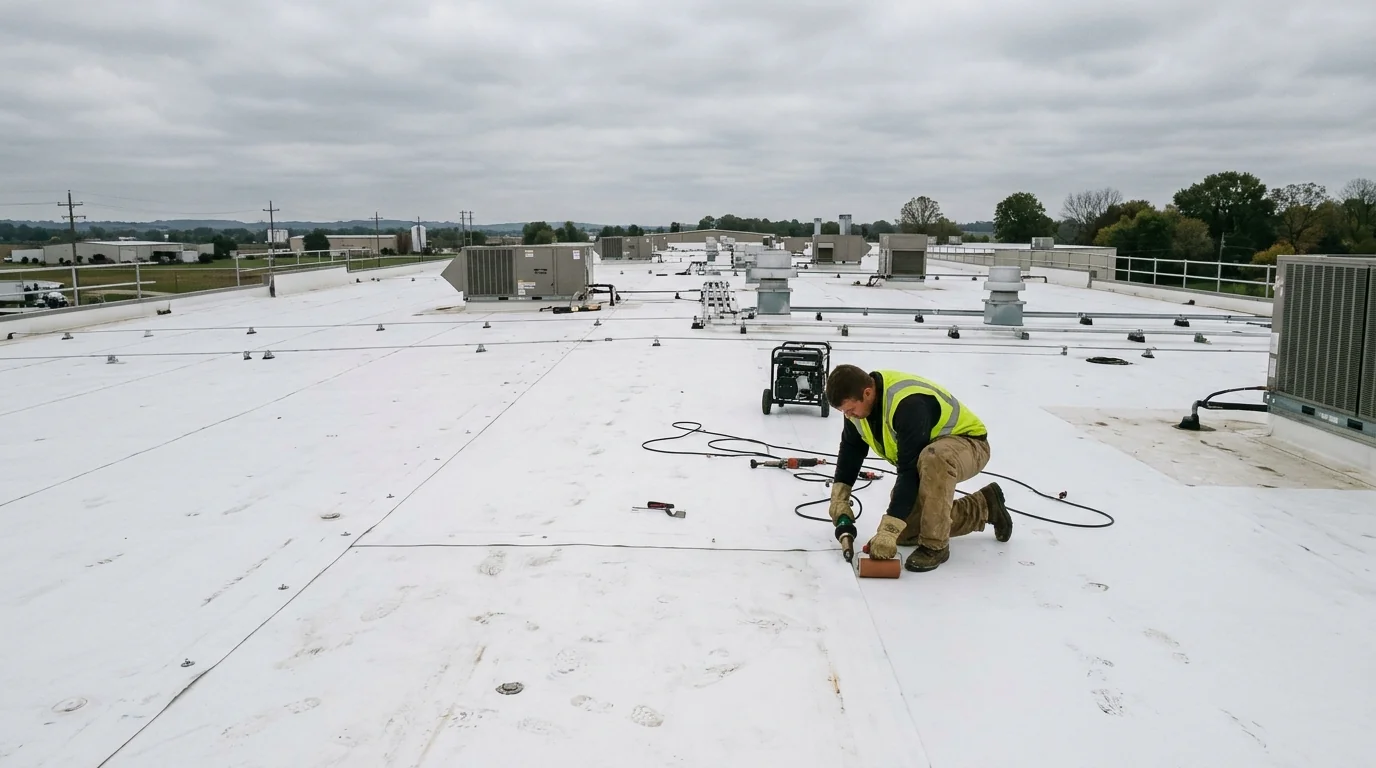
Most flat roof repairs in the Dayton area run $285 to $1,380, depending on whether we're sealing a single blister or puncture, rebuilding a failed seam, or reflashing a parapet wall or scupper. Repairs involving wet insulation or rotted decking usually cost $1,460 to $3,870. We find the water's real entry point first, because on low-slope roofs it rarely sits directly above the ceiling stain.
Flat roofs are not truly flat. A good one has a slight pitch, about a quarter inch per foot, that moves water toward a drain, scupper or gutter. When that pitch is lost to a sagging joist, crushed insulation or a clogged outlet, water sits, and standing water finds every weak seam. Most of the low-slope leaks we see around Dayton start this way: on a back porch roof, a kitchen addition, a garage or the rear section of a brick rowhouse that nobody looks at until the ceiling stains.
Repairing a flat roof well means matching the membrane that's already there. EPDM rubber, TPO, modified bitumen and old built-up tar and gravel each need specific primers, adhesives or heat welding, and the wrong patch material can lift within a season. Our roofers identify the existing system, cut test openings where needed to check for wet insulation, and repair with compatible materials. If the roof is too far gone for a repair to make sense, we tell you that plainly and show you the photos that back it up.
Warning signs your flat or low-slope roof needs repair now
Low-slope roofs give you clues well before the ceiling drips. If you can safely see the roof from an upstairs window, take a look after a heavy rain.
Water still standing two days after rain
Ponding that lingers 48 hours or more points to lost slope or a blocked outlet, and it speeds up the breakdown of seams and surfacing.
Blisters or soft spots underfoot
Bubbles in modified bitumen or built-up roofing mean trapped moisture or air between plies. Spongy areas usually mean wet insulation or rotted decking below.
Seam edges curling up
On EPDM, look for seam tape or adhesive edges lifting away. On TPO, an open weld shows up as a small gap you can slip a fingernail into.
Cracked flashing where the roof meets a wall
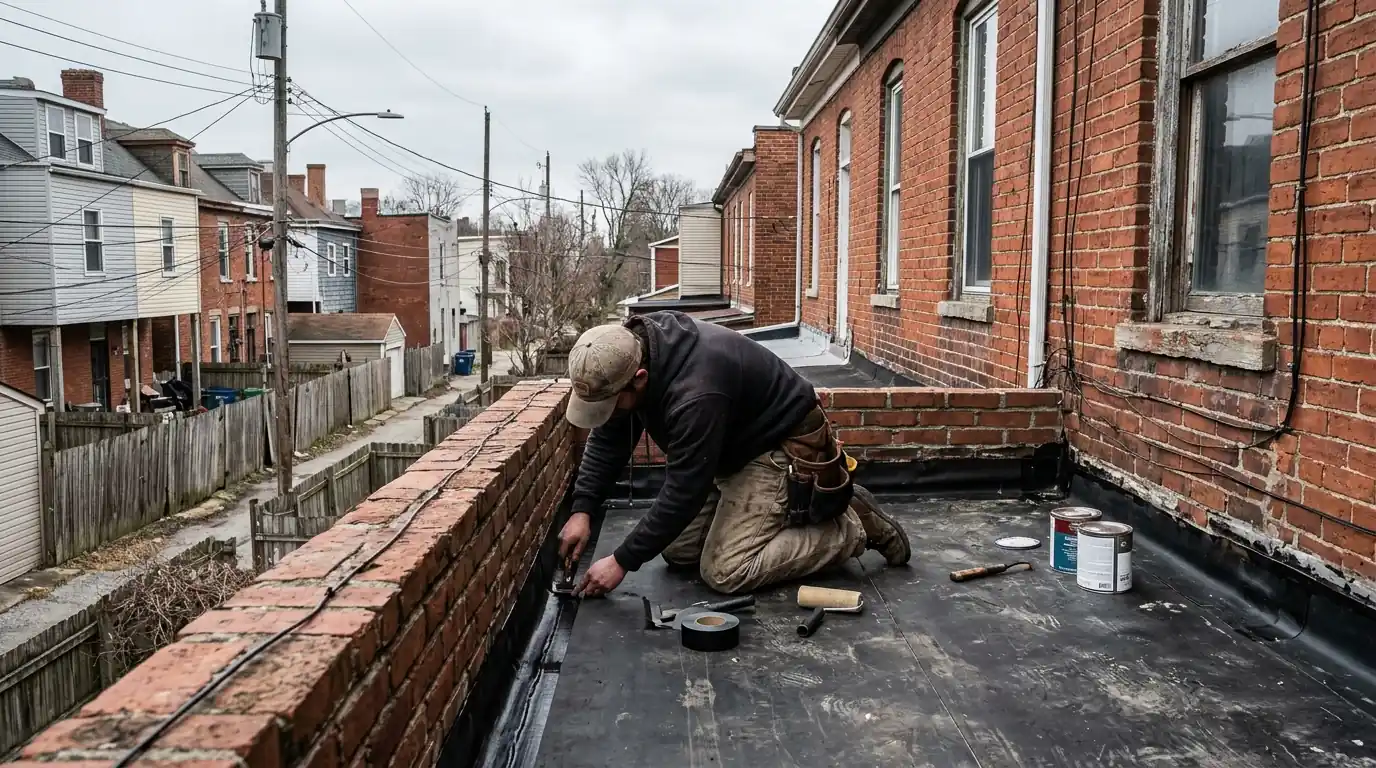
The joint between a porch roof and the brick or siding above it moves with every freeze-thaw cycle, and it's the most common leak point we repair.
Alligatoring or bare spots on the surface
Crazed, cracked surfacing on old tar or coated roofs, or cap sheet granules washing into the gutter, means the membrane has lost its UV protection.
Stains near an exterior wall
Water travels sideways under a flat membrane, so a stain near the wall often traces back to a scupper, drip edge or wall flashing several feet away.
How we track down and fix a flat roof leak
Low-slope leaks are harder to trace than shingle leaks, so our process puts the diagnosis ahead of the patch.
Interior check and measurements
We start inside, measuring the stain against the exterior walls and noting when the water shows up. That gives our roofers a search area before anyone climbs a ladder.
Surface inspection and water testing
On the roof we check seams, penetrations, flashings and drains, and photograph each suspect spot. When the source isn't obvious, we water test one section at a time until the leak repeats.
Test cuts for wet insulation
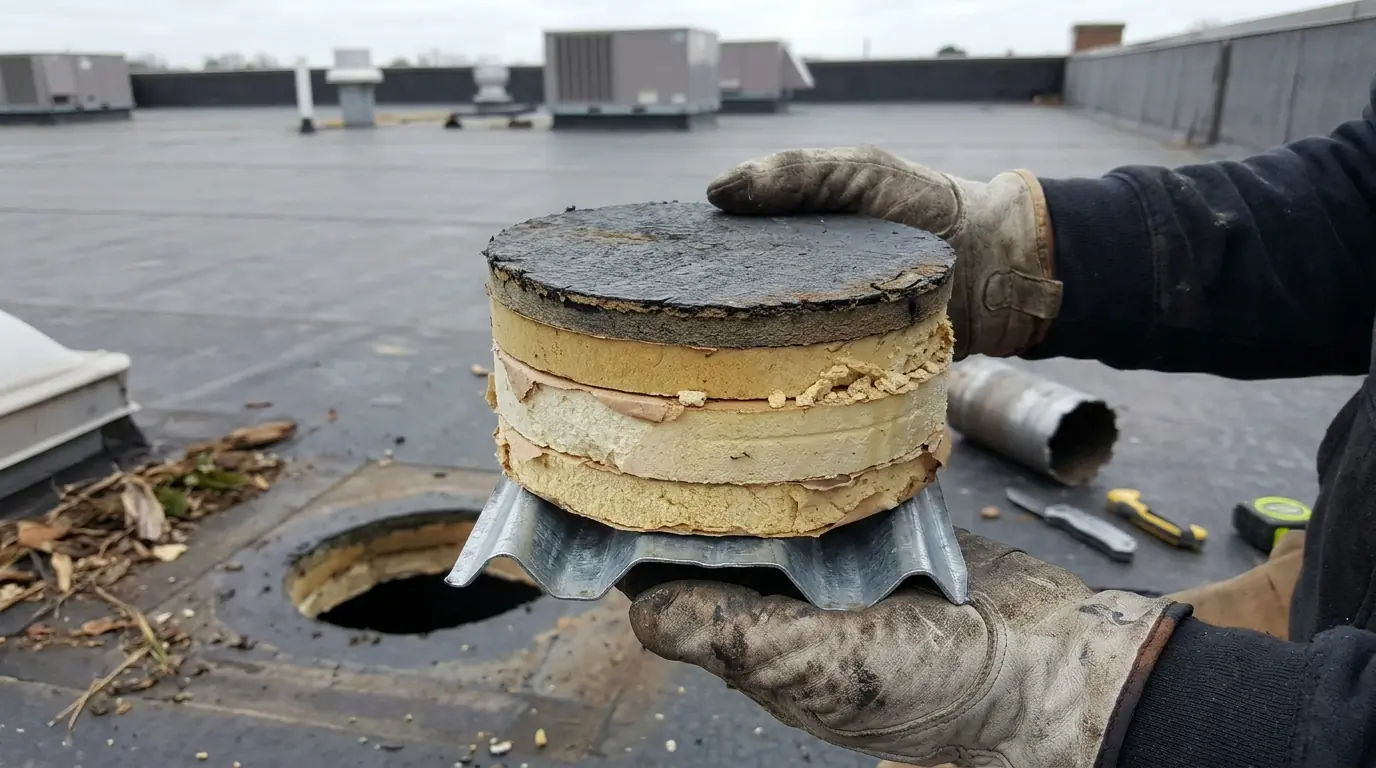
If the membrane feels soft, we cut a small inspection opening to see whether the insulation and decking are wet. Wet material has to come out, or the new patch will blister and fail.
Repair with matching materials
We clean and prime the area and repair with the same membrane family: EPDM tape and patch, heat-welded TPO, or torched or self-adhered modified bitumen. Failed wall flashings get new termination bars and sealant.
Drainage corrections
Clogged scuppers, undersized downspouts and debris dams get cleared or corrected, since most repeat leaks come back to drainage. Small low spots can sometimes be built up with tapered insulation during the repair.
Photo report and an honest outlook
You get photos of the before, the work in progress and the finished repair, plus our read on how much life the rest of the roof has left. If we think replacement is coming within a few years, we say so.
What flat roof repair typically costs around Dayton
These are typical Dayton-area ranges for residential and small commercial low-slope repairs. Your price depends on the membrane, the access and what we find under the surface.
| Job | Typical range | What it covers |
|---|---|---|
| Puncture, blister or small patch | $285 to $690 | One area, matched membrane, cleanup included |
| Seam rebuild or wall flashing repair | $540 to $1,380 | Up to about 20 linear feet of seam or flashing |
| Scupper, drain or edge metal repair | $465 to $1,190 | New scupper box or drain flashing, edge metal, sealant |
| Wet section tear-out and rebuild | $1,460 to $3,870 | Remove wet insulation and decking, rebuild, tie in new membrane |
| Same-day temporary patch or tarp | $245 to $635 | Stopgap to keep water out until the permanent repair |
These are typical 2026 Dayton-area ranges, not a quote; we give you a firm price once we've inspected the roof. See more on our Dayton roofing price guide.
- Membrane typeHeat-welded TPO and torch-applied modified bitumen need different equipment than EPDM, and old built-up roofs often need extra prep.
- AccessA porch roof outside a second-story window is quicker to reach than a three-story rowhouse roof with no hatch and a narrow side yard.
- Hidden water damageNobody can price rotted decking until it's opened up, so we show you photos before any added work goes ahead.
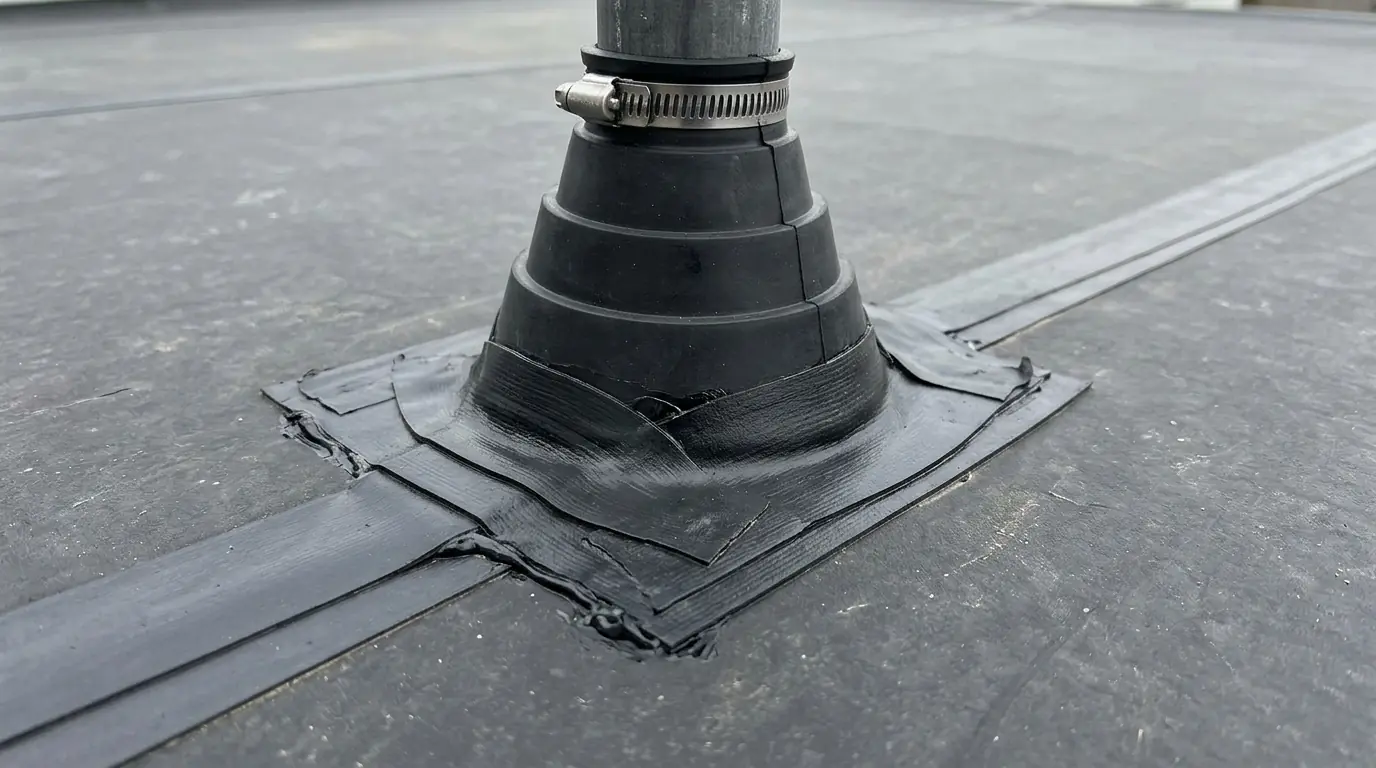
- PenetrationsVent stacks, skylights, HVAC lines and satellite mounts each add flashing time to a repair.
- SeasonSome adhesives and primers need warmer temperatures to cure, which can mean a temporary patch in January and a permanent repair when it warms up.
Repair or replace: when patching a flat roof stops making sense
A repair is the right call when the membrane is sound overall and the damage is limited to a few seams, one flashing or a puncture. We usually lean toward repair on roofs under about 15 years old, or on any roof where the insulation stays dry outside the leak area. A good repair on a healthy roof can buy you years.
Patching turns into a losing game when the same roof needs work every season, when a quarter or more of it feels soft, or when the membrane is brittle enough to crack as we work on it. At that point a full flat roof replacement with new tapered insulation usually costs less over the next decade than a string of repairs. Our guide to repairing or replacing an Ohio roof walks through the same thinking for any roof type.
- Repair: isolated leak, dry insulation, membrane still flexible
- Repair plus drainage fix: ponding in one spot, roof otherwise healthy
- Replace: widespread soft spots, two or more old layers, or leaks every year
Why porch roofs and additions leak where they meet the house
On a lot of Dayton homes, the low-slope roof came later: a 1950s kitchen bump-out, an enclosed back porch, a carport turned into a family room. The flat section ties into the main house at a wall, and that junction is the weak point. Siding gets installed over the flashing, brick mortar cracks behind it, or the membrane was simply turned up a few inches and caulked.
We fix these by opening the wall a course or two, running the membrane up properly, and installing counterflashing or a termination bar that sheds water over the top of it. Where a shingled main roof drains onto the flat section, we also look at whether a diverter or gutter is needed, so a whole slope of runoff isn't dumping onto one seam. If the step flashing on the main roof is part of the problem, our roof flashing repair work covers that side of the wall too.
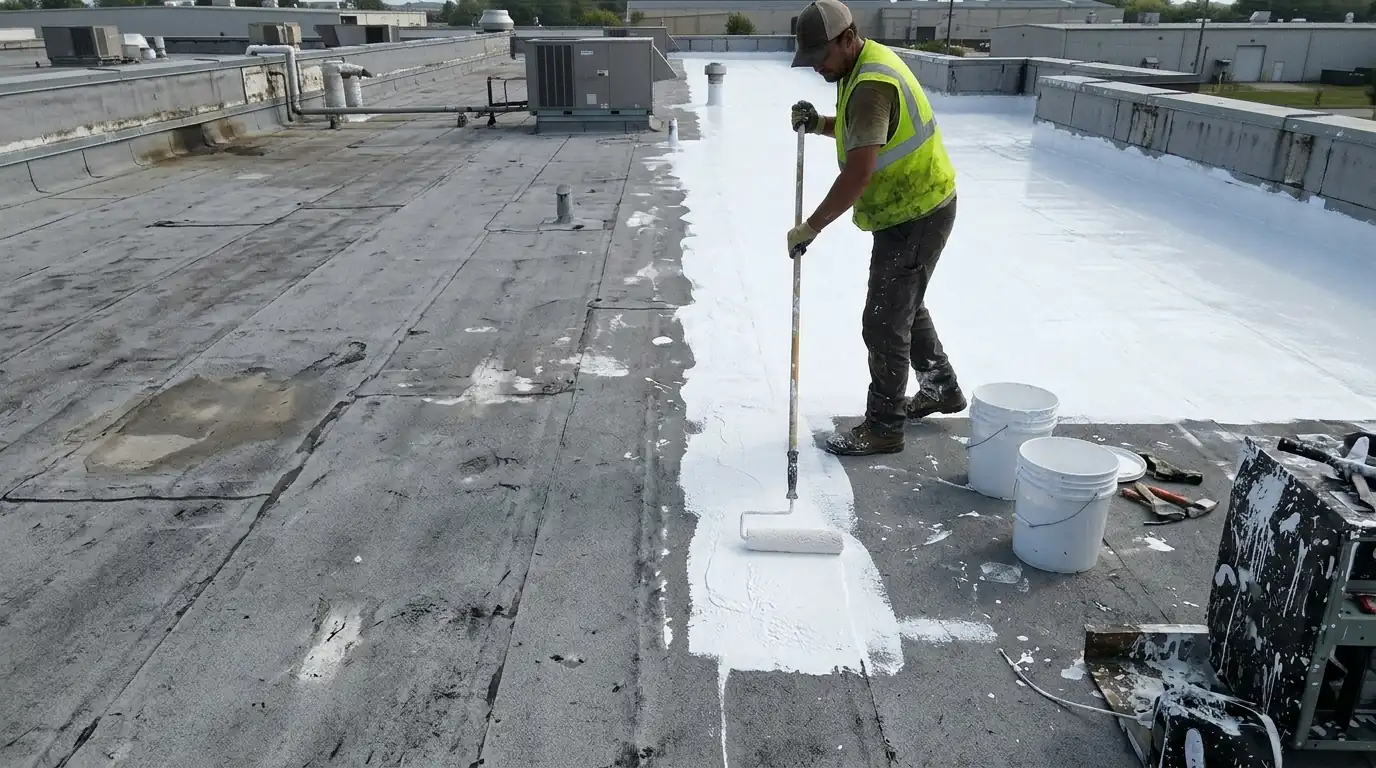
Flat roofs we repair across Dayton, from brick rowhouses to suburban ranches
Some of the oldest low-slope roofs in the city sit on the brick rowhouses and Italianate homes of the Oregon District and St. Anne's Hill. Many have shallow rear roofs hidden behind parapets, with built-up or modified bitumen layers going back decades, internal gutters, and scuppers that drain toward the alley. Access is tight on those lots, so we plan ladder placement and material staging before we show up.
Out in the post-war suburbs, the flat roofs are usually porch roofs, breezeways and room additions on ranches and split-levels, the kind you see all over Kettering. Dayton weather works against every one of them: freeze-thaw winters crack flashings, spring thunderstorms overwhelm small drains, and July sun cooks dark membranes. That's why we look past the stain and check the drainage on every visit, from the downspout at the bottom to the gutter or scupper box at the roof edge. A leak fixed without fixing the water path tends to come back by the next spring.
Where we do flat roof repair most often
These neighborhoods, suburbs and cities make up most of our flat roof repair calls. Each link opens the local page with its ZIP.
Questions about flat roof repair in Dayton
Can you patch a leaking flat porch roof in the middle of a Dayton winter?
Often, yes, though it may be a two-step fix. Many flat roof adhesives and primers need temperatures above about 40 degrees to bond properly. In a cold snap we put on a temporary patch or an emergency tarp that stops the water, then come back on a milder day for the permanent repair. Heat-welded TPO and torch-applied modified bitumen are more forgiving in the cold than EPDM adhesives.
Why does my flat roof leak only in heavy storms and not in light rain?
That pattern usually points to drainage rather than a hole in the field of the roof. When a scupper, drain or downspout can't keep up, water rises above a flashing or seam that stays dry in normal rain. We check outlet sizes, clear debris and measure flashing height at the walls. Fixing the overflow often solves what looked like a mystery leak.
Is it safe for me to walk on my rowhouse's flat roof to look for the leak?
We'd rather you didn't. Old built-up and rubber roofs over soft decking can give way, and most rowhouse roofs have no railing at the edge. If you can see the roof from a window, photos of ponding or lifted seams are helpful. Otherwise give us a call and our roofers will do the walking, with fall protection, and send you photos of everything.
Can an old tar and gravel roof be repaired, or does it have to be replaced?
Built-up tar and gravel roofs can be repaired, though it takes more prep. We scrape back the gravel, clean down to sound plies, and patch with compatible modified bitumen or built-up materials. If the plies are dried out and cracking across the whole surface, repairs tend to fail at the edges of each patch, and replacement becomes the better value.
Will a flat roof patch match my existing membrane's color and type?
We match the membrane type so the patch bonds correctly, which matters far more than color. EPDM is black, most TPO is white, and modified bitumen cap sheets come in a few granule colors. On an older roof the patch will look newer for a while, since weathered membranes fade, but on most porch and rear roofs nobody notices it from the ground.
How long should a flat roof repair last on a Dayton home?
A properly adhered repair on an otherwise healthy roof should last as long as the membrane around it. When repairs fail early, it's usually because wet insulation was left underneath, the drainage problem wasn't fixed, or the patch material didn't match. We note the condition of the rest of the roof in your photo report so you know what to expect.
Other roofing work that often goes with this job
Product lines we install on roofs around Dayton include shingles from GAF, Owens Corning and CertainTeed, metal from Englert, membranes from Carlisle SynTec and skylights from VELUX.
Need flat roof repair today?
Call any hour. A person answers, asks a few questions and sets a time for a roofer to come out.