Storm Damage Roof Repair in Dayton, OH, From Claim to Fix
After a storm, we walk the whole property, roof, gutters, siding and attic, and hand you a dated photo report that separates storm damage from ordinary wear. A person answers 24/7 while the claim clock is running.
- Answered 24/7
- Photo report on every visit
- Dayton and the Miami Valley
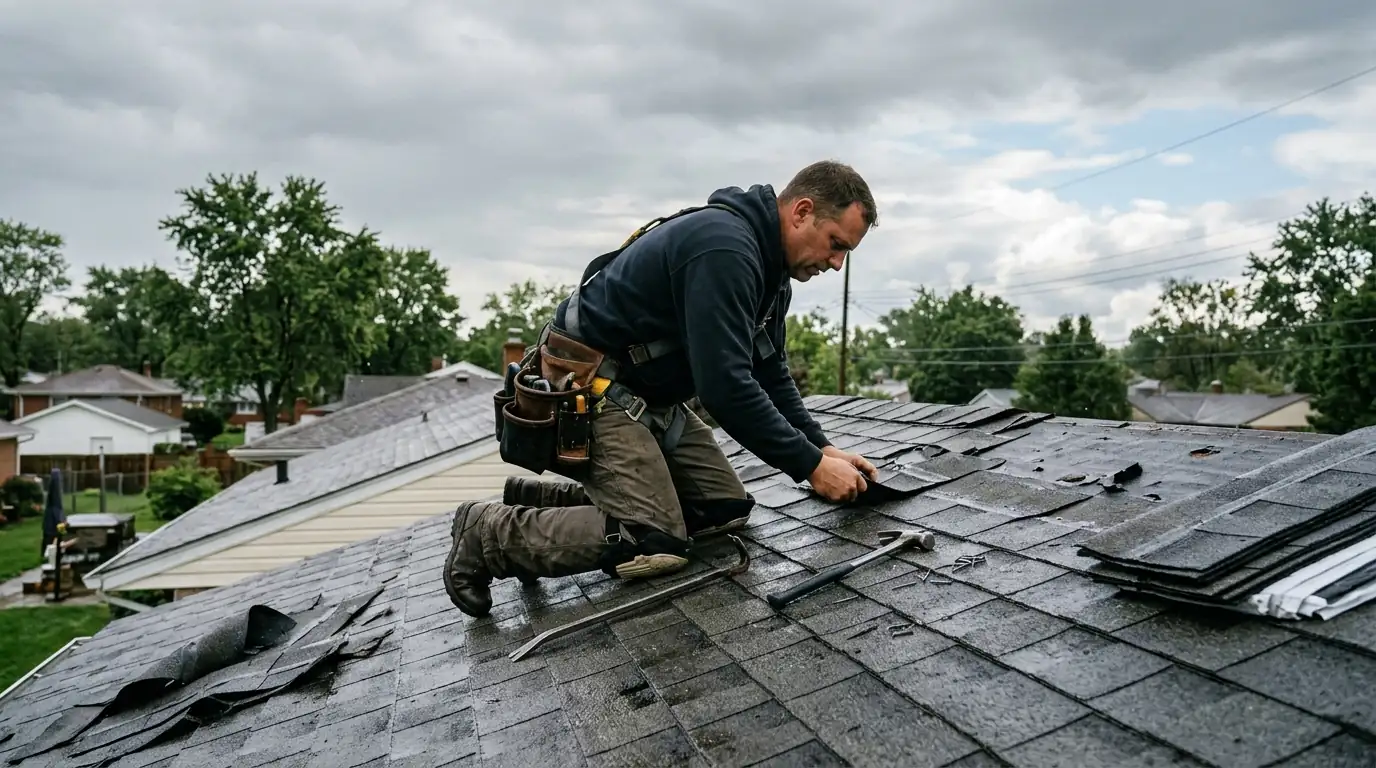
Storm damage repair on a Dayton-area home ranges widely: $560 to $2,870 for targeted repairs, and roughly $11,850 to $23,640 when an approved claim covers full replacement. The work starts with a slope-by-slope inspection and photo report, continues with an adjuster meeting if you file, and ends with repairs that match the approved scope. Your share is typically the policy deductible.
A big storm leaves two problems behind. One is the physical damage: shingles torn or bruised, gutters dented, vents cracked, sometimes a hole or a limb on the roof. The other is paperwork, because most storm repairs run through a homeowners claim, and the claim depends on evidence. Insurers want to see what the storm did, separate from what twenty Ohio winters did on their own. Without that separation, a legitimate claim can stall for weeks.
We handle both halves. Our crew inspects every slope and the attic, photographs the damage with a scale reference, and writes it up in plain language. If the damage is minor, we'll tell you it's probably below your deductible and quote a straight repair. If it's significant, we'll walk you through the claim and meet your adjuster on the roof. For storms that were mainly hail or mainly wind, our pages on hail roof repair and wind damage repair go deeper into those specific patterns.
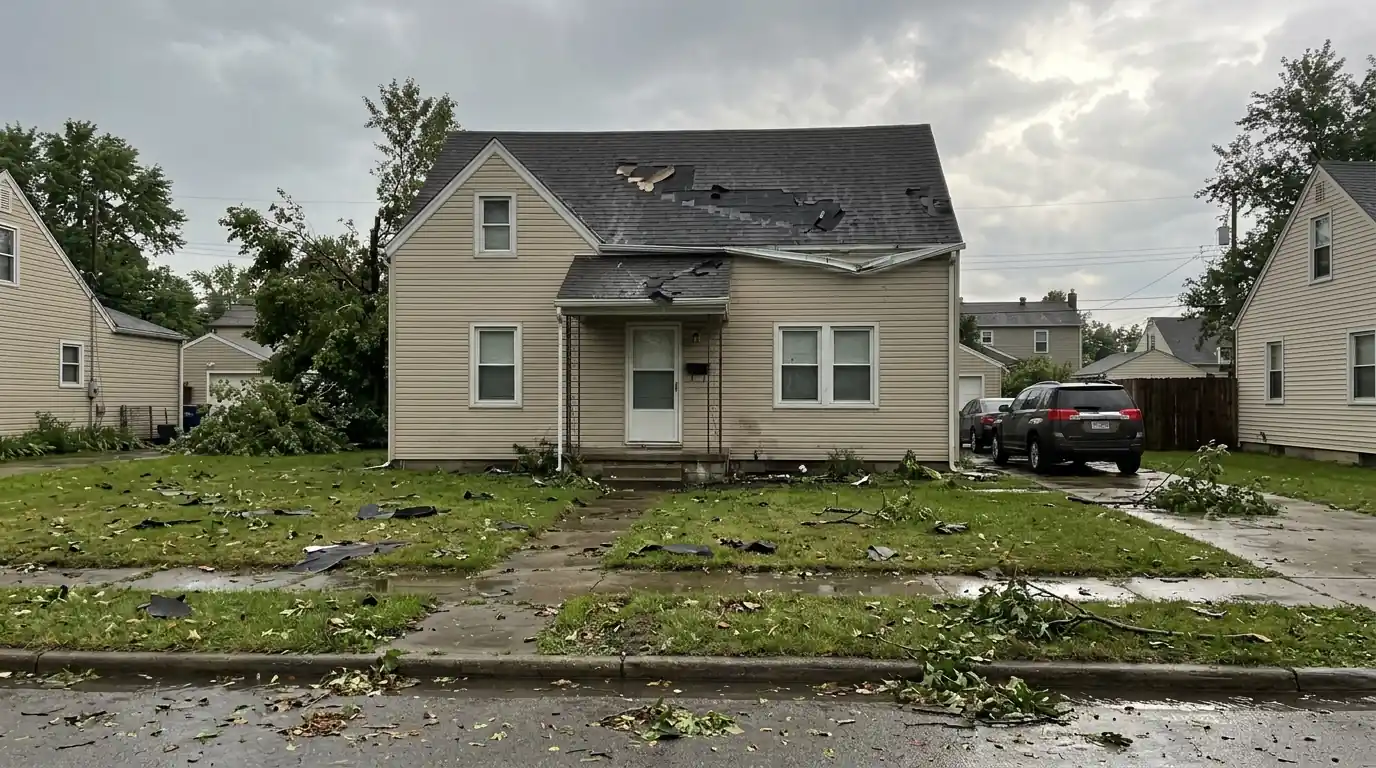
After a Miami Valley storm: damage you can spot from the ground
Stay off the roof. Most storm evidence shows up from the yard, the driveway or a window, and it tells us where to look first.
Shingle pieces or granules in the yard
Torn tabs on the lawn or a fresh gray-black layer of grit at the downspout outlets mean the storm took material off the roof.
Dented gutters, downspouts or vent caps
Soft metal shows impacts clearly. If the gutters took hits, the roof above them almost certainly did too.
Damage to siding, screens or the AC unit
Split vinyl, torn window screens or bent condenser fins help establish storm direction and intensity for the claim.
Lifted or uneven shingle lines
Rows that no longer lie flat, or a ridge that looks ragged, often mean the seal strips let go in the wind.
New stains or drips inside after the storm
Any fresh water inside after a storm is a sign the roof was breached, even if nothing looks wrong from the ground.
Neighbors getting inspections or new roofs
Storms rarely pick one house. If several homes on your street are filing, it's worth having your roof checked too.
How we document storm damage and carry it through your claim
Good storm work depends on evidence gathered early and organized clearly. This is the sequence our roofers follow after a storm call.
Secure anything open
If there's active water or an opening, we dry it in first. Insurers expect reasonable steps to prevent further damage, and a tarp is part of that.
Inspect every slope and elevation
We walk each slope, check the ridge, valleys and penetrations, and look at gutters, siding, windows and outbuildings. Storm damage on a detached garage or shed counts too.
Photograph with scale and direction
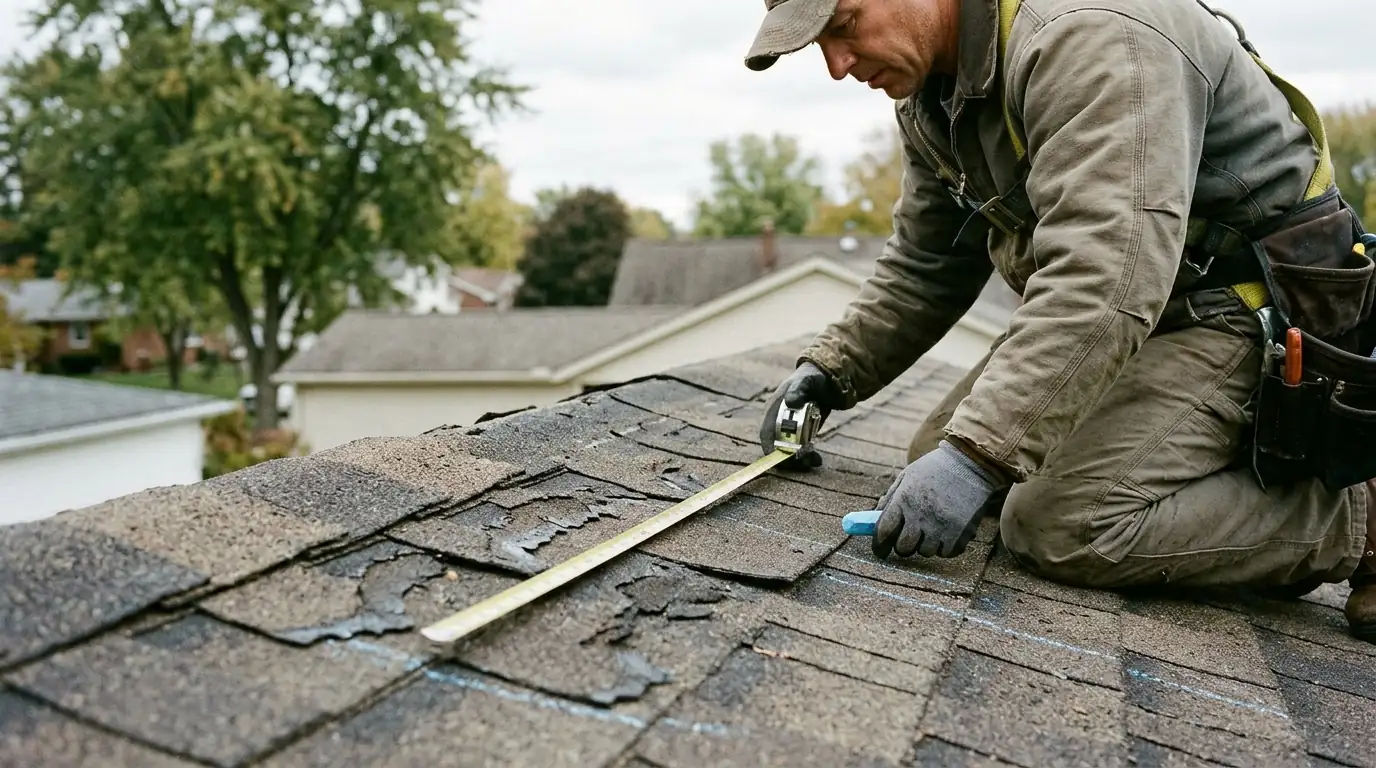
Each damaged area gets close-up photos with a tape or chalk mark for scale, plus wide shots showing which slope faces which direction.
Write a plain-language damage report
We separate storm damage from pre-existing wear, so you know what a claim can reasonably include and what it can't. That honesty saves arguments later.
Meet the adjuster on site
If you file, we can be there when the adjuster inspects. We point out what we found and answer questions about materials and repair methods.
Repair to the approved scope
Once the claim settles, we schedule the work, order matching materials and complete the repair or replacement. Your final photo report closes out the file for the insurer and your records.
What storm damage roof repair runs in Dayton, with and without a claim
Storm repairs range from a few shingles to a full roof. These are typical figures on Dayton-area homes; insurance covers covered damage minus your deductible.
| Job | Typical range | What it covers |
|---|---|---|
| Targeted storm repair | $560 to $2,870 | Replacing damaged shingles, vents, ridge and flashing on affected areas |
| Roof plus gutter storm repair | $890 to $3,140 | Roof repairs with damaged gutter sections and downspouts replaced |
| Full replacement on an approved claim | $11,850 to $23,640 | Tear-off, new underlayment, shingles, flashing and vents on a typical home |
| Post-storm inspection and photo report | $145 to $295 | Every slope, attic and exterior checked, written report for your files |
These ranges are typical for Dayton-area homes in 2026 and are not quotes or coverage promises; your insurer decides what a claim covers. See more on our Dayton roofing price guide.
- Your policy and deductibleMany Ohio policies use a percentage deductible for wind and hail, which can change your out-of-pocket share considerably.
- Extent across slopesDamage on one slope may be repaired; damage on most slopes often leads to replacement in the approved scope.
- Shingle matchingIf the existing shingle is discontinued, matching a repair can be difficult, and that becomes a conversation with the adjuster.
- Other damaged componentsGutters, skylights, chimney caps and siding add to the total and are usually part of the same claim.
- Code items at replacementIce barrier at the eaves, drip edge and proper ventilation may be required when a roof is replaced, and some policies cover those code upgrades.
Meeting the adjuster: what we bring up on the roof
The adjuster visit is where most storm claims are decided, and it usually lasts less than an hour. Adjusters see a lot of roofs after a big storm, so clear evidence helps everyone. We show up with our photo report printed or on a tablet, chalk to mark damaged areas, and the details of your existing roof: shingle brand and line if we can identify it, number of layers, and age.
We don't argue coverage. That's between you and your insurer. What we do is make sure the adjuster sees every damaged area, including the back slopes and the garage roof that are easy to skip. If the approved scope misses something we documented, we'll send the photos so you can ask for a review.
- Dated photos of each damaged slope with scale references
- Notes on soft metal damage, gutters and other exterior items
- Shingle identification and availability for matching
- Attic photos showing any water entry from the storm
Storm crews and door knockers: questions to ask before you sign
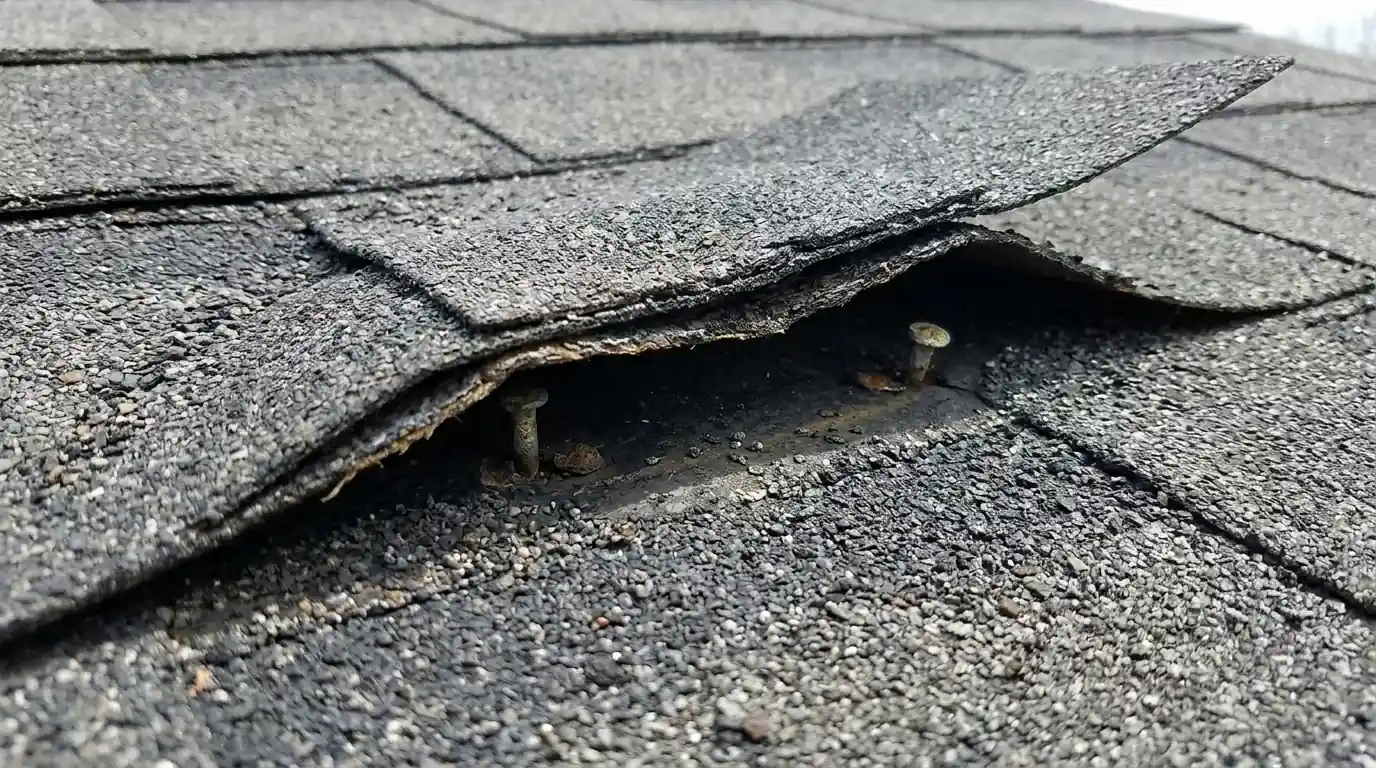
After every major Dayton storm, out-of-area crews arrive and start knocking on doors. Some are fine. Others collect deposits, rush through roofs in a week and are gone by the time a warranty question comes up. Before you sign anything, ask where their office is, who you call in two years if something leaks, and whether they will pull the permit your city requires.
Be cautious with anyone who offers to waive or cover your deductible, since that can amount to insurance fraud and puts you at risk too. Read any paper carefully before signing; some contracts hand the contractor control of your claim. Our step-by-step guide to Ohio storm claims covers the timeline in more detail. You're never obligated to use the contractor who knocked first, and a reputable roofer will give you time to read the paperwork, call your agent and get a second opinion before any work starts.
The storms that shaped Dayton roofing, from 2008 to Memorial Day 2019
Dayton sits in a storm corridor. In September 2008, the remnants of Hurricane Ike crossed Ohio with gusts strong enough to peel shingles off thousands of Miami Valley roofs and drop trees across power lines for days. In June 2012, a derecho swept through with similar results. Spring hail is close to an annual event somewhere in the region, and summer thunderstorms bring straight-line winds that rarely make the news but still strip ridge caps.
The Memorial Day 2019 tornado outbreak was the worst in recent memory, tearing through Trotwood, Harrison Township, Old North Dayton, Northridge, Riverside, Huber Heights and parts of Beavercreek. Some homes lost entire roofs; many more had damage that wasn't obvious until leaks showed up months later. That's a lesson worth keeping: a storm that seems to have missed you may have done quiet damage, and most policies set a deadline for reporting it. A post-storm check costs far less than finding out too late.
Where we do storm damage roof repair most often
These neighborhoods, suburbs and cities make up most of our storm damage roof repair calls. Each link opens the local page with its ZIP.
Questions about storm damage roof repair in Dayton
How long do I have to file a roof claim after a storm in Ohio?
It depends on your policy, not a single state rule. Many homeowners policies set a deadline measured from the date of loss, often one year, and some are shorter for wind and hail. Waiting also makes it harder to prove which storm caused the damage. Check the conditions section of your policy, or ask your agent, and get the roof inspected soon after the storm.
Can you be at my house when the insurance adjuster inspects the roof?
Yes, and we recommend it. Tell us the appointment time as soon as you have it. Our crew lead brings the photo report, walks the roof with the adjuster and points out every damaged area we documented, including spots that are easy to miss. We stay factual and leave coverage decisions to you and your insurer.
What if the adjuster approves a repair but you believe the roof needs replacement?
We'll explain our reasoning with photos, such as damage spread across most slopes or a discontinued shingle that can't be matched. You can ask your insurer for a review or a second inspection and share our documentation. Sometimes the original decision stands, and in that case we'll do the approved repair properly. We won't inflate damage to push a replacement.
Should my gutters and siding be checked along with the roof after a storm?
Yes. Gutters, downspouts, siding, window screens and even the AC condenser show storm impacts clearly, and they help prove the storm's intensity and direction. They're usually part of the same claim. We inspect the whole exterior on a storm call and note any gutter damage or siding damage in the same report, so nothing gets left off.
Does a storm roof replacement in Dayton need a building permit?
A full replacement generally does, while small repairs usually don't. The rules depend on where you live: the City of Dayton, each suburb and the county building department for unincorporated townships all set their own requirements. We check the jurisdiction for your address, pull the permit when one is required, and include the permit cost in the price we give you, so it shows up in the claim paperwork.
Is the damage on my detached garage roof covered in the same storm claim?
Usually detached structures fall under a separate section of a homeowners policy with its own limit, but they're often reported in the same claim. We inspect garages, sheds and other outbuildings during a storm visit and photograph them separately, so the adjuster can see each structure clearly. Ask your agent how your policy handles other structures.
Other roofing work that often goes with this job
Hail Damage Roof Repair
Roof Repair & Storm Damage
See hail damage roof repairWind Damage Roof Repair
Roof Repair & Storm Damage
See wind damage roof repairInsurance Claim Roof Inspection
Inspections, Ventilation & Skylights
See insurance claim roof inspectionEmergency Roof Tarping
Roof Repair & Storm Damage
See emergency roof tarping
Product lines we install on roofs around Dayton include shingles from GAF, Owens Corning and CertainTeed, metal from Englert, membranes from Carlisle SynTec and skylights from VELUX.
Need storm damage roof repair today?
Call any hour. A person answers, asks a few questions and sets a time for a roofer to come out.