Roof Decking Replacement in Dayton, OH
We replace rotted, soft or delaminated roof sheathing, usually during a tear-off, and photograph every sheet and board we change so you see exactly what you paid for. Someone answers our phone 24/7 if a soft spot turns into a leak.
- Answered 24/7
- Photo report on every visit
- Dayton and the Miami Valley
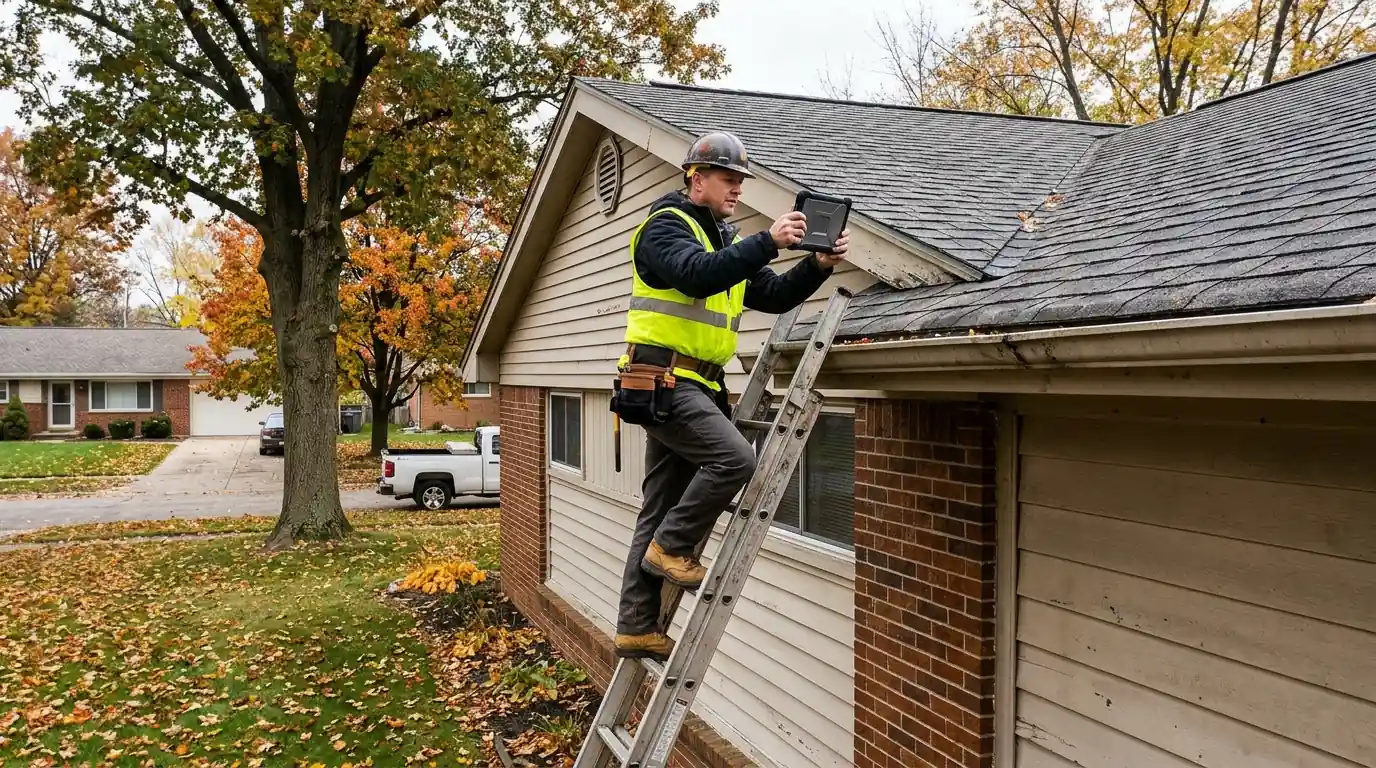
Roof decking replacement in the Dayton area typically costs $85 to $145 per 4 by 8 sheet installed during a re-roof, depending on thickness and access. Full redecking of an average house runs about $4,280 to $7,960. We only replace boards that are rotted, soft or unfit to hold nails, and we show you photos of each one before the new shingles go on.
Decking is the layer of plywood, OSB or boards that your shingles nail into. Nobody sees it, which is why problems there go unnoticed for years. A slow leak at a chimney, a bathroom fan venting into the attic, or an attic that can't breathe will each soak the sheathing a little at a time until it softens, delaminates or rots through. Then shingles stop holding, nails pull out in the wind, and the roof feels spongy underfoot.
Most decking work happens during a roof replacement, once the old shingles are off and every sheet can be seen and walked. We mark damaged sections, photograph them and cut them out to the nearest rafters, then install new sheathing with proper spacing and nailing. We don't replace sound decking just to raise a bill, and we don't cover rotten boards with new shingles to keep a price low. Either mistake shows up later, and we'd rather not leave you with one.
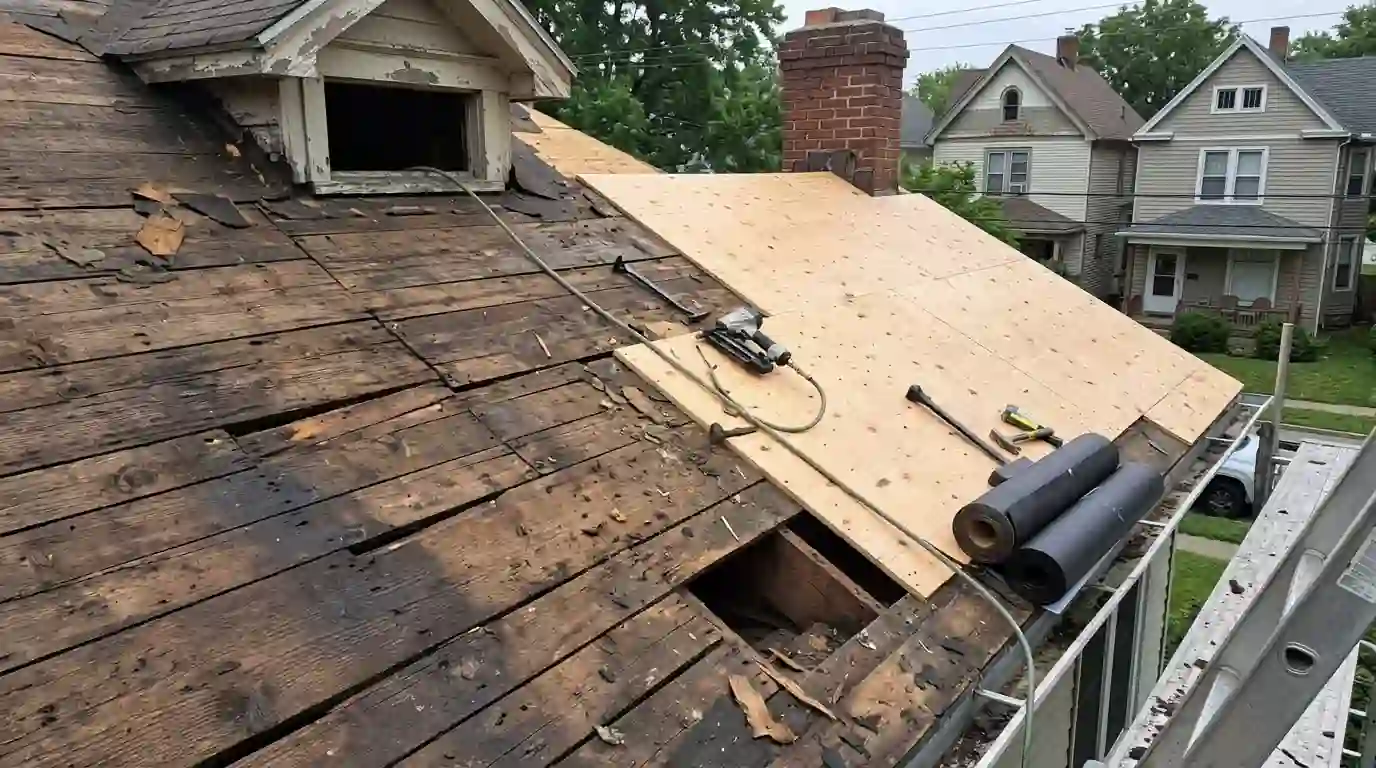
Plank boards, plywood and OSB on Dayton-area roofs
The decking under your shingles depends a lot on when the house was built. Homes from before roughly 1950 usually have plank decking: 1x6 or 1x8 boards nailed across the rafters, sometimes with gaps between them. Some started life as spaced boards under wood shingles and later got asphalt over the top. Postwar homes moved to plywood, often thin by today's standards, and homes from the 1980s onward commonly have OSB.
Each has its own failure pattern. Plank decking is often still strong, but gaps wider than about a quarter inch and split boards give shingle nails nothing to grab. In those cases, overlaying sound boards with plywood can be smarter than tearing them out. Old 3/8 inch plywood sags between rafters on wider spans. OSB swells at the edges when it gets wet repeatedly, and those swollen edges telegraph through new shingles as ridges. We recommend the fix that suits the existing deck, not the same answer for every house.
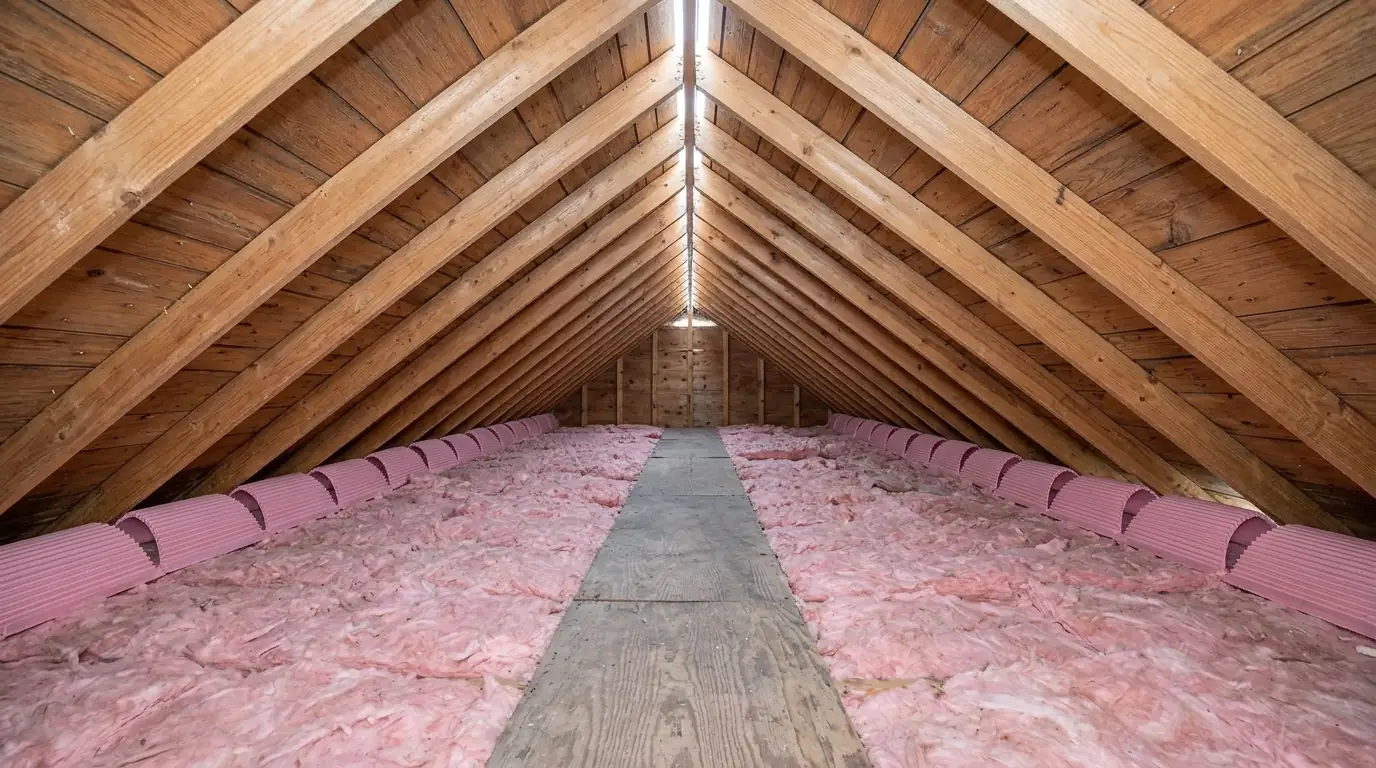
Why rotted decking keeps coming back if the cause stays
New sheathing will rot just like the old one if the source of moisture is still there. The most common cause we find around Dayton isn't a dramatic leak. It's condensation from attics with too little ventilation, bathroom and kitchen fans dumping humid air into the attic, or missing baffles that let insulation block the soffits. In winter, warm moist air from the house meets cold decking and condenses, then drips back down or soaks into the wood.
That's why the attic check comes first and why our estimate covers the cause, not just the wood. Sometimes the fix is rerouting a fan duct outside through a proper roof cap. Other times it's opening soffits and adding a continuous ridge vent as part of attic ventilation work. When the rot sits around a chimney or plumbing pipe, the flashing gets redone with new metal. For more on spotting the attic side early, read our article on failing attic ventilation.
Reading the decking line on a roofing estimate before you sign
Decking is the one part of a re-roof nobody can price exactly in advance, which makes it the line item most open to surprises. Some estimates include a few sheets and say nothing about what happens past that number. Others leave decking out entirely and add it later at whatever rate the crew names on tear-off day. Neither is fair to you.
Our estimates state a per-sheet price for plywood or OSB, a per-foot price for plank boards, and a likely range based on what we saw in the attic. On tear-off day, our crew lead marks and photographs every damaged section, and we call you if the count runs past the range we discussed. You see the same photos we do, so the final invoice has nothing hidden in it. Ask any roofer you're comparing for those same numbers.
- A per-sheet price for sheathing, in writing
- A per-foot price for plank board replacement
- Photos of every replaced sheet before the roof is closed
- A call before work exceeds the estimated range
What roof decking replacement typically costs around Dayton
Decking is usually priced per sheet, so the final number depends on what we find once the old roof comes off. These ranges are typical for 2026.
| Job | Typical range | What it covers |
|---|---|---|
| Replace damaged sheathing, per 4x8 sheet | $85 to $145 | 7/16 inch OSB or 1/2 inch plywood, installed during re-roof |
| Full redeck, average 1,800 to 2,200 sq ft roof | $4,280 to $7,960 | Remove old deck, new sheathing, H-clips |
| Replace plank boards, per linear foot | $7 to $14 | 1x6 or 1x8 boards on older homes |
| Plywood overlay over sound plank decking | $3,860 to $7,140 | Solid nailing surface over boards for a typical house |
| Sister a damaged rafter | $265 to $585 | Per rafter, depends on length and access |
These are typical Dayton-area ranges and depend on what we find during tear-off; we give you per-sheet pricing in writing before work begins. See more on our Dayton roofing price guide.
- Extent of damageA few sheets near a chimney cost little. Widespread rot from years of condensation adds up fast.
- Sheathing type and thickness5/8 inch plywood costs more than 7/16 inch OSB, and matching odd thicknesses on older homes takes extra work.
- Plank versus sheet deckingBoard decking on older homes takes more cutting and fitting than modern sheets.
- Roof pitch and heightSteep or tall roofs slow the handling of full sheets.
- Framing repairsCracked or rotted rafters add carpentry before new sheathing goes down.
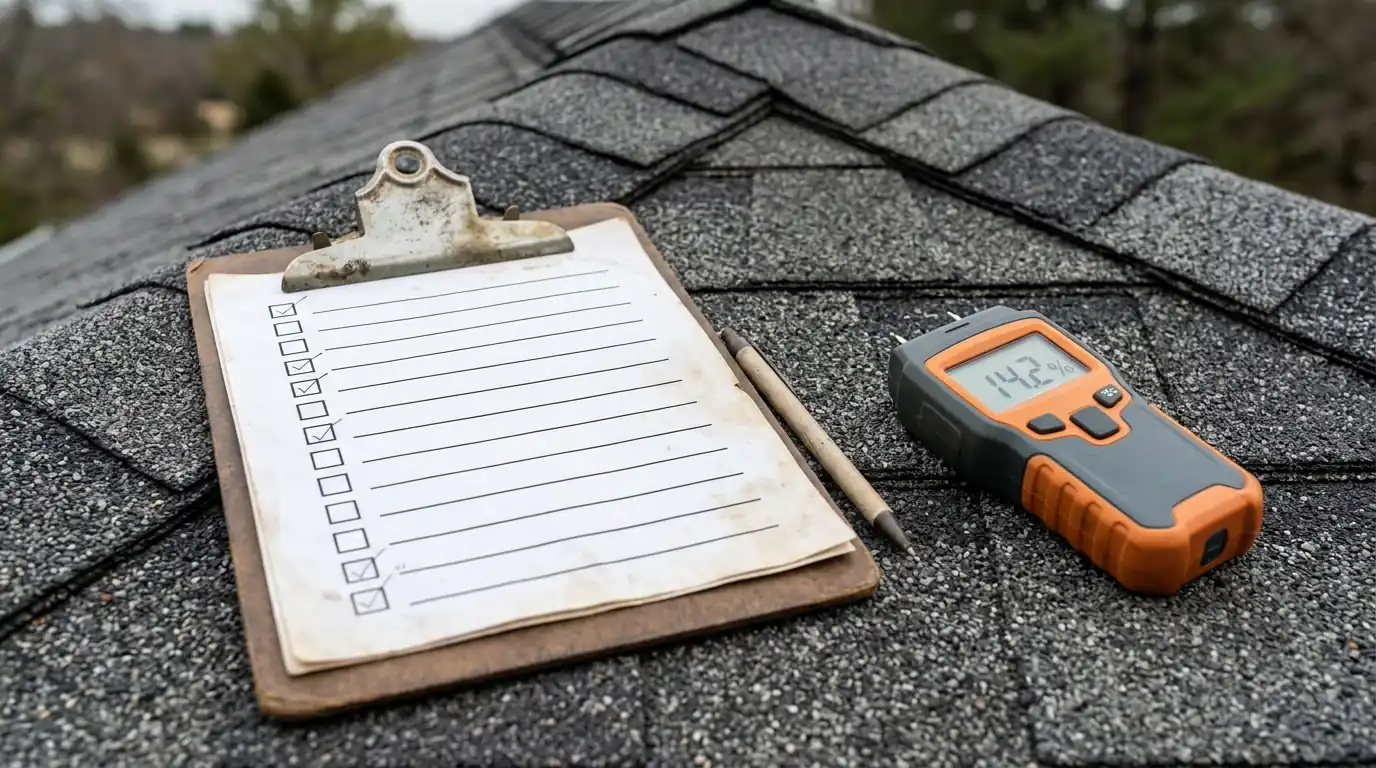
How we find, cut out and replace bad sheathing
Decking work is mostly careful judgment during tear-off. Here's how we handle it so you're never guessing about what went on your roof.
Check from the attic first
Before tear-off, we look at the underside of the decking for stains, rot and delamination, and we probe suspicious areas. That gives you a realistic estimate of how many sheets may be needed.
Tear off and walk every sheet
Once the old shingles and underlayment are off, we walk the whole deck and test soft spots. Damaged areas get marked with paint so you can see them clearly in our photos.
Photograph before cutting
Every sheet or board we plan to replace gets photographed in place with a note on why. You see the photos before we close the roof, and the count matches your invoice.
Cut back to solid framing
We cut damaged sheathing back to the center of the nearest rafters so new sheets have full bearing. If a rafter is cracked or rotted, we sister it before going any further.
Install new sheathing correctly
New plywood or OSB goes in with an expansion gap between sheets, H-clips where the span calls for them and the right nail pattern. We match thickness so the roof plane stays flat.
Fix the cause and close the roof
We address the leak or ventilation problem that rotted the wood, then install underlayment, ice and water membrane at the eaves, and the new roofing over the repaired deck.
Clues that the decking under your shingles is failing
Decking problems often show up first as shapes and textures on the roof, or as stains in the attic. Here's what to look for.
Sags between rafters
A dip in the roof plane between framing members often means the sheathing has weakened or was too thin for the span.
A spongy feel underfoot
If a roofer or inspector notes soft spots when walking, the wood below is wet, delaminated or rotted.
Daylight through the attic boards
Light showing through gaps in plank decking or around sheets often means rot at the edges or missing material.
Dark, stained or moldy sheathing
Black staining near the ridge or eaves usually points to long-term condensation from poor attic ventilation.
Nails backing out again and again
When nails keep pushing up through shingles, the wood around them may be too soft or brittle to grip.
Wavy shingle lines
Ripples across the roof often trace back to swollen OSB edges or uneven boards underneath.
Older Dayton neighborhoods where decking repairs come up often
Plank decking is the norm in Dayton's older neighborhoods. Houses in Belmont, Walnut Hills and South Park often have original boards under two or more generations of roofing, and when we tear off, we usually find a mix of sound boards and rotted sections near chimneys, valleys and eaves. Roofs that once carried wood shingles sometimes show wide gaps that need an overlay.
In the postwar suburbs, thin plywood is the more common issue. Ranches in Huber Heights and Kettering often have long, low runs where 3/8 inch sheathing has sagged after decades of snow loads and summer heat. Our freeze-thaw cycles make every small leak worse, since water that soaks into wood expands when it freezes and loosens the fibers. Ohio's residential code allows no more than two layers of shingles, so homes that already have two come down to the deck at replacement, which is when we see the wood clearly.
Where we do roof decking replacement most often
These neighborhoods, suburbs and cities make up most of our roof decking replacement calls. Each link opens the local page with its ZIP.
Questions about roof decking replacement in Dayton
How do you estimate how many sheets of decking my roof needs before tear-off?
We can't know exactly until the old roof is off, but the attic tells us a lot. We check the underside of the sheathing for stains and rot and probe soft areas. Our estimate gives a likely range and a per-sheet price, and we photograph every sheet we replace so the final count is documented.
Can new shingles go over decking that's only a little soft?
Not in good conscience. Soft decking can't hold nails properly, so shingles over it are more likely to blow off or leak, and many manufacturer warranties require a sound deck. We replace soft areas before installing new roofing. If the issue is only slight flexing between rafters, H-clips or an overlay may solve it.
Should old plank decking be torn out or covered with plywood?
If the boards are mostly sound, a plywood or OSB overlay fastened through the boards into the rafters gives a solid surface without the cost of removal. If many boards are rotted or the gaps are very wide, removing them and decking fresh is better. We decide based on what we find, and we show you photos.
Is OSB or plywood better for redecking a Dayton roof?
Both work when installed correctly. Plywood handles occasional wetting a bit better and dries faster, while OSB is more consistent from sheet to sheet and costs less. On roofs with past condensation problems or low slopes, we lean toward plywood. Either way, good attic ventilation matters more than the panel type.
Does homeowners insurance pay for rotted roof decking?
Usually not when the rot comes from long-term leaks, condensation or age, since most policies exclude gradual damage. Decking broken by a fallen tree or a sudden storm event may be covered as part of that claim. Check your policy, and we'll document the cause in photos either way so the record is clear.
How much time does decking replacement add to a re-roof?
A handful of sheets adds an hour or two. Widespread replacement or a full redeck can add a day on a typical house. We keep the roof covered with underlayment as we go, so the house is never left open overnight, and we plan tear-off sections around the weather forecast.
Other roofing work that often goes with this job
Product lines we install on roofs around Dayton include shingles from GAF, Owens Corning and CertainTeed, metal from Englert, membranes from Carlisle SynTec and skylights from VELUX.
Need roof decking replacement today?
Call any hour. A person answers, asks a few questions and sets a time for a roofer to come out.