Chimney Repair in Dayton, OH Above the Roofline
We climb up and photograph all four sides of your chimney, the crown and the cap before recommending anything, because most chimney leaks start at the top. Call any hour, and a person answers 24/7.
- Answered 24/7
- Photo report on every visit
- Dayton and the Miami Valley
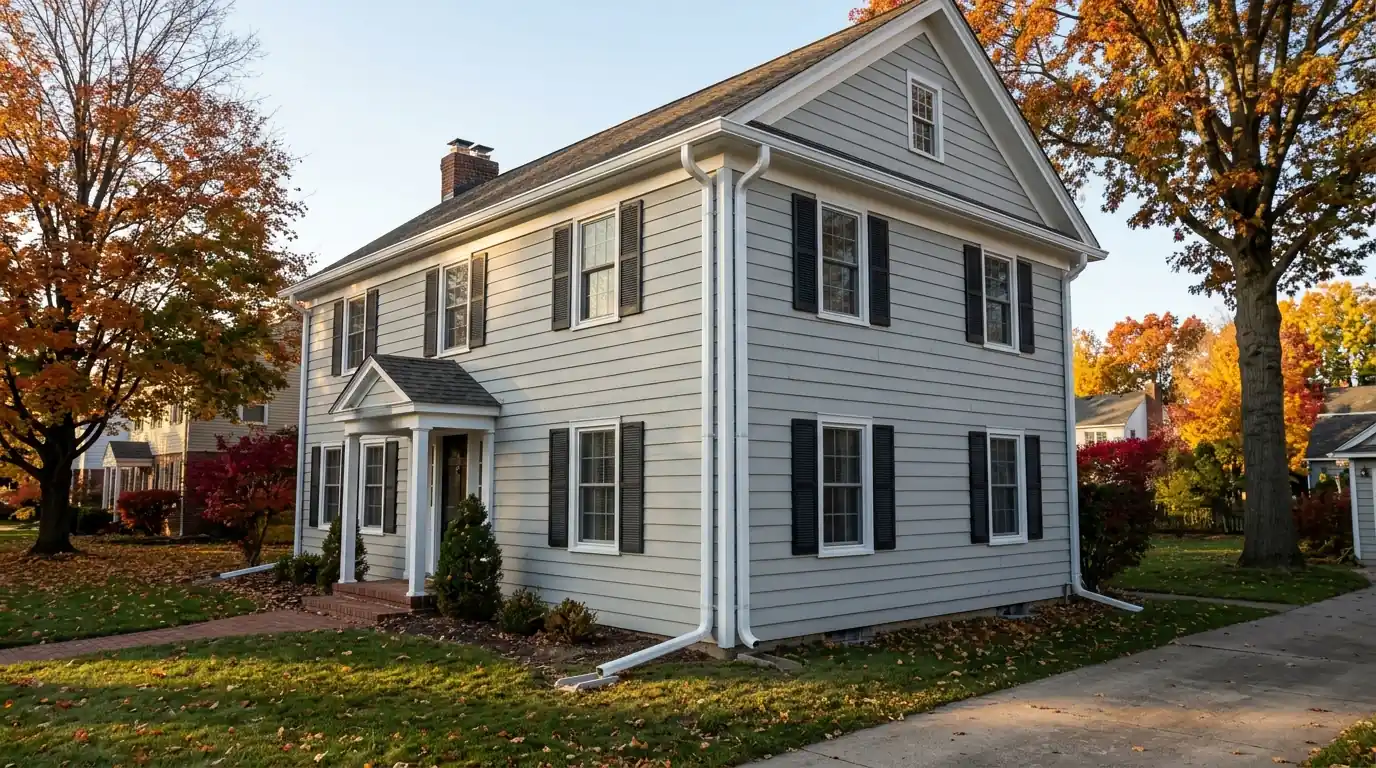
Chimney repair in the Dayton area typically runs $235 to $485 for a stainless single-flue cap, $585 to $1,460 to rebuild a cracked crown, and $645 to $1,780 to tuckpoint the stack above the roof. Rebuilding the top courses usually costs $1,340 to $3,860. Work starts with a rooftop inspection of crown, cap, mortar, brick and flashing, followed by repairs matched to what failed.
A chimney is a brick tower sticking up through your roof, exposed on all four sides to rain, wind and every freeze-thaw cycle a Dayton winter brings. Water gets in from the top through a cracked crown or missing cap, from the sides through porous brick and eroded mortar joints, and at the base where the chimney meets the shingles. Homeowners usually notice the result inside, as a stain on the ceiling beside the chimney, a damp smell in the fireplace, or flaking plaster on the chimney wall in the attic.
Most people assume a chimney leak is the flashing. Sometimes it is, and our chimney flashing repair page covers that work. But we find just as many leaks that start higher up, where water soaks through the masonry and runs down inside the chimney to exit at the roofline. Fixing the flashing on a chimney with a cracked crown only moves the leak. We look at the whole stack from crown to base, explain what failed and why, and repair it in the right order.
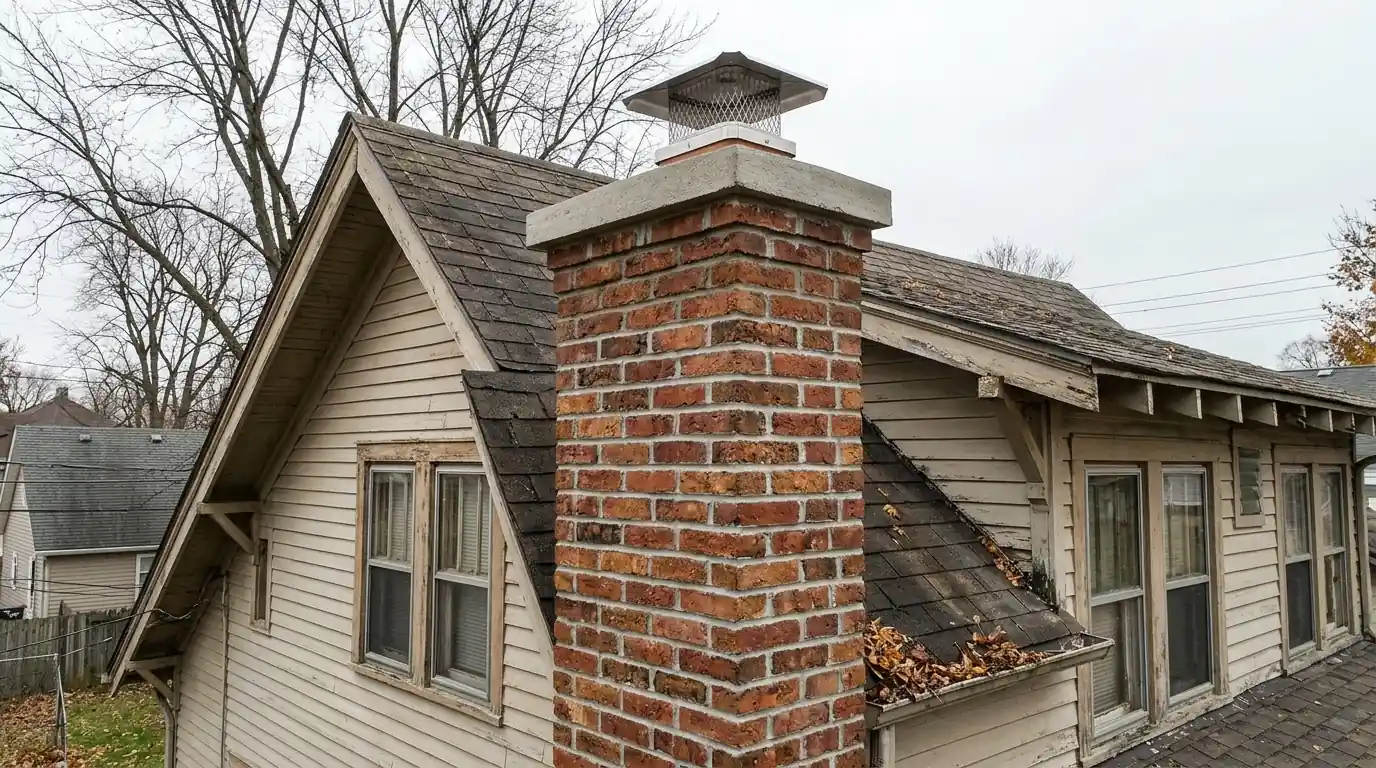
Crown, cap and wash: what keeps water out of the top of the chimney
The top of a chimney takes more direct weather than any other part of the house. Many older Dayton chimneys don't have a true crown at all. Instead, they have a mortar wash, a sloped layer of ordinary mortar troweled over the top course of brick. Mortar isn't made for that job. It shrinks, cracks within a few winters, and sends water straight into the brick below.
A proper crown is poured with a concrete mix, overhangs the brick on all sides by an inch or more, and has a drip edge cut underneath so water drops off instead of running down the face. It also leaves a small expansion gap around the flue tile so the two can move independently. A stainless cap over the flue keeps rain out of the chimney's interior and keeps birds, squirrels and raccoons from moving in. Together, crown and cap do more to stop chimney leaks than any sealant.
- Mortar wash: cheap, cracks early, common on older homes
- Poured crown with overhang: the durable fix
- Crown coating: buys time on a crown that's sound but lightly cracked
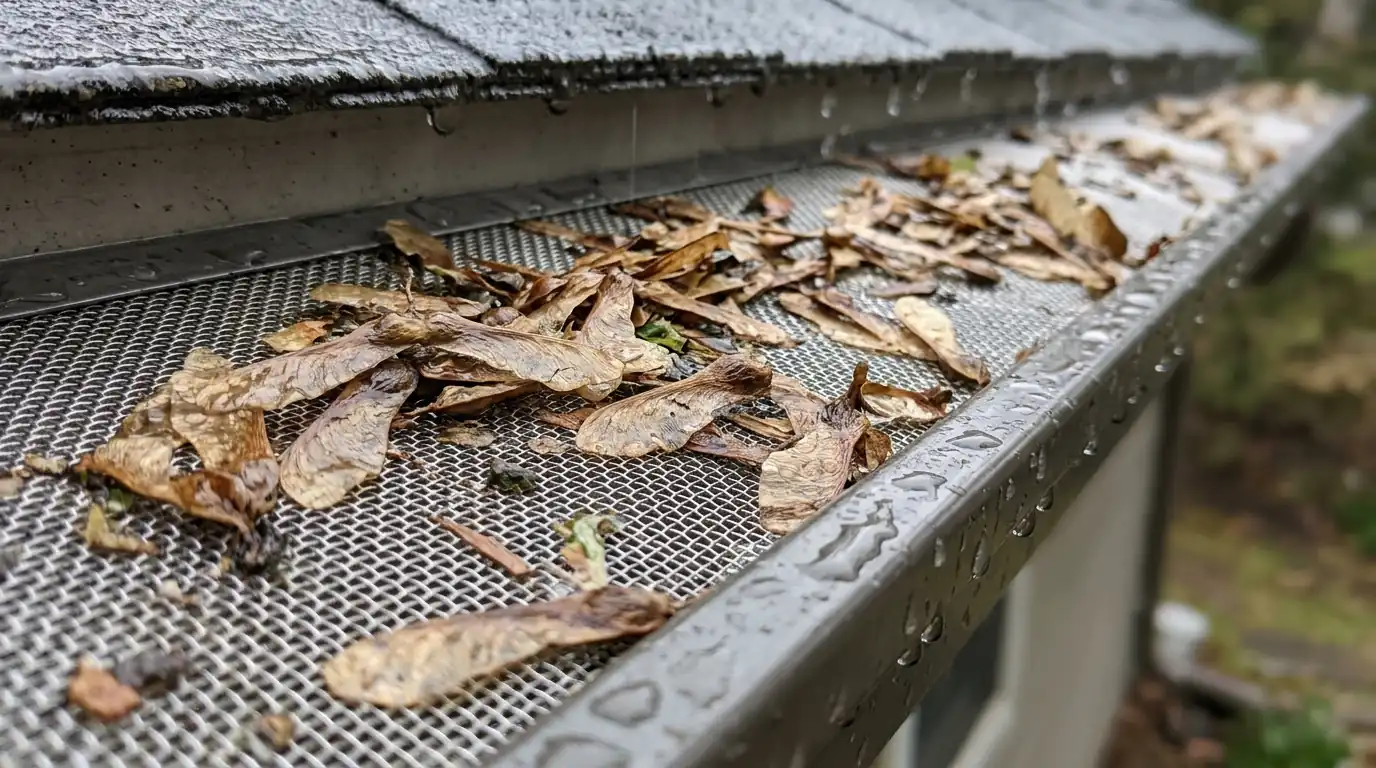
Why Dayton's freeze-thaw winters are so hard on chimney brick
Dayton winters swing above and below freezing many times a season, often within a single week. Every swing is a chance for water inside brick and mortar to freeze and expand. Over the years, that breaks the face off bricks, called spalling, and pushes mortar out of the joints. Chimneys suffer more than walls because they're exposed on every side and catch wind-driven rain from every direction.
Sealants help, but only the right ones. Paint-like coatings and some clear sealers trap moisture inside the brick, which makes spalling worse. We use breathable water repellents that keep rain out while letting moisture escape. They work best on sound masonry after tuckpointing, not as a substitute for it. Hail and wind take a toll too, so a cap knocked loose or a crown cracked after a storm is worth checking during a storm damage roof repair visit.
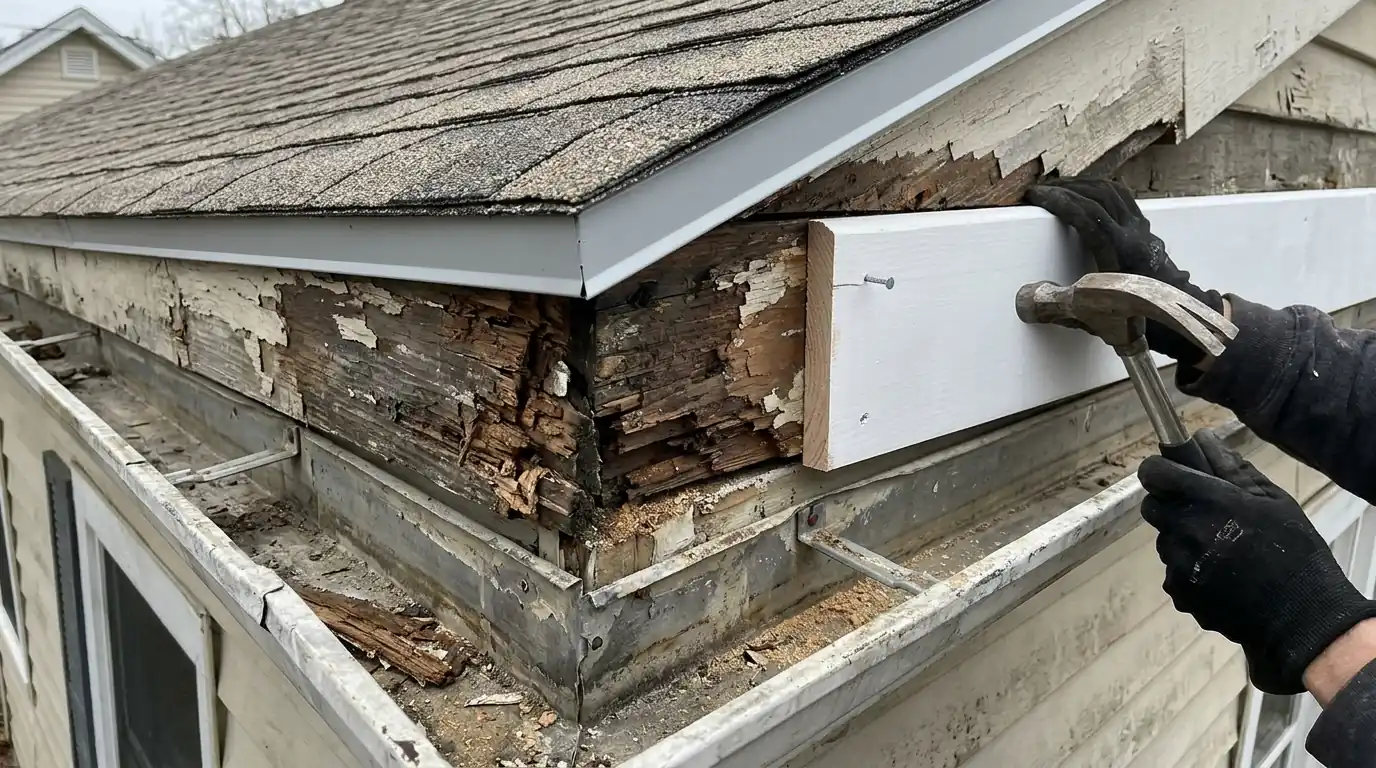
Rebuild, repair or remove an unused chimney?
If you no longer burn wood and your furnace and water heater now vent elsewhere, the chimney may be doing nothing but leaking. Many Dayton homeowners in that situation ask about taking it down below the roofline. We can remove the stack, frame and deck over the opening, and shingle it in to match the roof. That ends the flashing, crown and masonry upkeep for good.
Removal makes the most sense when you're already planning a roof replacement, since the patch disappears under all-new shingles. If the chimney still vents an appliance, it has to stay, or the appliance needs a new venting path set up by your HVAC contractor. For chimneys that stay, repairing the top and flashing usually costs less than people fear, and a sound chimney adds character to an older house. We price both paths so you can compare them side by side.
What chimney repairs typically cost in the Dayton area
Chimney repair prices depend heavily on height above the roof, roof pitch and how much masonry has failed. These are typical 2026 ranges around Dayton.
| Job | Typical range | What it covers |
|---|---|---|
| Stainless chimney cap, single flue | $235 to $485 | Cap with screen, fastened to the flue tile or crown |
| Multi-flue stainless cap | $415 to $890 | Custom-sized cap covering several flues |
| Crown rebuild | $585 to $1,460 | Remove old crown, pour new crown with overhang and drip edge |
| Tuckpointing above the roof | $645 to $1,780 | Grind and repoint mortar joints on the exposed stack |
| Rebuild top courses | $1,340 to $3,860 | Take down and relay loose brick, new crown and cap |
| Breathable water repellent | $285 to $565 | Applied to clean, cured masonry above the roof |
These are typical Dayton-area ranges and not a quote. We give you a price after inspecting the chimney from the roof and showing you photos. See more on our Dayton roofing price guide.
- Chimney height and roof pitchTall stacks on steep roofs need staging and more setup time than a short chimney on a shallow ranch roof.
- How much masonry has failedA cracked crown alone is a small job. Loose bricks on top usually mean partial rebuilding.
- Brick and mortar matchingOlder Dayton homes often have soft brick and lime-based mortar. Matching them takes the right materials, which can cost more.
- Number of fluesChimneys serving a furnace, water heater and fireplace often need larger caps and crowns.
- Flashing conditionIf the flashing at the base is failing too, doing it at the same time saves a separate trip and setup.
How we repair a chimney from the crown down to the roofline
We work top to bottom, because water does. Fixing the base first on a chimney that leaks from the top wastes your money.
Inspect from the roof and the attic
We photograph the crown, cap, all four sides and the flashing, then check the attic side for staining or wet framing. The photo report shows where water is getting in.
Protect the roof and set staging
We lay protection on the shingles around the chimney and set roof brackets or staging as needed. That keeps mortar and falling debris from damaging the roof.
Repair or rebuild the crown
Cracked mortar washes are removed and replaced with a poured crown that overhangs the brick, with a drip edge cut underneath. Hairline cracks in an otherwise sound crown can be sealed with a crown repair coating.
Tuckpoint or rebuild masonry
Worn mortar joints are ground out and repointed with mortar suited to the brick. Badly spalled or loose top courses are taken down and relaid with matching brick.
Install a cap and check the flashing
A stainless cap with a screen keeps out rain and animals. We check the flashing and counterflashing at the base, and repair or replace any that is failing.
Apply water repellent and report
Once the mortar has cured, we can apply a breathable water repellent to the brick. You get before and after photos of every side of the stack.
Warning signs your chimney is taking on water from above
Many chimney problems are visible from the ground with binoculars or from the attic with a flashlight. These are the ones to watch for.
Cracks or missing chunks in the crown
The cement cap on top of the chimney cracks with freeze-thaw. Once it splits, water drops straight into the masonry below.
No chimney cap, or a rusted one
Open flues let in rain, leaves and animals. A thin cap from a hardware store often rusts out in a few winters.
Recessed or crumbling mortar joints
When mortar has worn back from the brick face, water sits in the joints and freezes, pushing the bricks apart.
Spalling brick faces
Brick faces that flake or pop off show that water inside the brick is freezing. It's most common on the side facing prevailing weather.
White staining on the brick
Efflorescence is salt left behind as water moves through masonry. It marks where water is getting in.
A leaning or cracked stack
A chimney that leans or has stair-step cracks above the roof needs attention before wind or ice brings bricks down.
Stains on ceilings or attic framing beside the chimney
The cause may be flashing, crown or brick. Finding which one takes a close look from the roof.
Chimneys we work on most across Dayton and nearby towns
Brick chimneys are everywhere on Dayton's older housing. In St. Anne's Hill, South Park and Dayton View, many homes from the late 1800s through the 1920s have tall chimneys, sometimes several per house, built with soft brick and lime mortar that need careful repointing. Plenty of them still carry original mortar washes instead of true crowns.
Postwar neighborhoods like Belmont, Kettering and Walnut Hills have shorter brick chimneys on ranch and Cape Cod homes, often venting a furnace or water heater as well as a fireplace. In newer suburbs such as Springboro and Beavercreek, many homes have framed chimney chases with metal chase covers instead of masonry. Those covers rust and hold water, and the stains run down the siding. Freeze-thaw winters and summer storms hit all three types, just in different ways, so we tailor the repair to the chimney you actually have.
Where we do chimney repair most often
These neighborhoods, suburbs and cities make up most of our chimney repair calls. Each link opens the local page with its ZIP.
Questions about chimney repair in Dayton
Why does my chimney crown crack every winter?
Most often because it isn't a true crown. Many older chimneys have a mortar wash, which shrinks and cracks as it ages and can't handle freeze-thaw movement. Another common cause is a crown poured tight against the flue tile with no expansion gap. A properly poured crown with an overhang and a gap at the flue holds up for many years.
Do I need a chimney cap if I never use the fireplace?
Yes, as long as the chimney is open. Rain falling straight down an uncapped flue soaks the inside of the chimney and the fireplace below, and raccoons and birds treat an open flue as a nesting spot. If the flue vents a furnace or water heater, a cap also keeps debris from blocking the exhaust. A stainless cap is inexpensive protection.
Can you rebuild just the top of a chimney above the roofline?
Yes, and it's one of the most common chimney repairs we do. Freeze-thaw damage is usually worst in the top several courses, so we take those bricks down to solid masonry, relay them with matching brick and mortar, then pour a new crown and install a cap. The rest of the chimney stays as it is if the lower brick is sound.
Is it worth removing an old chimney when I replace my roof?
If the chimney no longer vents anything and you don't plan to use the fireplace, removal at roof replacement time can make good sense. We take the stack below the roofline, deck over the opening, and shingle it in with the new roof. That removes a leak point for good. If an appliance still vents through it, talk to your HVAC contractor first.
What causes rust stains running down the siding below my chimney chase?
Usually a rusted metal chase cover. Framed chimneys on newer homes have a sheet metal top, and older galvanized covers often sag in the middle, hold water and rust. That rusty water runs down the siding and can leak into the chase. We replace them with stainless or powder-coated covers that slope and have a drip edge, so water sheds off.
Will a water sealer stop my brick chimney from leaking?
Only if the brick itself is the source and the mortar, crown and flashing are sound. Sealer can't bridge a cracked crown or open mortar joints. We use breathable water repellents after repairs, never paint-like coatings that trap moisture. If you're unsure where the leak starts, a roof inspection will narrow it down before you spend money on the wrong fix.
Other roofing work that often goes with this job
Product lines we install on roofs around Dayton include shingles from GAF, Owens Corning and CertainTeed, metal from Englert, membranes from Carlisle SynTec and skylights from VELUX.
Need chimney repair today?
Call any hour. A person answers, asks a few questions and sets a time for a roofer to come out.