Fascia and Soffit Repair in Dayton, OH
We pull back the gutter, probe the fascia and rafter tails, and photograph every soft spot before replacing a board, so you see the rot we found. A person answers our line 24/7 if animals or water are getting in.
- Answered 24/7
- Photo report on every visit
- Dayton and the Miami Valley
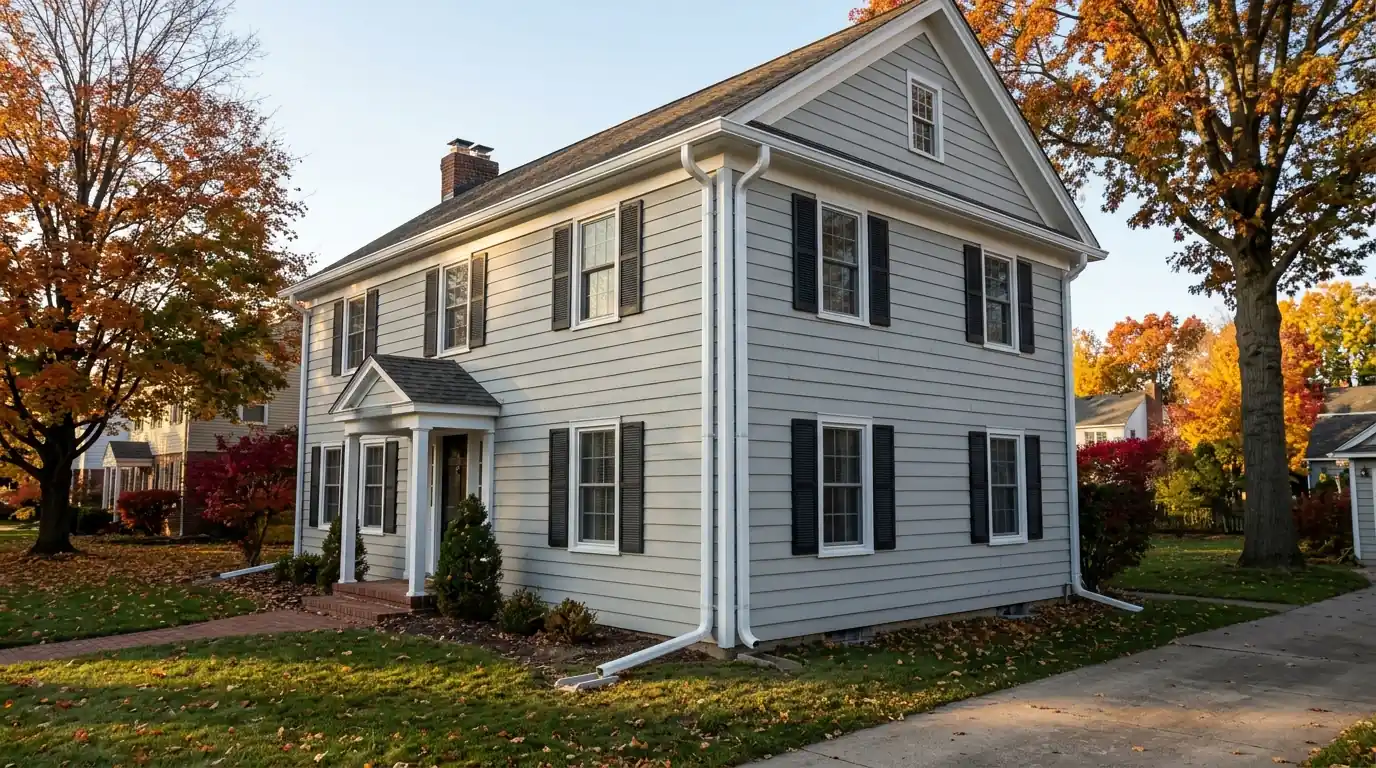
Fascia and soffit repair in the Dayton area typically runs $13.85 to $24.65 per linear foot to replace painted wood fascia, $11.40 to $22.85 per linear foot for new vented soffit, and $165 to $395 to close an animal entry hole. The work involves taking down gutters where needed, cutting out rot, checking rafter tails, installing new boards and vents, and rehanging the gutters.
Fascia and soffit are the trim boards that close in the edge of your roof. The fascia runs along the ends of the rafters and carries the gutters. The soffit closes the underside of the overhang and, on most homes, lets fresh air into the attic. Both sit right where the roof sheds its water, which is why they rot. When a gutter overflows, when drip edge is missing, or when an ice dam pushes meltwater back over the edge, the water soaks these boards from behind where you can't see it.
We see the same pattern on house after house around Dayton. Paint starts peeling along one stretch of fascia, the gutter begins to sag, and eventually a squirrel finds the soft corner and chews its way into the attic. By then the rot has often reached the rafter tails. Our approach is to fix the cause along with the boards: correct the drip edge or gutter apron, rehang the gutter on solid wood, and reopen soffit vents so the attic can breathe. Otherwise the new trim rots the same way.
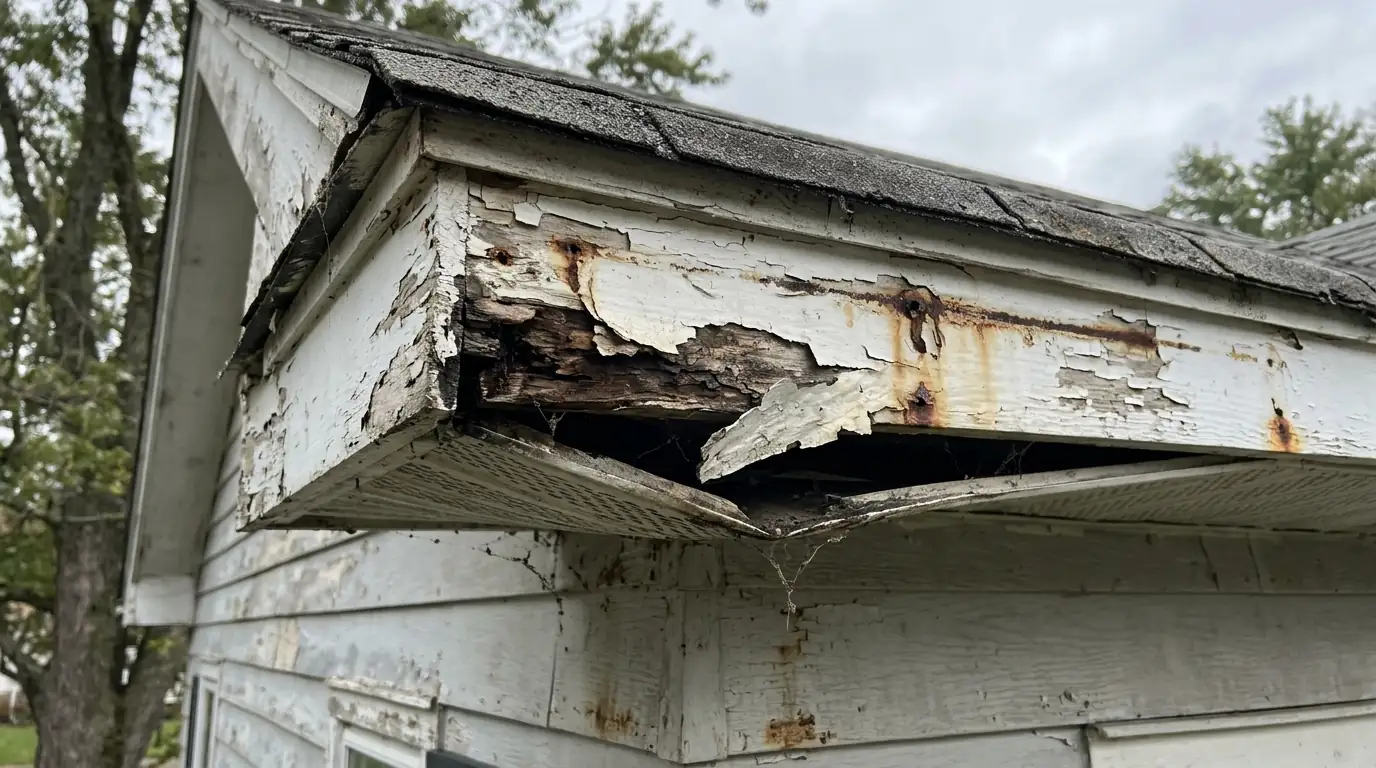
Why fascia rots behind gutters, and what the roof edge has to do with it
Fascia rarely rots from the front. Paint and weather protect the face of the board pretty well. The damage starts at the top edge and back side, where water sneaks in from the roof. On many older Dayton homes the roof was built without drip edge, so water rolls off the last shingle, clings to the underside, and runs straight down the back of the fascia and into the gutter hangers.
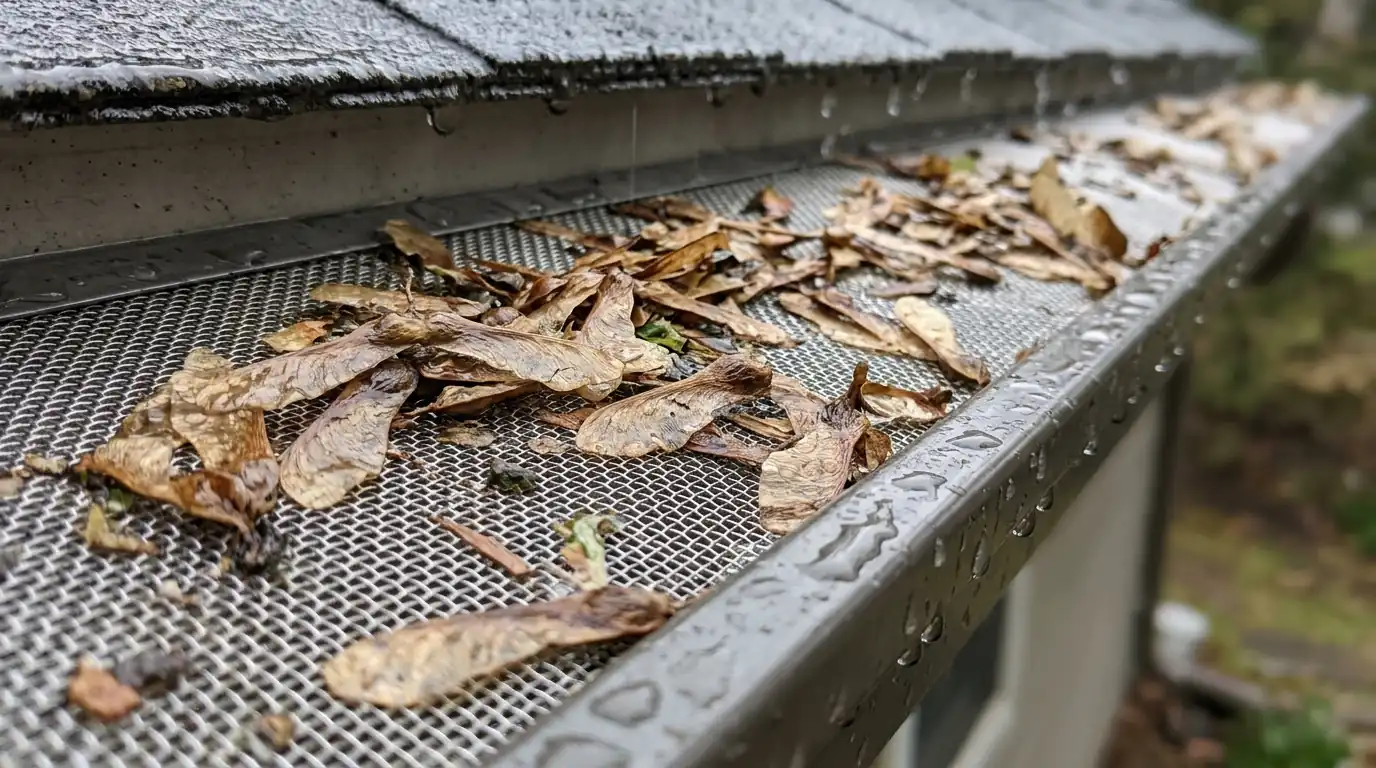
Overflowing gutters make it worse, and ice dams finish the job. A gutter packed with leaves spills over its back edge, not just the front. In winter, ice in the trough holds meltwater against the board for days at a time. That's why we always correct the roof edge while we're replacing trim. A drip edge or gutter apron that laps into the gutter costs little, and it's the difference between a repair that lasts and one you pay for twice. If rot has spread into the roof deck, we'll price decking replacement for the first few feet.
Soffit vents are half of your attic's ventilation system
A roof breathes in at the soffits and out at the ridge or roof vents. When soffit intake is blocked, the exhaust vents up top can't pull air through the attic, and moisture and heat stay trapped. In summer that bakes the shingles from below. In winter, warm, damp attic air melts snow from underneath and frosts the sheathing, which is how a lot of Dayton ice dams get started.
We find blocked soffits all the time. Older homes often have solid plywood soffit with no vents at all, or vents painted shut decades ago. Newer homes sometimes have vented panels with insulation stuffed right against them in the attic. When we replace soffit, we use vented panels where the attic needs intake and check from inside that baffles keep insulation clear of the airflow. If the whole system is out of balance, our attic ventilation work matches intake to exhaust.
- Solid soffit with no vents: a common cause of hot attics on prewar homes
- Vents painted shut: easy to spot and easy to fix during a repair
- Insulation packed against vents: needs baffles installed from the attic side
Typical fascia and soffit repair costs around Dayton
Trim repair is priced mostly by length and by what's hiding behind the boards. These are typical 2026 ranges for the Dayton area.
| Job | Typical range | What it covers |
|---|---|---|
| Replace wood fascia, primed and painted | $13.85 to $24.65 per linear foot | Remove rotted board, new wood, two coats of paint |
| Fascia replacement with aluminum wrap | $17.35 to $29.80 per linear foot | New board plus bent aluminum cover in your trim color |
| Vented soffit panels, vinyl or aluminum | $11.40 to $22.85 per linear foot | Remove old soffit, new channel and vented panels |
| Rafter tail sistering | $185 to $465 per rafter | New lumber fastened alongside a rotted tail |
| Animal entry hole sealed and patched | $165 to $395 | Opening closed with metal backing, trim patched and painted |
| Full eave rebuild on one side of a house | $1,240 to $3,180 | Fascia, soffit, rafter tail repair, gutter removal and rehang |
These are typical Dayton-area ranges, not a quote. We price your job after inspecting the trim and showing you photos of what's behind it. See more on our Dayton roofing price guide.
- Length of damaged trimShort patches cost more per foot than long runs, because setup, gutter removal and painting take similar time either way.
- Rafter tail damageRot that reaches the rafters adds lumber and labor. We can't know until the fascia comes off, so we show you photos before going further.
- Material choicePainted wood is cheapest up front. Aluminum wrap and PVC cost more but don't need repainting.
- Height and overhang depthSecond-story eaves and the deep overhangs on many ranch homes need more setup, staging and material.
- Gutter conditionIf the gutters are worth saving, we rehang them. If they're failing, replacing them at the same time often makes sense.
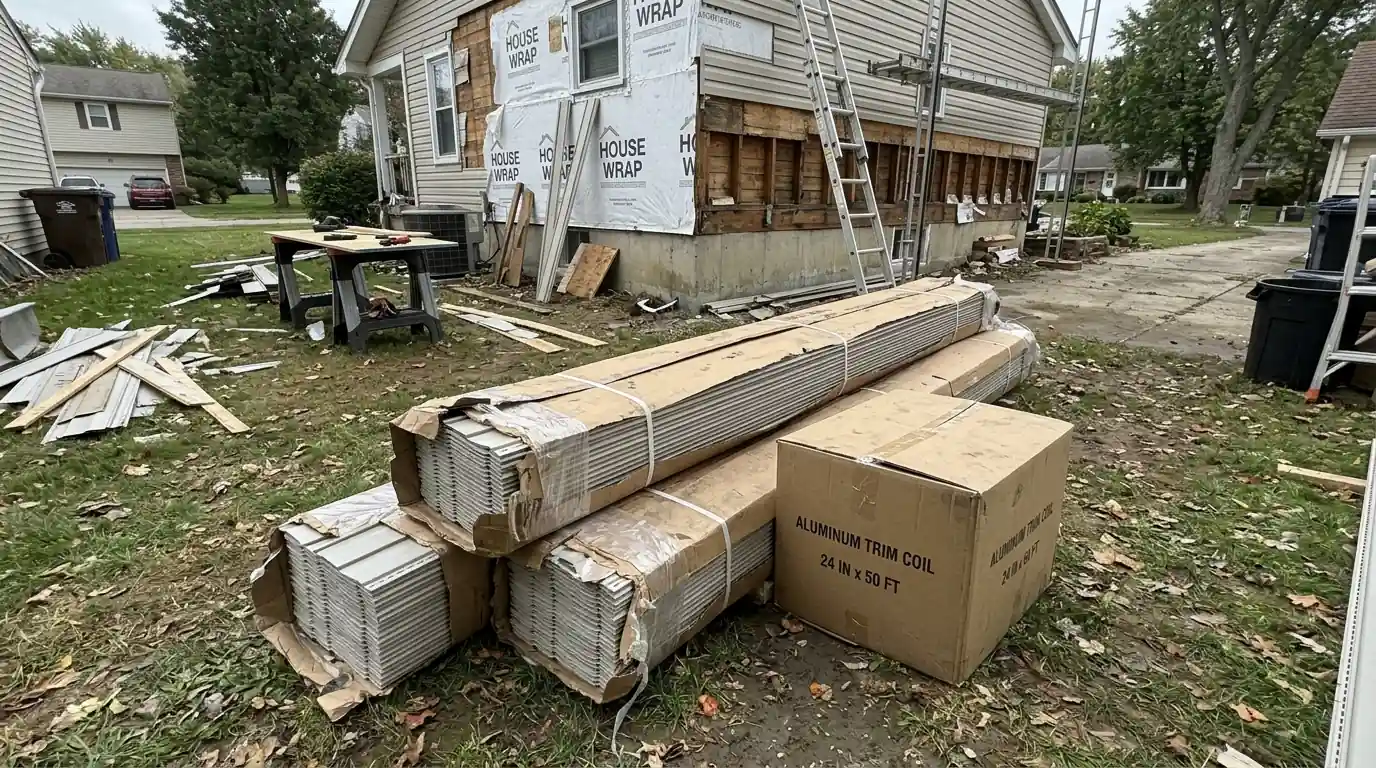
How we repair rotted fascia and soffit so it stays fixed
Trim repair goes fastest when we can see the whole problem at once. These are the steps on a typical Dayton eave.
Map the damage and photograph it
We probe the fascia, soffit and visible rafter tails, mark soft wood, and take photos before anything is removed. You get a clear picture of how far the rot runs.
Take down gutters where needed
Gutters on damaged fascia come down carefully and are set aside to rehang if they're in good shape. Downspouts are disconnected and labeled.
Cut out rot and repair rafter tails
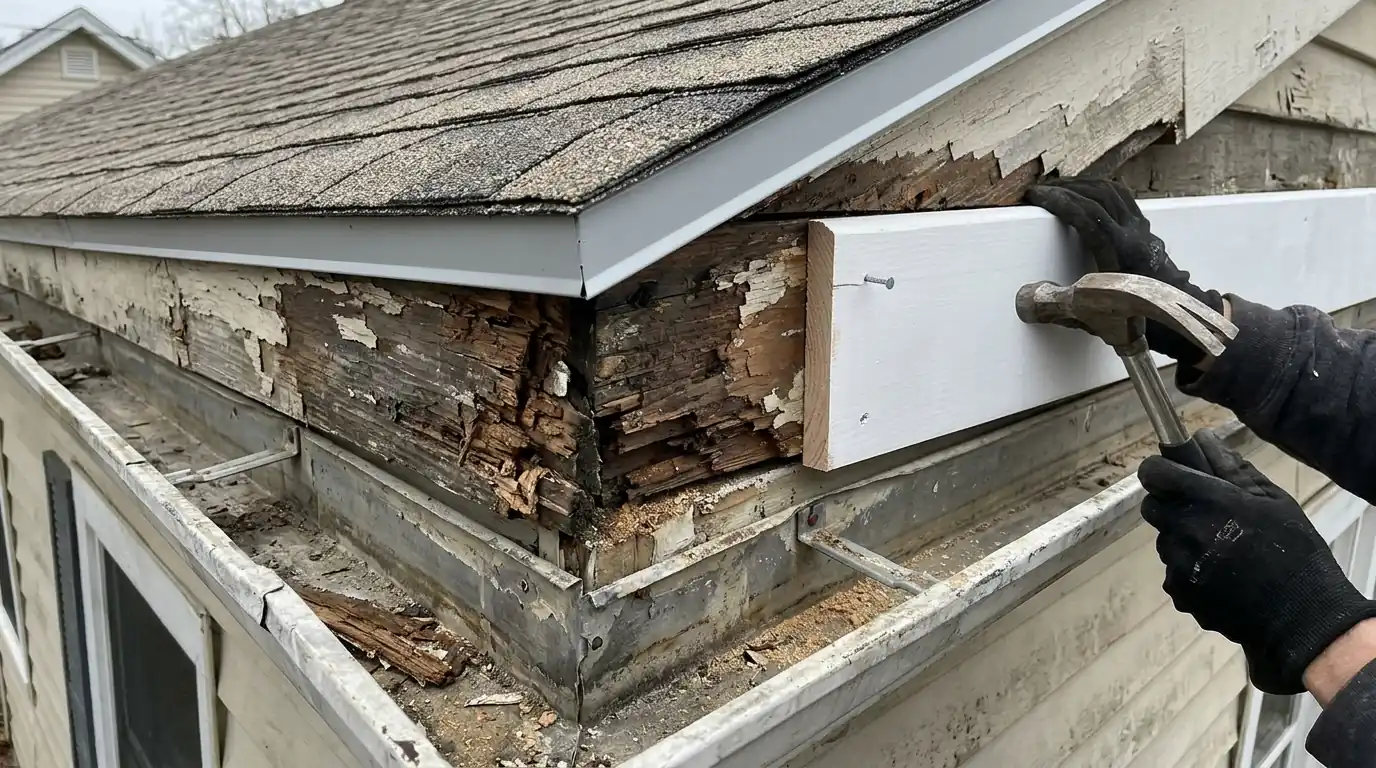
We remove the damaged board back to solid wood. Soft rafter tails are sistered with new lumber so the new fascia has something sound to fasten into.
Install new fascia and soffit
New fascia goes up in primed wood, PVC, or wood with an aluminum wrap. Soffit is replaced with vented vinyl, aluminum or wood panels, matched as closely as possible to what's there.
Fix the roof edge detail
We check the drip edge and add a gutter apron where the roof needs one. Water then drops into the gutter instead of running behind it.
Rehang gutters and close entry points
Gutters go back up on hidden hangers into the new board, pitched to drain. Animal openings are closed with metal backing, and we photograph the finished eave.
Signs your fascia or soffit is failing behind the gutters
Trim damage usually starts small and out of sight. Walk around the house with these in mind, ideally on a dry afternoon with the sun at a low angle.
Peeling paint along one stretch of fascia
Paint that blisters in a band, especially below an inside corner, usually means water is getting behind the gutter.
Gutters tipping forward or sagging
Hangers lose their grip as fascia softens. A sag that keeps coming back after rehanging points to rot, not loose screws.
Dark stains or soft spots on the soffit
Water staining on the underside of the overhang often traces back to an ice dam or a leak at the roof edge above.
Holes, chew marks or droppings
Squirrels, raccoons, starlings and bats exploit soft corners and loose soffit panels. Scratching in the attic at dawn is a common clue.
Sagging or missing soffit panels
Vinyl soffit that drops out of its channel, or plywood soffit that bows, lets in pests and weather.
A hot attic or frost on the roof sheathing
Painted-over or blocked soffit vents choke attic airflow. That shows up as summer heat, winter frost and ice dams.
Where we find the most fascia and soffit rot around the Miami Valley
Older city neighborhoods have the most rot simply because the trim has been there longest. In Belmont and North Riverdale, homes from the 1920s through the 1950s often still have their original wood fascia, painted many times over, and many were built with no drip edge. Some bungalows and Craftsman-style houses have exposed rafter tails, which rot at the ends where water drips off the roof.
In the suburbs the story shifts. The ranch homes common in Kettering and Huber Heights have wide, deep overhangs that shade windows nicely but hold a lot of soffit, and much of it is original plywood or early aluminum. Mature trees bring squirrels, and freeze-thaw winters open joints that animals then widen. We see a burst of calls each spring when people hear scratching in the attic, and again in late winter after ice dams.
Where we do fascia & soffit repair most often
These neighborhoods, suburbs and cities make up most of our fascia & soffit repair calls. Each link opens the local page with its ZIP.
Questions about fascia & soffit repair in Dayton
Can you replace rotten fascia without taking the gutters down for good?
Yes. We take the gutters down carefully, set them aside, replace the fascia, then rehang the same gutters on new hidden hangers if they're in good condition. Aluminum gutters usually survive removal fine. If a run is bent, undersized or leaking at most seams, we'll show you photos and price new runs as an option, but reusing sound gutters is often the smart call.
How do squirrels get into the soffit on a Dayton house, and how do you close it?
They usually start at a soft corner of fascia, a gap where soffit meets the roof, or a loose vinyl panel, then chew the opening wider. Before we close anything, the animals need to be out, which may mean calling a wildlife removal service first. We then replace the damaged wood and back the repair with metal so the next squirrel can't chew through.
Should my soffits be vented if my attic already has a ridge vent?
Yes. A ridge vent is an exhaust vent, and it only works when intake air comes in low at the eaves. Without soffit intake, a ridge vent can pull conditioned air out of the house or barely move air at all. Our article on signs of failing attic ventilation explains what to look for the next time you're up in the attic.
Is it worth wrapping wood fascia in aluminum on an older house?
It can be, if the wood underneath is sound and the roof edge sheds water properly. Wrap eliminates repainting and holds up well in Ohio weather. The risk is wrapping over rot, or wrapping a board that gets wet from behind, because the aluminum hides the damage until it's serious. We only wrap boards we've probed and fixed, and we correct the drip edge first.
Can fascia and soffit repair wait until after winter?
Small cosmetic issues can wait. Open holes, sagging gutters or soft fascia under a gutter should be fixed before winter if possible. Ice and snow add a lot of weight to a gutter, and a weak board can tear loose in a thaw. Open soffit also gives animals a warm place to move into once the weather turns cold. We do trim work through most of the year.
What happens if you find rotted rafter tails behind the fascia?
We stop and show you. Rafter tails are the ends of the roof framing, and once the fascia comes off we can see how far any rot runs. Most cases are fixed by sistering new lumber alongside the old tail. If rot has reached the roof deck, we photograph it and price that separately before going further, so nothing gets added without your approval.
Other roofing work that often goes with this job
Gutter Repair
Gutters, Siding & Chimneys
See gutter repairSeamless Gutter Installation
Gutters, Siding & Chimneys
See seamless gutter installationAttic Ventilation
Inspections, Ventilation & Skylights
See attic ventilationRoof Decking Replacement
Inspections, Ventilation & Skylights
See roof decking replacement
Product lines we install on roofs around Dayton include shingles from GAF, Owens Corning and CertainTeed, metal from Englert, membranes from Carlisle SynTec and skylights from VELUX.
Need fascia & soffit repair today?
Call any hour. A person answers, asks a few questions and sets a time for a roofer to come out.