Tree Damage Roof Repair in Dayton, OH
When a limb comes through the roof, the damage often runs deeper than the hole. We dry in the opening fast, check every rafter and sheet of decking it touched, then rebuild the structure and the roof surface.
- Answered 24/7
- Photo report on every visit
- Dayton and the Miami Valley
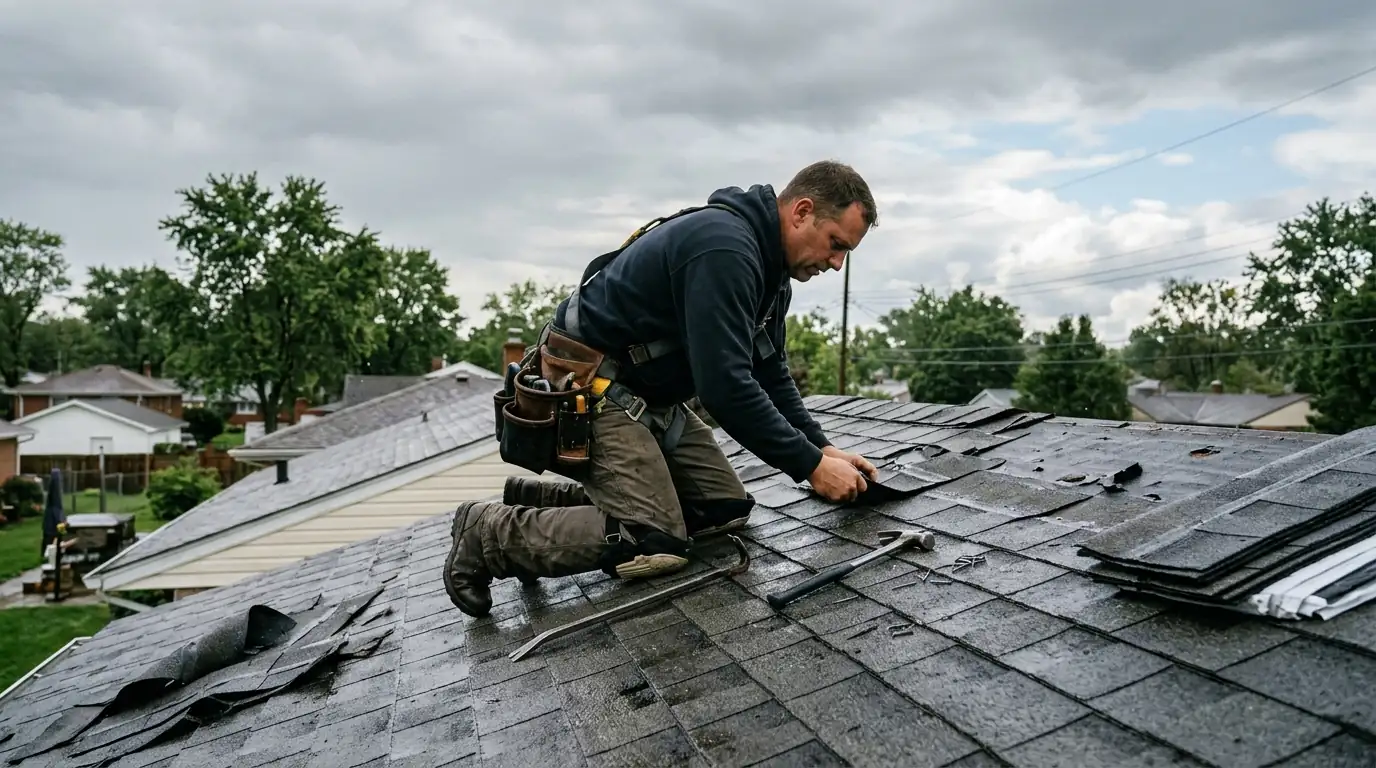
Tree damage roof repair in the Dayton area typically runs $340 to $890 for a small limb strike on shingles, $1,180 to $3,640 when decking must be replaced around a puncture, and $1,460 to $4,980 when rafters are cracked and need sistering. Large trunks are removed by a tree service first; then we tarp, assess the framing and repair.
A falling tree hits a roof with enormous force, even when the limb looks small from the ground. The obvious damage is the hole or the crushed shingles. The less obvious damage is underneath: cracked rafters, split ceiling joists, sheathing pulled off its nails, and a ridge knocked slightly out of line, and gutters bent on the way down. If those go unrepaired, the roof sags over time or leaks around the patched area for years.
That's why our tree damage work starts with structure, not shingles. Once the tree is off the roof, our crew checks every rafter and sheet of decking in the impact zone from the attic and the roof surface, photographs any cracks or deflection, and plans the repair from the framing up. In the meantime, the opening gets a plywood cover and a battened tarp so rain stays out, using the same method described on our emergency roof tarping page. Every step goes into a photo report you can hand to your insurance adjuster.
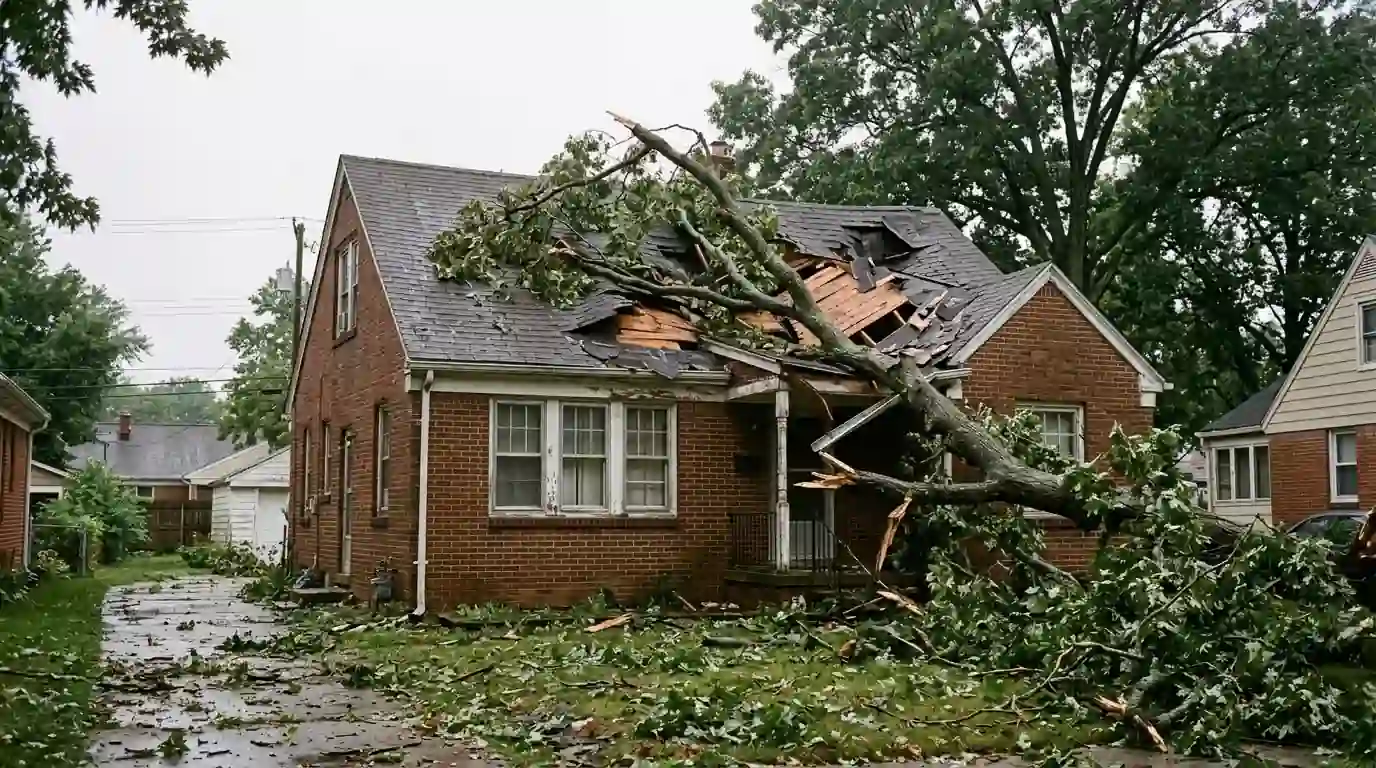
After a limb hits: damage to look for inside and out
Some tree damage is obvious. Other signs only show up later, so check for these even after a small branch falls on the roof.
A visible hole or crushed area
Any opening to the sky needs a dry-in right away. Don't climb up to look; photograph it from the ground.
Sagging rooflines or a dip near the impact
A dip in the roof surface or a bowed ridge usually means rafters cracked or shifted when the limb hit.
Cracks in interior ceilings or walls
New cracks in drywall or plaster below the impact area show the force traveled into the framing.
Popped nails and loose decking in the attic
Nails pulled partly out of rafters, or decking that moves when pushed, mean the sheathing was jarred loose.
Damaged gutters, fascia or soffits
Limbs often catch the roof edge on the way down, bending gutters and cracking fascia boards.
Scuffed shingles or loose ridge cap
Branches dragging across the roof can strip granules and lift ridge caps, even without breaking through.
How we repair a roof after a tree comes down on it
Tree damage repair happens in a specific order, because each step depends on the one before it. Here is how our crew handles it.
Wait for the tree to come off safely
Small limbs we remove ourselves. Large limbs and trunks need a tree service with the right rigging, and we schedule around their visit so the roof isn't left open.
Dry in the opening right away
We cover punctures with plywood screwed to sound framing, then tarp and batten over it. That keeps rain out while the claim and repair are organized.
Assess the framing from the attic
We check each rafter, collar tie and ceiling joist in the impact zone for cracks, splits and deflection. Severe structural damage may call for a structural engineer's review, and we'll tell you if we think it does.
Repair or sister damaged rafters
Cracked rafters get a new full-length board fastened alongside them, called sistering, or are replaced outright. The roof plane is brought back into line before any decking goes on.
Replace decking and underlayment
Damaged sheathing is cut back to sound rafters and replaced with matching thickness. New underlayment ties into the existing roof around the repair.
Reshingle and repair the edges
Shingles are woven in to match the surrounding roof as closely as possible. Gutters, fascia and soffits damaged by the limb are repaired on the same project.
Deliver the photo report
The report covers the tree on the roof, the framing damage, the repairs and the finished roof. Insurers often ask for exactly this sequence.
Tree damage roof repair costs in Dayton, from puncture to rafter repair
Expect figures like these around Dayton. The depth of the damage, from shingles to framing, sets the price.
| Job | Typical range | What it covers |
|---|---|---|
| Small limb strike, shingle repair only | $340 to $890 | Damaged shingles and underlayment replaced, attic checked |
| Puncture with decking replacement | $1,180 to $3,640 | Decking, underlayment and shingles around the impact |
| Rafter sistering and structural repair | $1,460 to $4,980 | Cracked rafters sistered or replaced, then deck and shingles |
| Emergency dry-in after a tree strike | $395 to $1,240 | Plywood over the opening plus battened tarp |
| Gutter and fascia repair from limb damage | $285 to $960 | Damaged gutter sections and fascia boards replaced |
Ranges are typical for Dayton-area homes in 2026 and are not a quote; tree removal costs are separate and set by the tree service. See more on our Dayton roofing price guide.
- Depth of damageShingle-only damage costs far less than broken rafters or joists that need structural repair.
- Size of the impact areaA large trunk can damage several rafters and many sheets of decking at once.
- Access around the houseTight yards, fences and debris from the fallen tree can slow staging and material delivery.
- Shingle matchingDiscontinued shingles can make the repair stand out, which may expand the area being reshingled.
- Interior damageWater or debris that reached the interior adds work beyond the roof itself.
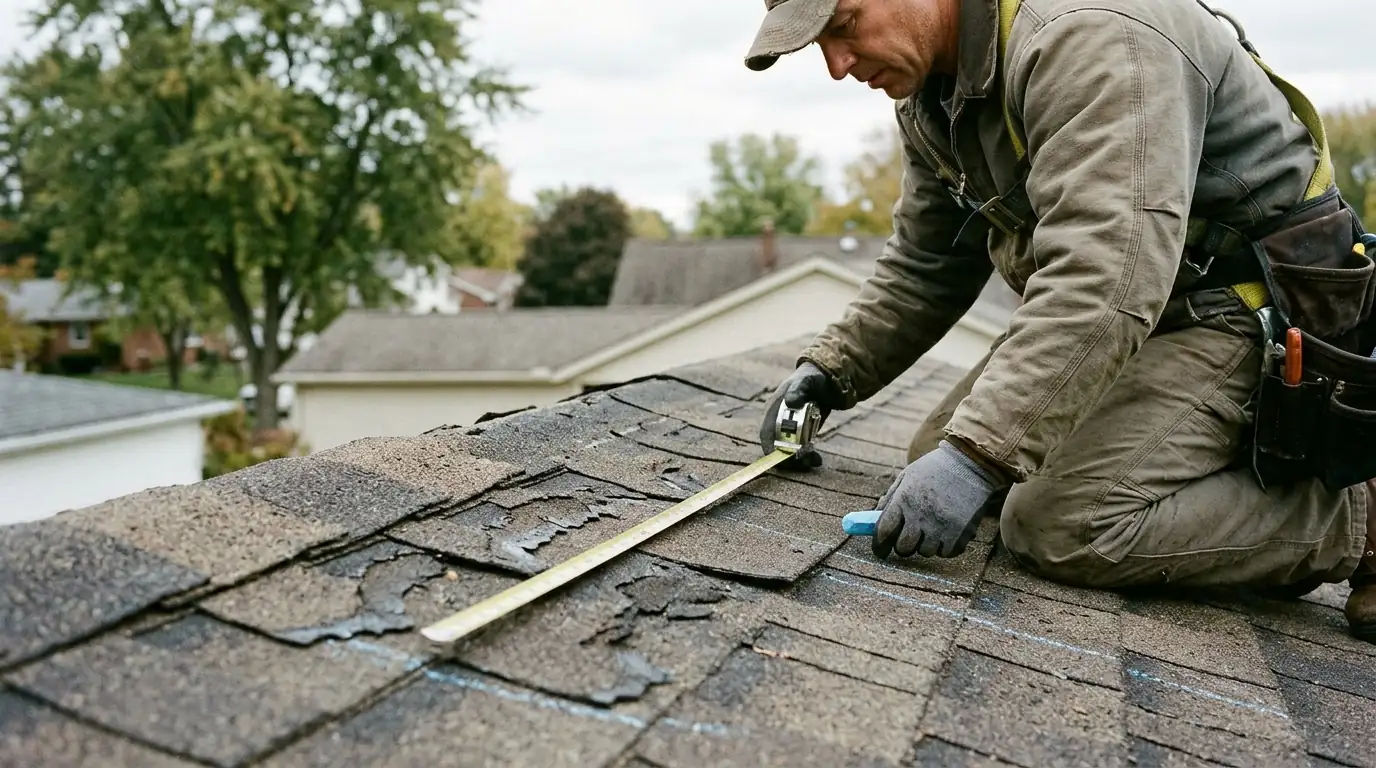
Rafters, decking and shingles: how deep tree damage goes
Think of tree damage in layers. The top layer is shingles and underlayment, which can be torn or bruised even by a branch that bounces off. The middle layer is the decking, the plywood or plank sheathing that can crack, split or pull loose from its nails. The bottom layer is the framing: rafters, ridge boards, collar ties and ceiling joists that carry the weight of the roof.
Shingle damage alone is a standard repair. Decking damage means cutting out and replacing sheathing back to solid rafters. Framing damage is the one people underestimate. A rafter with a hairline crack may look fine, but it has lost strength and can sag over the next few winters under snow load. We check each one by eye and by pushing on it, and we photograph anything questionable.
Older Dayton homes add a wrinkle. Many have plank decking rather than plywood, and true-dimension rafters that are larger than modern lumber, so repairs take careful fitting. Our roof decking replacement work handles both types.
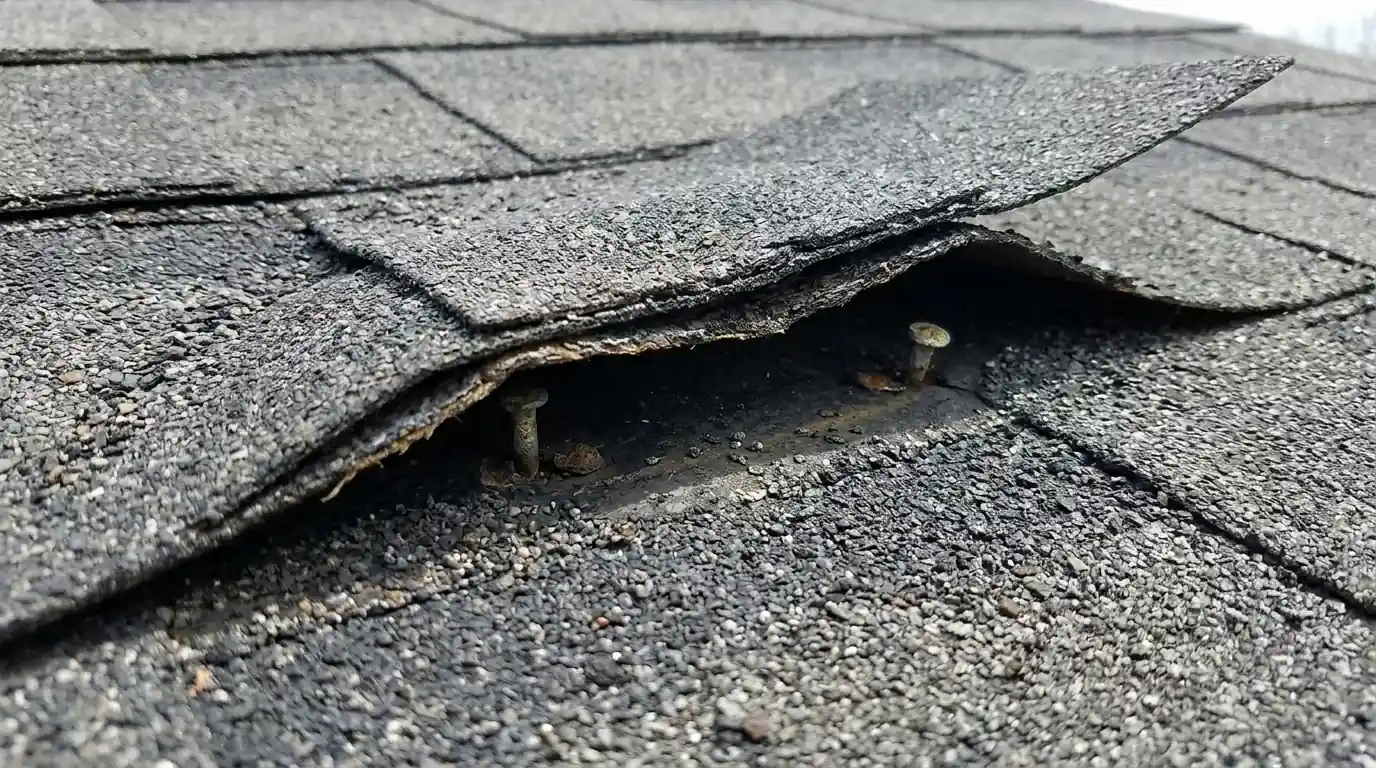
Trees that put Dayton roofs at risk, and what to do about them
Some trees are more likely to drop limbs on a roof than others. Knowing which ones are near your house helps you decide when to call an arborist before the next storm does it for you.
- Dead and dying ash trees, killed across Ohio by the emerald ash borer, turn brittle and drop large limbs without warning
- Silver maples grow fast with weak wood and often split at the crotch in wind or ice
- Bradford pears tend to split apart at their narrow branch unions, often in their second or third decade
- Mature oaks and sycamores are strong, but their sheer size makes any limb failure serious
- Any tree with branches touching the roof scrapes shingles and gives squirrels a bridge onto the roof
- As a general guide, keep branches trimmed back several feet from the roof surface, and have trees with dead wood, cracks or lean looked at by an arborist
Miami Valley neighborhoods where big trees meet older roofs
Dayton is a city of big trees, and they're a big part of why tree damage is one of our most common storm calls. In Oakwood and parts of Kettering near Hills and Dales MetroPark, mature oaks, maples and sycamores tower over homes built between the 1920s and the 1960s. Those trees shade the roofs beautifully, but in a summer thunderstorm or a winter ice storm, a single large limb can cause serious damage.
Farther out, homes in Bellbrook and around Sugarcreek MetroPark often sit on wooded lots, with trees standing close to the house on several sides. The emerald ash borer has left many dead ash trees across the region over the past decade and more, and those standing dead trees are a common source of the limbs we find on roofs. After the Memorial Day 2019 tornadoes, fallen trees accounted for a large share of the roof damage in hard-hit neighborhoods. If you have a tree with dead limbs overhanging the house, having it trimmed before storm season costs far less than repairing the roof afterward.
Where we do tree damage roof repair most often
These neighborhoods, suburbs and cities make up most of our tree damage roof repair calls. Each link opens the local page with its ZIP.
Questions about tree damage roof repair in Dayton
Who removes a fallen tree from my roof, your crew or a tree service?
It depends on the size. We remove small limbs and branches ourselves as part of the dry-in. Large limbs and trunks need a tree service with cranes or rigging, since lifting them wrong can cause more damage to the roof and framing. We coordinate timing with them so the roof is tarped as soon as the tree comes off.
Does homeowners insurance pay to remove a tree that fell on my house?
Many policies cover removing a tree that damaged a covered structure like your house, often up to a set limit, along with the roof repair itself. Trees that fall without hitting anything are often not covered. Policies vary, so check with your agent. Our insurance claim inspection documents the roof and framing damage for your adjuster.
Can a falling branch damage my roof without leaving a visible hole?
Yes. A heavy limb can crack rafters, loosen decking and bruise shingles without breaking through. The damage may only show up later as a sag, a leak or cracks in the ceiling below. If a sizable branch hits your roof, even if it bounced off, it's worth having us check the attic and the roof surface.
Is it safe to stay in my house with a tree lying on the roof?
Stay out of any room directly under the impact, especially if the ceiling is sagging, cracking or showing daylight. If you smell gas, see sparking wires or hear creaking from the framing, leave the house and call the utility or 911 first. Otherwise, most of the house is usually fine to stay in while the tree is removed and the roof dried in.
How far back should tree branches be trimmed from my roof?
A common rule of thumb is to keep branches at least six to ten feet from the roof surface. That prevents scraping, limits leaf buildup in gutters and valleys, and takes away the bridge squirrels use to reach the roof. For large trees or limbs over the house, have an arborist do the trimming; it's not a ladder job for homeowners.
Does a tree service need to finish before you can tarp my roof?
Usually the tree has to come off first, because a tarp can't seal around a limb that's still lying in the opening, and shifting limbs tear tarps. If the tree service can't come right away, we can sometimes protect the interior and cover undamaged parts of the opening, then complete the dry-in as soon as the limb is removed.
Other roofing work that often goes with this job
Emergency Roof Tarping
Roof Repair & Storm Damage
See emergency roof tarpingRoof Decking Replacement
Inspections, Ventilation & Skylights
See roof decking replacementStorm Damage Roof Repair
Roof Repair & Storm Damage
See storm damage roof repairFascia & Soffit Repair
Gutters, Siding & Chimneys
See fascia & soffit repair
Product lines we install on roofs around Dayton include shingles from GAF, Owens Corning and CertainTeed, metal from Englert, membranes from Carlisle SynTec and skylights from VELUX.
Need tree damage roof repair today?
Call any hour. A person answers, asks a few questions and sets a time for a roofer to come out.