Roof Leak Repair in Dayton, OH: We Trace It to the Source
A ceiling stain is a clue, not an address. We follow the water from the stain through the attic to the actual entry point, fix that, and send you a photo report showing the full path we traced.
- Answered 24/7
- Photo report on every visit
- Dayton and the Miami Valley
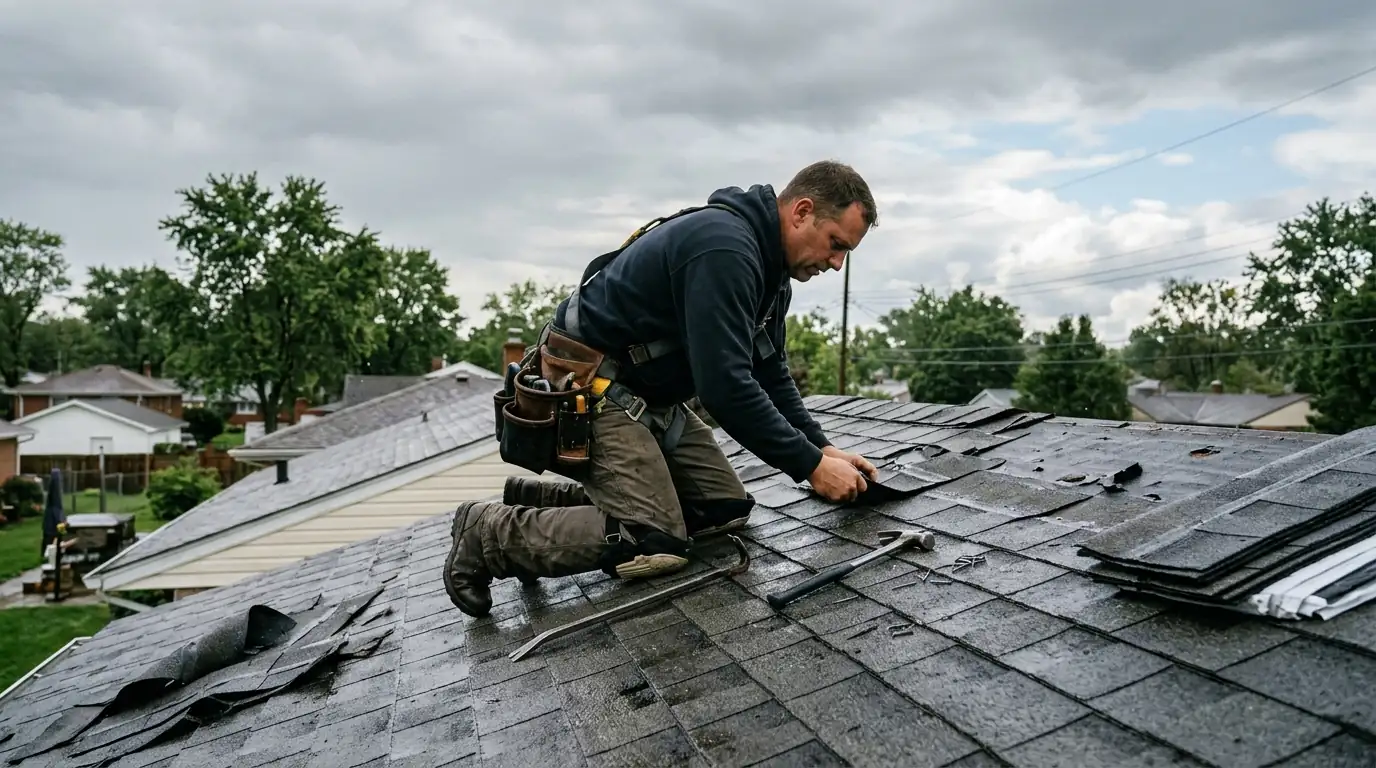
Finding and fixing a roof leak in the Dayton area typically costs $340 to $1,420, depending on the source. Most leaks trace back to flashing, pipe boots, exposed nails or a failed vent, not to the shingles directly above the stain. The work includes an attic inspection, water testing when needed, the repair itself and a photo report of the water path.
The most common thing we hear on a leak call is, "We had someone patch it, and it's still leaking." Usually the patch went on the shingles right above the stain. The trouble is that water rarely drops straight down. It enters at a seam or a nail, runs along the underlayment or a rafter, and finally drips wherever gravity and the framing let it fall, sometimes six or eight feet away from where it got in.
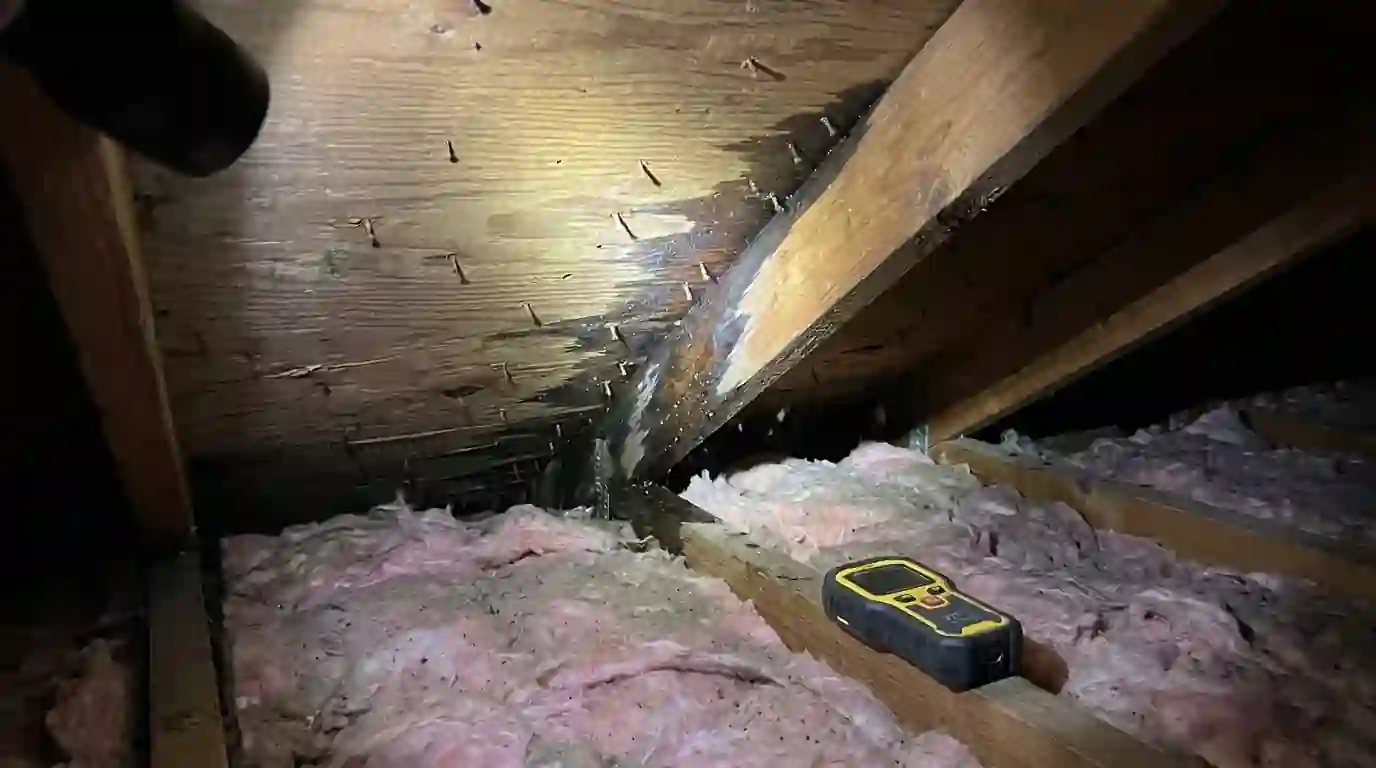
That's why our leak work starts in the attic, not on the roof. We look for the trail: dark streaks on the decking, rusted nail tips, water marks on rafters, and wet spots in the insulation. Then we match that trail to what's on the roof surface above. Once we find the entry point, the repair itself is often small, like a cracked pipe boot or a lifted piece of step flashing. Getting to it correctly is the real job.
Clues that point to where your roof leak actually starts
Before we arrive, these details help narrow the search. Each one tells us something about how and where water is getting in.
Stains that grow only in heavy, wind-driven rain
This often points to flashing at a wall or chimney, where wind pushes water sideways under the metal. Light rain may not reach it at all.
Drips that start hours after the rain stops
Water that shows up late is usually traveling a long way along the framing, or soaking through insulation before it drips.
A stain ringed around a ceiling light or bath fan
Water likes to follow wires and duct runs. The leak may come from a vent cap or pipe boot several feet uphill.
Stains on an exterior wall below a roofline
A missing kick-out flashing where a roof meets a wall sends water behind the siding instead of into the gutter.
Drips in winter with no rain at all
This is often frost in the attic melting, or an ice dam backing water under the shingles at the eave.
Rust spots on nail tips in the attic
Rusty nails tell us moisture has been reaching the underside of the deck for a while, even if the ceiling is still clean.
How we trace a leak from the ceiling stain back to the roof
Leak tracing is methodical. We work from the inside out and from the bottom of the roof up, so one test doesn't mask another.
Mark the interior evidence
We photograph and measure the stain's location from two walls. That measurement lets us find the same spot in the attic quickly.
Follow the trail in the attic
With a light and a moisture meter, we work uphill from the stain along rafters and decking. Water marks, darkened wood and rusted nails show the direction of travel.
Match it to the roof surface
Once we know roughly where water enters, we check every penetration and seam above it: boots, vents, flashing, valleys and nail heads.
Water test if the source isn't obvious
One person runs a hose on a small section, starting low and moving up, while another watches in the attic. We test each area for several minutes before moving on, so we know exactly which spot lets water in.
Repair the actual entry point
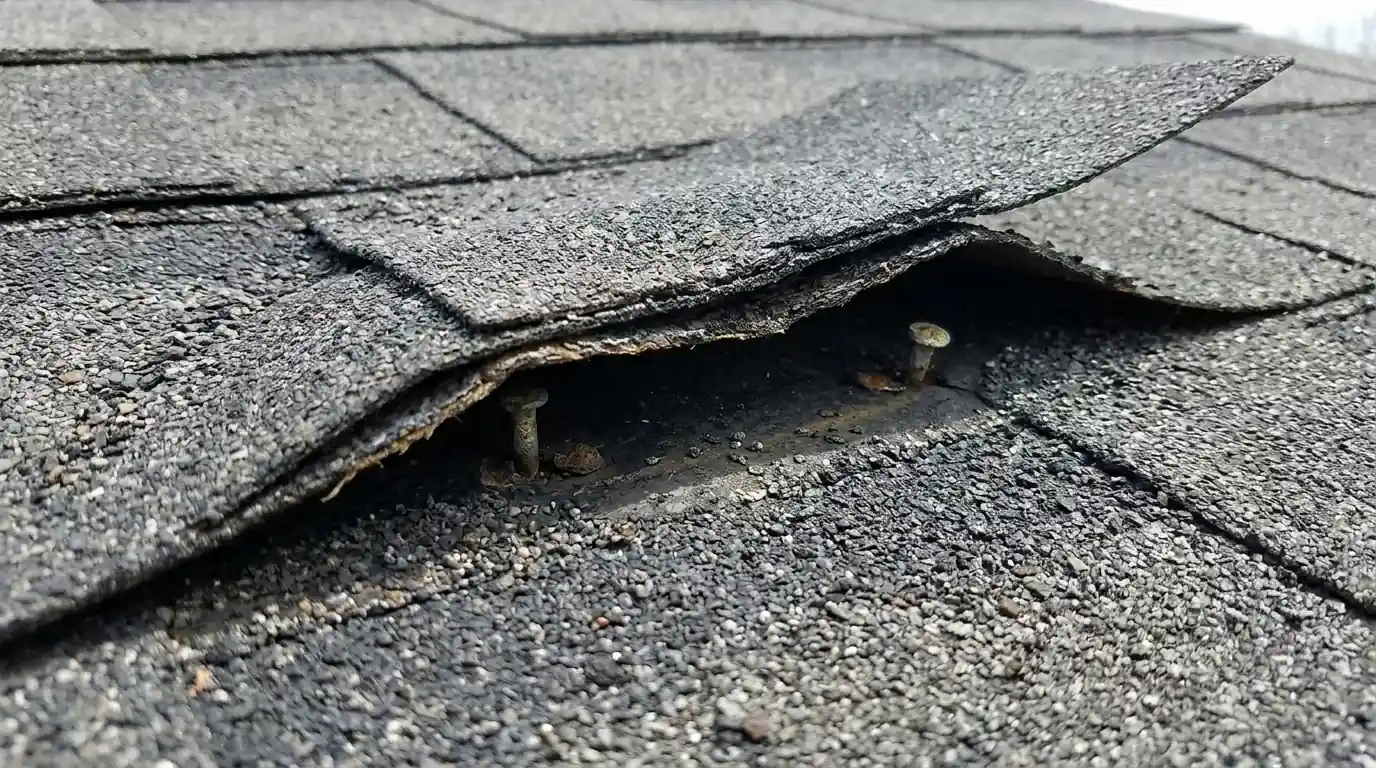
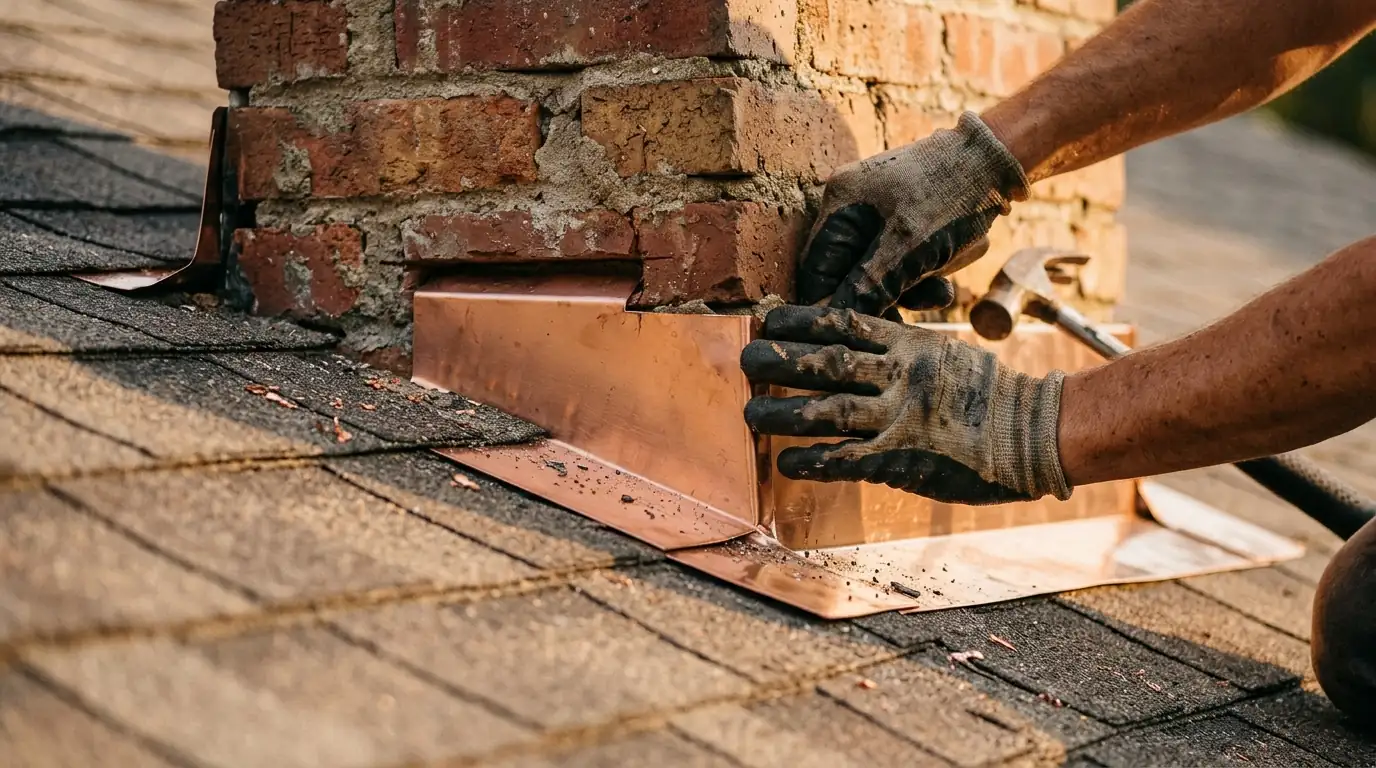
That may mean replacing a cracked boot, resetting step flashing, swapping a split vent cap or replacing shingles with exposed nails. We fix the cause with proper materials, not a smear of roof cement.
Retest and document the water path
After the repair, we run water over the area again to confirm the attic stays dry. Your photo report shows the stain, the trail in the attic, the source and the finished repair.
Typical Dayton prices to find and fix a roof leak
Most of the cost in leak work is finding the source; the repair is often modest once we know where water enters.
| Job | Typical range | What it covers |
|---|---|---|
| Leak investigation with water test | $225 to $485 | Attic tracing, controlled hose test, written findings and photos |
| Single-source leak repair | $340 to $960 | Pipe boot, vent cap, nail pop or small shingle repair at the entry point |
| Flashing-related leak repair | $480 to $1,420 | Step, headwall or kick-out flashing reset or replaced with shingle work |
| Multiple sources or wet decking | $1,180 to $3,270 | Several entry points, decking replacement, new underlayment |
These are typical 2026 Dayton-area ranges, not quotes; your final price depends on what the tracing and the roof reveal. See more on our Dayton roofing price guide.
- How hidden the source isA cracked boot can be found in minutes. A wind-driven leak at a dormer wall can take a full water test to confirm.
- Attic accessFinished attics, cathedral ceilings and tight crawl spaces limit tracing from inside and add time on the roof.
- Roof complexityDormers, valleys, skylights and wall intersections each add possible entry points that we have to rule out one by one.
- Wood damageLong-running leaks often soften decking, which must be cut out and replaced before the roof is closed up.
- Material at the leakLeaks under slate, metal or old tile need different repair methods than asphalt shingles.
Why the ceiling stain is rarely right under the hole
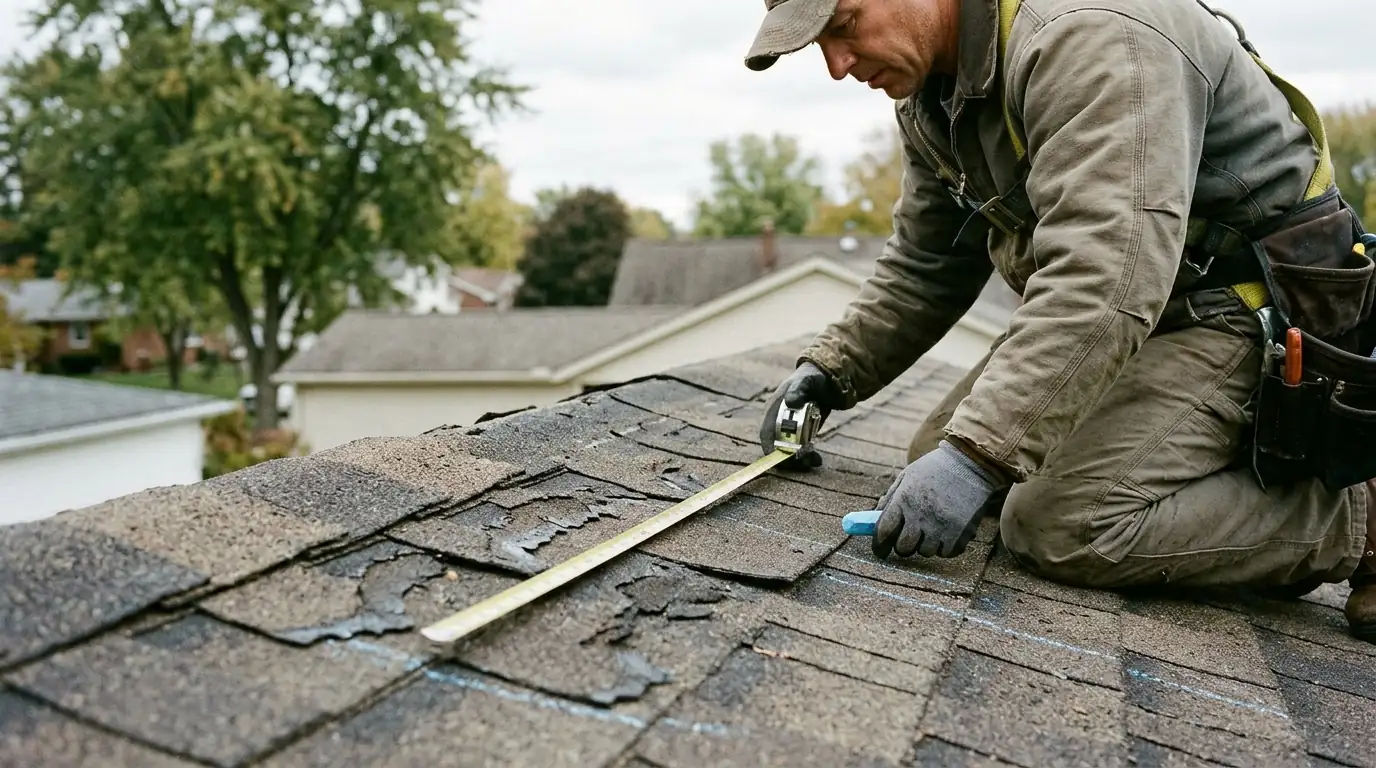
Roofs are built to shed water downhill, and leaks follow the same rule. Water that slips past a shingle usually lands on the underlayment and runs down it until it finds a seam, a nail or a gap. From there it can drip onto a rafter and ride the wood sideways, or soak into insulation that wicks it farther still before anything shows on the drywall.
On a typical Dayton two-story with a 6/12 pitch, we often find the entry point four to eight feet uphill from the stain. In a house with a cathedral ceiling, water can travel between rafters all the way to the wall plate. That's why patching shingles directly above a stain fails so often, and why roof cement smeared across a suspected spot just hides the evidence we need.
When you call, try not to paint over or cut into the stain until we've seen it. Its shape and edges help us read how long the leak has been active.
Leaks that aren't roof leaks: what else drips from a Dayton ceiling
Not every wet ceiling is the roof's fault. Part of tracing a leak honestly is ruling out the other causes, so you don't pay for a roof repair that won't fix anything. These are the look-alikes we check for most often, and each one leaves a slightly different pattern in the attic.
- Attic condensation in cold weather, when warm, moist air from the house freezes on the underside of the deck and melts on the first sunny day. Our article on attic ventilation warning signs explains why
- Bath fans venting into the attic instead of through the roof, which soak insulation directly above the bathroom
- Plumbing drain or supply leaks from an upstairs bathroom, which show up regardless of weather
- Condensate lines from attic HVAC units that clog and overflow in summer
- Ice dams at the eave, which push meltwater under shingles that are otherwise sound
- Wind-driven rain through gable vents or ridge vents during sideways storms
Leak patterns we find in Dayton's older and newer homes
The age of a house changes where its leaks hide. In older neighborhoods like Five Oaks and South Park, many homes date from the 1890s through the 1920s and carry dormers, brick chimneys, roof-to-wall joints on porches, and sometimes old built-in box gutters. Each of those details has been reflashed, patched and tarred several times over the decades, and the layers of old repairs make leaks harder to trace.
Newer subdivisions bring a different set of problems. In Beavercreek, plenty of homes built from the 1990s on have complex rooflines with multiple valleys, steep front gables and roofs dying into second-story walls. Missing kick-out flashing at those wall intersections is one of the most common leak sources we see on that era of house, and the water often shows up as rotted sheathing behind siding rather than a ceiling stain. Our freeze-thaw winters add a seasonal layer on top of all of it: small gaps that drip in March often stay dry all summer.
Where we do roof leak repair most often
These neighborhoods, suburbs and cities make up most of our roof leak repair calls. Each link opens the local page with its ZIP.
Questions about roof leak repair in Dayton
Why does my roof only leak during heavy, wind-driven rain?
Because wind pushes water sideways and uphill, into places gentle rain never reaches. The usual suspects are step flashing at walls and chimneys, the top edge of a skylight, gable vents and ridge vents. A normal visual check can miss these, so we often water test with the hose angled the way storms hit that side of the house to reproduce the leak.
How do you find a roof leak when it isn't raining during the visit?
We start with the attic, where water leaves a trail of darkened wood, rusted nails and staining even after it dries. If that trail doesn't lead clearly to a source, we run a controlled hose test on small sections of roof, starting low and working up, while someone watches inside. It takes patience, but it pinpoints the entry rather than guessing.
Is smearing roof cement over the leak spot a real fix?
Rarely. Roof cement can buy a few months on a small gap, but it dries, cracks and pulls away from metal in our freeze-thaw cycles. Worse, it hides the evidence of where water actually enters, so the next person has a harder time tracing it. We remove old cement where we can and repair the underlying flashing, boot or shingle properly.
My stain is under an upstairs bathroom; how do you know it's the roof and not plumbing?
Timing is the first clue: plumbing leaks show up with water use, roof leaks show up with weather. In the attic, we look at whether the wet area is on the deck above or on the ceiling joists below, and whether a bath fan duct is dripping condensation. If it points to plumbing, we'll tell you that and won't charge for a roof repair you don't need.
Why does my attic drip in January even though the shingles look fine?
That is often frost, not a leak. Warm, humid air from the house rises into a cold attic and freezes on the nail tips and decking. On the next warm day, it all melts at once and drips onto the insulation. The fix is usually air sealing and better attic ventilation, not roofing, and we'll show you the frost pattern in photos.
What should I photograph for you before a roof leak dries up?
Take a wide shot and a close-up of the stain or drip, with the time showing, during or right after the rain. Note which way the wind was blowing and how long it rained before the drip started. If you can safely look in the attic, a photo of any wet wood helps too. Those details can cut the tracing time on our visit.
Other roofing work that often goes with this job
Product lines we install on roofs around Dayton include shingles from GAF, Owens Corning and CertainTeed, metal from Englert, membranes from Carlisle SynTec and skylights from VELUX.
Need roof leak repair today?
Call any hour. A person answers, asks a few questions and sets a time for a roofer to come out.