Roofing Services and Repair in Dayton, OH (45402)
Working out of 40 N Main St in downtown Dayton (45402), we repair and replace roofs on every side of the city, and a person answers the phone 24/7 when a storm opens one up overnight.
- ZIP 45402
- Answered 24/7
- Montgomery County
Most Dayton roof repairs we price land between $385 and $1,240, depending on access, material and how far water has traveled. A full tear-off and new architectural shingle roof on a typical city house usually runs $10,850 to $19,640. Slate, flat rear roofs and steep historic pitches cost more. Those are typical local ranges, not a quote, and we price your roof after we've walked it.
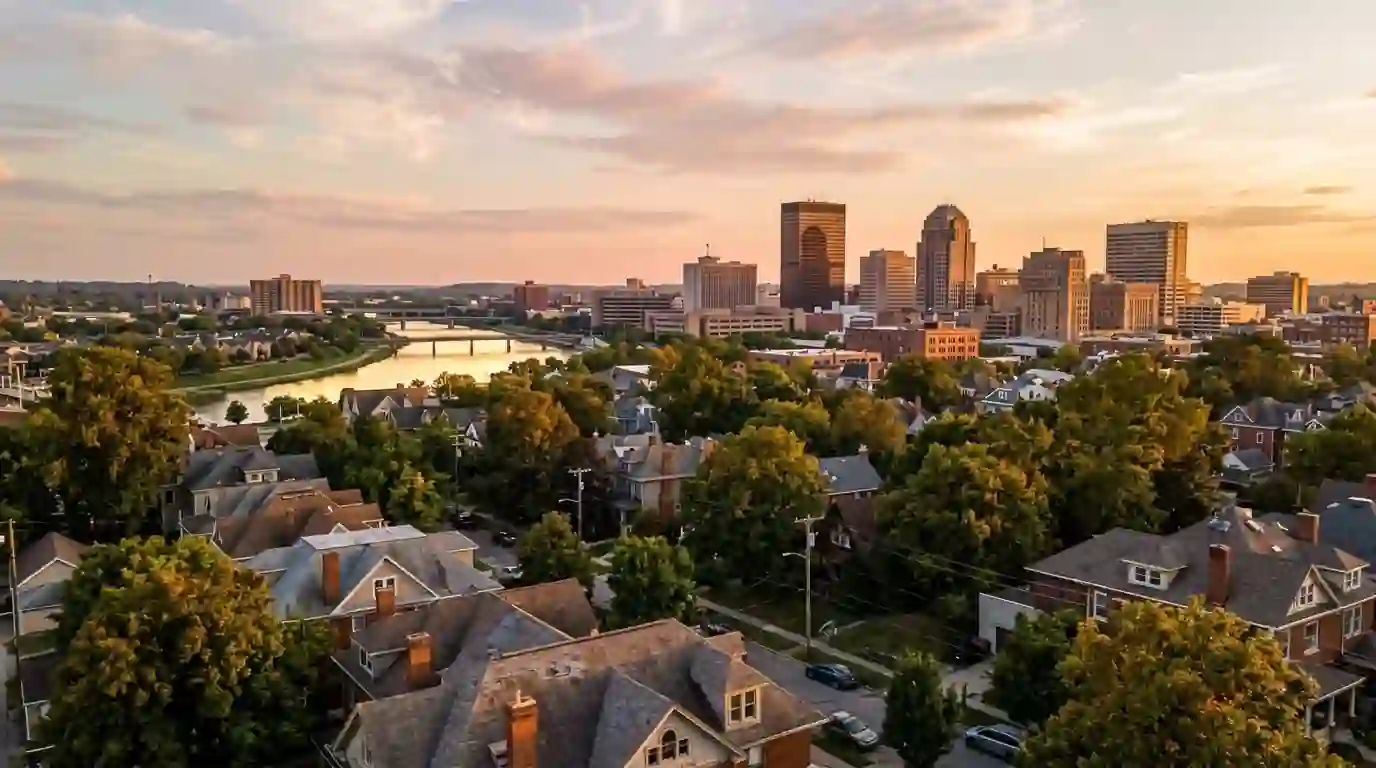
Dayton's roofs tell you when each part of the city was built. Close to downtown, the old districts carry 1800s brick and frame houses with steep slate, metal-lined valleys and low rear roofs over kitchen additions. Climb toward the bluffs north of the river and the houses get bigger, with multiple gables, dormers and chimneys that need careful flashing. Push out to the east side, the far west side or the northeast corner of the city and you find bungalows, Cape Cods and postwar ranches with plain gable roofs and one or two layers of asphalt. Each kind of house fails in its own way, and we plan repairs around that.
We work all of it from one downtown address, which keeps most of the city within a short drive. Our roofers handle the everyday jobs, like a lifted ridge cap or a cracked pipe boot, and the bigger ones, like a full tear-off with new decking. Before anyone talks price, our crew lead climbs up, looks into the attic when there's access, and photographs every slope. You get those photos with a written scope, so you can see the same soft spots and worn flashing we saw. If you're stuck between fixing and starting over, we explain how we weigh that call in our article on repairing versus replacing.
How Dayton's neighborhoods shape the roof over your head
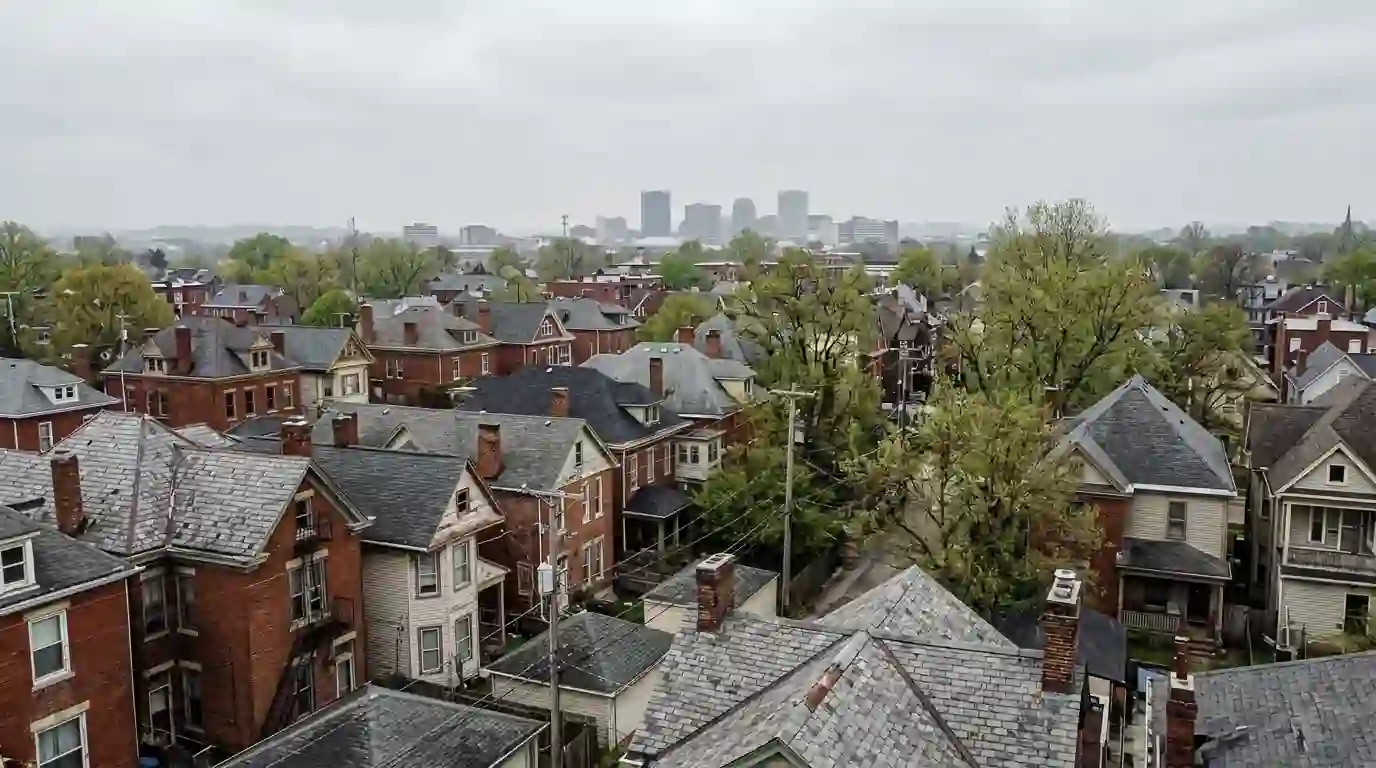
The oldest housing sits in the ring around downtown. In the Oregon District and on St. Anne's Hill, narrow lots hold Italianate and Victorian houses from the 1800s, many still under slate or with slate hidden beneath later shingles. South Park, near Miami Valley Hospital, mixes Queen Anne cottages with larger frame homes. North of the river, Grafton Hill and the Dayton View streets hold big early 1900s houses with towers, dormers and tall brick chimneys. On those roofs the details matter more than the open field of shingles: valleys, step flashing, built-in gutters and the joint where a steep main roof meets a nearly flat porch.
Farther out, the housing shifts. Old North Dayton has rows of modest frame cottages built for working families, most with steep, simple roofs and very little attic space. The east side, around Belmont and Linden Heights, is heavy on 1920s bungalows, brick Cape Cods and postwar homes. Westwood and the rest of the west side have a similar early to mid 1900s mix, with brick and frame houses on tree-lined blocks. Five Oaks and North Riverdale, up the N Main St corridor, add tall foursquares and Craftsman bungalows. In the far northeast, Forest Ridge is newer, with ranches, split-levels and two-story homes, mostly under asphalt on wide, open slopes.
What Miami Valley weather does to roofs across the city
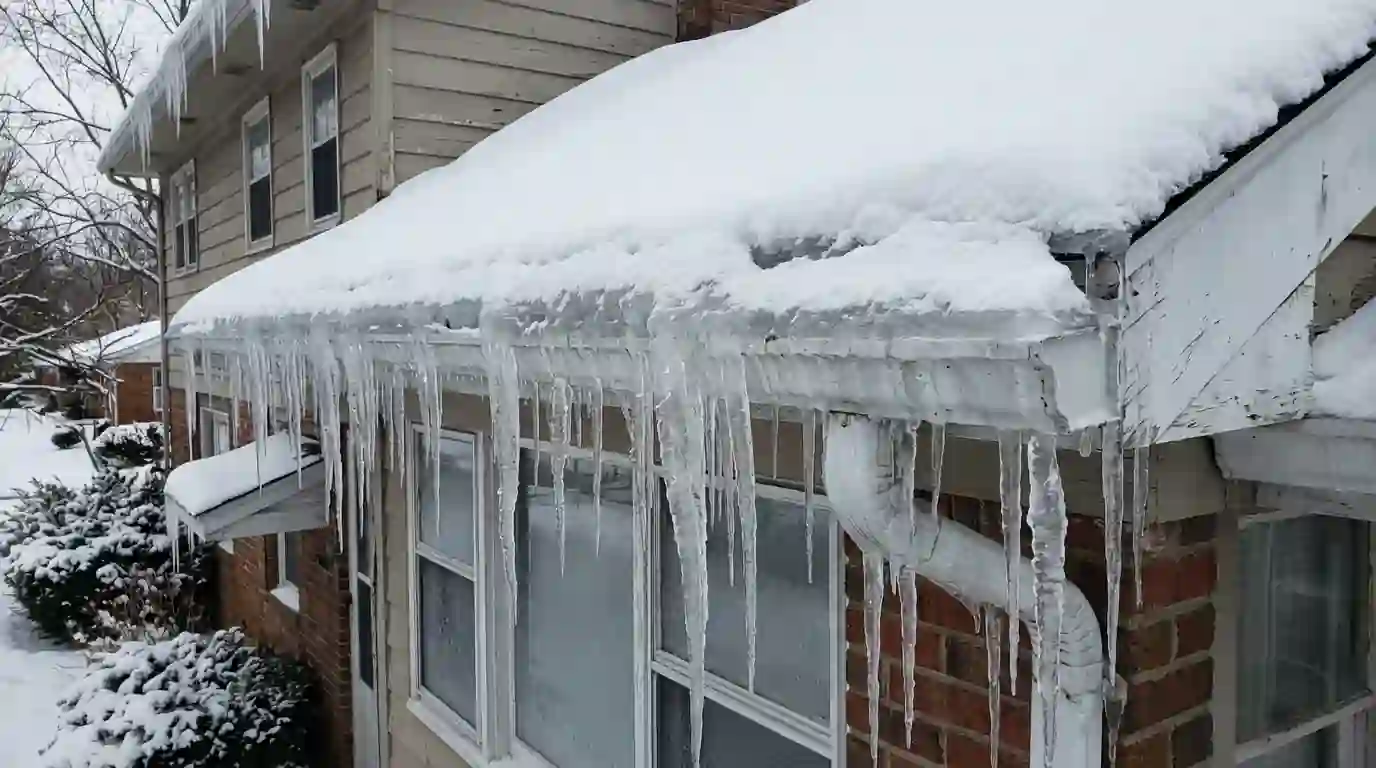
Spring is hail and wind season here. Thunderstorms roll in from the west, and the hail that bruises shingle mats tends to show up from March into June, often in narrow bands that hit one side of town and skip another. Summer brings straight-line winds that peel tabs and ridge caps, plus heavy downpours that find every tired pipe boot. Then winter takes over with freeze-thaw cycles: snow melts by day, refreezes at the eaves at night, and pushes water under the first courses. On older homes without much attic insulation, that cycle builds ice dams almost every hard winter.
The city also remembers the Memorial Day 2019 tornado outbreak, which tore through Old North Dayton, Northridge, Trotwood, Harrison Township and nearby communities. Many roofs in those paths were replaced afterward, and some were patched in a hurry. When we inspect a roof in that part of town, we look closely at how the replacement was fastened and flashed, since rushed storm work tends to show its shortcuts within a few seasons.
Roofing work Dayton homeowners call us about most
Across the city's mix of historic and postwar houses, these seven requests fill most of our calendar.
Roof Repair
Lifted shingles, cracked boots and worn flashing are the most common calls on the city's older roofs.
See roof repairStorm Damage Roof Repair
Spring hail and summer wind leave damage that's easy to miss from the ground but shortens a roof's life.
See storm damage roof repairRoof Replacement
Plenty of bungalows and Cape Cods sit under a second layer that is ready to be stripped to the deck.
See roof replacementSlate Roof Repair & Restoration
Historic districts near downtown still carry slate that can often be repaired one piece at a time.
See slate roof repair & restorationFlat Roof Repair
Rear additions, porches and rowhouse roofs in the older neighborhoods have low slopes that hold water.
See flat roof repairChimney Flashing Repair
Tall brick chimneys on prewar homes are among the leak sources we trace most often.
See chimney flashing repairRoof Inspection
Buyers, sellers and long-time owners want a clear picture of what's left in a roof before deciding.
See roof inspection
How a roof visit works from our North Main Street office
Our office at 40 N Main St puts us in the middle of the city, so most visits start with a short drive. We take I-75 north toward the upper neighborhoods, US-35 east or west for the east and west sides, and Brown St or Wayne Ave for the hills south of downtown. When you call, a person answers, day or night, and asks what you're seeing inside and out. If water is coming in, we work to get a tarp or temporary seal on that day. For planned work, our crew lead sets a time, inspects the roof and attic, and sends a photo report with a written scope and price range before anything is scheduled.
Dayton neighborhoods and nearby towns we cover
- Belmont45420
- Walnut Hills45420
- Patterson Park45420
- South Park45410
- St. Anne's Hill45410
- Oregon District45402
- Dayton View Triangle45406
- Five Oaks45406
- Grafton Hill45406
- Old North Dayton45404
- North Riverdale45405
- Westwood45417
- Linden Heights45403
- Forest Ridge45424
- Kettering45429
- Oakwood45419
- Riverside45431
- Trotwood45426
Roofing questions from Dayton
Do I need a permit to replace a roof inside Dayton city limits?
It depends on the scope of the job, and the rules can change, so we confirm with the city's building services before work starts rather than guessing. Structural work, such as replacing large sections of rafters, is more likely to need review than a simple shingle swap. If your house sits in one of the city's historic districts, visible changes to roofing material may also go through historic review.
What's different about roofing a Dayton house built before 1940?
Prewar houses here usually have spaced plank sheathing instead of plywood, chimneys that no longer serve a furnace, and attics with little insulation or venting. Many also hide an older roof, sometimes wood shingle or slate, under the current layer. We pull a test patch at the eave, check the attic framing, and price decking, flashing and ventilation work up front so the job doesn't change once the tear-off starts.
How do I know if spring hail hit my Dayton roof when my neighbor's looks fine?
Hail falls in narrow bands, and roofs of different ages react differently, so two houses on one block can fare very differently. From the ground, check for dents in gutters, downspouts and metal roof vents, plus granules washing out of the downspouts. Shingle bruises usually need a closer look, so we inspect on the roof and photograph each hit we find.
Which roof problems show up most in Dayton's older neighborhoods compared with the newer ones?
Close to downtown, we mostly chase flashing: chimneys, valleys, built-in gutters and the joints where porches and rear additions meet the main house. In the postwar and later neighborhoods, the common issues are aging shingles, too few attic vents, and storm damage on open slopes with little tree cover. Both groups share cracked pipe boots, which fail on almost every roof sooner or later.
Who picks up when I call about a downtown Dayton roof leak at 2 in the morning?
A person, not a recording. Our phone is answered at any hour, and downtown plus the close-in neighborhoods are only minutes from our office. How soon a roofer reaches you depends on the weather and how many storm calls are coming in, but the first goal never changes: stop the water that night or the next morning with a tarp or temporary seal, then plan the permanent repair in daylight.
What should a roof inspection include when I'm buying an older Dayton house?
A useful inspection covers more than the shingles. We look at flashing, valleys, chimneys, gutters and ventilation, check the attic for stains and soft decking, and count the layers at the eave. You get photos with plain notes on remaining life and likely repair costs. If the seller or lender needs a formal document, we also offer roof certification for home sales.
Roof trouble in Dayton?
Call any hour and tell us your street. We will give you a time window before we hang up.