Slate Roof Repair and Restoration in Dayton, OH
We repair century-old slate roofs slate by slate, with matched salvaged slate, copper or stainless hooks and new copper flashing, working from ladders and hooks so nobody walks your slate. A person answers 24/7.
- Answered 24/7
- Photo report on every visit
- Dayton and the Miami Valley
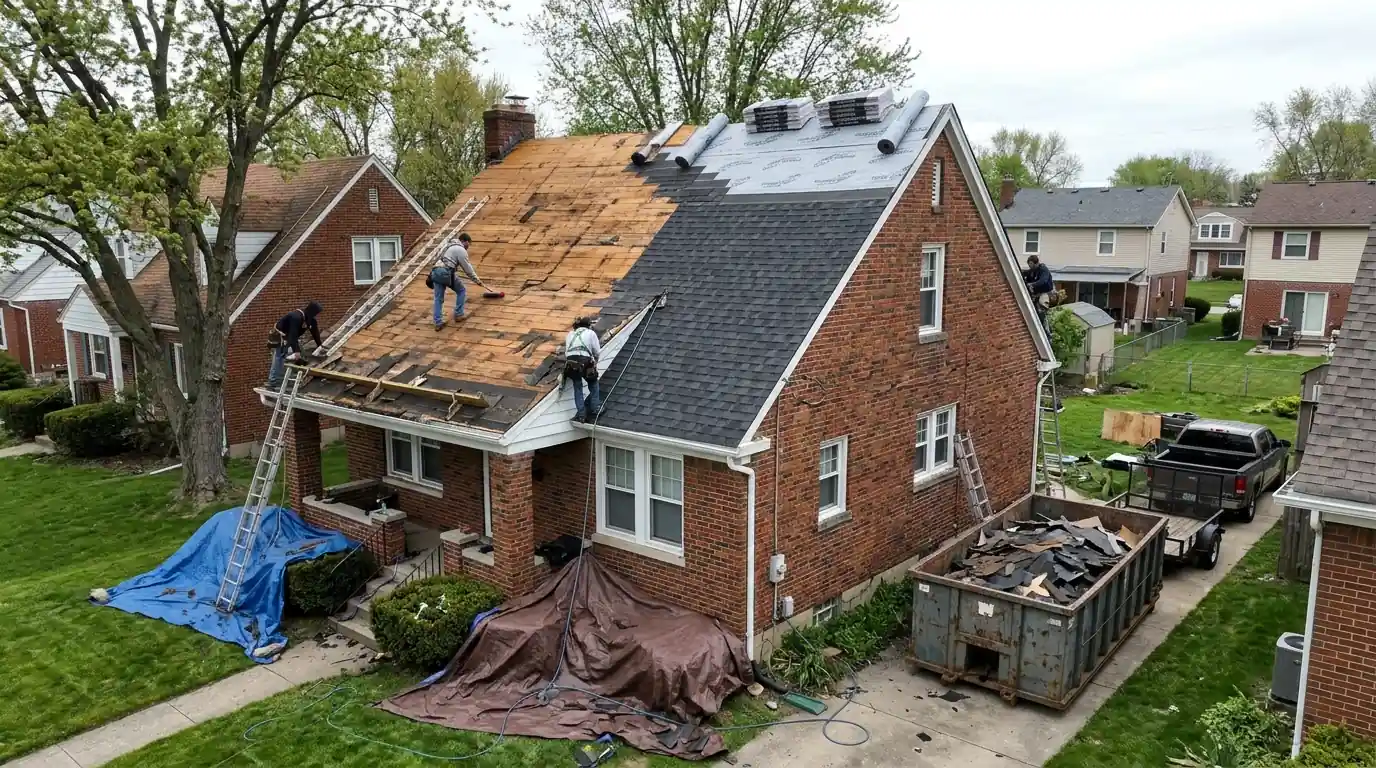
Slate repairs around Dayton typically start at $485 to $1,170 for a visit that replaces a few broken slates, with additional slates around $46 to $94 each. Copper valley replacement runs $2,470 to $6,830 per valley. A full restoration, with slipped slates reset, tar patches removed and flashing renewed, often runs $8,960 to $34,680 depending on size and condition.
A good slate roof can outlast the house's original owners, their children and their grandchildren. Many slate roofs on Dayton homes built between the 1890s and 1930s are still sound, even if they look tired. What usually fails first isn't the stone. It's the iron nails holding it, the copper or tin in the valleys, the flashing at chimneys, and decades of tar patches from roofers who didn't know slate.
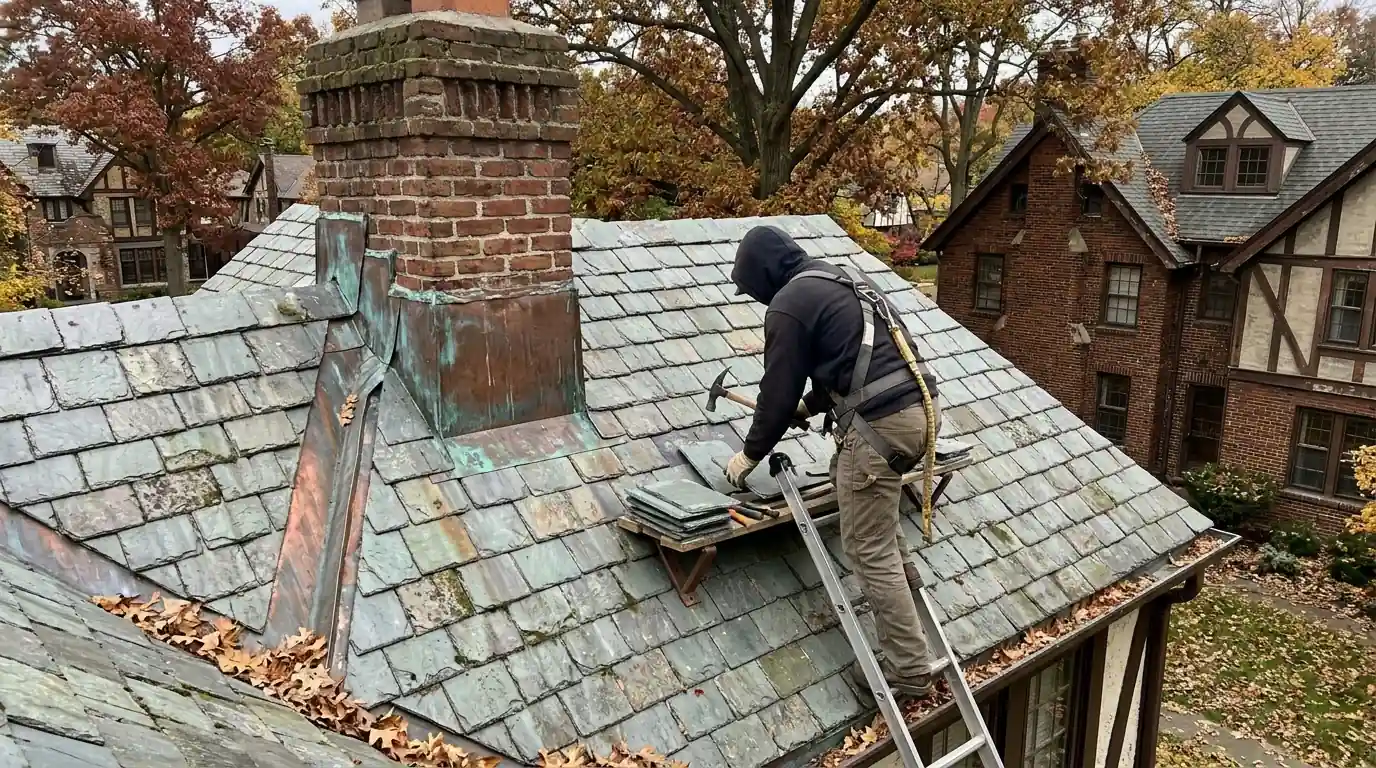
We treat slate as a repairable roof, not a replacement candidate. Broken or slipped slates come out with a slate ripper and new ones go in with hooks or the nail-and-bib method. Valleys and chimney flashings get rebuilt in copper. We source salvaged slate matched for color, size and thickness, so a repair blends in instead of standing out. For upkeep between visits, see our guide to caring for slate on historic Dayton homes.
Repair, restore or replace: deciding what an old slate roof needs
Most slate roofs we see in Dayton's older neighborhoods don't need replacing. They need repair and restoration. If the slate itself is sound, rings when tapped, and isn't flaking widely, the roof can often keep going for decades with new flashing, valleys and replaced slates.
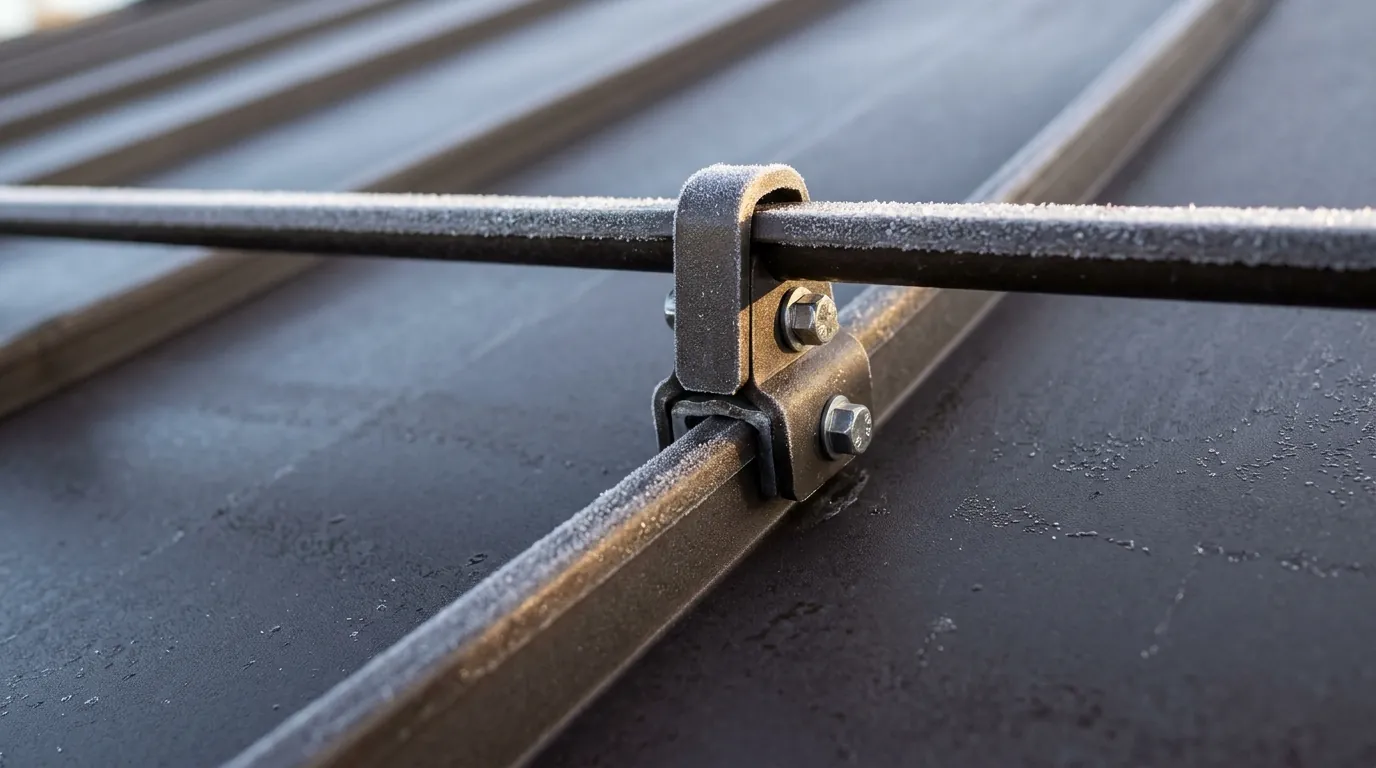
A restoration goes further than spot repairs. It typically includes resetting slipped slates, replacing broken ones, removing old tar patches, rebuilding valleys and chimney flashing in copper, relining built-in gutters, and adding copper snow guards where needed. It's a bigger investment, but it costs far less than a new slate roof and keeps the original character.
Replacement makes sense when a high share of slates are flaking, soft or broken, or when the deck underneath has rotted. Even then, sound slates can often be salvaged and reused on the most visible slopes. If full replacement isn't in the budget or the house can't carry the weight of new slate, our synthetic slate roofing page covers a lighter option.
- Repair: a few broken or slipped slates, sound roof otherwise
- Restore: widespread slipped slates, failing valleys and flashing
- Replace: widespread flaking, soft slate or rotted deck
Historic district rules and why matching slate matters
Several Dayton neighborhoods are locally designated historic districts, including St. Anne's Hill and Dayton View. In those districts, exterior changes such as replacing a slate roof with a different material generally go through the city's historic preservation review. Repairs with matching materials are usually simpler, but rules can change, so check with the city before planning a material change.
Even outside historic districts, matching matters. A repair with the wrong color or thickness stands out from the street and can look like a patch for decades, because slate weathers very slowly. That's why we look for salvaged slate that's already weathered, rather than new slate that may take years to blend in.
Copper flashing fits historic homes for the same reasons. It weathers to a brown and then green patina that suits slate, it lasts far longer than painted steel, and it was used on many original roofs. If your chimney needs attention beyond the flashing, our chimney flashing repair work ties in with slate repairs.
What slate roof repair and restoration typically cost in Dayton
Slate repairs are priced by access, materials and scope. These are typical Dayton-area ranges.
| Job | Typical range | What it covers |
|---|---|---|
| Repair visit, a few slates replaced | $485 to $1,170 | Setup, access, matched salvaged slate, hooks or nail and bib |
| Each additional slate | $46 to $94 | Same visit, same roof area |
| Copper valley replacement | $2,470 to $6,830 per valley | Remove slates along valley, new 16 or 20 oz copper, reset slates |
| Chimney flashing in copper | $1,385 to $3,960 | Step flashing, counterflashing cut into mortar joints |
| Built-in gutter relining | $38 to $72 per linear ft | New copper or membrane lining in historic box gutters |
| Full restoration | $8,960 to $34,680 | Reset slipped slates, replace broken ones, remove tar, renew flashing |
These are typical Dayton-area ranges and are not a quote. Slate jobs vary widely, so we price each one after a close inspection. See more on our Dayton roofing price guide.
- Access and heightSteep, tall roofs with turrets and dormers need more setup, hooks and scaffolding. Access often drives slate costs more than materials.
- Slate matchingCommon colors and sizes are easier to find. Unusual colors, thicknesses or sizes take more searching and can cost more.
- Copper weight and designHeavier copper, soldered seams and custom-formed details cost more than lighter copper or simpler details, but last longer.
- Number of failed nailsRoofs with widespread nail sickness need many slates reset, which raises labor. Sometimes a section is better stripped and relaid.
- Old tar and past repairsRemoving roof cement and correcting previous bad repairs takes time and sometimes requires more replacement slates.
How we repair slate the traditional way, without walking on it
Slate rewards slow, careful work. This is how we approach each repair.
Inspect from ladders, hooks and binoculars
We never walk directly on slate. We inspect with ladders, roof hooks and binoculars, then photograph broken, slipped and flaking slates, failed flashings and old tar patches, marking each one on a roof sketch.
Identify the slate and source a match
We identify slate by color, thickness and size, and sometimes by its likely quarry region. Then we find matching salvaged slate so repairs blend with weathered slate around them.
Remove damaged slates with a slate ripper
A slate ripper slides under the slate and cuts or pulls the old nails without disturbing the courses above. That lets us replace a slate in the middle of the roof without stripping the area.
Install with hooks or nail and bib
Replacement slates go in with stainless or copper slate hooks, or with a nail and a copper bib that covers the nail head. Hooks are discreet and fast. Nail and bib suits some roofs and locations better.
Rebuild valleys and flashing in copper
Failed valleys get stripped and rebuilt with copper, and chimney step and counterflashing get replaced with copper set into the mortar joints. Copper outlasts the tin and galvanized steel common on original roofs.
Remove old tar and document the work
Roof cement from past repairs is removed where possible and the slates underneath replaced or cleaned. You get a photo report and a roof map showing every slate and flashing we touched.
Signs a historic slate roof needs attention before water reaches plaster
Slate fails slowly and in specific ways. These are the signs worth acting on.
Slipped slates and gaps in the courses
When old iron nails rust through, slates slide down and leave a gap above. This is called nail sickness and it's the most common issue on century-old slate.
Cracked, broken or missing slates
Falling branches, ice, and people walking on the roof break slates. A single missing slate can let water reach the deck and plaster below within one storm.
Black tar patches on the roof
Roof cement smeared over slates or flashings is a sign of past quick fixes. It traps water, cracks in cold weather, and makes proper repair harder.
Leaks along valleys and chimneys
Old valley metal and chimney flashing often wear out decades before the slate does. Stains on ceilings near chimneys or below valleys usually point here.
Flaking or soft slates
Some softer slates eventually delaminate, flaking on the surface or turning powdery at the edges. Scattered flaking can be repaired. Widespread flaking may mean the slate is near the end.
Built-in gutter leaks
Many historic homes have gutters built into the roof edge. When their metal linings fail, water rots the cornice and can run into walls.
Slate roofs on Oakwood, Dayton View and St. Anne's Hill homes
Dayton has a lot of slate for a Midwest city. In Oakwood, many Tudor, colonial revival and Georgian homes from the 1910s through 1930s still carry their original slate, often with copper valleys and built-in gutters. Some have steep, complex roofs with dormers, turrets and multiple chimneys, which makes access and flashing the biggest parts of any repair.
Closer to downtown, Dayton View Triangle and the surrounding Dayton View area have large Victorian and early 20th-century homes with slate, some with decorative patterns or colored bands. In St. Anne's Hill, many smaller Italianate and Queen Anne homes from the late 1800s have slate on their main roofs or porch roofs, sometimes partly replaced with shingles over the years.
Weather here is hard on old slate roofs in specific ways. Freeze-thaw cycles crack weak slates and push water under laps. Ice dams build up in built-in gutters. Mature street trees drop branches that break slates, and spring storms knock loose slates already hanging by rusted nails. Regular checks catch those small failures before they turn into plaster damage inside.
Where we do slate roof repair & restoration most often
These neighborhoods, suburbs and cities make up most of our slate roof repair & restoration calls. Each link opens the local page with its ZIP.
Questions about slate roof repair & restoration in Dayton
Can you match the slate on my 1920s Oakwood house for a repair?
Usually, yes. We identify the slate by color, size, thickness and weathering, then find salvaged slate that matches. Weathered salvaged slate blends better than new slate, which can take years to tone down. Unusual colors or sizes may take longer to source, but a close match is almost always possible.
What's the difference between slate hooks and nail-and-bib repairs?
Slate hooks are small stainless or copper hooks nailed into the deck between slates. The new slate rests on the hook, which is barely visible. Nail and bib uses a nail through the slate with a copper bib tucked over it to shed water. Both are traditional methods. We choose based on slate size, location and roof condition.
Why shouldn't roofers walk on a slate roof during repairs?
Slate is strong in the plane of the roof but brittle under point loads. Walking on it, especially older or thinner slate, cracks slates that weren't broken before. We work from ladders, roof hooks and staging to spread weight and avoid creating new damage while fixing old damage.
Is it worth restoring a slate roof instead of replacing it with shingles?
If the slate is sound, usually yes. Restoration costs more than a basic shingle roof, but a restored slate roof can last decades longer than shingles and keeps the house's historic character. In historic districts, switching to shingles may also require approval. We'll tell you honestly if your slate is past saving.
Do I need permission to repair slate in a Dayton historic district?
Repairs with matching materials are generally simpler than material changes, which usually require review. Rules can vary and change, so we suggest checking with the city's historic preservation staff before starting, especially if you're considering copper versus another metal or any change in material.
How long do copper valleys last on a historic slate roof?
Properly installed copper valleys often last many decades, frequently matching the life of the slate itself. They're far longer-lasting than the tin or galvanized steel used on many original roofs. Heavier copper and correct installation with no exposed nails in the water path give the longest service.
Other roofing work that often goes with this job
Product lines we install on roofs around Dayton include shingles from GAF, Owens Corning and CertainTeed, metal from Englert, membranes from Carlisle SynTec and skylights from VELUX.
Need slate roof repair & restoration today?
Call any hour. A person answers, asks a few questions and sets a time for a roofer to come out.