Roof Repair in Dayton, OH for Everyday Wear and Weather
We fix the small roof problems that turn into big ones: missing shingles, popped nails, cracked ridge caps and soft spots. A person answers 24/7, and every repair visit ends with a dated photo report of the work.
- Answered 24/7
- Photo report on every visit
- Dayton and the Miami Valley
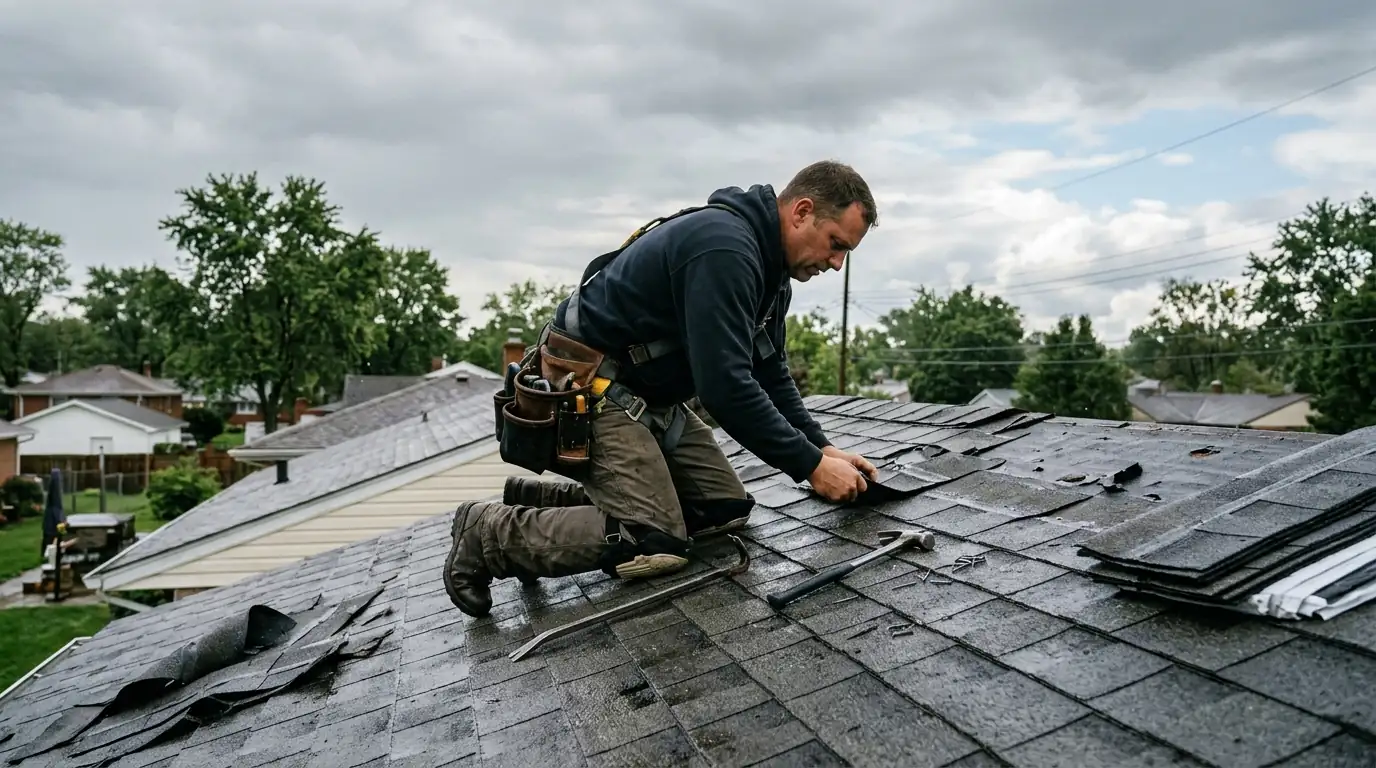
Most roof repairs on Dayton-area homes run $285 to $1,580, depending on access, pitch and how many shingles or how much decking we replace. A typical visit covers finding the actual failure, matching shingles as closely as the market allows, replacing fasteners and nearby flashing, and sending you photos. Repairs that uncover rotted decking can reach $4,350.
Most roofs in the Miami Valley do not fail all at once. They fail one shingle, one nail and one seam at a time, usually after a few freeze-thaw winters and a couple of July thunderstorms have worked on them. A repair done early costs a fraction of what the same problem costs once water has soaked the decking and stained a bedroom ceiling. On a repair call, our job is to find what actually failed, fix it properly, and tell you honestly how much life the rest of the roof has left.
This page covers general repairs on asphalt shingle roofs, the kind most Dayton homes carry. If your trouble started with a specific storm, hail, wind or a falling limb, the pages for those jobs go deeper. Here we focus on everyday failures: shingles that slipped or went missing, nails backing out, a ridge line cracking, a small sag near the eave. We'll also explain when a repair stops making sense and replacing the whole roof becomes the better spend, because patching a worn-out roof is money you won't get back.
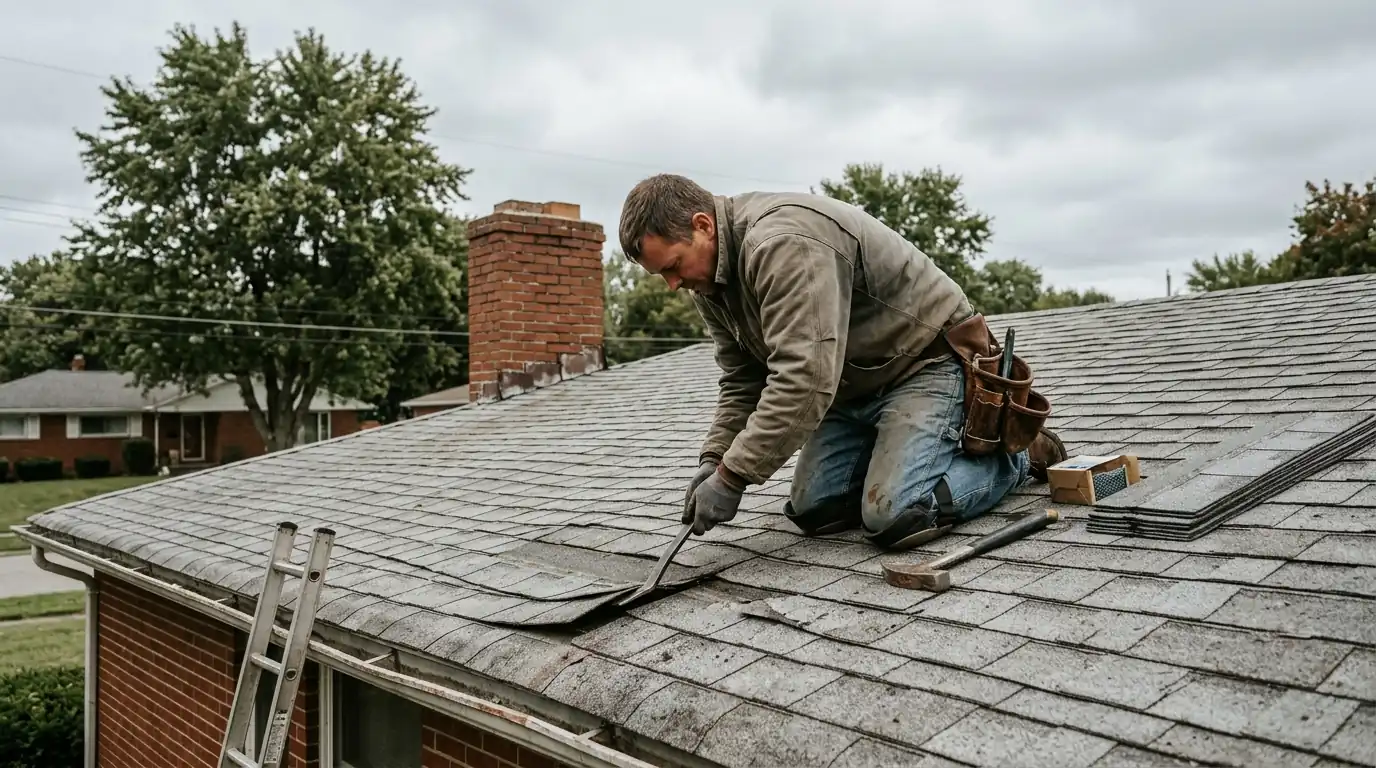
Signs your Dayton roof needs a repair before the next storm
None of these mean the whole roof is finished. Each one is a spot where water or wind has an easy way in, and each gets worse with every season you wait.
Missing or slipped shingles
Bare patches or shingles hanging crooked expose the nail line and underlayment beneath. Even one gap gives wind a handhold on the next course up.
Nail pops
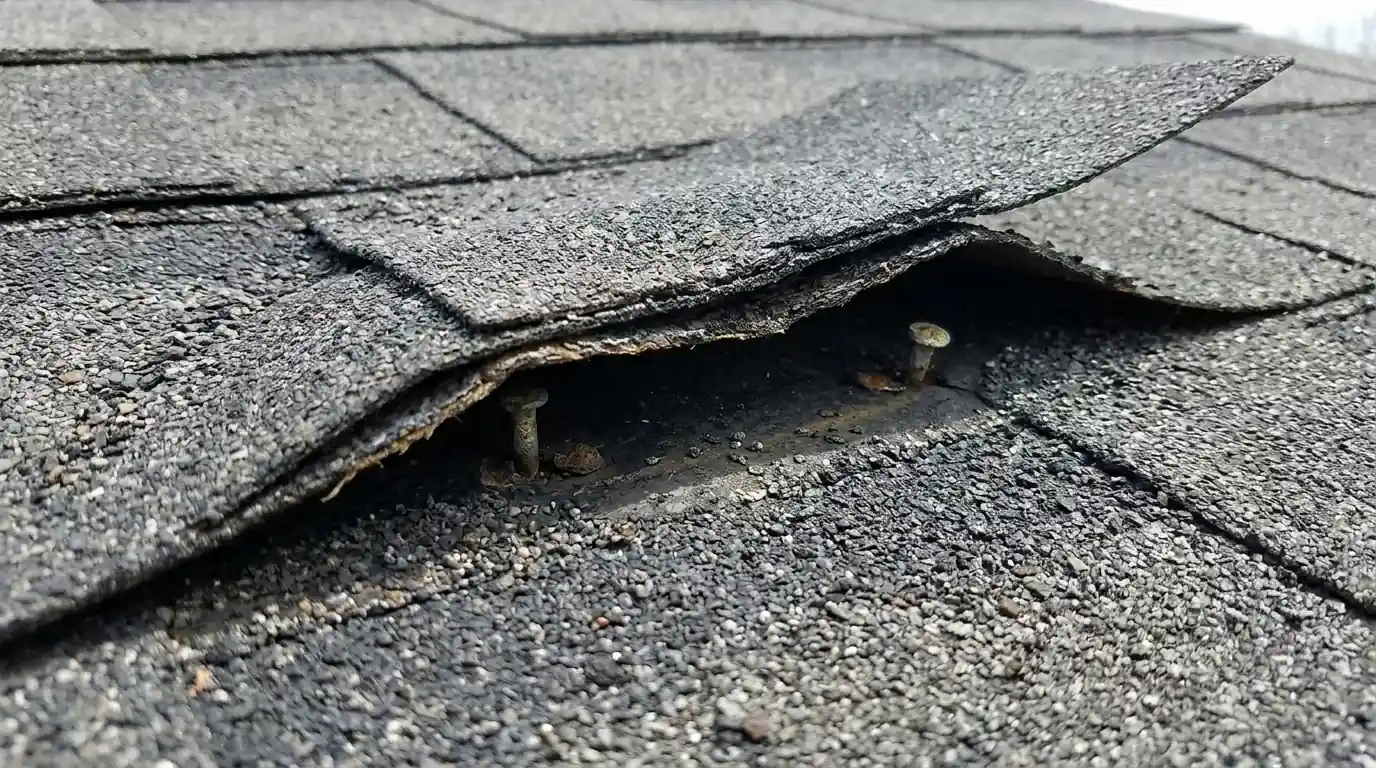
Nails backing out lift the shingle above into a small bump. Eventually the head punches through, and rain follows the shank straight into the deck.
Curling or cupped edges
Edges turning up or tabs cupping in the middle mean the shingle has dried out. Curled tabs snap off in the next strong gust.
A soft spot or visible dip
A dip between rafters often means wet or delaminated decking. We probe it from the attic and the roof before deciding how much wood to cut out.
Exposed or rusted fasteners
Face-nailed patches from an earlier fix leave nail heads open to weather. Each one becomes a leak once the dab of caulk over it dries and cracks.
Daylight or dark rings in the attic
Pinholes of light at the deck or dark stains on the wood show where water already gets in, even if the ceiling below still looks clean.
How we repair a shingle roof so the fix outlasts the season
A good repair blends in and lasts as long as the shingles around it. Here is the order our roofers work in on a typical repair call.
Find the real failure
We walk every slope and check the attic before touching a shingle. The visible damage and its cause are not always in the same place, and fixing only the symptom wastes your money.
Photograph before work starts
Our crew lead photographs the damage, the surrounding shingles and the attic deck. You get those images in the final report, so you can see what we found without climbing a ladder.
Match the shingle
We read the brand, color and profile off the existing roof and source the closest match available. On discontinued 3-tab or older laminates, we'll show you options before installing anything.
Unseal and lift the courses above
Shingles above the damaged area are carefully released with a flat bar so we can pull nails without tearing good material. Rushing this step is how a two-shingle repair becomes a ten-shingle repair.
Replace what failed underneath
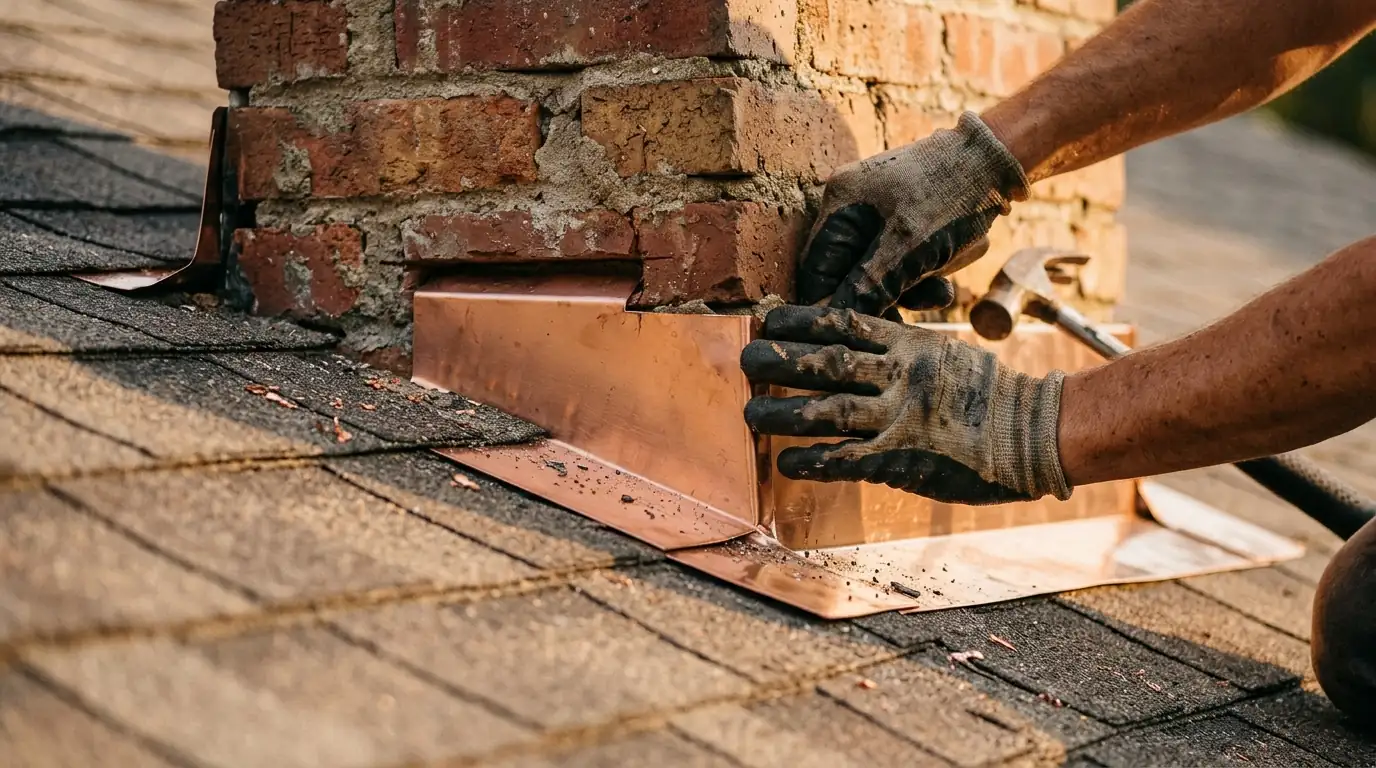
Torn underlayment gets patched with new synthetic felt or peel-and-stick membrane. Rotted decking is cut back to the rafters and replaced with sheathing of matching thickness.
Nail and seal to the manufacturer's spec
New shingles get the nail count and placement the manufacturer calls for, and we hand-seal tabs that won't bond on their own in cold weather. We never leave exposed nail heads in the field of the roof.
Clean up and send the report
We pick up debris, sweep the yard with a magnet for nails, and send a dated photo report showing before, during and after. That record helps if you sell the house or file a claim later.
What a shingle roof repair costs around Dayton in 2026
These are typical ranges we see on Dayton-area homes, and our roofing price guide covers other jobs. Your number depends on what we find once we're on the roof and in the attic.
| Job | Typical range | What it covers |
|---|---|---|
| Minor shingle repair (up to about 10 shingles) | $285 to $640 | Matched shingles, underlayment patch, hand sealing, photo report |
| Nail pop and exposed fastener repair | $245 to $585 | Per slope; reseated or replaced nails, new shingles where heads broke through |
| Section repair (one to two squares) | $680 to $1,580 | Tear-off of the section, new underlayment, shingles and flashing tie-ins |
| Repair with rotted decking | $1,640 to $4,350 | Decking cut-out and replacement, underlayment, shingles, attic photos |
These ranges are typical for Dayton-area homes in 2026, not a quote; your price is set after we inspect the roof and attic. See more on our Dayton roofing price guide.
- Roof pitch and heightSteep or three-story roofs need extra fall protection and staging, which adds labor even to a small repair.
- Shingle availabilityDiscontinued colors sometimes mean pulling original shingles from a hidden slope, which adds a second work area.
- Hidden decking damageWe can't see rot until the shingles come up, so we call you with photos before replacing more wood than planned.
- Number of existing layersA two-layer roof takes longer to open and close cleanly, and the repair has to tie into both layers.
- Access around the houseTight lots, steep yards and fragile plantings change how we set ladders and stage materials.
Repair or replace: how we make the call on an aging Dayton roof
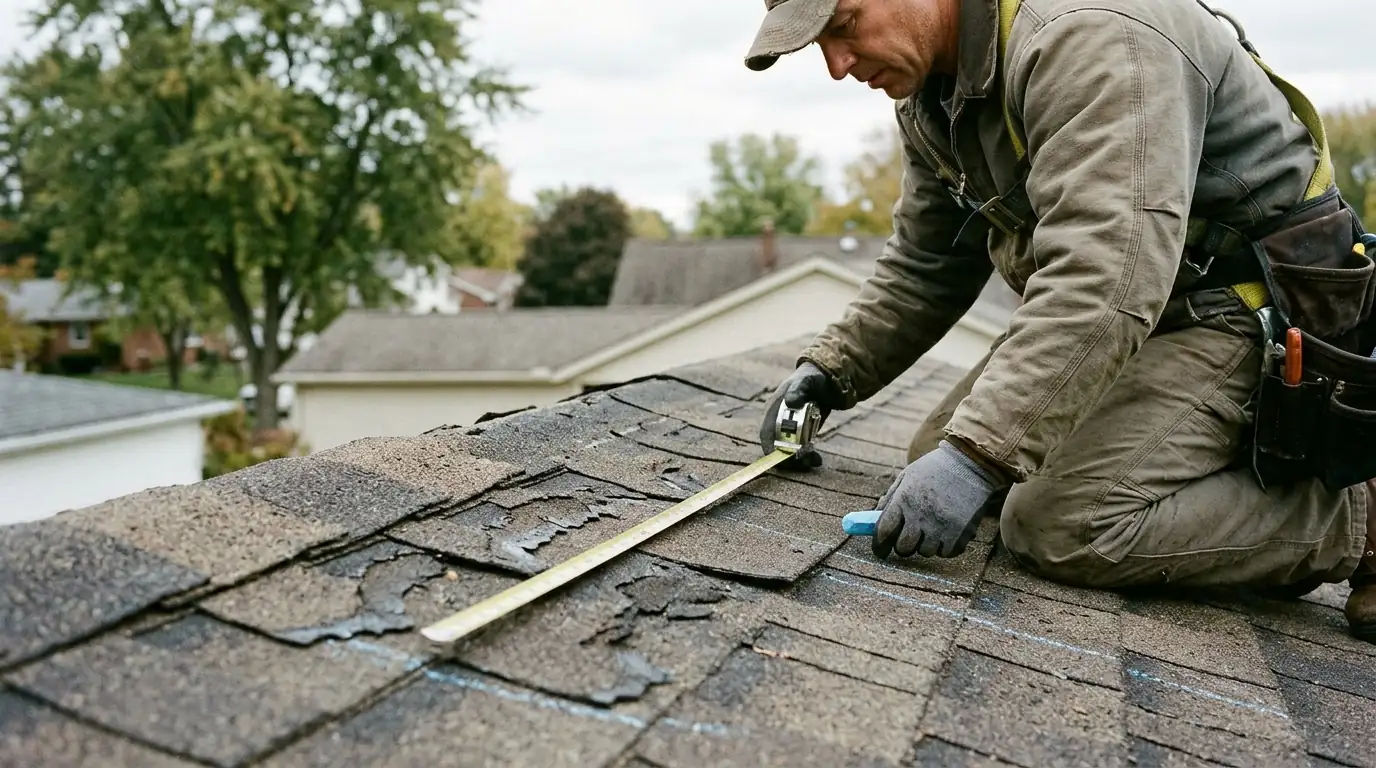
We don't recommend replacing a roof that a repair will carry for years. We also won't keep patching a roof that is past its useful life, because that money is better spent on the new one. The honest answer depends on the roof's age, the condition of the shingles around the damage, and how many separate problems we find on the walk.
As a rough guide, a 3-tab roof from before about 2008 with brittle, curling shingles across several slopes is usually a replacement candidate. A 10- to 15-year-old architectural roof with one bad area is almost always worth repairing. Our article on deciding between repair and replacement in Ohio walks through the math in more detail.
- Repair usually makes sense when damage is confined to one slope or one roof feature
- Replacement usually makes sense when shingles crack as we lift them, the granule surface is worn bare across the field, or two layers are already on
- Either way, we put our reasoning in writing with photos so you can compare the options side by side
Why matching shingles is the hardest part of a small repair
Shingle lines change every few years. Colors get renamed, profiles get thicker, and older 3-tab shingles have largely disappeared from supply houses around Dayton. A patch in a slightly different shade can stand out from the street, especially on a front slope facing the road. That matters more than most people expect when it's time to sell the house.
We bring samples up to the roof and compare them in daylight against weathered shingles, not against the wrapper. When nothing matches closely, there are a few honest options. We can harvest original shingles from a less visible slope and put the new ones there, accept a small color difference on a back slope, or plan the repair so the patch ends at a natural break like a valley or hip. We'll show you photos of each choice before starting. New shingles also weather in over a year or two, so a slight difference usually fades with time.
Where repair calls cluster across the Miami Valley
Much of Dayton's housing went up in two big waves: the streetcar-era homes of the 1900s through the 1920s, and the post-war ranches and split-levels of the 1950s and 1960s. Both have usually been reroofed at least once, and many carry a second layer laid over the first. Those overlays hold heat, wear out faster, and make small repairs fussier.
In Kettering and Huber Heights, the brick ranches built by the thousands after the war have long, low slopes where nail pops and slipped shingles show up first along the eaves. Farther south, 1970s and 1980s homes in Centerville are often on their second roof and reaching the age where ridge lines and valleys need attention. Across the region the pattern holds: freeze-thaw winters loosen fasteners, summer heat dries shingles, and spring storms find whatever is already weak. Catching it during a repair visit is cheaper than catching it on the ceiling.
Where we do roof repair most often
These neighborhoods, suburbs and cities make up most of our roof repair calls. Each link opens the local page with its ZIP.
Questions about roof repair in Dayton
How long does a typical shingle repair take on a Dayton house?
Most small shingle repairs take two to four hours on site, including setup, the repair itself and cleanup. A section repair with new decking can take most of a day. Weather is the main variable: we won't open a roof with rain moving in, and in cold months we plan around temperatures so new shingles can be hand-sealed properly. You'll get the photo report the same day we finish.
Can you repair a roof that already has two layers of shingles?
Yes, though it takes more care. We open both layers cleanly and tie the repair into each one so water can't run between them. A two-layer roof also limits your options later, since Ohio's building code generally does not allow a third layer. If the repair area shows the bottom layer is rotting, we'll tell you, because that usually changes the repair-versus-replace math.
Will a shingle repair void the manufacturer's material warranty on my roof?
A repair done to the manufacturer's installation instructions should not void a material warranty, but terms differ by brand and product line. We use compatible shingles and follow the nailing and sealing specs for the product already on your roof. If your roof has a registered warranty, keep the photo report we send with your house records, since it shows what was done and when.
Why do you check the attic for a simple shingle repair?
Because the attic shows things the roof surface hides. Dark staining, damp insulation or rusted nail tips tell us whether water has been getting in longer than you realized, and how far it has spread. Soft or delaminated decking also shows up from below. It takes a few minutes and keeps us from closing a repair over wood that's already failing.
Is it worth repairing a shingle roof that is more than 20 years old?
Sometimes. A 20-year-old architectural roof in decent shape can take a targeted repair and give you several more years. If the shingles crack when we lift them, or problems show up on several slopes, the money is better put toward replacement. A full roof inspection gives you the whole picture with photos, and we won't push a new roof that isn't needed.
Can you move original shingles around to hide a mismatched repair?
In many cases, yes. When a close match isn't available, we can pull original shingles from a rear slope to finish a repair on the front, then install the new shingles in back where a small color difference won't show from the street. It adds labor, so we'll price both approaches and show you sample photos before you choose.
Other roofing work that often goes with this job
Product lines we install on roofs around Dayton include shingles from GAF, Owens Corning and CertainTeed, metal from Englert, membranes from Carlisle SynTec and skylights from VELUX.
Need roof repair today?
Call any hour. A person answers, asks a few questions and sets a time for a roofer to come out.