Roof Flashing Repair in Dayton, OH for Walls, Dormers and Valleys
Most roof leaks start where the roof meets something else: a wall, a dormer, a valley. We rebuild that flashing properly in metal, layered with each shingle course, and photograph every layer before it gets covered.
- Answered 24/7
- Photo report on every visit
- Dayton and the Miami Valley
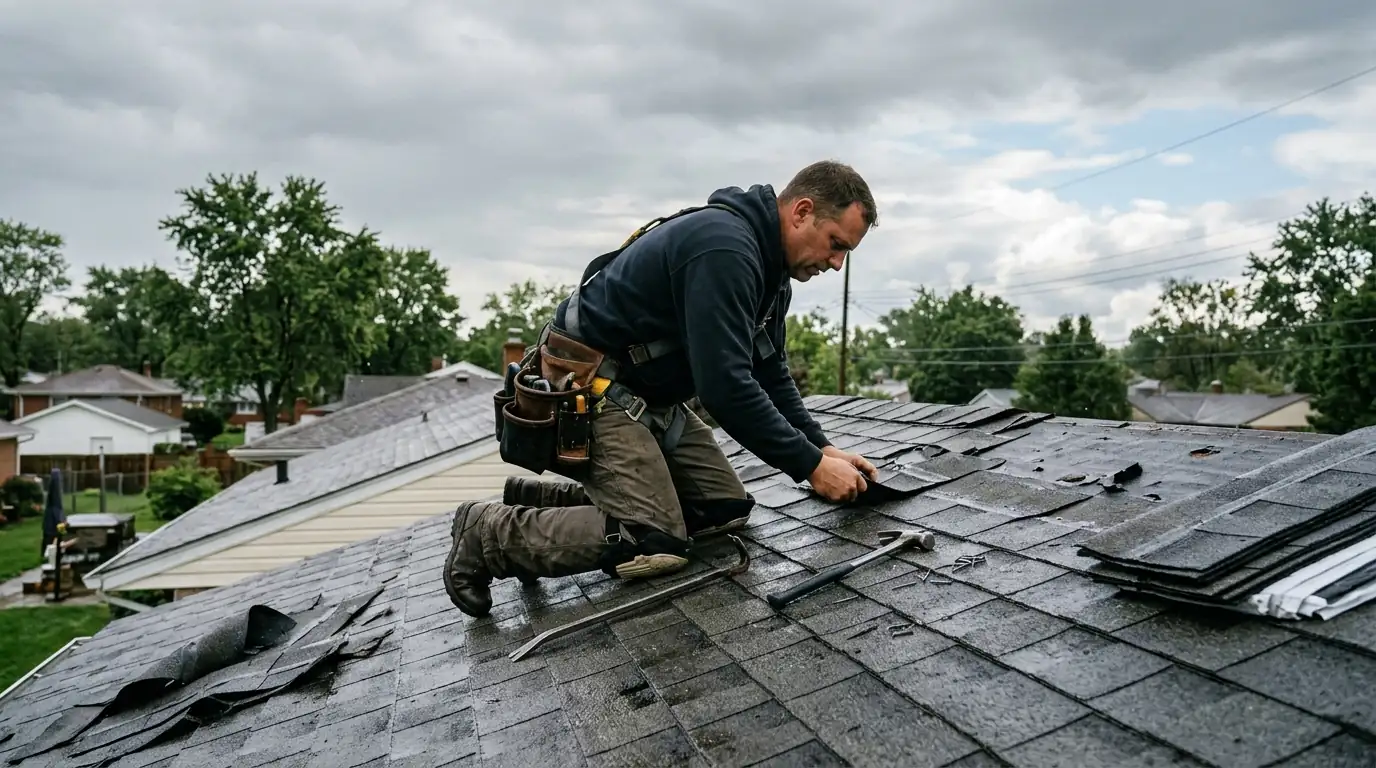
Roof flashing repair in the Dayton area typically costs $185 to $465 for a kick-out flashing, $480 to $1,260 for step flashing along a sidewall, and $640 to $1,720 to rebuild a valley. The job involves lifting the shingles, removing old metal and patches, installing new flashing woven into each course, and resealing siding or counterflashing above it.
Shingles do a fine job on the open field of a roof. The trouble spots are the joints: where a slope runs into a sidewall, where a dormer face meets the roof, where two slopes meet in a valley, and where the roof ends at the eave. At each of those joints, a piece of bent metal called flashing directs water away from the gap and back onto the shingles. When it's missing, rusted, bent or installed wrong, water goes straight into the wall or deck.
Flashing failures are some of the most common leaks we trace, and they're also among the most commonly mis-repaired. A bead of caulk along a wall or a smear of roof cement in a valley may stop a drip for a season, but it hardens and cracks in our freeze-thaw cycles. A proper repair means lifting the shingles, removing old metal and patches, and installing new flashing the way the system was designed to work. Chimneys and plumbing vents have their own details, covered on our chimney flashing repair and pipe boot pages.
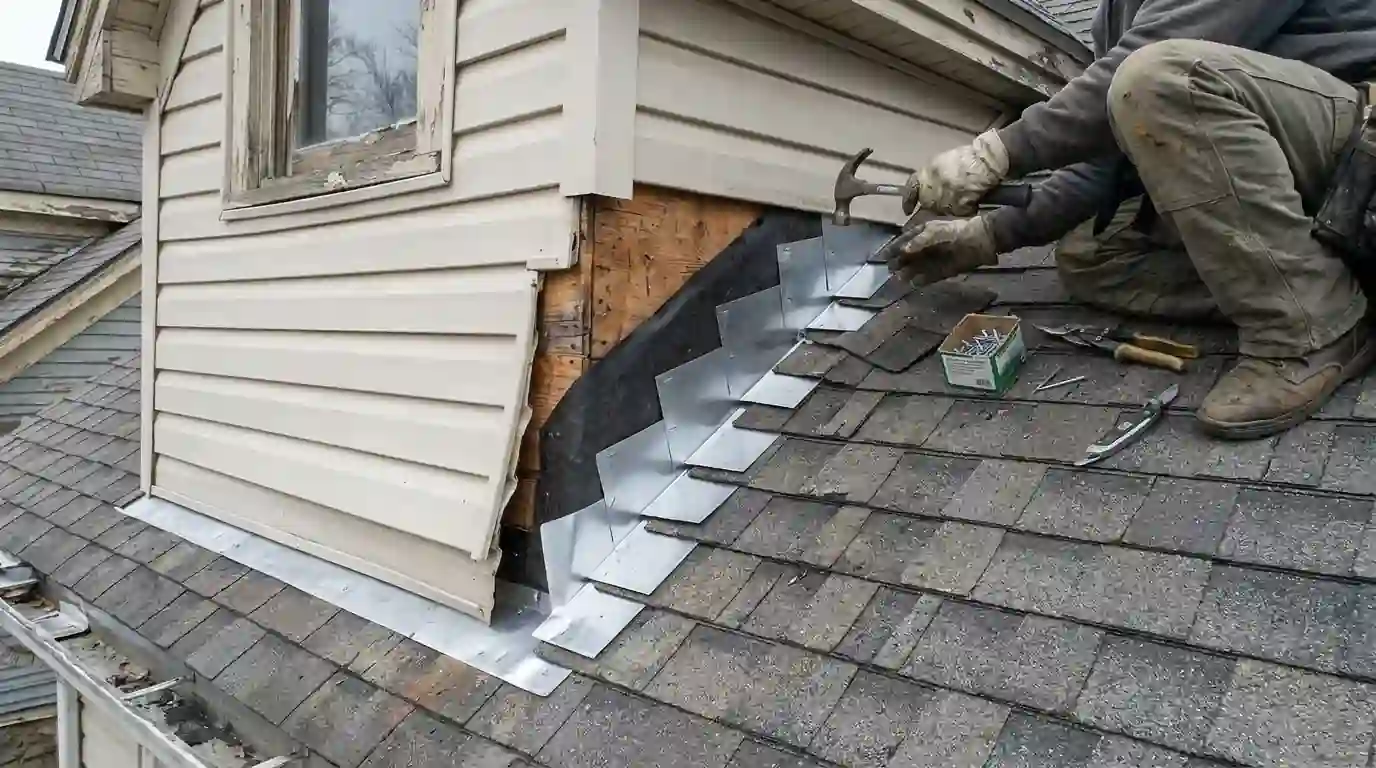
Step, apron, kick-out and valley flashing: what each piece does
Each type of flashing handles a different joint, and each fails in its own way. Knowing which one is involved helps explain why a repair costs what it does.
Step flashing runs up a sidewall in small L-shaped pieces, one under each shingle course. If it was installed as one long strip instead, water can run behind it. Apron flashing sits across the bottom of a wall or dormer face, where the roof slopes down away from it. Kick-out flashing is a small diverter at the bottom of a roof-to-wall joint that throws water out into the gutter instead of behind the siding. It's often missing on houses built before the 2000s. Valley flashing lines the trough where two slopes meet, the place where the most water on the roof concentrates.
- Step flashing: sidewalls, chimney sides, dormer cheeks
- Apron or headwall flashing: below walls and dormer fronts
- Kick-out flashing: where a lower roof ends against a wall
- Valley flashing: where two roof slopes meet
- Drip edge: along eaves and rakes to protect the deck edge
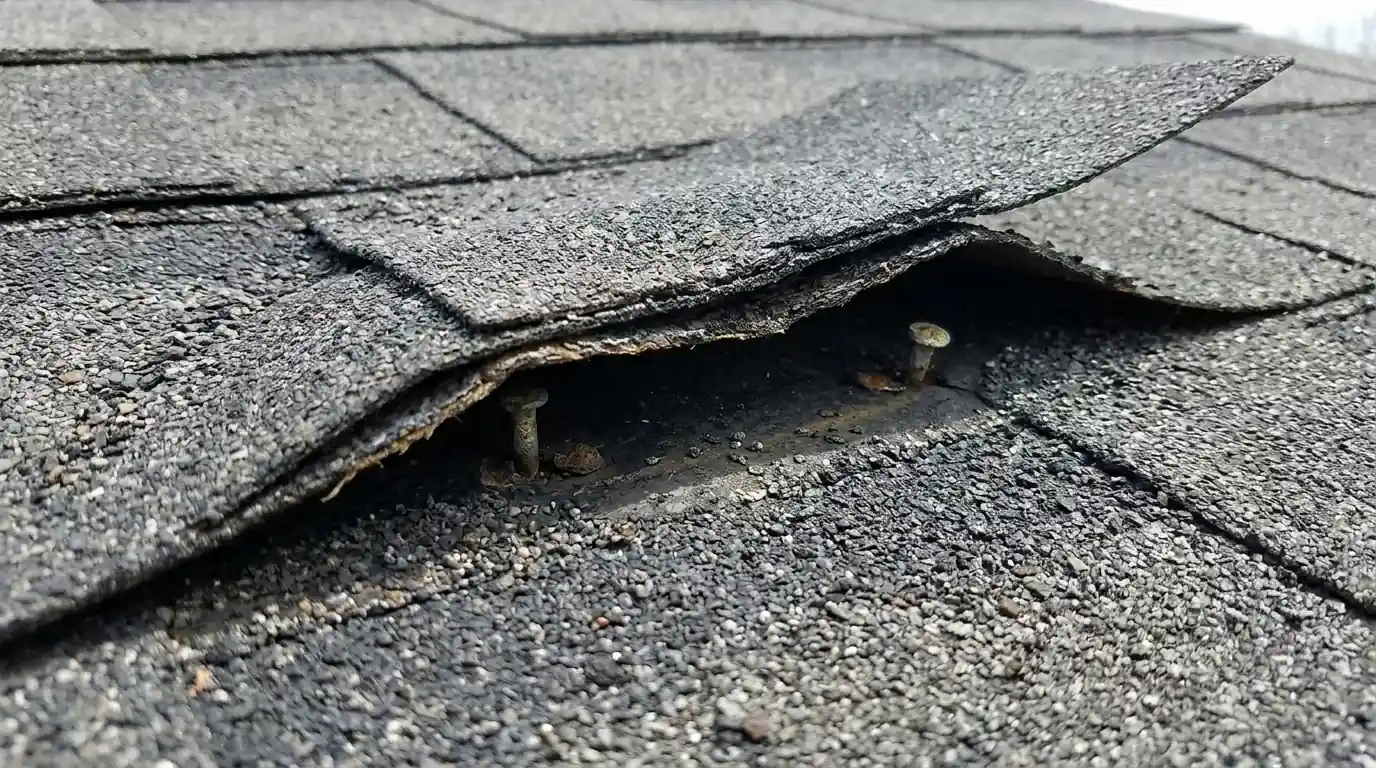
Why caulk and roof cement aren't a substitute for flashing
We remove a lot of sealant on flashing jobs. Someone noticed a leak at a wall, ran a bead of caulk along the joint, and it worked for a while. Then the caulk shrank in the cold, pulled away from the siding or brick, and the leak came back, often worse, because the caulk trapped water behind it.
Sealants have a role, but it's a small one: sealing exposed fastener heads, bedding a counterflashing into a mortar joint, or closing a tiny gap at the top of a kick-out. They're not a waterproofing system on their own. Metal flashing works by gravity, sending water over each layer and down the roof. It keeps working even after decades of heat and cold, which no tube of sealant can promise.
If you see thick tar around your dormers, walls or skylights, that's usually the sign of a leak that's been patched several times. Opening it up is the only way to know what's underneath. For skylight frames specifically, our skylight repair team handles the curb and flashing kit together.
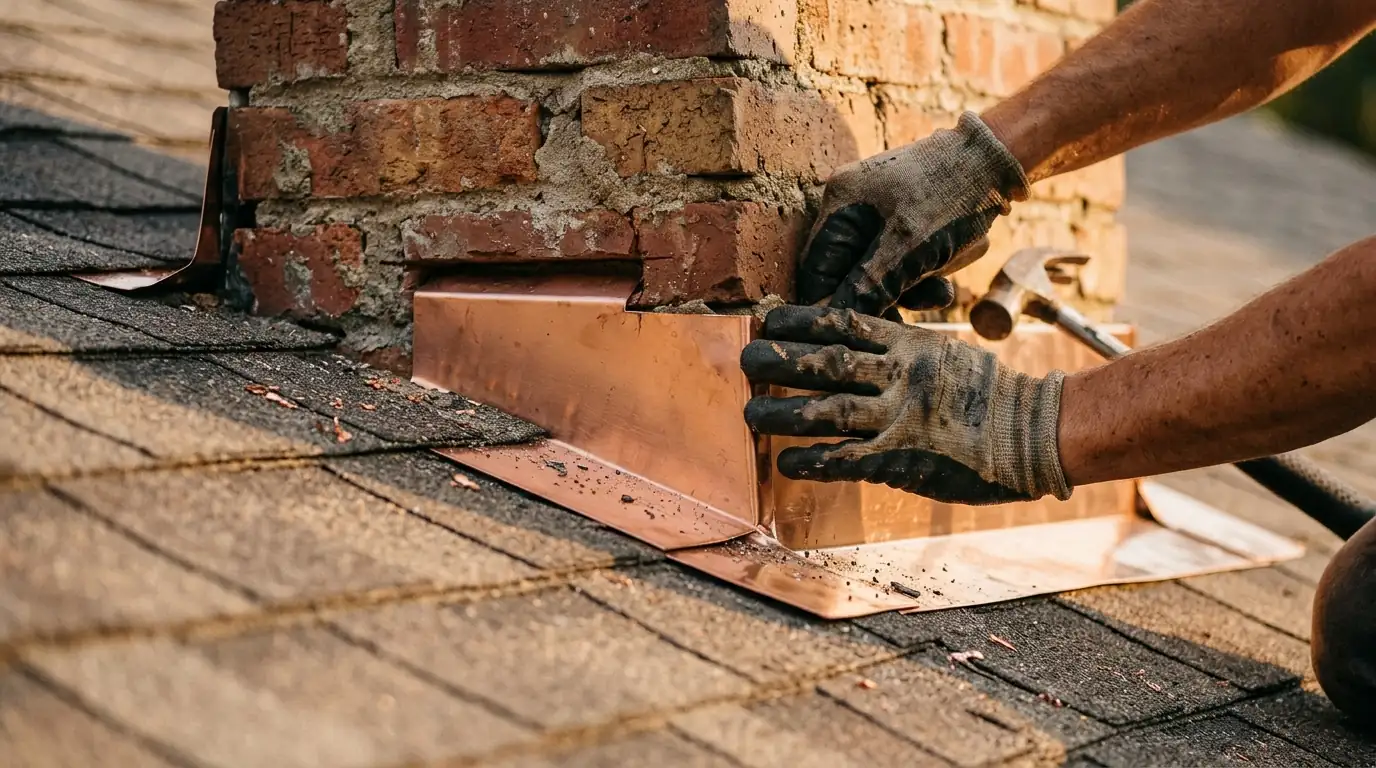
Roof flashing repair prices around Dayton by location on the roof
Flashing costs depend on the joint, its length and what has to come apart to reach it. These are typical Dayton-area ranges.
| Job | Typical range | What it covers |
|---|---|---|
| Kick-out flashing install | $185 to $465 | Per location, including lifting shingles and siding to fit it |
| Step flashing along a sidewall | $480 to $1,260 | Per wall up to about 15 feet, new membrane and metal |
| Apron flashing at a dormer or headwall | $390 to $980 | Per run, with siding clearance corrected |
| Valley rebuild | $640 to $1,720 | Per valley, new membrane and metal or shingle valley |
| Full dormer flashing rework | $860 to $2,140 | Both cheeks and the apron on a typical dormer |
These are typical 2026 Dayton-area ranges, not quotes; your price depends on the joint and what we find when we open it up. See more on our Dayton roofing price guide.
- Wall materialVinyl siding comes off easily; brick and stone need cut-in counterflashing, which adds labor.
- Length of the jointLong sidewalls and valleys take more metal and more courses of shingles to lift and reset.
- Rot behind the flashingLong-running leaks often soften decking or wall sheathing, which has to be replaced before new flashing goes in.
- Flashing metalCopper and lead-coated copper cost more than aluminum or galvanized steel but last much longer on historic homes.
- Shingle condition nearbyBrittle shingles may break when lifted, so we may need to replace more of them than planned.
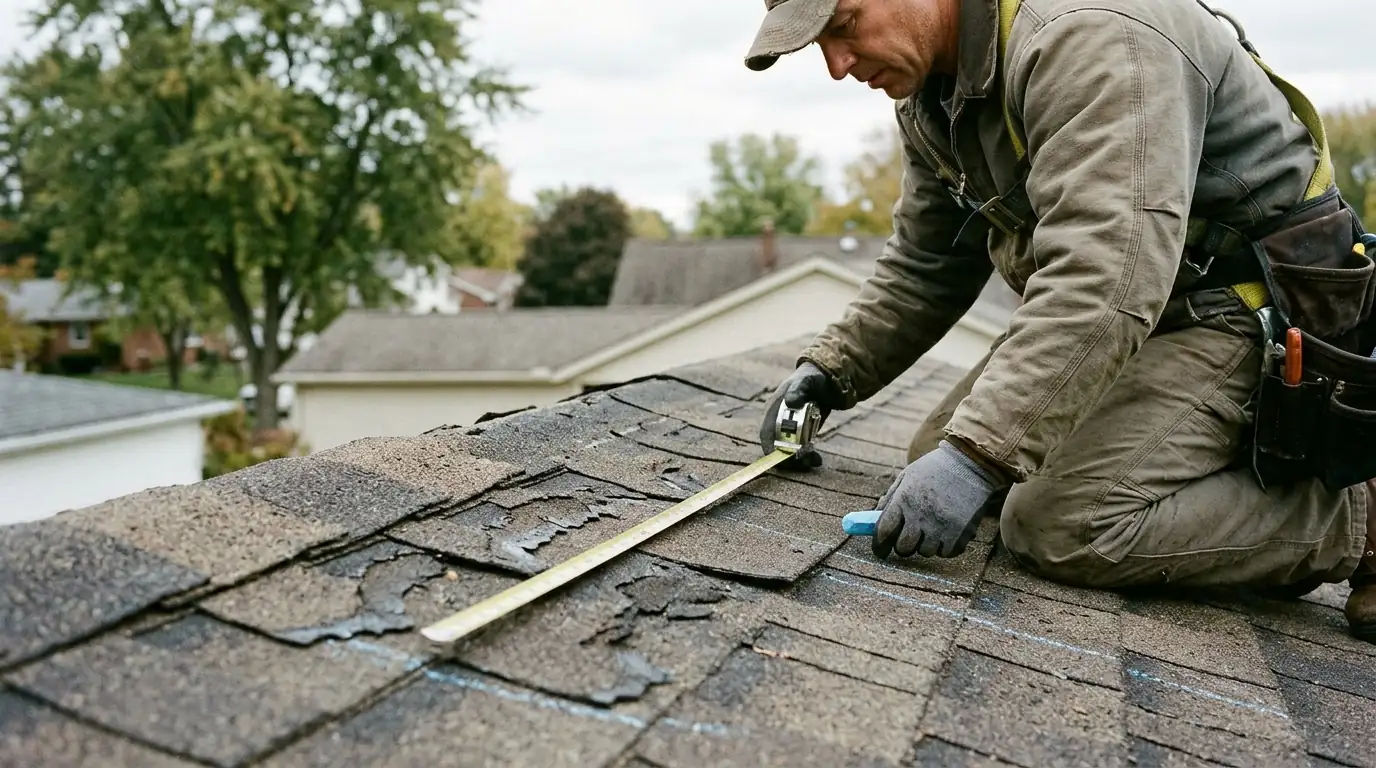
How we rebuild flashing at walls, dormers and valleys
Good flashing is layered so water always flows over each piece, never behind it. That's how our roofers build it.
Open up the joint
We carefully lift the shingles along the joint and, where needed, remove the bottom course of siding or trim. That exposes the old flashing and the deck beneath it.
Remove old metal and patches
Rusted metal, caulk, roof cement and any face-nailed patches come out. We check the deck and wall sheathing for rot and replace soft wood.
Add underlayment at the joint
Self-adhering membrane goes along the joint and turns up the wall. That backup layer catches any water that ever gets past the metal.
Install new flashing piece by piece
Step flashing goes in one piece per shingle course, overlapping like the shingles themselves. Valleys get new metal or a woven or closed-cut shingle valley, depending on the roof.
Add the kick-out and drip edge
Where a roof ends against a wall, we install a kick-out flashing to send water into the gutter. Missing drip edge at the eaves gets added at the same time.
Close the wall and photograph each layer
Siding or counterflashing goes back over the new metal with the right clearance above the shingles. Your photo report shows the old flashing, the membrane, the new metal and the finished joint.
Where failed flashing shows up on a Dayton house
Flashing problems tend to show up near the joint itself, either inside or on the wall below. Look for these.
Stains where a ceiling meets an outside wall
A stain right at a wall line below a roof-to-wall joint usually points to failed step flashing above it.
Rot or stains on siding below a roof edge
Soft trim or stained siding where a lower roof ends against a wall often means the kick-out flashing is missing.
Caulk or tar smeared along walls and dormers
Heavy sealant where metal should be is a sign of past patching, and usually of a leak that keeps coming back.
Rusted or lifted metal in valleys
Open metal valleys on older roofs can rust through, and lifted edges let water run under the shingles beside them.
Leaks at the front of a dormer
Water at the base of a dormer face usually means the apron flashing is too short or the siding sits too tight to the shingles.
Rotted fascia or decking at the eave
Missing or short drip edge lets water curl back under the shingles and into the edge of the deck and fascia.
Dormers, porch roofs and brick walls on Miami Valley homes
Dayton's older neighborhoods are full of flashing details. In St. Anne's Hill and the Oregon District, many homes date from the 19th century and sit close together, with roofs running into brick walls, dormers set into steep slopes, and porch roofs tied into masonry. Over a century, those joints have been reflashed and patched many times, sometimes with metal and often with tar. Flashing into brick requires a cut-in counterflashing set into the mortar joint, not just sealant along the top.
Newer suburbs bring their own patterns. In Washington Township, plenty of homes from the 1980s and 1990s have vinyl siding over OSB sheathing, with multiple roof-to-wall joints where garages, porches and two-story walls meet. Missing kick-outs on those houses can quietly rot the sheathing behind the siding for years. If you see swelling or soft spots on siding below a roof edge, our siding repair page covers the wall side of that fix.
Where we do roof flashing repair most often
These neighborhoods, suburbs and cities make up most of our roof flashing repair calls. Each link opens the local page with its ZIP.
Questions about roof flashing repair in Dayton
Can new step flashing be installed without tearing off the surrounding shingles?
Usually only the shingles right along the joint need to come up, not the whole slope. Step flashing weaves under each shingle course, so we lift or remove the courses closest to the wall, install new metal one piece at a time, and lay shingles back in. On a brittle roof, some shingles crack when lifted and need replacing.
Why is the siding rotting below the corner where my roof meets the wall?
That's the classic sign of a missing kick-out flashing. Without it, water running down the roof-to-wall joint pours behind the siding at the bottom instead of into the gutter. Over time it soaks the sheathing and framing. We install the kick-out and check the wood behind the siding while it's open.
Is copper flashing worth the extra cost on an older Dayton home?
On a slate or tile roof, or a historic brick home you plan to keep for decades, often yes. Copper lasts far longer than aluminum or galvanized steel and matches the roofing's lifespan. On an asphalt shingle roof that will be replaced in 20 to 25 years, aluminum or painted steel usually makes more financial sense.
Do you have to remove siding to replace step flashing along a wall?
Usually the bottom course or two of siding along the joint has to come off or be pulled out, because the siding laps over the top of the step flashing. Vinyl siding can typically be unlocked and reused. On brick, the counterflashing is cut into the mortar instead. We close up the wall with the right clearance above the shingles.
How long should roof flashing last compared to the shingles around it?
Good metal flashing often outlasts asphalt shingles, especially aluminum, painted steel and copper. During a repair, we reuse flashing only if it's sound, correctly shaped and installed the right way. Rusted, bent or patched metal gets replaced. Flashing that was installed as one long strip instead of individual steps gets replaced too, since it can't be made to work properly.
Why is there thick black tar all over the flashing around my dormers?
That's almost always evidence of repeated leak patching. Someone saw water at the dormer and coated the joint in roof cement rather than fixing the flashing. It hides the real problem and traps moisture. We remove the tar, inspect the wood beneath, and install proper apron and step flashing so the dormer sheds water on its own.
Other roofing work that often goes with this job
Product lines we install on roofs around Dayton include shingles from GAF, Owens Corning and CertainTeed, metal from Englert, membranes from Carlisle SynTec and skylights from VELUX.
Need roof flashing repair today?
Call any hour. A person answers, asks a few questions and sets a time for a roofer to come out.