Metal Roof Repair in Dayton, OH for Leaks, Rust and Loose Screws
We trace metal roof leaks to the actual screw, lap or flashing that's failing, fix it with parts made for metal, and send photos of before and after. A person answers 24/7 when water's coming in.
- Answered 24/7
- Photo report on every visit
- Dayton and the Miami Valley
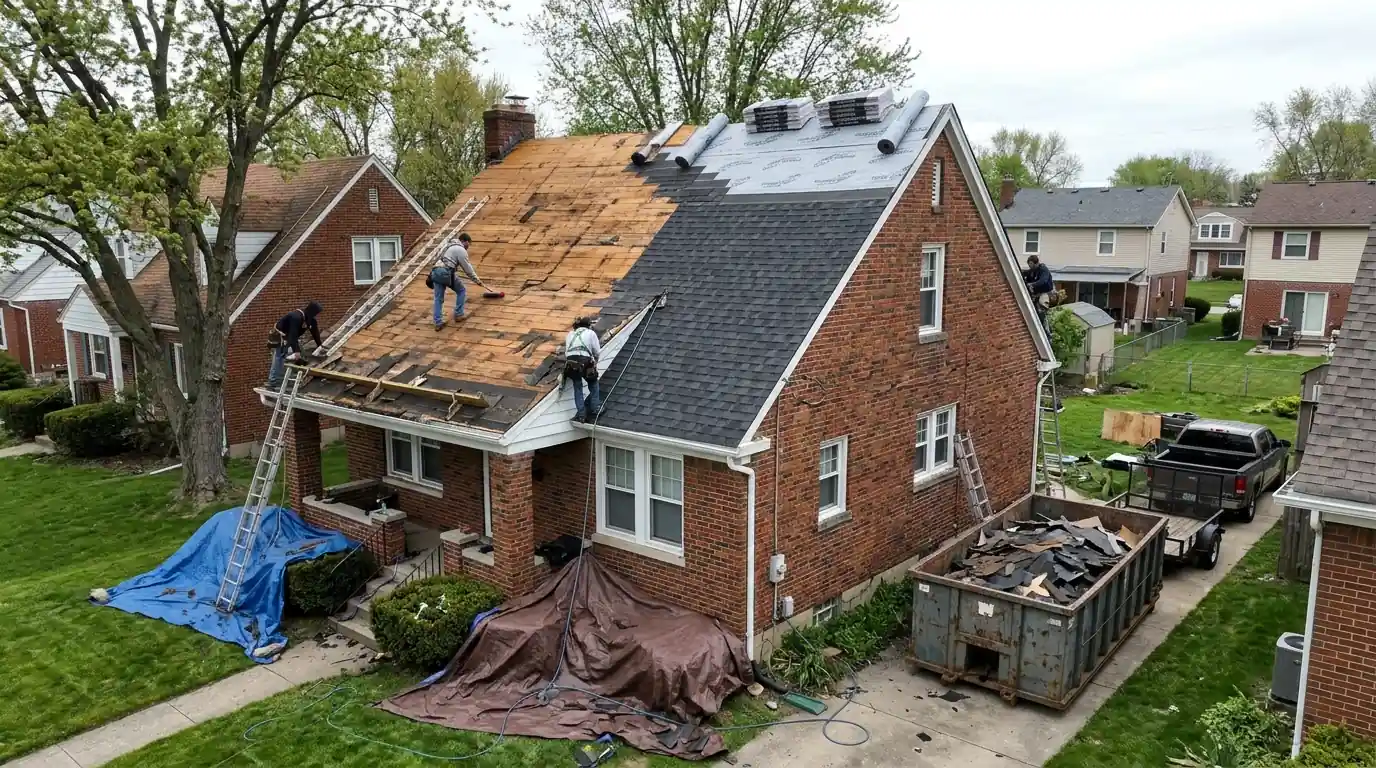
Most metal roof repairs around Dayton typically cost $385 to $940 for a diagnosed leak at a few fasteners, a flashing or a ridge closure. Re-screwing an entire exposed-fastener roof often runs $1.35 to $2.65 per square foot. Replacing damaged panels, treating rust, or restoring a worn barn roof with coating costs more, depending on access and panel availability.
Metal roofs rarely fail all at once. They leak at a handful of predictable places: the rubber washer under a screw that has dried and split, an end lap where two panels overlap, a ridge closure that blew loose, or flashing around a chimney or vent that was caulked instead of formed. Finding the right spot takes patience, because water runs along panel ribs and can drip several feet from where it got in.
We start inside when we can, marking the stain or drip, then work up the slope on the roof, checking every fastener, lap and seam in that path. Once we find it, we fix it with materials made for metal: oversized replacement screws, butyl tape at laps, formed flashing, and color-matched sealant only where sealant belongs. You get photos of the problem and the repair, so you know exactly what was done and why it should stay dry.
Warning signs your metal roof needs repair before it leaks more
Metal gives plenty of warning before major problems. These are the signs we look for first.
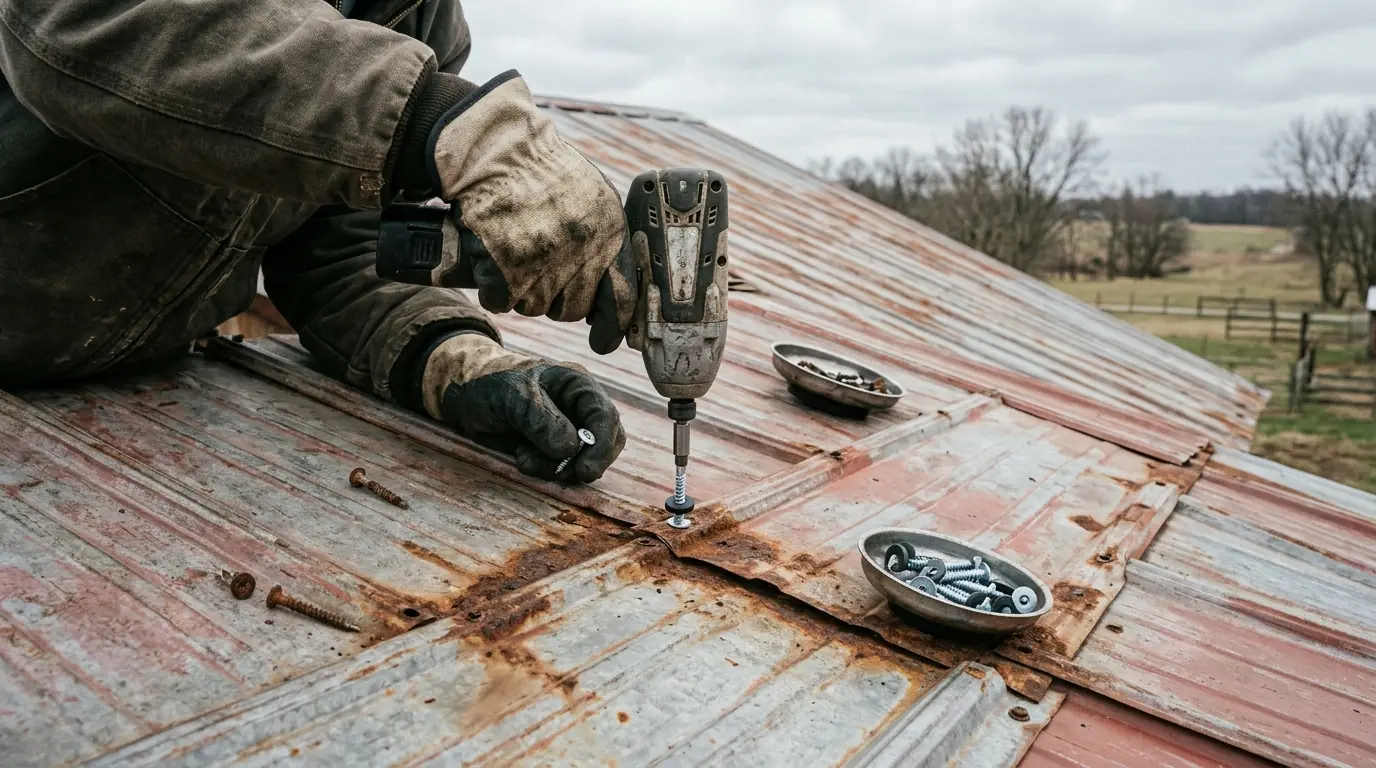
Cracked or missing screw washers
Look for gray, cracked neoprene under screw heads or screws sitting crooked. Each failed washer is a small hole in the roof.
Screws backing out of the panels
Daily expansion and contraction can work screws loose over the years, especially on long panels. Raised screw heads leak and can enlarge their holes.
Rust at laps, edges and cut ends
Rust usually starts where moisture sits: under end laps, along the eave, and at cuts made in the field without touch-up paint.
Drips that show up only in wind-driven rain
If water appears during sideways rain but not gentle rain, look at ridge closures, rake trim and side laps where wind pushes water uphill.
Panels lifted or bent after a storm
Straight-line winds can peel back panel edges, especially at rakes and eaves. A lifted edge catches more wind every storm until the panel tears away.
Gutters torn off by snow slides
When snow sheets off a metal roof, it can rip gutters and bend eave trim. That damage opens the eave to water and ice next time.
How we find and fix leaks on metal roofs
Metal roof leaks call for careful tracing and the right parts. This is how we work through a repair.
Answer, stabilize and set a time
When you call, we ask where water is showing and how fast. If it's active, we can temporarily seal the suspected area or tarp it, then come back for the full repair in dry weather.
Trace the leak from inside and out
We mark stains from the attic or ceiling, then follow panel ribs uphill on the roof. Water on metal travels, so we check every fastener, lap and seam along that path.
Replace failed fasteners correctly
Loose or stripped screws are swapped for oversized screws with fresh washers, driven snug so the washer seals without being crushed. We don't just stack sealant over old screws.
Reseal laps and repair flashing
End and side laps get cleaned and re-taped with butyl, and loose closures are replaced. Flashing around chimneys, vents and walls is reformed or replaced rather than smeared with caulk.
Replace or treat damaged panels
Badly dented, rusted-through or torn panels are replaced with matching profiles when available. Surface rust is cleaned, primed and painted to stop it spreading.
Water test and photograph the fix
Where practical, we water test the repaired area from above while someone watches inside. Then we send photos of the repair and note any other areas that will need attention later.
Typical metal roof repair prices around Dayton
These Dayton-area ranges cover common repairs on residential and agricultural metal roofs. Larger or commercial jobs are priced individually.
| Job | Typical range | What it covers |
|---|---|---|
| Leak diagnosis and small repair | $385 to $940 | Trace the leak, replace fasteners or reseal a lap or flashing |
| Full fastener replacement | $1.35 to $2.65 per sq ft | Oversized screws with new washers across the roof |
| Panel replacement | $715 to $2,380 per section | Matching profile, color and trim where available |
| Ridge cap and closure rework | $9.80 to $17.40 per linear ft | New closures, butyl tape and fasteners at the ridge |
| Rust treatment and roof coating | $2.85 to $5.65 per sq ft | Clean, prime and coat worn exposed-fastener roofs |
These are typical ranges in the Dayton area and are for planning. Your repair price depends on what we find on the roof. See more on our Dayton roofing price guide.
- Roof height and pitchBarns and two-story homes need more safety equipment and setup than a single-story porch roof, which raises labor.
- Panel availabilityCommon ribbed profiles are easy to match. Discontinued profiles or colors may need custom panels or a close substitute.
- Extent of rustSurface rust is a cleaning and painting job. Rust that has thinned or holed the steel means panel replacement.
- Roof typeExposed-fastener roofs are quicker to repair. Standing seam repairs can require unseaming and lifting panels, which takes more time and skill.
- Storm damage and insuranceIf wind or hail caused the damage, your policy may cover repairs. We document the damage so you have records for a claim.
Repair, re-screw or coat: matching the fix to the roof's age
A metal roof that's 10 years old with one leak needs a targeted repair. A 25-year-old exposed-fastener roof with dozens of cracked washers and rust at the laps is a different conversation. Chasing leaks one at a time on an aging roof wastes money, because the next washer fails a few feet away.
On those older roofs, a full fastener replacement is often the best value. Every screw comes out and gets replaced with an oversized screw and fresh washer, and laps get re-taped. That can add many years of life to sound panels for a fraction of replacement cost.
When panels are mostly sound but the finish is chalking and rust is spreading, a coating system can extend life further. The roof is cleaned, rust is treated, seams and fasteners are sealed, and a coating like silicone or acrylic goes on top. Our silicone roof coating page explains that option. When the steel is rusted through in many places, replacement is usually the honest answer, and our metal roof installation page covers the choices.
Fixing standing seam roofs without making new leaks
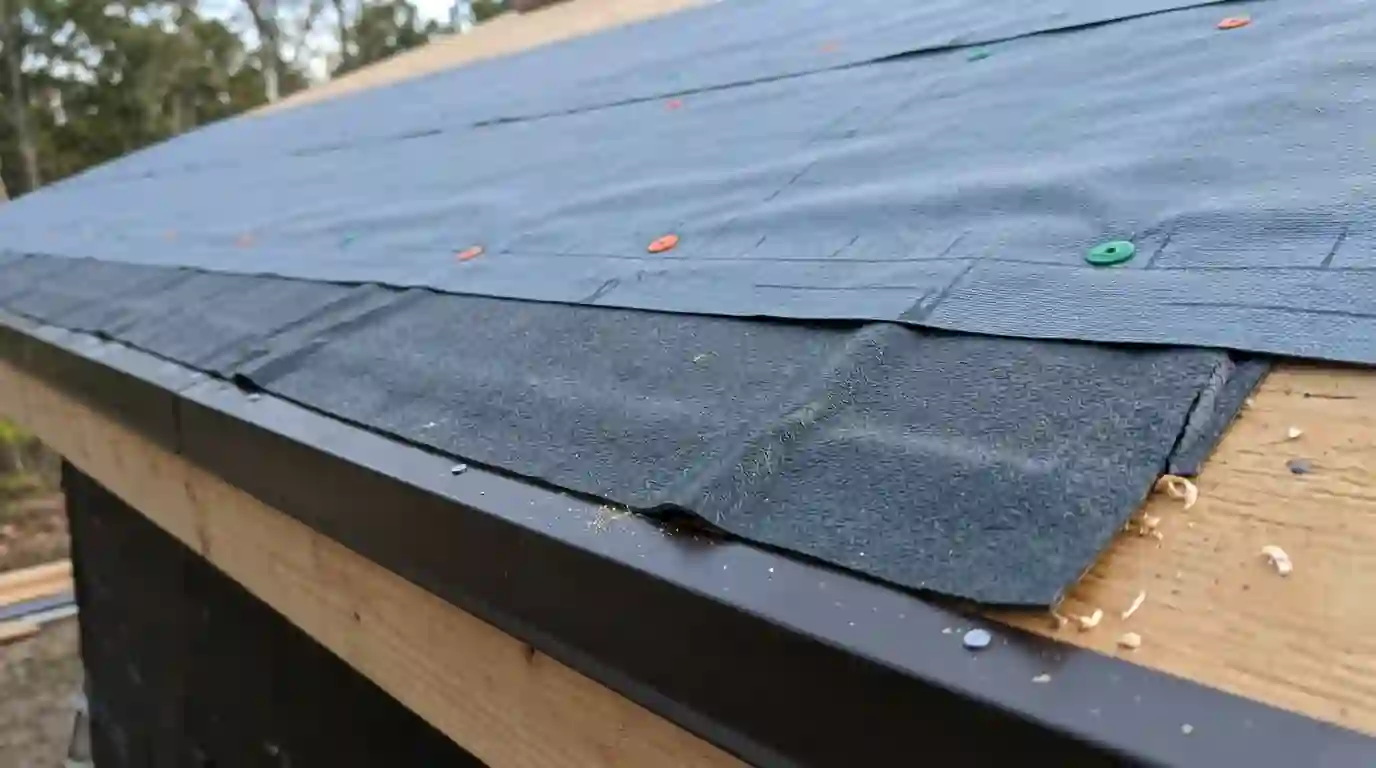
Standing seam roofs leak less often, but repairs are trickier. The fasteners are hidden under the seams, so you can't just swap a screw. Common problems include seams that were never fully locked, panels that pulled loose from clips in high wind, flashing at walls and chimneys that was caulked instead of formed, and pipe boots made for shingles instead of metal.
Repairing these takes time. Sometimes we have to unseam a panel, lift it, reset or replace clips, and re-seam it. Through-panel screws, often added by previous repairs, need to be removed and their holes properly patched. Sealant has a place, but it's not a substitute for a seam or a formed flashing.
If your standing seam roof has a leak, avoid having anyone screw through the panel flat as a quick fix. That fixes one problem and creates another, because a rigid fastener through the flat stops the panel from moving with temperature and can cause buckling or new holes. Our standing seam roofing page explains how clips are meant to work.
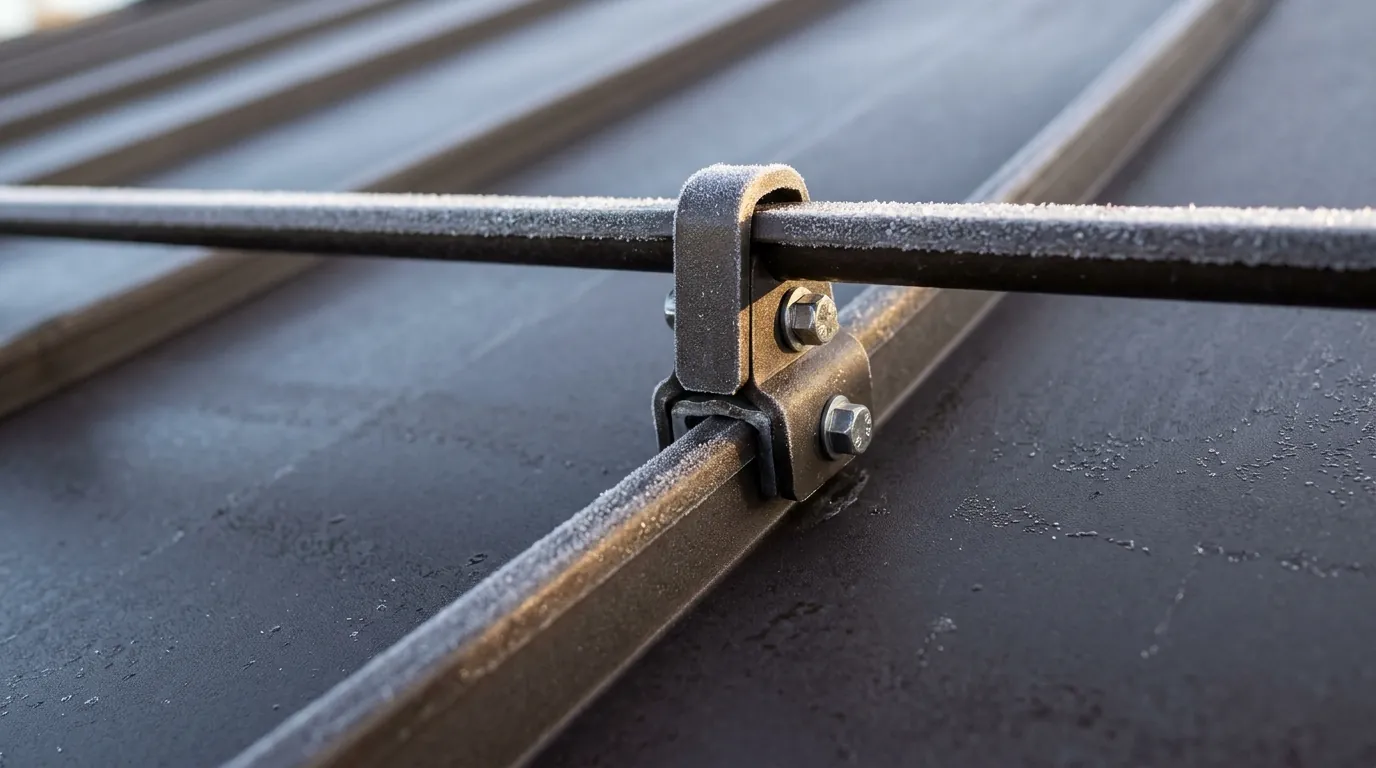
Metal roof repairs we see across Dayton's farms, shops and homes
A lot of exposed-fastener metal in the region went up on barns, shops and rural homes in the 1990s and 2000s. Around Springfield and out into Clark County, plenty of those roofs are now at the age where washers are failing all at once, and owners are deciding between re-screwing, coating or replacement.
Closer to the city, light industrial and storage buildings in areas like Moraine often have older metal roofs with rusted laps and patched penetrations from equipment changes over the years. Residential metal roofs on newer suburban homes tend to need more specific fixes: a vent boot, a chimney flashing, or a section damaged when snow slid off and took the gutter with it.
Weather in the Miami Valley stresses metal in particular ways. Summer heat and winter cold expand and contract panels, working fasteners loose. Spring hail can dent thinner gauges. Straight-line winds from summer thunderstorms lift panel edges at rakes and eaves. And freeze-thaw winters push water into laps and seams where it freezes and expands. We see all of these in a typical year.
Where we do metal roof repair most often
These neighborhoods, suburbs and cities make up most of our metal roof repair calls. Each link opens the local page with its ZIP.
Questions about metal roof repair in Dayton
Why is my metal roof leaking at the screws after only 15 years?
The neoprene washers under the screw heads usually wear out first. UV exposure dries and cracks them, and daily panel movement loosens screws. After about 15 to 20 years, many exposed-fastener roofs start leaking at several screws. Replacing fasteners with oversized screws and fresh washers usually solves it.
Can a rusty barn roof near Dayton be repaired, or does it need replacing?
It depends on the rust. Surface rust can be cleaned, treated and coated, which can extend a roof's life. If rust has thinned the steel or created holes in many panels, replacement is usually more sensible. We'll check the panels and give you an honest recommendation with photos.
How do you find a leak on a metal roof when the drip moves around?
Water on metal travels along ribs and seams, often several feet from the entry point. We start where the water shows inside, then follow the panel path uphill on the roof, checking fasteners, laps and flashing. Sometimes we water test sections while someone watches inside to confirm the source.
Is it okay to caulk around leaking screws on my metal roof?
As a short-term patch, sealant can slow a leak. It's not a lasting fix, because the washer underneath is still failing and the screw may be loose. Proper repair means replacing the screw with an oversized one and a new washer, then sealing only if the system calls for it.
Can you fix metal panels that wind lifted at the edge of my roof?
Often yes. If the panel isn't torn or badly kinked, we can reset it, add fasteners or clips at the correct spacing, and replace damaged trim. Badly bent or torn panels need replacement. Lifted edges get worse every storm, so it's worth calling soon after you notice one.
Will a roof coating stop leaks on an old exposed-fastener metal roof?
A proper coating system can, if the roof is prepared correctly. That means cleaning, treating rust, replacing or sealing fasteners, and reinforcing seams before the coating goes on. Coating over loose screws and open laps without prep doesn't last. We'll tell you whether your roof is a good coating candidate.
Other roofing work that often goes with this job
Product lines we install on roofs around Dayton include shingles from GAF, Owens Corning and CertainTeed, metal from Englert, membranes from Carlisle SynTec and skylights from VELUX.
Need metal roof repair today?
Call any hour. A person answers, asks a few questions and sets a time for a roofer to come out.