Siding Repair in Dayton, OH for Storm and Water Damage
When wind peels vinyl off a wall or hail punches holes in it, a person answers our line 24/7. We cover open walls the same day when we can, then check the step flashing where your roof meets the siding.
- Answered 24/7
- Photo report on every visit
- Dayton and the Miami Valley
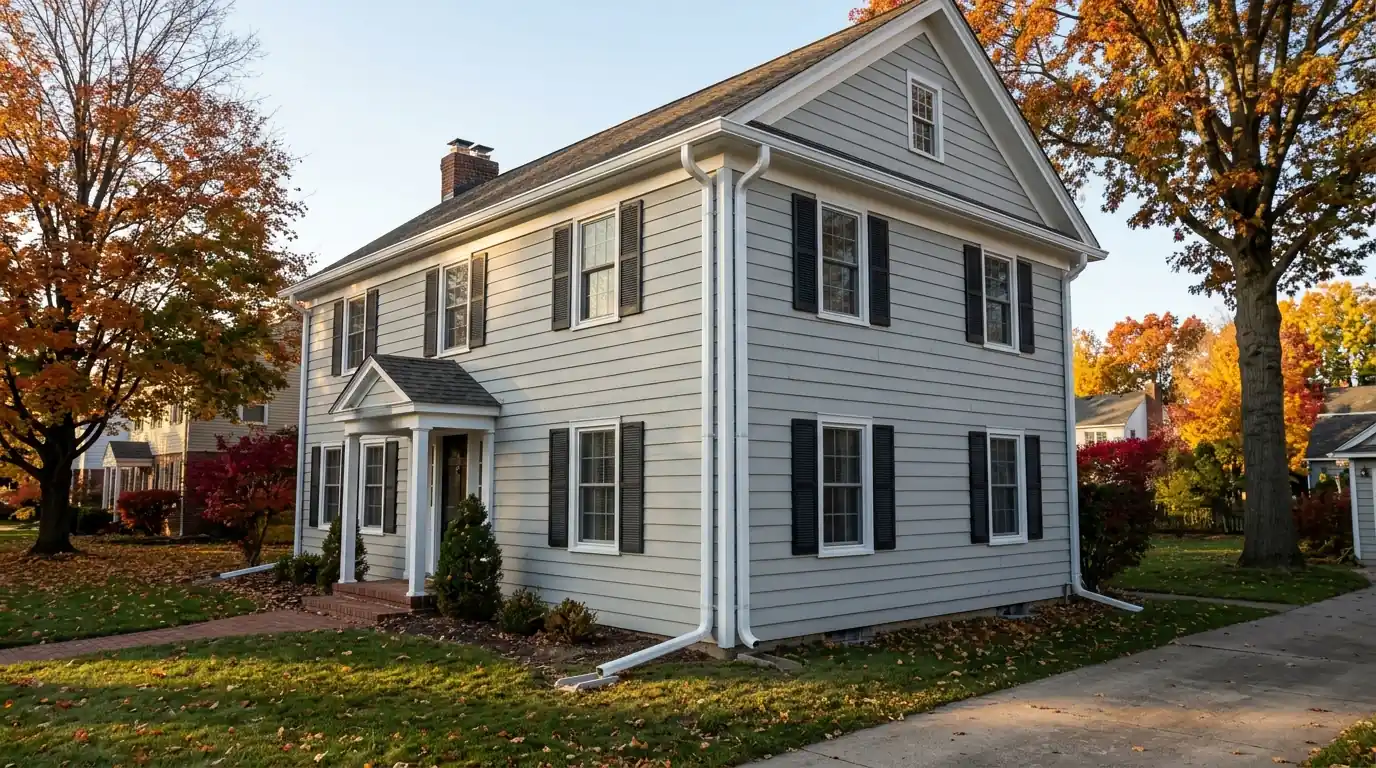
Siding repair in the Dayton area typically costs $235 to $645 to replace a few vinyl panels, $185 to $520 to rehang a wind-blown section, and $265 to $585 to add kickout flashing at a roof-to-wall corner. Hail repairs covering a full wall often run $1,860 to $5,340. Repairs involve matching panels, checking sheathing and house wrap, and correcting the flashing behind the siding.
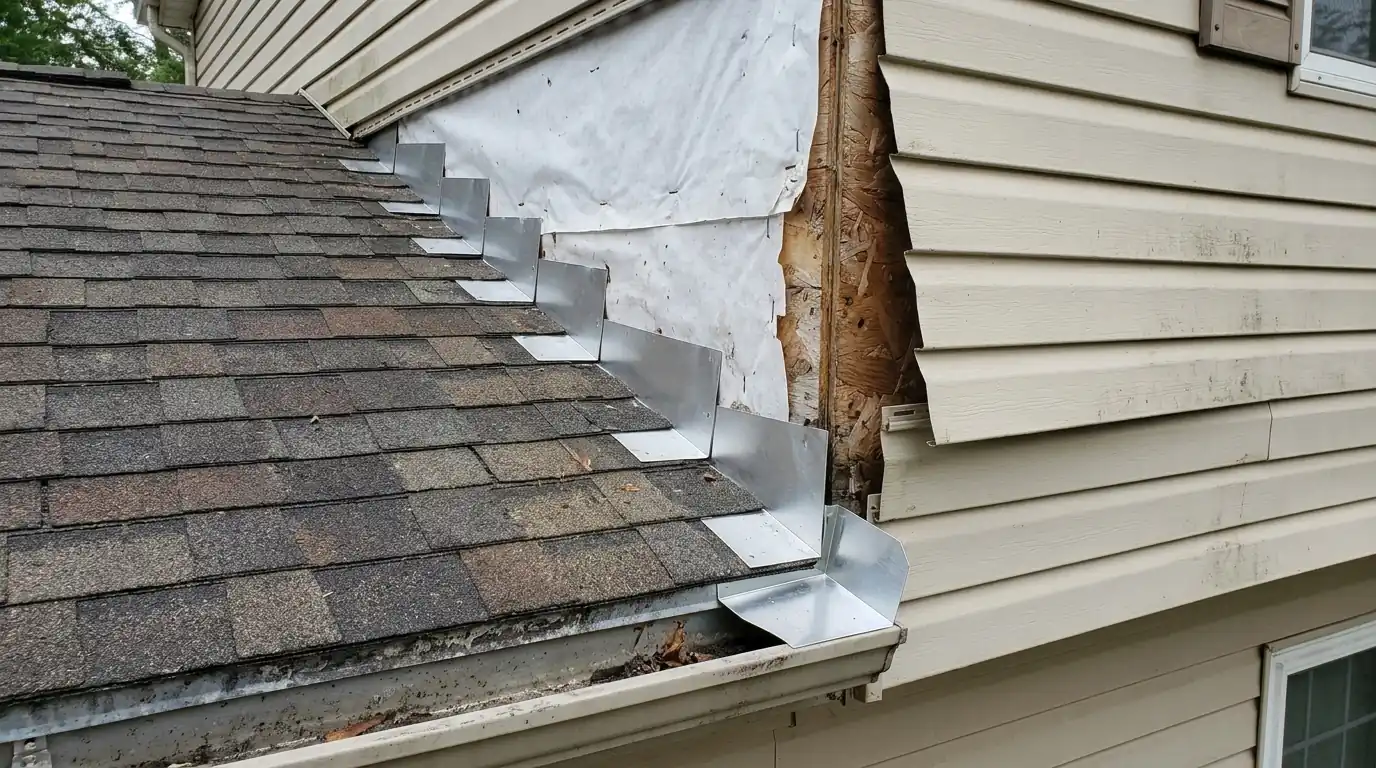
Siding and roofing meet in more places than most people realize. Every dormer wall, every second-story wall above a porch or garage roof, and every chimney chase wrapped in siding has a line where shingles butt against the wall. Water running down the roof hits that line, and only the step flashing tucked behind the siding keeps it out of the house. When siding is cracked, loose or installed tight against the shingles, that flashing can't do its job, and the wall rots from the inside.
That's why our siding repairs look past the damaged panel. A cracked piece of vinyl from a lawn mower rock is a simple swap. A soft spot below a roof-to-wall corner is a different job, because it usually means a missing kickout flashing has been dumping roof water into the wall for years. We remove enough siding to see the wrap, sheathing and flashing, photograph what we find, and fix the water path before closing it back up. Storm damage gets the same attention, along with photos you can hand to an insurance adjuster.
Siding damage you shouldn't wait out, especially near a roofline
Some siding damage is cosmetic. These signs usually mean water, wind or pests have a way in, and they're worth a call.
Panels blown off or flapping
Wind that pops loose one course of vinyl can strip the courses above it in the next storm. Exposed house wrap also tears quickly.
Holes, cracks or dents after hail
Hail cracks vinyl, especially in cold weather, and dents aluminum. Damage is usually heaviest on the walls that faced the storm.
Stains or bulges below a roof-to-wall corner
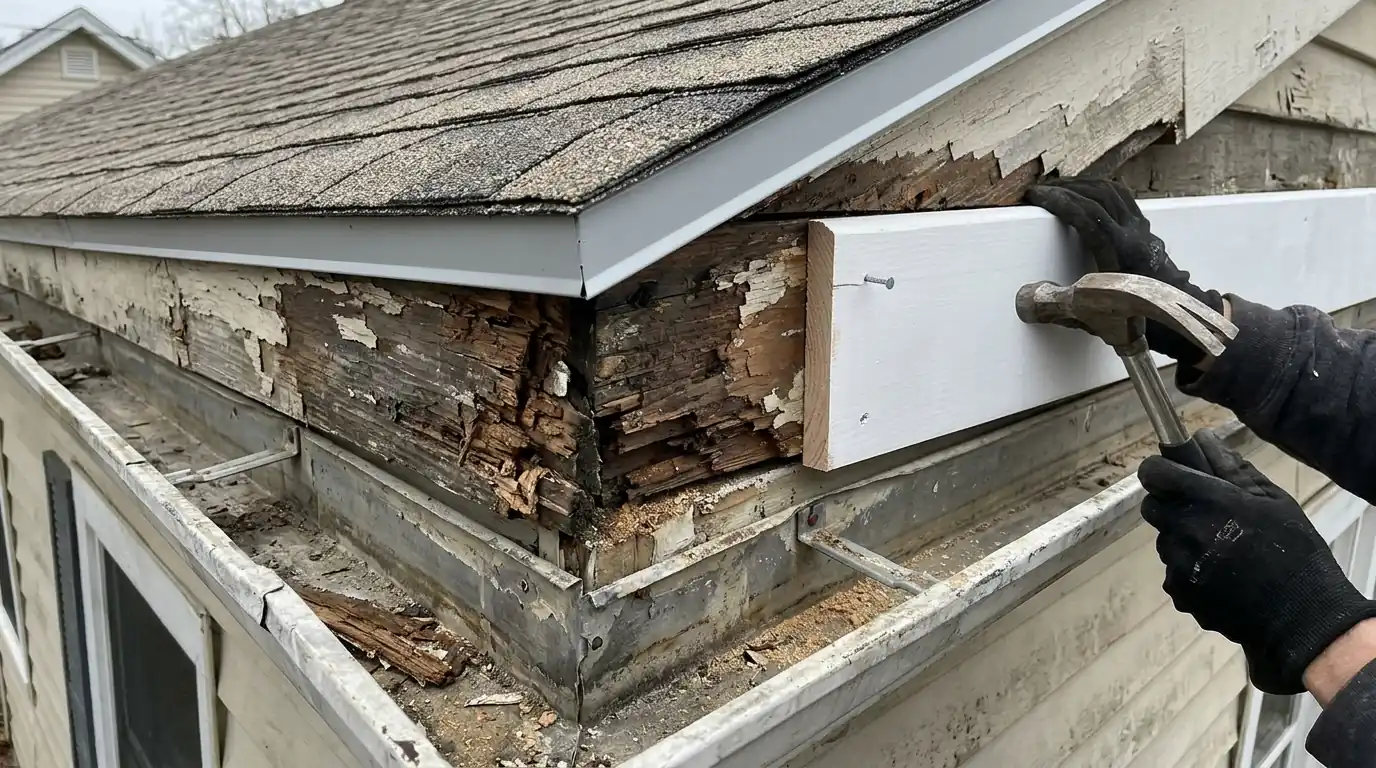
Streaks or soft siding where a lower roof meets a wall often point to a missing kickout flashing and rot behind the panels.
Siding resting on the shingles
Siding should stop short of the roof surface. When it sits on the shingles, it wicks water and traps debris against the flashing.
Warped or melted panels
Grill heat and sunlight reflected off low-E windows can warp vinyl. Warped panels pull loose and let water behind them.
Peeling paint or soft wood clapboard
On wood siding, failing paint along the bottom edges is the first stage of rot, often near downspouts or close to the ground.
How we repair siding and the flashing hidden behind it
A good siding repair is mostly about what goes back behind the panels. Here's how a typical visit runs.
Document the damage
We photograph each damaged wall from the ground and up close, including storm marks on gutters, window wraps and the roof. You get photos suitable for an insurance claim.
Remove panels past the damage
We release vinyl with a zip tool or pull aluminum or wood back far enough to see the house wrap and sheathing. Most hidden damage shows up a course or two beyond what's visible.
Check the roof-to-wall flashing
Wherever the wall meets a roof, we look at step flashing, counterflashing and kickouts. Missing or rusted pieces are replaced so water stays on top of the shingles.
Repair wrap and sheathing
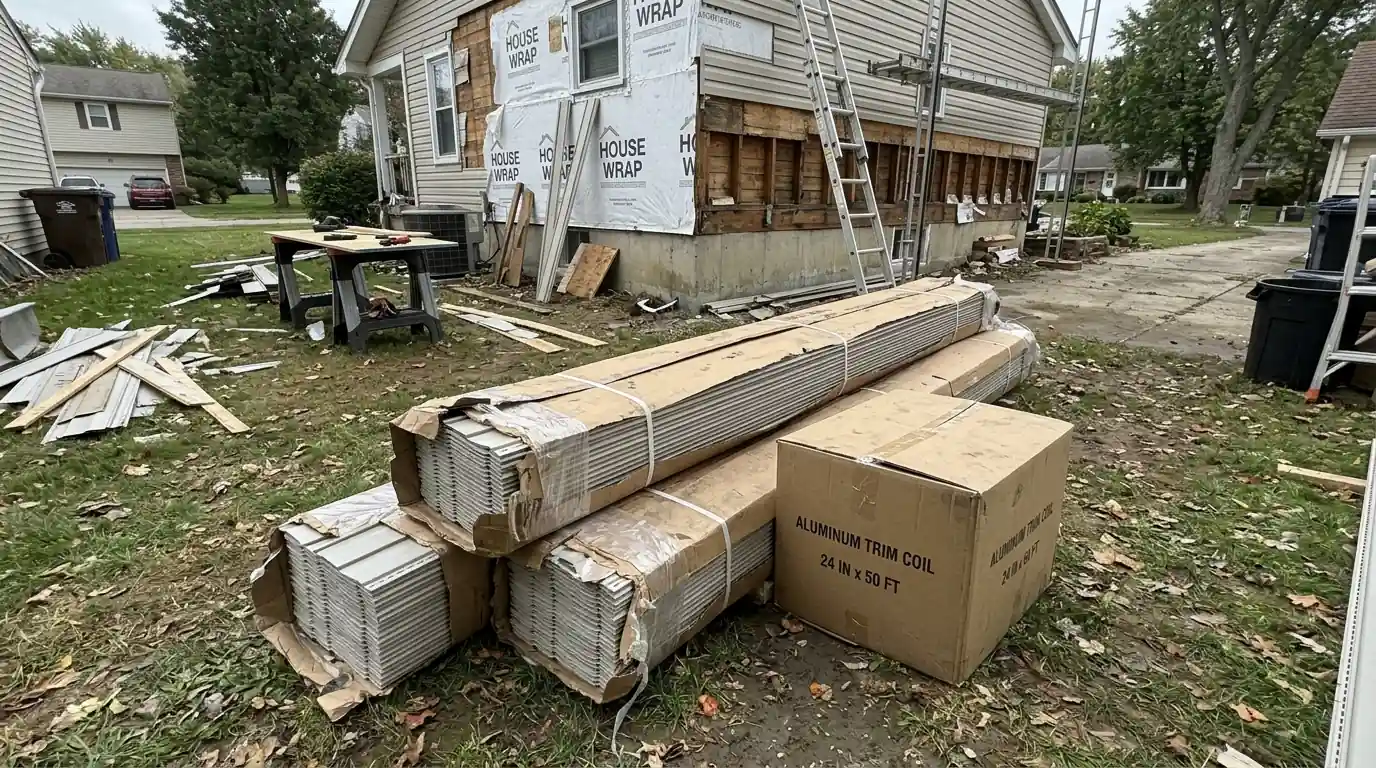
Torn wrap is patched and lapped shingle-style, upper over lower. Rotted sheathing is cut out and replaced with new panels fastened to the studs.
Match and install siding
We match profile, exposure and color as closely as possible, using salvaged panels from a hidden wall when a color is discontinued. Vinyl is nailed loose enough to expand, never pinned tight.
Set clearances and report
Siding is held off the roof surface with the gap the siding maker calls for. We finish with photos of the repaired wall and the flashing behind it.
What siding repair usually costs on a Dayton home
Siding repair prices swing on two things: how much has to come off to find the end of the damage, and how hard the siding is to match. These are typical 2026 ranges in the Dayton area.
| Job | Typical range | What it covers |
|---|---|---|
| Replace a few vinyl panels | $235 to $645 | Remove damaged pieces, patch wrap, install matching panels |
| Rehang a wind-blown section | $185 to $520 | Relock and refasten panels, replace broken pieces |
| Kickout flashing at a roof-to-wall corner | $265 to $585 | Remove siding, install kickout and step flashing, reinstall siding |
| Rotted sheathing behind a roof-to-wall corner | $640 to $1,970 | Open the wall, replace sheathing and wrap, new flashing |
| Wood clapboard section repair | $345 to $980 | Cut out rotted boards, new primed clapboard, paint to blend |
| Hail-damaged wall, full elevation | $1,860 to $5,340 | New siding on one side of the house, wrap and trim |
These are typical Dayton-area ranges, not a quote. We give you a price after inspecting the wall in person and explaining what might be hiding behind it. See more on our Dayton roofing price guide.
- Color and profile matchCurrent colors and common profiles are easy. Discontinued vinyl or old aluminum may require salvage or residing a full wall.
- Hidden rotRot behind siding near roof lines and downspouts adds sheathing and framing work. We photograph it before going further.
- Siding materialVinyl is quickest to repair, aluminum is harder to match, and wood or fiber cement needs painting.
- Height and accessSecond-story walls, walls above lower roofs and tight side yards need ladders, staging or roof access.
- Insurance involvementStorm repairs often raise matching questions that adjusters weigh differently. We document the damage so you have what you need.
The wall above your roofline: step flashing, kickouts and siding clearance
Wherever a sloped roof runs into a wall, there should be a piece of step flashing under every shingle course, bent up the wall and tucked behind the siding. Water running down the roof hits the wall, rides the flashing and stays on top of the shingles. At the bottom of that roof-to-wall line, a kickout flashing turns the water out into the gutter instead of letting it run down the wall. On many Miami Valley homes built before the 2000s, that kickout is missing.
Without it, every rain sends roof water down the face of the wall behind the siding. It soaks the sheathing, then the framing, and sometimes the window or door below. From outside you may see nothing more than a streak or a slightly bulged panel. We open the wall at those corners, replace damaged flashing and sheathing, and install a kickout before the siding goes back. If the step flashing up the wall is also failing, roof flashing repair handles the shingle side.
- Garage roofs meeting a two-story wall
- Porch roofs tied into the front of the house
- Dormer side walls
- Chimney chases wrapped in siding
Matching old siding when only a few panels are damaged
Matching is the hardest part of siding repair. Vinyl fades with sun exposure, so even the original color from the same maker won't look identical next to fifteen-year-old panels. Profiles change too, and many colors popular in the 1990s are discontinued. For aluminum siding, common on Dayton homes from the 1950s and 60s, new matching material is very hard to find.
We start by identifying the profile and exposure, then compare current colors in daylight. When nothing is close, we often borrow panels from a hidden wall, such as behind a garage or under a deck, and put the new panels there instead. For storm claims, document the damage and ask your adjuster how your policy handles matching. Our Ohio storm claim walkthrough covers what to photograph. If an entire wall can't be matched, residing one elevation is sometimes the cleanest fix.
What siding damage looks like across Dayton's neighborhoods and suburbs
Storms drive a lot of our siding calls. The Memorial Day 2019 tornadoes stripped siding across Huber Heights, Riverside, Old North Dayton and Beavercreek, and some of the patch jobs from that rush never got proper flashing behind them. Spring hail and summer thunderstorms add new damage every year, most often to vinyl on west- and south-facing walls.
The siding itself varies by neighborhood. Postwar streets in Kettering and Belmont have a lot of aluminum siding, often painted, which dents easily and is hard to match. Split-levels and two-story homes from the 1970s through 1990s in Huber Heights and Centerville tend to have vinyl and attached garages whose roofs meet a second-story wall, exactly where kickouts go missing. Older homes in South Park and St. Anne's Hill often still have wood clapboard, which needs carpentry and paint rather than a vinyl patch.
Where we do siding repair most often
These neighborhoods, suburbs and cities make up most of our siding repair calls. Each link opens the local page with its ZIP.
Questions about siding repair in Dayton
Can you match a vinyl siding color that's no longer made?
Sometimes exactly, often close enough, and occasionally not at all. We check current colors first, then look at salvaging panels from a hidden wall and putting new siding there. When a damaged wall faces the street and nothing matches, residing that one side keeps the house looking even. We show you samples in daylight before you decide.
What is a kickout flashing, and does my house need one where the roof meets a wall?
A kickout is a small angled flashing at the bottom of a roof-to-wall joint that turns water into the gutter instead of letting it run down the wall. If you have a lower roof ending against a wall, such as a garage or porch roof, you need one. Many older homes don't have them, and the wall beneath is often where we find rot.
Can hail damage aluminum siding even when the roof looks fine?
Yes. Aluminum dents more visibly than shingles show bruising from the ground, so walls often look worse than the roof after a storm. Dents in siding, gutters and window wraps are also useful evidence that hail hit the house. If you see them, have the roof checked too. Our hail damage roof repair inspections include the siding and gutters.
Why is the wall rotting under the siding next to my garage roof?
Almost always because water from the garage roof is getting behind the siding at the bottom of the roof-to-wall line. Missing kickout flashing, short step flashing, or siding sitting tight on the shingles are the usual causes. We open that section, replace rotted sheathing, add proper flashing, and reinstall the siding with a clearance gap above the shingles.
Can you repair vinyl siding in January in Dayton?
Yes, with care. Vinyl gets brittle in cold weather, so we handle panels gently, cut them with the right tools, and avoid forcing locks on very cold mornings. Small repairs and storm patches go ahead in winter. For large sections we may suggest waiting for a milder day so the new panels can be hung with the right expansion gap.
Do you fix wood clapboard on older homes, or only vinyl?
We repair wood clapboard too. On older homes we cut out rotted boards, match the profile and exposure with new primed clapboard, and paint to blend. If the paint has failed across the whole house, we'll tell you, because patching rot without addressing paint just moves the problem. For houses ready for a change, we can price full siding installation instead.
Other roofing work that often goes with this job
Product lines we install on roofs around Dayton include shingles from GAF, Owens Corning and CertainTeed, metal from Englert, membranes from Carlisle SynTec and skylights from VELUX.
Need siding repair today?
Call any hour. A person answers, asks a few questions and sets a time for a roofer to come out.