Seamless Gutter Installation in Dayton, OH
We roll seamless gutters on site from coil, size them to the roof planes that drain into them, and leave you a photo report of the fascia and drip edge we found behind the old ones. A person answers our line 24/7.
- Answered 24/7
- Photo report on every visit
- Dayton and the Miami Valley
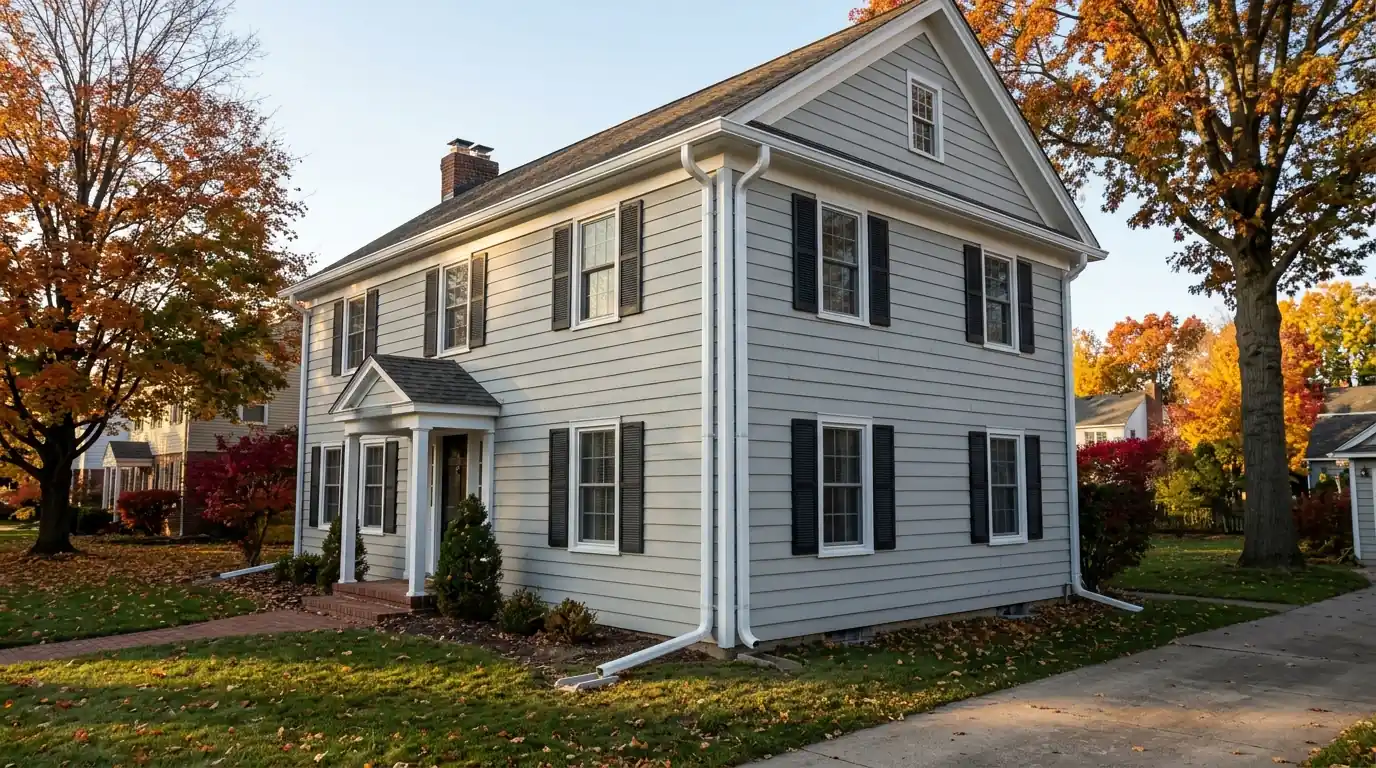
Seamless gutter installation in the Dayton area typically runs $9.35 to $14.60 per linear foot for 5-inch aluminum K-style and $11.80 to $17.45 for 6-inch, downspouts included. A ranch with about 150 feet of eaves often lands in the $1,685 to $2,940 range. The job covers removing old gutters, checking fascia and drip edge, rolling new runs on site, hanging them and water testing every outlet.
Gutters are the last part of your roof's drainage system, not a separate trim item. Every gallon that runs down the shingles ends up at the eave, and what happens there decides whether your fascia stays sound, whether your basement stays dry, and whether ice builds along the edge in January. We treat a gutter install as roof work. That means looking at the drip edge, the first course of shingles, the condition of the fascia board, and how many square feet of roof feed each run before we cut a single piece of coil.
Most of the gutters we pull off Dayton homes are 4-inch or 5-inch sectional runs from the 1960s through the 1990s, joined every ten feet with seams that have been caulked a dozen times. Seamless gutters replace those joints with one continuous piece per run, so the only seams left are at corners and end caps. We roll them in your driveway, match the color to your trim, and pitch each run toward downspouts placed where the ground actually slopes away. If you're also planning a new roof, we can sequence both jobs so the gutters go on after the drip edge.
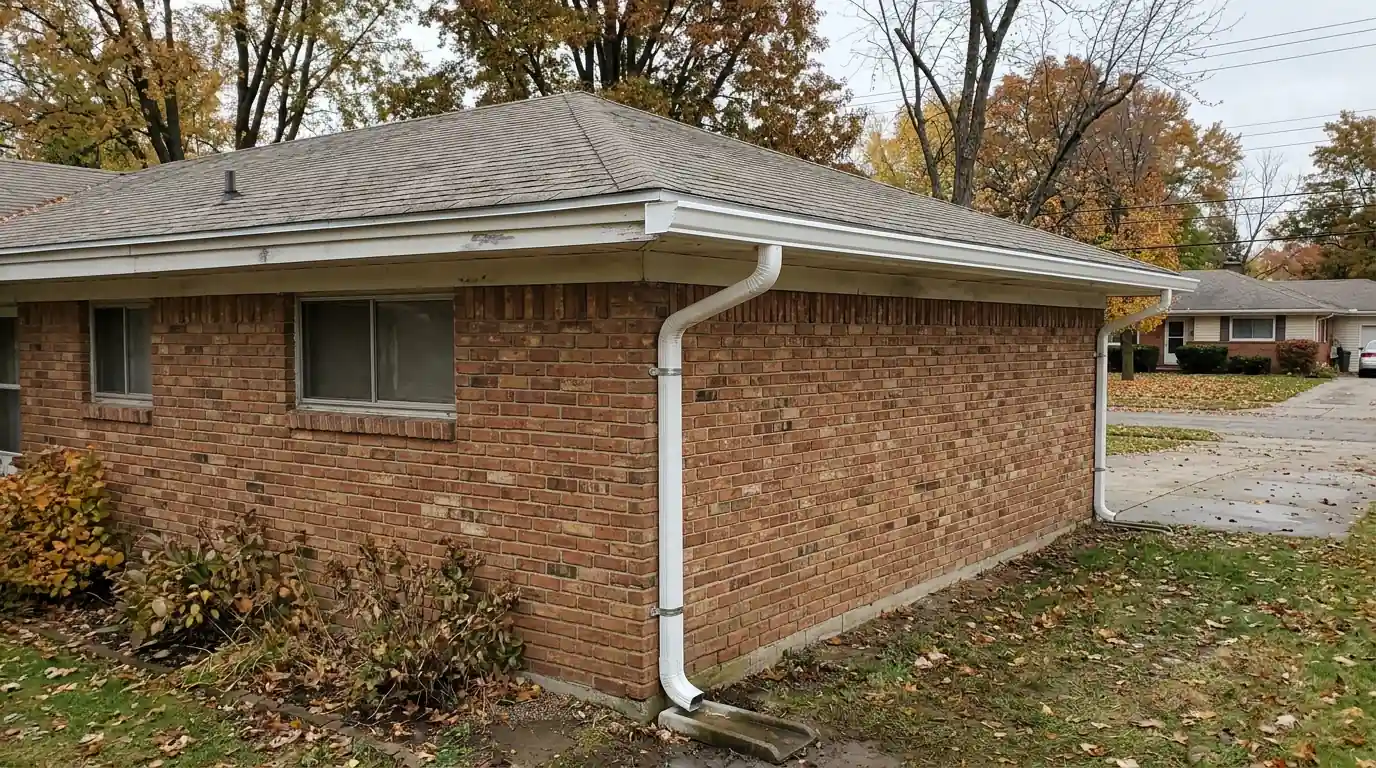
5-inch or 6-inch: how we size gutters to your roof, not the neighbor's
Gutter size should come from the roof, not habit. We start with the square footage of each roof plane that drains to a run, then adjust for pitch, because a steep roof sheds water faster and throws it harder toward the front lip. A long valley that empties onto one corner can double the water hitting a short stretch of gutter during a thunderstorm.
Dayton's heaviest rain tends to come in short summer bursts rather than long, soaking rains. Those bursts are what overwhelm a gutter, so we size for peak flow. For most single-story homes in the area, 5-inch K-style with 2x3 or 3x4 downspouts does the job. Two-story homes, steep roofs and houses with long valleys usually need 6-inch gutters, or extra outlets on 5-inch runs.
- Modest roof area draining to one run: 5-inch is usually fine with a single downspout
- Eaves longer than about 40 feet: a second downspout, or a center outlet with the run pitched both ways
- Valleys dumping onto an inside corner: a 6-inch gutter or a diverter on the shingles above
- Pitches steeper than 8/12: 6-inch gutters set to catch water that overshoots the lip
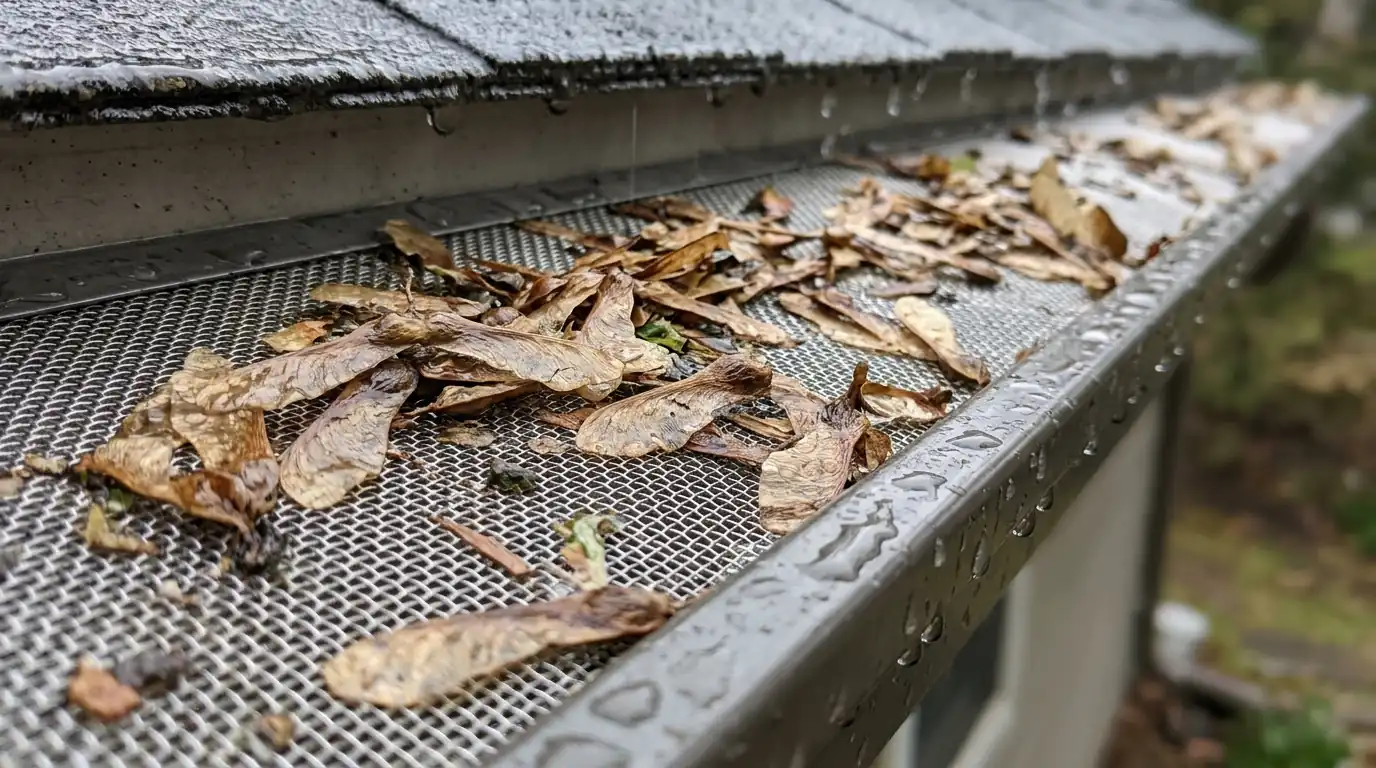
Where the gutter meets the shingles: drip edge, gutter apron and ice
The weak point of most gutter installs isn't the gutter at all. It's the inch or two between the shingle edge and the back of the trough. When drip edge is missing, too short, or tucked behind the gutter instead of into it, water wicks back along the underside of the shingles and runs down the face of the board. That's how a house with brand-new gutters still ends up needing fascia and soffit repair.
We check the drip edge on every job and add a gutter apron where the roof needs one. The apron slides under the first course of shingles and extends down into the gutter, so water has nowhere to go but in. In winter the same detail matters for ice. Gutters packed with ice push meltwater back toward the roof edge, and a lapped apron plus ice and water shield at the eaves keeps it out of the decking. If ice is a yearly problem at your house, our guide to Dayton ice dams explains why attic insulation and ventilation matter more than the gutter itself.
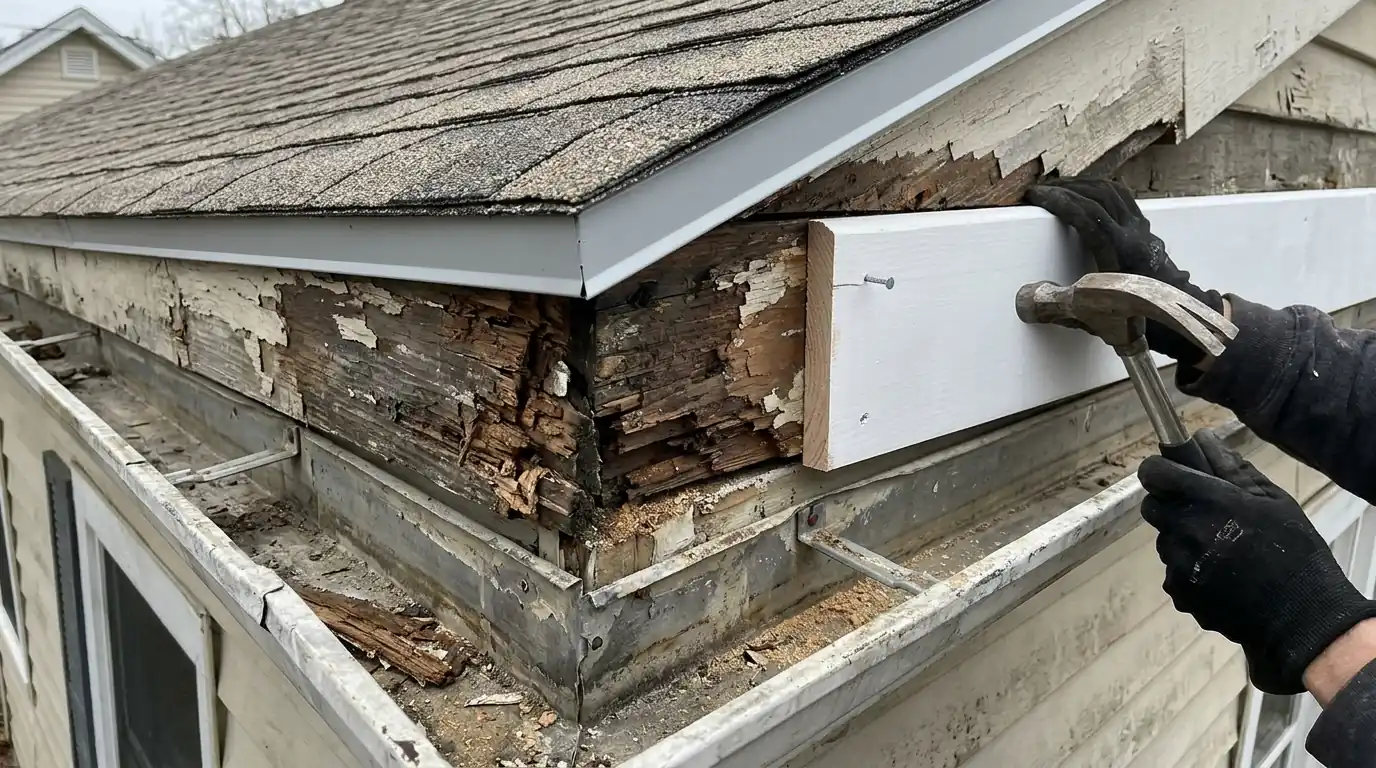
What seamless gutters typically cost on Dayton-area homes
These are typical installed ranges we see across Dayton and the surrounding suburbs in 2026. Your number depends on what we find at the roof edge and how the house is laid out.
| Job | Typical range | What it covers |
|---|---|---|
| 5-inch aluminum K-style | $9.35 to $14.60 per linear foot | Ranches and capes, hidden hangers, sealed corners, 2x3 or 3x4 downspouts |
| 6-inch aluminum K-style | $11.80 to $17.45 per linear foot | Larger roofs and steep two-story eaves, 3x4 downspouts |
| Single-story ranch, about 150 feet | $1,685 to $2,940 | Tear-off of old gutters, new 5-inch runs, four or five downspouts |
| Two-story colonial, 6-inch system | $2,860 to $4,780 | Longer runs, extra outlets, second-story ladder and staging work |
| Copper half-round | $31.40 to $48.75 per linear foot | Soldered joints and copper hangers, often on historic or high-end homes |
| Fascia replacement found during install | $14.75 to $27.35 per linear foot | Rotted board removed, new primed wood or PVC, aluminum wrap if wanted |
These are typical Dayton-area ranges, not a quote. We give you a written price after measuring the house and checking the roof edge in person. See more on our Dayton roofing price guide.
- Corners and storiesEvery inside or outside miter adds labor and sealant, and second-story eaves need more ladder setup and care.
- Downspout count and lengthA two-story downspout with long extensions costs more than a short ranch outlet. We add outlets where the roof area calls for them.
- Fascia and drip edge conditionRot hidden behind old gutters is the biggest swing in the final price. We photograph it and price it on its own line so you can decide.
- Gutter size and materialSix-inch aluminum costs more per foot than 5-inch, and copper sits in a different price range entirely.
- Guards and drainage add-onsGuards, heavier hangers or connections to underground drain lines change the total. Each one is listed separately.
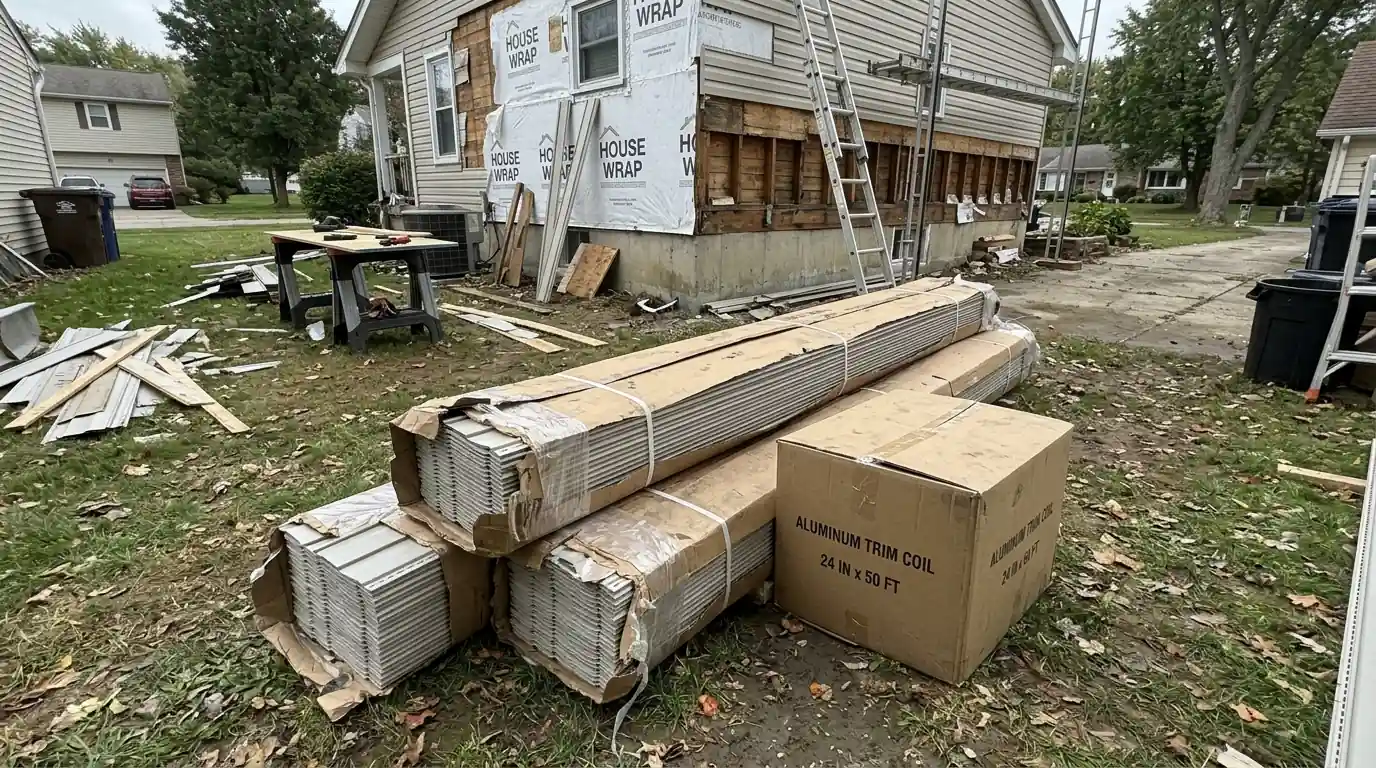
How we hang seamless gutters on a Dayton house, start to finish
A gutter job looks simple from the street. Most of the work that decides how long it lasts happens at the roof edge before the new metal ever goes up.
Map the roof planes and outlets
We measure each eave and note how much roof drains to it, including valleys that dump extra water at one corner. That tells us gutter size and how many downspouts each run needs.
Pull the old gutters and inspect the edge
With the old runs down, we photograph the fascia, rafter tails and drip edge. Soft wood gets probed and marked so you see the problem before we touch it.
Repair fascia and correct the drip edge
Rotten fascia is replaced and primed before anything hangs on it. If the roof lacks drip edge, or it stops short of the trough, we add a gutter apron that tucks under the shingles and laps into the gutter.
Roll each run on site
Our coil machine produces each run to the exact length of the eave, so there are no splices along the face. Corners are mitered, riveted and sealed with sealant rated for exterior metal.
Hang on hidden hangers and set pitch
We fasten hidden hangers about every 24 inches into solid fascia, and closer where snow or tree drop is heavy. Each run gets roughly a quarter inch of fall per ten feet toward its outlet.
Place downspouts and run a water test
Downspouts get straps, elbows and extensions that carry water away from the foundation. We run a hose at the high end of every gutter and watch each corner and outlet before we pack up.
When new seamless gutters beat patching the ones you have
Not every leaky gutter needs replacing. These are the conditions where we usually tell Dayton homeowners that a new system will cost less over the next decade than another round of repairs.
Seams leak at nearly every joint
Sectional gutters that drip at most splices have failed sealant along the whole run. Resealing them buys a season or two at best.
Runs pulling away from the fascia
Spike-and-ferrule hangers back out as the wood behind them softens. Once a run sags, water sits in the low spots and spills onto the boards.
Water sheets over the front in storms
A 4-inch gutter or a single downspout on a long two-story eave can't carry a Dayton summer downpour. Overflow at inside corners is the usual tell.
Rust or split bottoms on steel gutters
Galvanized steel from older installs rusts from the inside where wet debris sits. Patches don't hold on metal that thin for long.
You're replacing the roof anyway
New shingles mean new drip edge, and the gutter apron and hangers need to line up with it. Rehanging tired gutters on a fresh roof edge rarely makes sense.
Washed-out beds or wet basement corners
Downspouts that dump right beside the foundation are a layout problem. New runs let us move outlets to where the yard drains.
Gutter layouts we see most on Miami Valley houses
Housing age drives most of what we find. In older city neighborhoods like Belmont and Walnut Hills, many postwar homes still carry undersized sectional gutters hung on spikes driven into fascia that has been painted over for decades. Some prewar homes in Dayton View Triangle have built-in box gutters framed into the roof edge, which call for a different repair entirely, and we assess those before suggesting any change.
Out in Centerville and Washington Township, the two-story homes built from the 1970s through the 1990s have long eaves, intersecting gables and valleys that funnel water onto short runs over the front porch. Those are the houses where 6-inch gutters earn their cost. In Huber Heights, ranch and split-level streets have simpler rooflines, but many still have downspouts emptying beside basement walls, so outlet placement is usually the bigger fix. Mature maples and oaks across the region mean most homeowners also ask about guards at the same visit.
Where we do seamless gutter installation most often
These neighborhoods, suburbs and cities make up most of our seamless gutter installation calls. Each link opens the local page with its ZIP.
Questions about seamless gutter installation in Dayton
Should seamless gutters go on before or after a new roof in Dayton?
After, or at the same time as the final edge work. New drip edge and ice and water shield go on with the roof, and the gutter needs to sit correctly under that edge. If we do both jobs, we hang the gutters once the eaves are shingled. If your roof is a few years from replacement, we can still hang new gutters now and reset them carefully when the roof is done.
How many downspouts does a two-story house in Centerville usually need?
Most two-story homes there end up with six to eight downspouts, but the count comes from roof area per run rather than a rule of thumb. A long rear eave often needs two outlets, and any run below a valley needs one close to that corner. We mark proposed downspout spots on the photo report so you can check them against patios, walkways and flower beds first.
Can you match seamless gutter color to my trim and siding?
Usually, yes. Aluminum gutter coil comes in a few dozen factory colors, including several whites, browns, grays and darker tones like black and bronze. We bring a sample fan to the estimate and hold it against your trim and siding in daylight. If your trim is an unusual custom color, we pick the closest coil and match the downspouts so the system reads as one piece.
Do seamless gutters work on an older house with no fascia board?
They can, but they need a different hanging method. Some older Dayton homes have open rafter tails or a thin crown molding where a fascia board would normally be. In those cases we either install a fascia board across the rafter tails or use roof-mounted strap hangers that fasten under the shingles. Strap hangers are best set during roof work, so we explain the tradeoffs for your house first.
How long does a seamless gutter install take on a typical Kettering ranch?
Most single-story ranches in Kettering take one working day, including tearing off the old gutters, rolling the new runs and testing them with a hose. Fascia repairs, extra downspouts or a second story can push it into a second day. We set the schedule once we know whether any rot needs fixing first, and we call the evening before we arrive.
Should I add guards when the new gutters go up, or wait a season?
If big trees hang over your roof, adding gutter guards at install usually costs less than adding them later, because we're already on the ladder and the gutters are clean. If your yard has few trees, you can wait and see how much debris collects the first fall. Either way, we fasten guards so they don't lift the shingles at the roof edge.
Other roofing work that often goes with this job
Product lines we install on roofs around Dayton include shingles from GAF, Owens Corning and CertainTeed, metal from Englert, membranes from Carlisle SynTec and skylights from VELUX.
Need seamless gutter installation today?
Call any hour. A person answers, asks a few questions and sets a time for a roofer to come out.