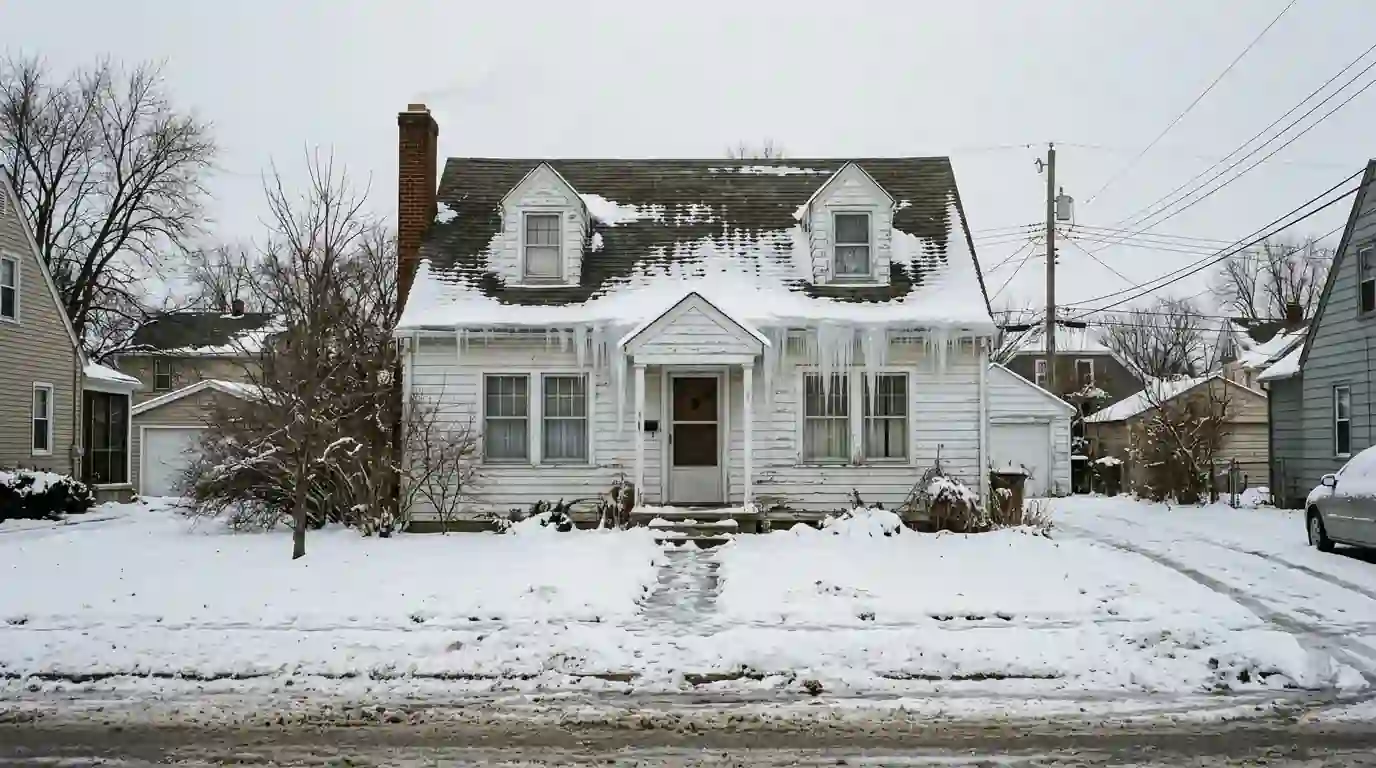
An ice dam builds when attic heat melts snow on the upper roof, the water runs down to the colder overhang and refreezes into a ridge of ice. Water then pools behind it and backs up under the shingles. In Dayton the real fix is usually air sealing and insulating the attic, with ice barrier at the eaves when the roof is replaced.
Why Dayton gets ice dams without a lot of snow
Our winters are less about deep snow and more about constant back and forth. A storm drops three or four inches, the sky clears, daytime highs sit in the upper 20s and the sun hits the roof. Nights fall into the teens. That cycle can repeat for a week or more in January and February, and every warm afternoon sends a little more meltwater down toward the gutters.
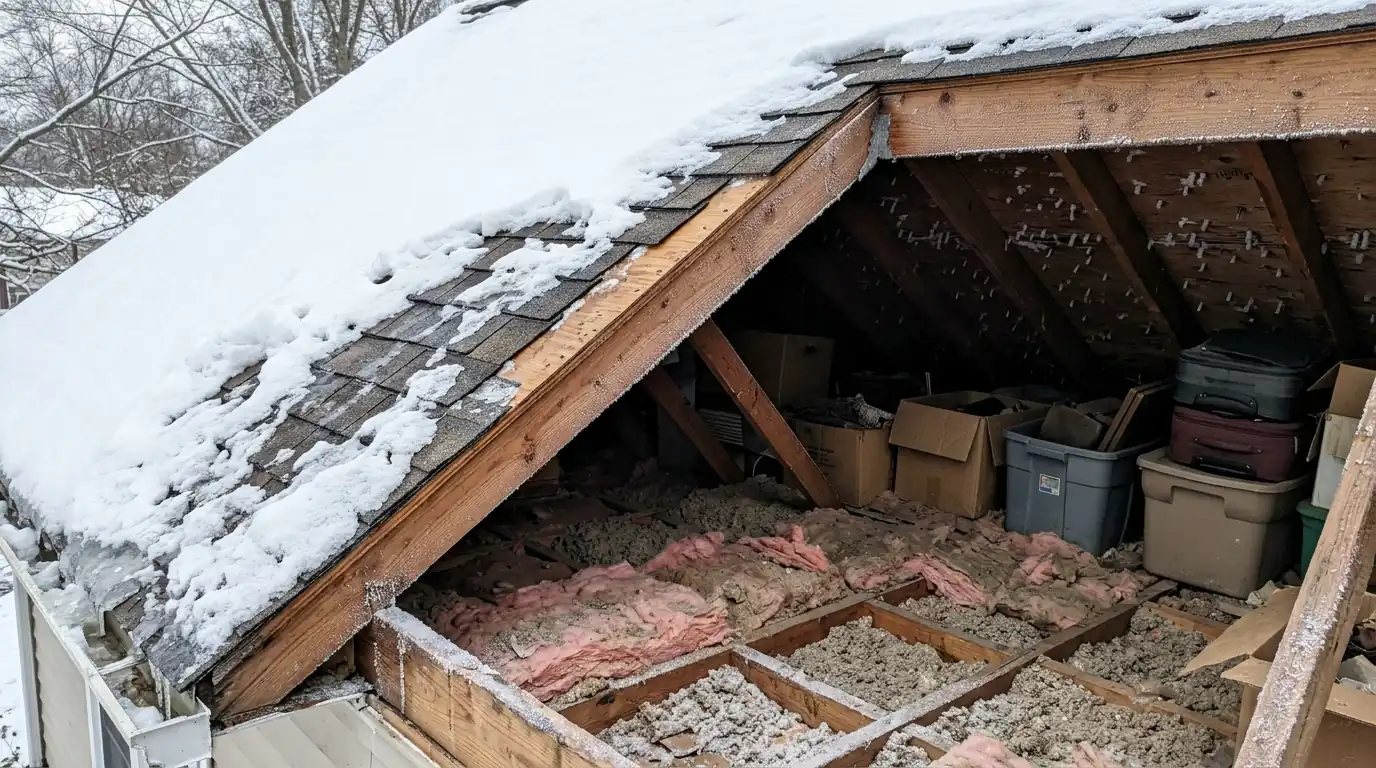
Housing age plays a big part. Many of the 1920s through 1950s homes in Belmont, Dayton View and older parts of Kettering are story-and-a-half houses or Cape Cods with sloped bedroom ceilings and knee walls. The space behind those walls is often poorly insulated, and heat leaks straight into the roof deck. Those are the houses where we see ice dams nearly every winter, even when the neighbor's ranch has none.
How an ice dam actually builds up on your roof
Picture the roof in two zones. The upper roof sits over the heated part of the house, and heat escaping from the living space warms the decking enough to melt the bottom layer of snow. The overhang sticks out past the exterior wall, so it stays as cold as the outside air. Meltwater runs down the warm zone, reaches the cold overhang and freezes.
Each day the ridge of ice grows a little taller. Eventually the meltwater can't get past it and pools in a shallow pond behind the dam. Shingles shed running water well, but they aren't built to hold standing water. It works up under the laps, past the nails and onto the decking, then shows up as a stain on the ceiling near an outside wall or a drip at the top of a window.
The damage often outlasts the ice. Wet insulation loses much of its value, drywall stains and sags, and decking at the eaves softens after several winters of soaking. When we replace roofs on homes with a long history of ice dams, the first two or three feet of plywood along the eaves is often the part that needs replacing.
Where on a Dayton house ice dams usually show up
Ice dams don't spread evenly. They follow the heat leaks and the shade, so the same spots tend to cause trouble year after year. We check these first:
- North-facing eaves, where snow lingers longest and the sun never clears it.
- Valleys, where two slopes funnel meltwater into one narrow channel.
- Eaves above a bathroom whose exhaust fan dumps warm, damp air into the attic.
- Low-slope porch roofs and additions that tie into the main roof.
- Sections above recessed can lights or an unsealed attic hatch.
- Gutters still packed with fall leaves, which freeze solid and give the dam a head start.
What to do safely when an ice dam is building right now
First, stay off the roof. Icy shingles are slick, and ladders on frozen ground slide. A long-handled roof rake used from the ground can pull fresh snow off the lowest three or four feet of roof, which takes away the dam's water supply. Leave an inch or so of snow on the shingles so the rake doesn't scrape granules off.
If water is already coming inside, a nylon stocking filled with calcium chloride ice melt, laid across the dam, can cut a drainage channel. Skip rock salt, which stains siding, corrodes metal and kills the shrubs below. Never chip at the ice with a hammer or a hatchet. We've seen far more roofs damaged by chipping than by the ice itself.
For a big dam or an active leak, professional ice dam removal uses low-pressure steam that melts channels without harming the shingles. Around Dayton a steaming visit typically runs $435 to $1,180, depending on how much ice there is, roof height and access. We answer day or night in winter because these calls tend to come in at the worst hours.
The fixes that actually stop ice dams for good
Removing ice treats the symptom. The permanent fix is keeping the roof deck cold, and that work happens inside the attic. In rough order of payoff, here's what we recommend:
- Air sealing: closing gaps at wall top plates, plumbing and wiring holes, chimney chases, can lights and the attic hatch.
- Insulation: bringing the attic floor up to roughly R-49, which current guidance suggests for homes in our part of Ohio.
- Ventilation: balanced soffit intake and ridge exhaust so the underside of the deck stays near outdoor temperature.
- Bath fans ducted all the way outside, not into the attic or just near a soffit.
- Ice barrier membrane at the eaves at your next reroof, run at least two feet past the inside of the exterior wall.
What these fixes typically cost, and where heat cables fit
Air sealing and topping up insulation on a typical Dayton attic commonly runs $1,640 to $3,870, depending on attic size, access and how many bypasses we find. Correcting ventilation is often $585 to $1,460 when it means adding ridge vent and opening blocked soffits. Our attic ventilation work and the guide to signs your attic ventilation is failing go deeper on that part.
Heat cables are the fallback when the attic can't be fixed easily, such as over a cathedral ceiling or a low porch roof. A typical installation runs $385 to $1,140. They work when they're on, but they use electricity all season, they need to be laid out correctly, and they only protect the strip of roof they cover. We treat them as a targeted tool, not a cure.
Gutters take a beating during ice dam season too. A gutter loaded with ice can pull its hangers out of the fascia, and the next thaw drops it into the flower bed. If yours sag after the melt, gutter repair in early spring is cheaper than waiting until the fascia rots behind it.