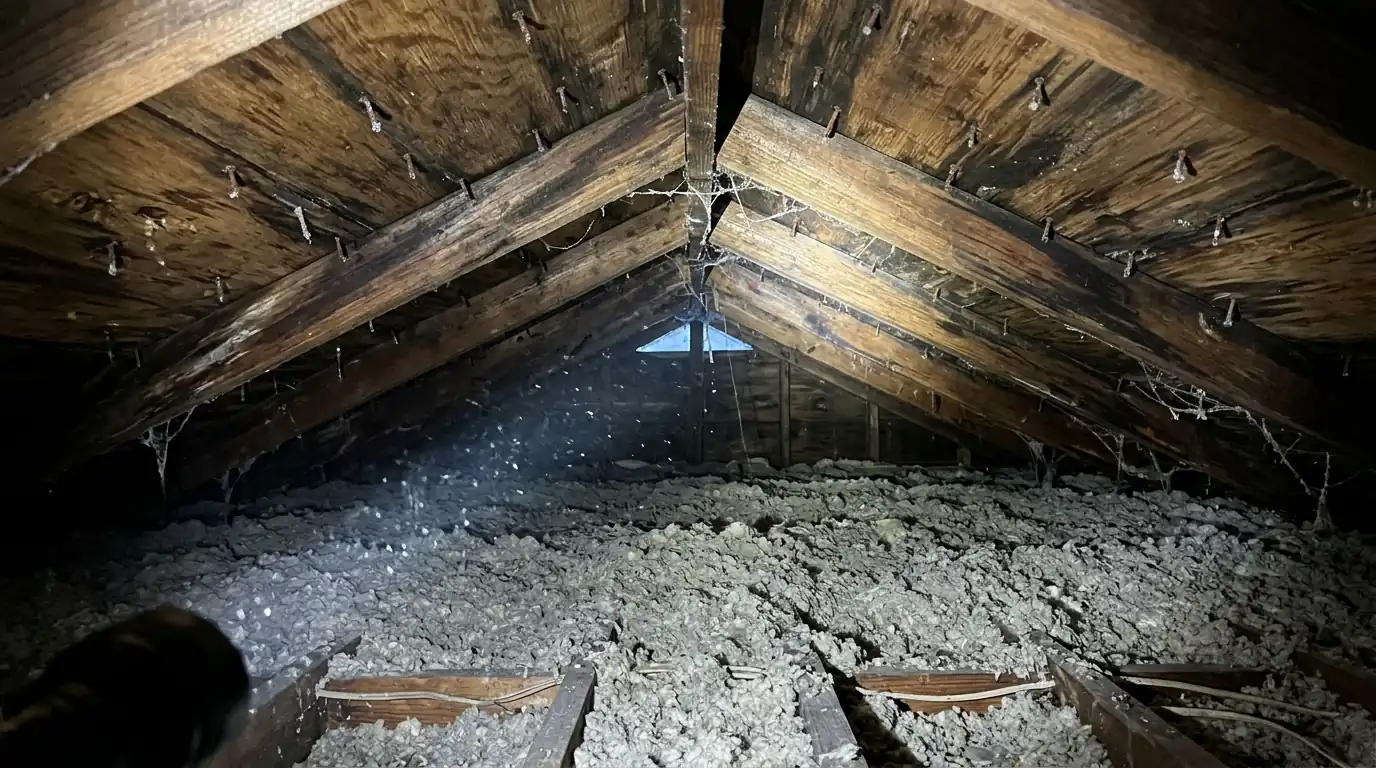
Common signs of failing attic ventilation include frost on roof nails in winter, dark staining on the underside of the decking, musty smells, ice dams, blistered shingles and upstairs rooms that stay hot in summer. In Dayton homes the cause is usually blocked soffit intake or mismatched exhaust vents. Typical vent fixes run $245 to $1,460, with air sealing as a separate cost.
What attic ventilation is supposed to do in a Dayton house
Your attic works like a chimney. Cool outside air should enter low, through vents in the soffits under the eaves, and leave high, through a ridge vent or roof vents near the peak. That steady flow does two different jobs depending on the season, and Dayton's climate asks a lot of both.
In summer, it carries off heat. On a sunny July afternoon an unvented attic over dark shingles can climb well past 130 degrees, which bakes the shingles from below and pushes heat into the rooms underneath. In winter, it carries off moisture. Every shower, pot of soup and breath adds water vapor to the house, and some of it rises into the attic. Without airflow, that vapor condenses on the coldest surface it finds, which is the underside of the roof deck.
The residential code used in Ohio generally calls for about one square foot of net vent area for every 150 square feet of attic floor, or half that when intake and exhaust are balanced. Balance matters more than the total. A roof with plenty of exhaust and no intake moves very little air, the same way a bottle won't pour smoothly without a second opening to let air in.
Signs you can spot from the yard
Some of the best clues show up on the outside of the house, especially in winter. Walk around after a light snow and on a hot afternoon, and compare your roof with your neighbors' roofs.
- Snow melting off the upper roof within a day while neighbors' roofs stay white.
- Ice dams and long icicles along the eaves after a few sunny days.
- Shingles blistering or curling on the upper half of the roof first.
- Peeling paint or dark stains on soffit boards and fascia.
- Rust streaks running down from metal roof vents.
- Soffits with no visible vent openings at all, or vents painted shut.
Signs inside the attic, especially in January
The attic itself gives the clearest evidence, and a cold winter morning is the best time to look. Take a flashlight up the hatch or pull-down stairs, stay on the joists, and check the underside of the roof boards near the eaves and the ridge.
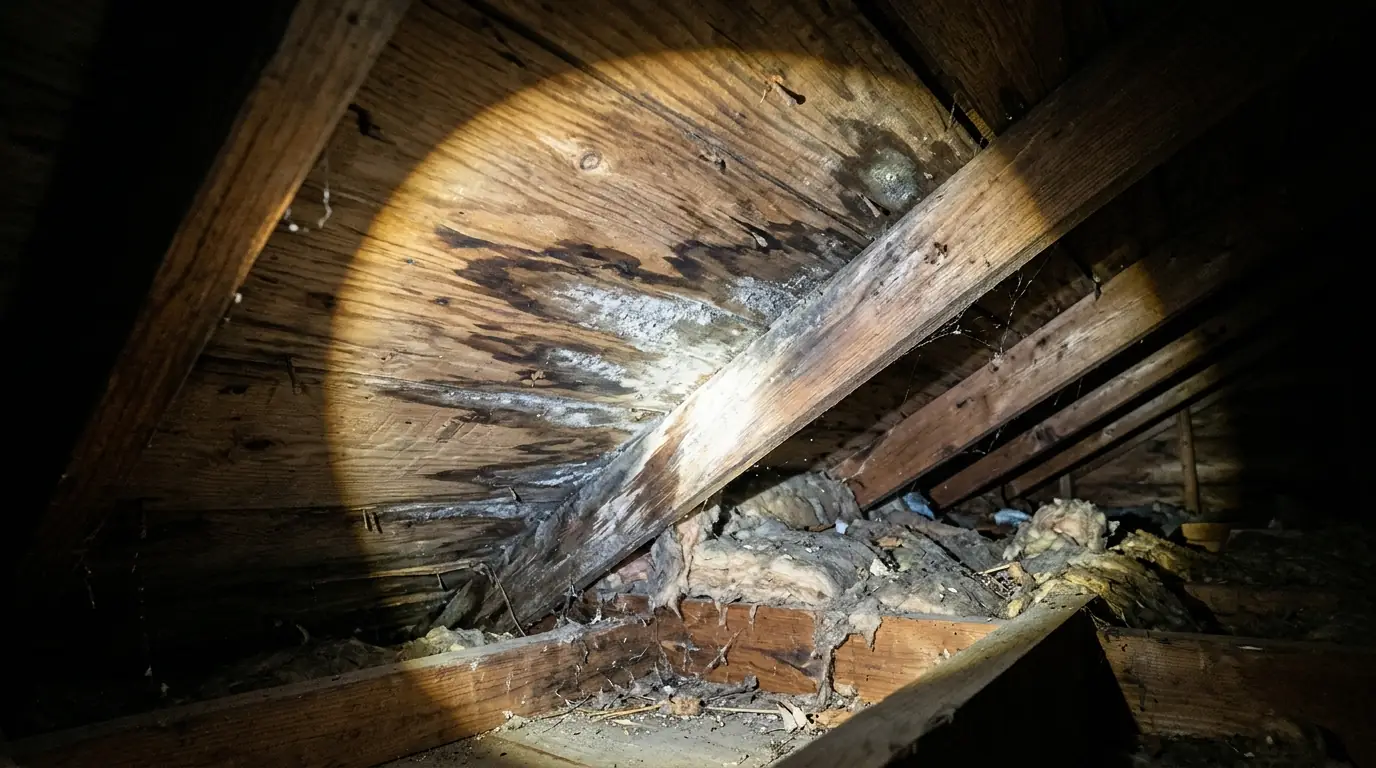
Frost on the nail tips that poke through the decking is a classic warning. When the sun warms the roof, that frost melts and drips onto the insulation, which homeowners sometimes mistake for a roof leak. Dark gray or black staining on the north-facing decking, fuzzy mold spots, damp or matted insulation and a musty smell all point the same way. So do rusted nail tips and wet spots below the ridge.
Also look at what's blocking the airflow. Blown-in insulation pushed all the way into the eaves often covers the soffit vents completely. Bathroom exhaust fans that end in the attic, or near a soffit vent where moist air gets sucked right back in, add gallons of water a week during winter.
Signs in the rooms you live in
Living spaces give quieter signals. Upstairs bedrooms that stay several degrees warmer than the rest of the house in summer, even with the air running, often sit under an overheated attic. An air conditioner that runs all afternoon in July can be a sign too, though duct leaks and thin insulation cause the same complaint.
In winter, watch top-floor ceilings for small water stains that appear on sunny days after cold nights, with no rain in the forecast. That's often frost melting in the attic. Peeling ceiling paint in upstairs bathrooms and closets near outside walls can trace back to the same moisture problem.
Why so many Dayton-area homes have this problem
Housing era explains most of it. Many 1950s and 1960s ranches in Kettering, Huber Heights and West Carrollton were built with a few small box vents on the roof and little or no soffit intake. Later owners added insulation, sometimes several layers, without adding baffles to keep the eaves open. The vents that existed ended up buried.
Newer homes have their own issues. A lot of 1990s and 2000s houses in Centerville and Beavercreek got a ridge vent during a reroof but kept their old gable vents or a powered attic fan. Those mixed systems short-circuit, pulling air in through one high vent and out the other while the eaves stay stagnant. Story-and-a-half homes and Cape Cods with finished upper rooms are the hardest to vent well, because the sloped ceilings leave only a narrow channel between drywall and roof deck.
Typical fixes and what they cost around Dayton
Most ventilation problems can be fixed without a new roof, though a reroof is the cheapest time to do the exhaust side. These are typical Dayton-area ranges that depend on attic size, access and what we find once we're up there.
- Adding or opening soffit intake vents, with baffles at each rafter bay: $245 to $890.
- Retrofitting a ridge vent and closing off conflicting roof vents: $585 to $1,460.
- Rerouting bathroom fans to a proper roof or wall cap: $265 to $640 per fan.
- Air sealing attic bypasses and topping up insulation: $1,640 to $3,870.
- Replacing moldy or delaminated roof decking: commonly $78 to $135 per sheet installed.
Getting the order right
Ventilation and air sealing work best together. Venting moves moisture out, but sealing the gaps around lights, plumbing and the attic hatch stops it from getting up there in the first place. If ice dams are the main complaint, our ice dam guide covers the insulation side in more depth.
If you're seeing several of these signs, a visit focused on attic ventilation includes photos of the intake, the exhaust and any staining or mold, plus a plain list of fixes in order of payoff. Damaged vent caps and cracked flashing around them fall under roof vent repair, and badly rotted sheathing may call for decking replacement during the next reroof.