Roof Leak Repair and Roofing in Englewood, OH (45322)
A ceiling stain in Englewood, OH 45322 rarely sits right under the hole. We trace each leak back across rafters and flashing to its real source, fix it, and send you photos showing the cause and the repair.
- ZIP 45322
- Answered 24/7
- Montgomery County
A typical roof leak repair in Englewood runs $315 to $1,095 in the Dayton area, depending on where the water gets in and how high and steep the roof is. Cracked pipe boots are the cheapest fix, often $215 to $485. When water has rotted the sheathing below, the repair grows to roughly $865 to $2,740 because we replace decking, underlayment and shingles together.
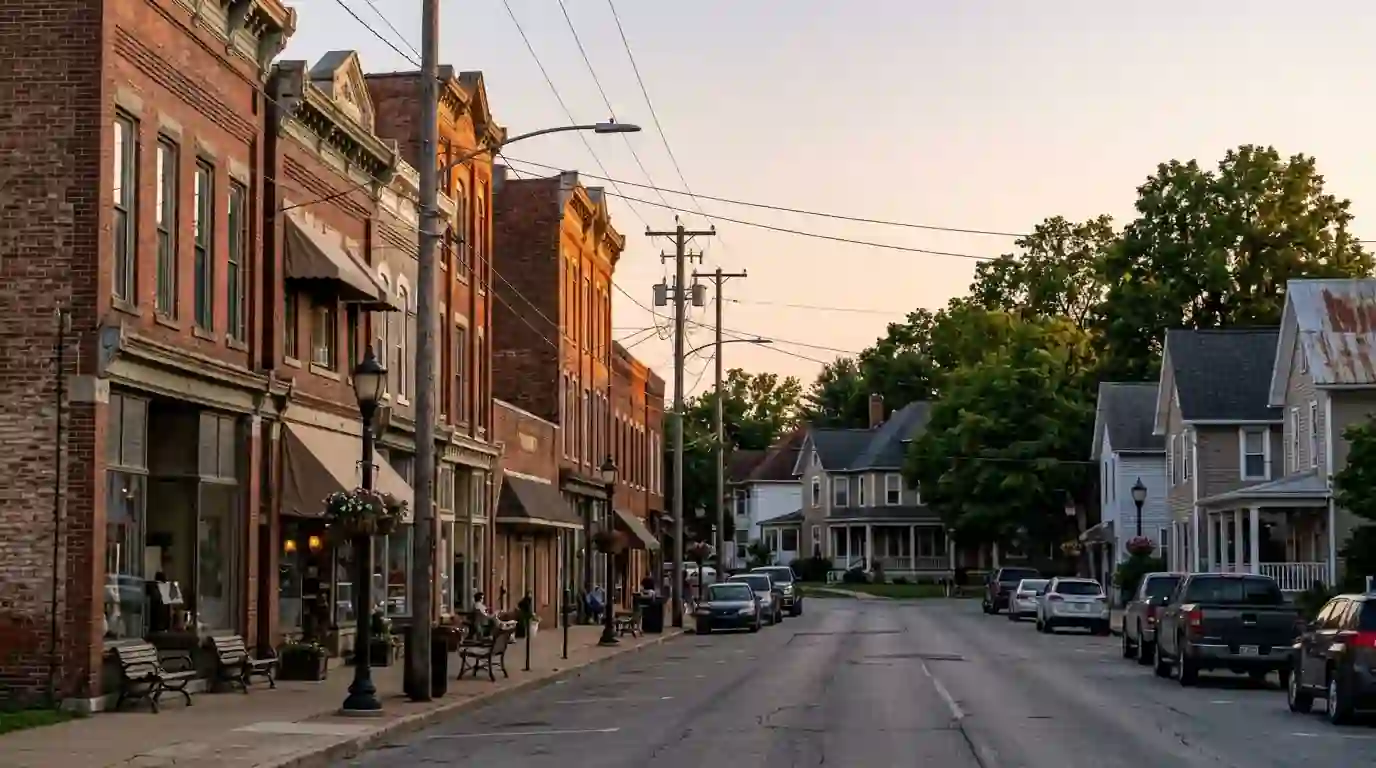
Englewood sits in the northwest corner of Montgomery County along the Stillwater River, next to Clayton, with the Englewood MetroPark and the Englewood Dam on its eastern edge. The dam is one of the dry flood-control dams the Miami Conservancy District built after the 1913 flood, and the woods around it frame the town. Most of Englewood itself is residential: streets of ranches, split-levels and two-stories built from the 1950s into the 1990s, along with a few newer pockets. These homes are now old enough that small leaks are the top reason we're called.
Leaks are tricky because water doesn't stay put. It can enter at a vent collar, run along the top of a rafter and show up as a stain two rooms away. Our crew lead starts in the attic with a light and a moisture meter, follows the trail uphill, then goes onto the roof to confirm the entry point before anything gets torn off. That's what keeps repairs small and honest. You'll see photos of the wet framing, the failed component and the fix, and if we find something that needs attention soon but isn't leaking yet, we'll flag it separately.
The Englewood homes we see leaking most, and where the water gets in
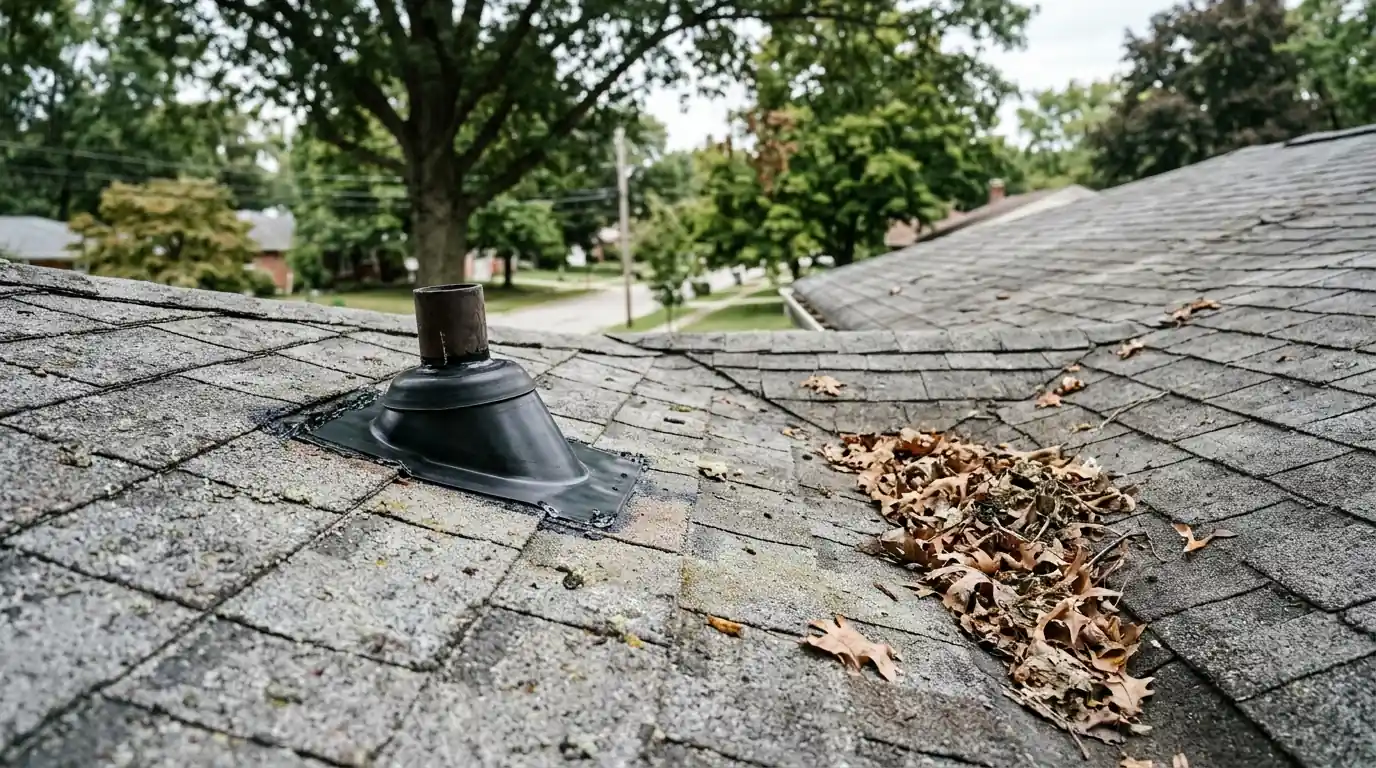
Englewood's postwar and 1960s ranches usually have simple gable roofs with one or two plumbing stacks, a bathroom fan and maybe a kitchen vent. On those houses the rubber collars around pipes are the leading leak source; they crack in the sun after ten to fifteen years and let water slide straight down the pipe. Split-levels add a lower roof that meets the upper wall, and that step flashing joint is another common culprit, especially where siding was replaced and the flashing was buried or cut short.
Two-stories from the 1980s and 1990s bring skylights, dormers and more valleys. Those details collect debris from the oaks, maples and ash trees that shade many lots, particularly on streets closer to the MetroPark and the Stillwater River. Leaves pack into valleys and behind chimneys, holding moisture against the shingles. In the oldest blocks near Main Street, some homes still have their original fascia and soffit boards, and soft wood there lets water and squirrels into the attic edge.
Wind-driven rain, ice dams and the leaks they cause in Englewood
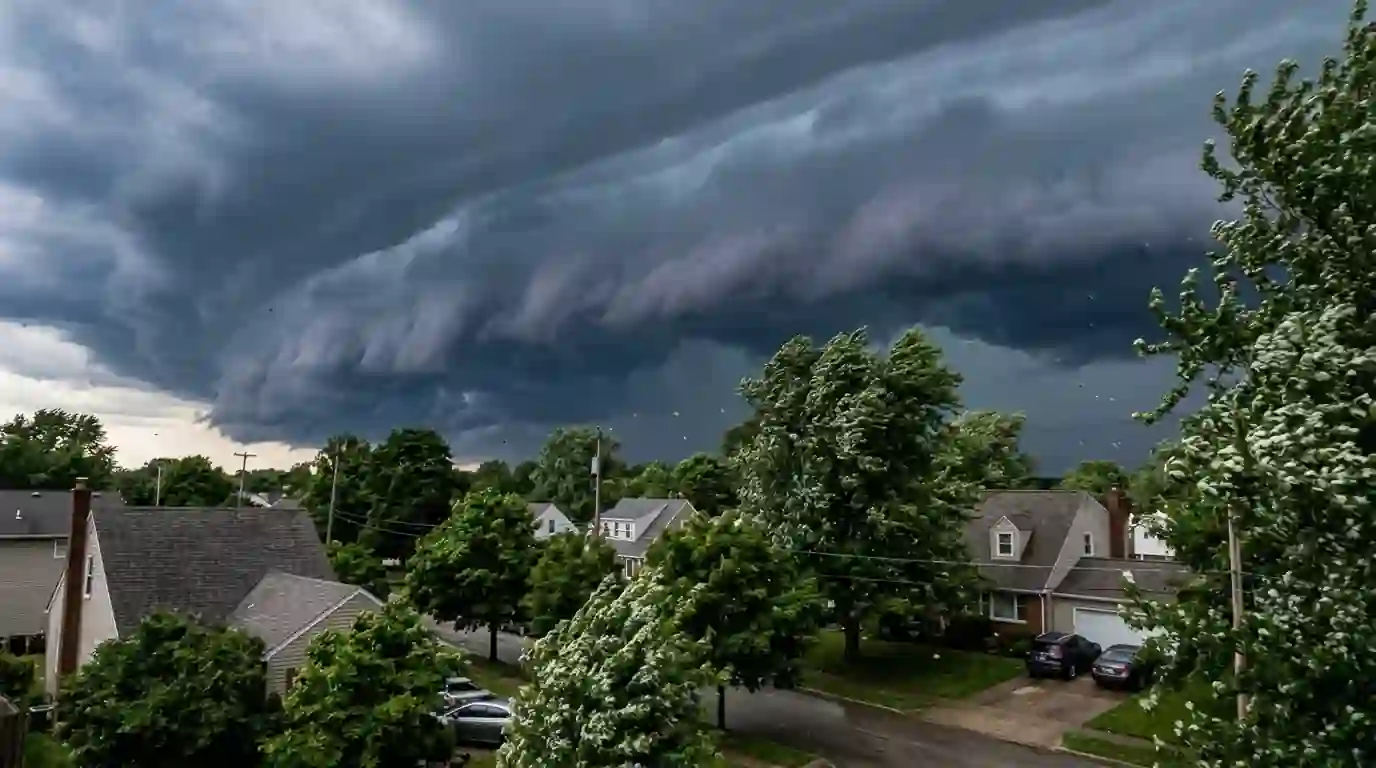
Spring and summer storms crossing the Miami Valley bring sideways rain that tests every flashing joint, and a seal that holds in a gentle shower can fail in a gusty downpour. Hail and fallen branches open new paths during the same storms. Winter is when Englewood's leak calls spike, though. Snow melts on the warm upper part of a poorly vented roof, runs down to the cold eaves and refreezes into an ice dam. Water then backs up under the shingles and drips into exterior walls and ceilings. Our article on ice dams in Dayton winters explains why attic airflow and insulation matter more than heat cables for stopping them.
Leak repairs and roofing work requested in Englewood
Here's what homeowners in 45322 most often ask us to diagnose and fix.
Roof Leak Repair
Ceiling stains in older ranches and split-levels need tracing back to the true entry point.
See roof leak repairPipe Boot & Roof Vent Repair
Sun-cracked rubber collars on plumbing vents are the most common leak source we find here.
See pipe boot & roof vent repairIce Dam Removal & Repair
Underventilated attics on postwar homes build ice at the eaves almost every winter.
See ice dam removal & repairSkylight Repair
Skylights on 1980s and 1990s two-stories leak at worn curbs and flashing kits.
See skylight repairRoof Decking Replacement
Slow leaks left alone rot the sheathing, which has to be replaced before new shingles go on.
See roof decking replacementFascia & Soffit Repair
Soft fascia boards on older homes let water and animals into the attic edge.
See fascia & soffit repair
How we get to Englewood and what happens once we're there
The simplest route from our office is SR-48, which starts as North Main Street in downtown Dayton and runs straight north into Englewood. For homes on the north side near I-70, we sometimes take I-75 to I-70 west and exit at SR-48. A person answers our phone 24/7, so if water is dripping through a light fixture at midnight, you can call and get immediate advice on what to shut off and when we'll arrive. The visit itself starts in the attic, moves to the roof, and ends with a photo report that shows the leak path step by step. Our contact page lists the office address if you'd like to stop by.
Areas near Englewood we also cover
Roofing questions from Englewood
Why does my Englewood ceiling only leak during heavy, windy storms?
Leaks that appear only in wind-driven rain usually point to flashing rather than shingles. Water gets pushed sideways under step flashing at a wall, behind a chimney or through a gap at the top of a vent collar. Gentle rain won't find these spots, but gusts force it uphill. We'll check those joints closely and can run a controlled water test on a dry day to confirm the source.
How long do plumbing vent boots last on Englewood roofs?
Standard rubber pipe boots often crack within ten to fifteen years because summer sun dries out the rubber. Many Englewood homes have had at least one roof replacement where the old boots were reused or cheap ones installed. We'll replace failed boots with longer-lasting designs and check the shingles around them. It's one of the smallest repairs we do, and one of the most common.
Is it worth fixing a leak on an older Englewood roof I plan to replace in a year or two?
Usually, yes. A small repair costs far less than repairing soaked insulation, drywall or decking later. If the roof is truly at the end of its life, we'll suggest a modest repair to keep it dry until replacement, not a premium fix that won't pay off. If repairs keep adding up, our guide to repairing versus replacing helps you plan the timing.
Can trees near Englewood MetroPark cause roof leaks even if branches never hit the house?
They can, and it's more common than people think. Leaves and seed pods pile into valleys, gutters and around chimneys, holding water against shingles and flashing. Shade also keeps moss and algae alive, which slowly lifts shingle edges. Over time those damp spots lead to leaks even without impact damage. Regular gutter and valley cleaning, plus trimming branches back several feet from the roof, makes a real difference.
Roof trouble in Englewood?
Call any hour and tell us your street. We will give you a time window before we hang up.