Metal Roof Installation in Dayton, OH for Homes, Barns, Garages
We install metal roofs on houses, barns, garages and outbuildings, and we price two or three panel types side by side from a single measurement. Call any hour to talk options; a person answers 24/7.
- Answered 24/7
- Photo report on every visit
- Dayton and the Miami Valley
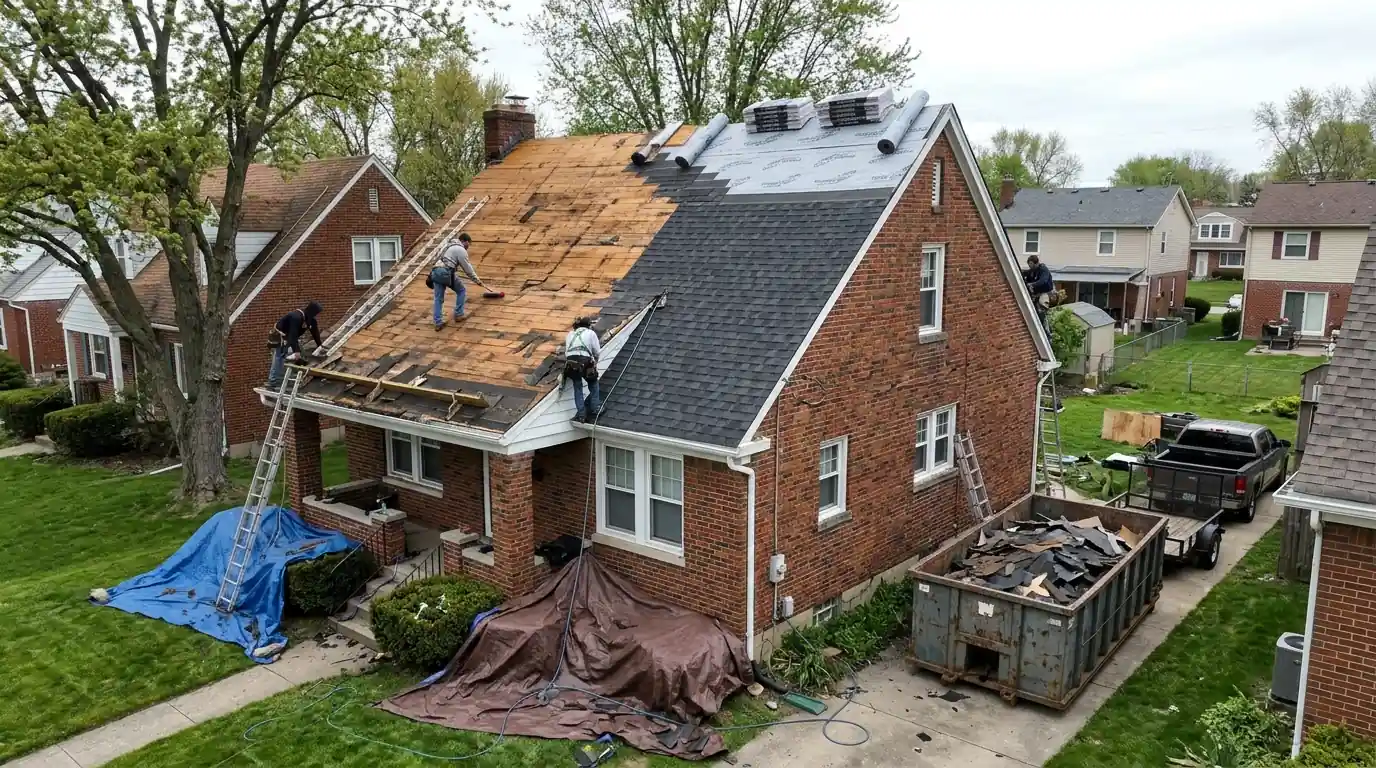
Metal roofing installed around Dayton typically runs $7.40 to $11.60 per square foot for exposed-fastener panels, $10.85 to $16.40 for metal shingles or stone-coated steel, and $13.65 to $21.85 for standing seam. A barn or pole building usually costs less per foot. Panel type, gauge, finish, roof shape and tear-off decide the final number.
Metal covers a wider range of roofs than most people realize. On a Miami County pole barn it's corrugated or ribbed panels screwed to purlins. On a 1950s ranch it might be stamped steel shingles that look like slate or shake. On a new modern farmhouse it's usually standing seam with hidden clips. They're all metal, but they install differently, cost differently and age differently, and the wrong pick for the building is an expensive mistake to undo.
Our job at the estimate is to match the panel type to the building, the roof pitch and how long you plan to own the place. We measure once, then show you two or three options with real numbers, gauge, finish and expected maintenance. If you'd like a deeper look at concealed-fastener panels, our standing seam metal roofing page covers seam types and clips. For the long-term cost math against shingles, see metal versus asphalt for Dayton homes.
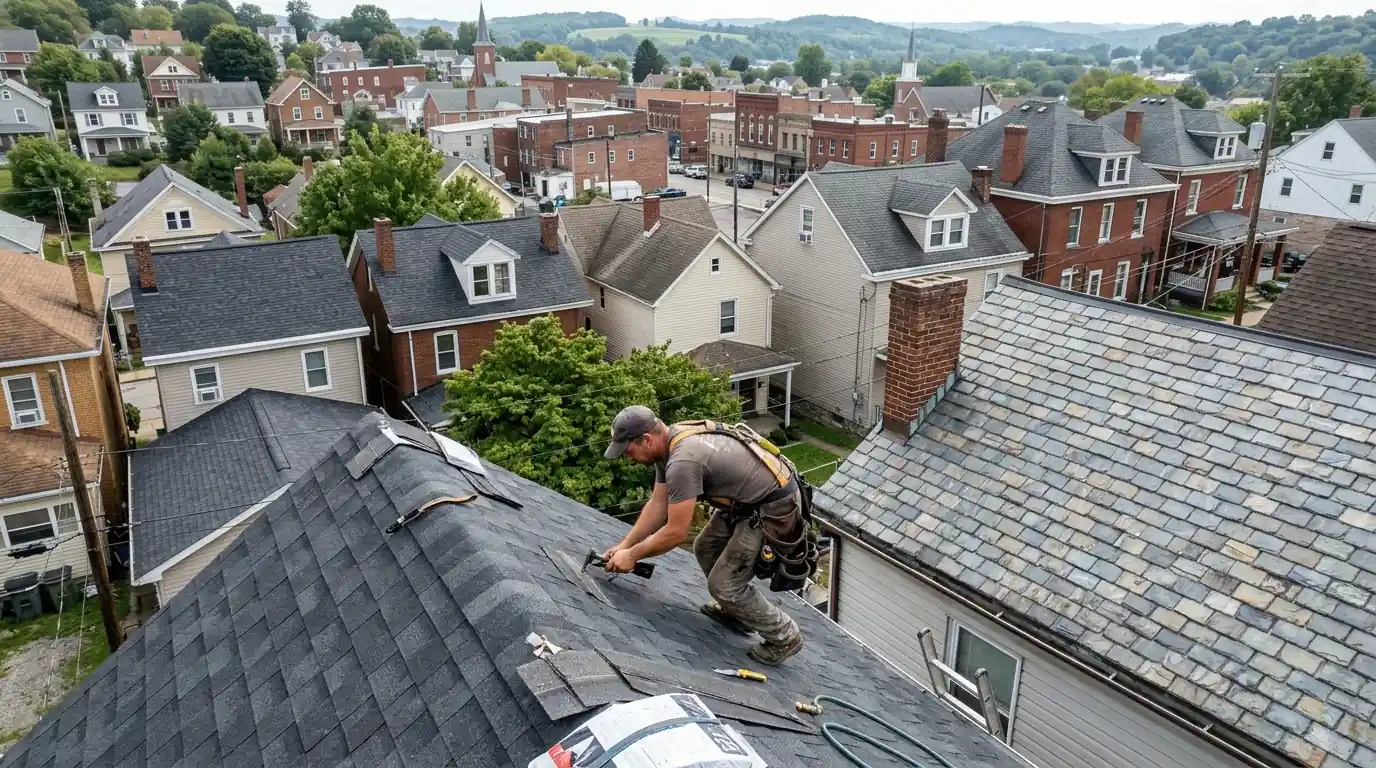
Exposed-fastener, metal shingle or standing seam: picking the system
Exposed-fastener panels are what most people picture on farm buildings: ribbed steel sheets screwed through the face to purlins or deck. They're economical and quick to install. The trade-off is the screws. Their rubber washers dry out and crack after 15 to 20 years of sun, and the panels expand and contract on those screws daily. Plan on checking and replacing fasteners as part of long-term upkeep.
Stamped metal shingles and stone-coated steel use interlocking panels shaped like slate, shake or tile. They suit houses where a bold ribbed or seamed look would clash with the architecture, and they walk more easily than standing seam for future repairs. Stone-coated products have a granule surface that quiets rain noise and hides minor scuffs.
Standing seam hides its fasteners under raised seams held by clips that let panels move with temperature. It's the most weathertight of the three and costs the most. It's our first suggestion for homes with lower pitches or owners planning to stay for decades.
- Exposed-fastener: lowest cost, fastener upkeep over time
- Metal shingles or stone-coated steel: traditional look, hidden fasteners
- Standing seam: concealed clips, longest service life, highest cost
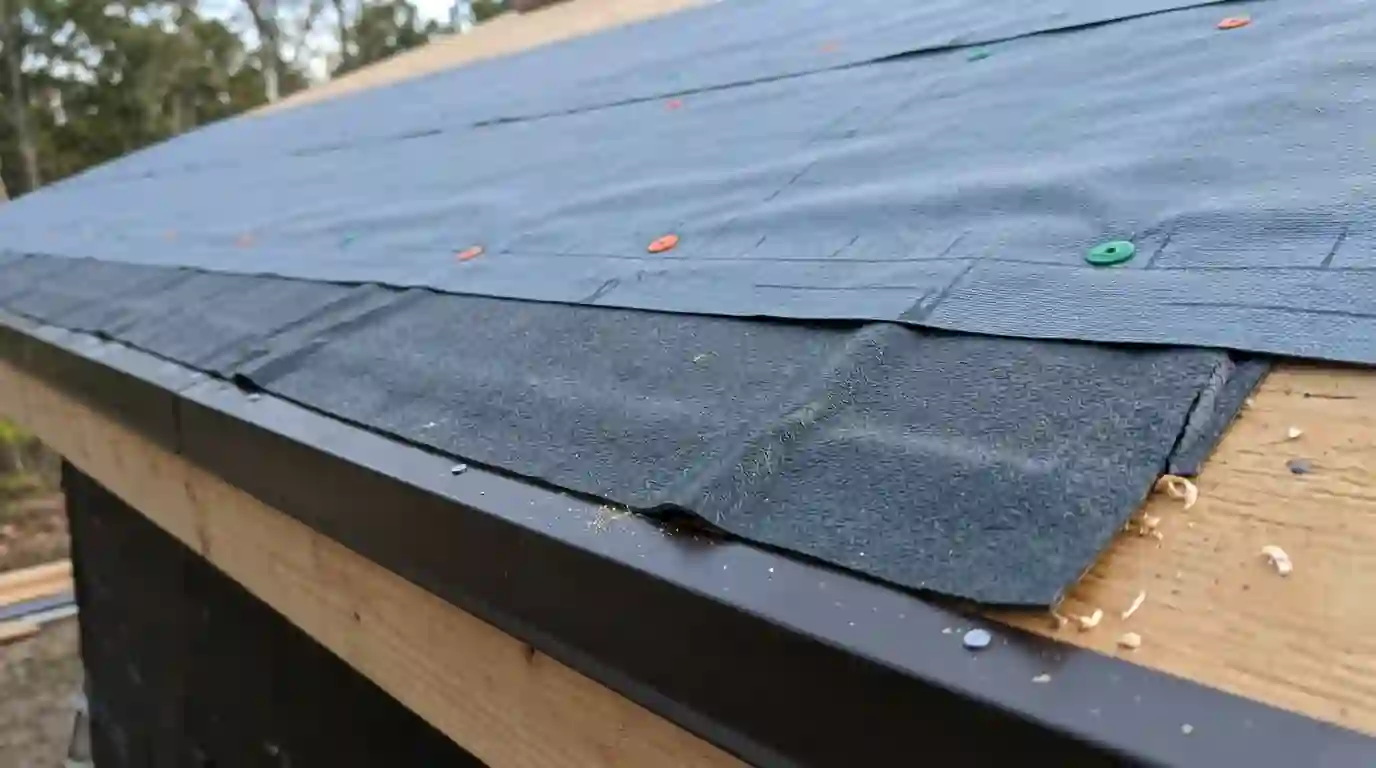
Noise, lightning, snow slides and other questions about living under metal
Rain noise is the first worry most homeowners raise. Over a solid deck with underlayment and an insulated attic, a metal roof on a house usually sounds little different from shingles indoors. The drumming people remember comes from panels over open purlins on barns and porches with no deck below.
Metal doesn't attract lightning. A strike chooses the highest object nearby, regardless of material, and a metal roof is noncombustible if a strike does happen. If you want lightning protection, that's a separate grounded system.
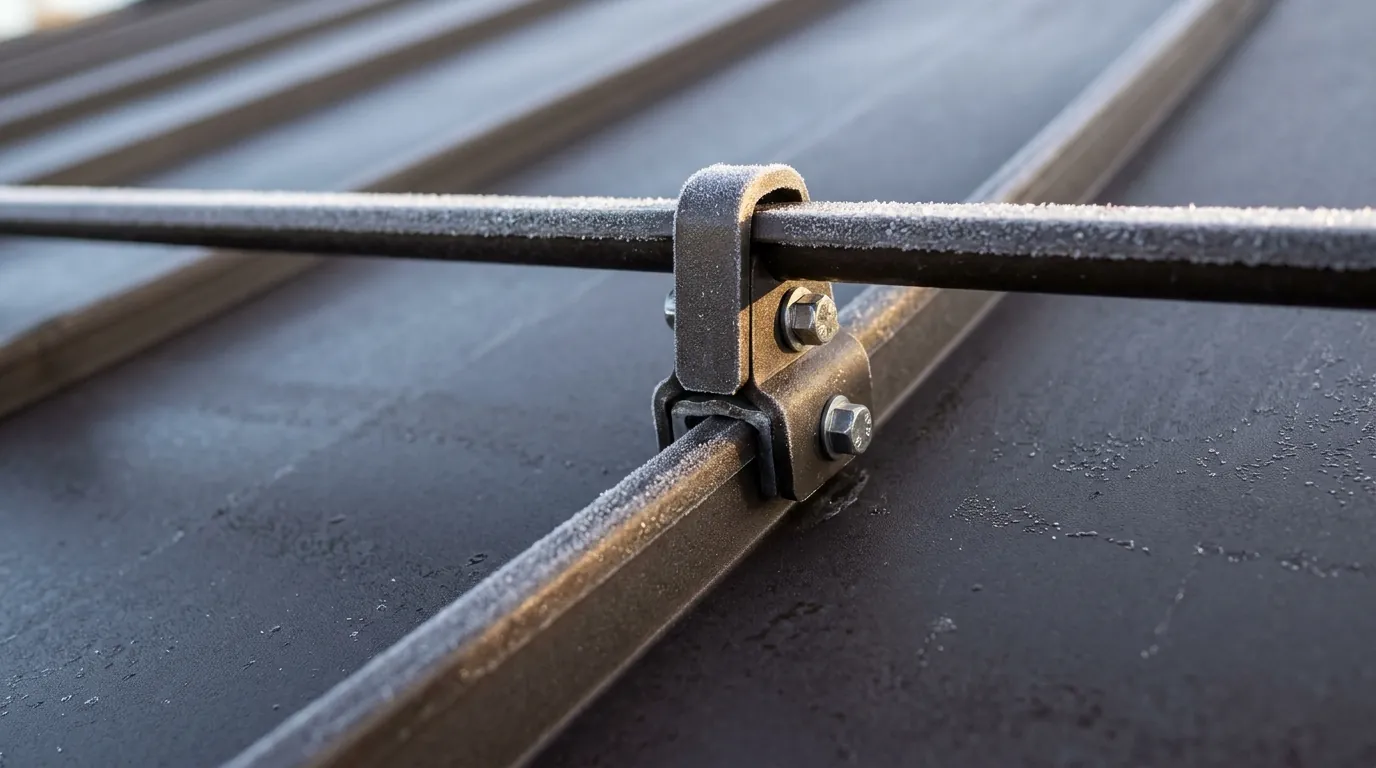
Snow does slide off metal more readily, often in one sheet. Over doors, walkways, decks and lower roofs, we add snow guards to hold it in place and let it melt gradually. Slides can also take gutters with them, so gutter hangers and placement matter. Our gutter guard options and heavier hangers help where the two meet. We also look at where meltwater lands below the eave, because a slide onto a north walkway can refreeze into a sheet of ice by morning.
Metal roofing costs in the Dayton area by panel type
Typical installed ranges, including underlayment and trim. Barn work is priced lower because there's usually no tear-off or deck.
| Job | Typical range | What it covers |
|---|---|---|
| Exposed-fastener panels on a house | $7.40 to $11.60 per sq ft | 29 or 26 gauge ribbed steel, screws with washers, trim |
| Exposed-fastener panels on a barn or pole building | $4.35 to $6.90 per sq ft | Panels over purlins, no tear-off |
| Stamped metal shingles or stone-coated steel | $10.85 to $16.40 per sq ft | Slate, shake or tile profiles, hidden fasteners |
| Standing seam, snap-lock or mechanically seamed | $13.65 to $21.85 per sq ft | 24 gauge typical, concealed clips, PVDF finish |
| Typical whole house, standing seam | $29,450 to $51,830 | About 2,200 sq ft of roof surface |
These are typical Dayton-area ranges for planning purposes. Your price depends on what we measure and the options you choose. See more on our Dayton roofing price guide.
- Panel typeExposed-fastener panels cost the least to buy and install. Standing seam and stamped metal shingles take more labor and more trim pieces.
- Gauge and finishThicker 24 gauge steel costs more than 26 or 29 gauge. PVDF paint finishes resist fading and chalking better than standard polyester paint but add cost.
- Roof shapeSimple gables are efficient for metal. Hips, valleys, dormers and skylights each need custom-cut panels and trim, raising labor quickly.
- Existing roof removalTear-off adds cost but lets us inspect and fix the deck. Going over existing shingles saves money where allowed but hides problems.
- Snow guards and accessoriesSnow guards over entries and walkways, specialty vents and color-matched gutters add to the total.
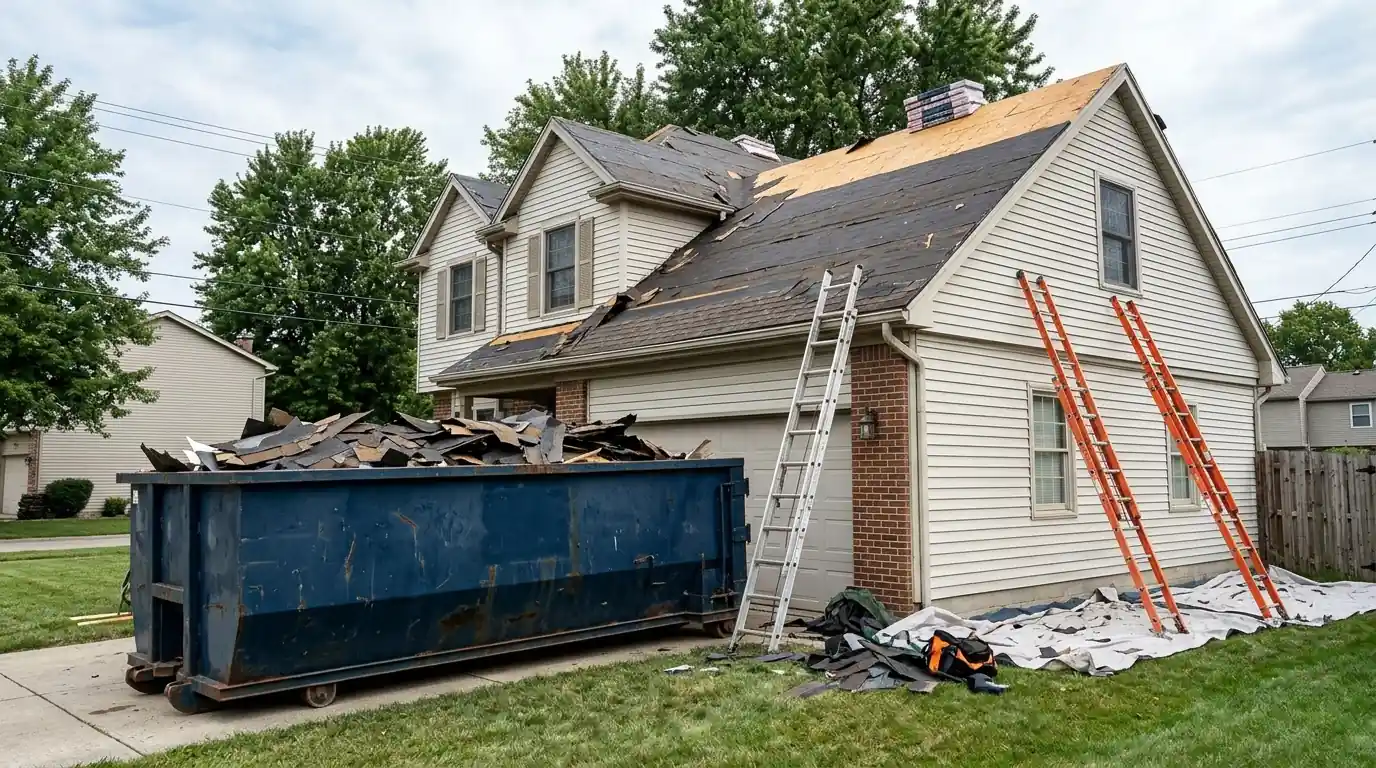
From tear-off to trim: how a metal roof goes on
Metal is less forgiving than shingles, because measurements and cuts show. We work in this order.
Measure precisely and order panels to length
We measure each roof plane, eave to ridge, and order panels cut to length where possible. That reduces end laps, which are a common leak point on exposed-fastener roofs.
Tear off or prep the existing roof
On houses we usually remove old shingles to inspect the deck. Some buildings allow metal over one layer of shingles with purlins or underlayment, and we'll explain the trade-offs if that's an option for you.
Install high-temperature underlayment
Metal gets hotter than shingles, so we use a synthetic or high-temp underlayment rated for it, plus ice barrier at eaves and valleys on homes.
Set eave trim, valleys and closures
Eave trim, valley pans and foam or vented closures go on before panels. Closures keep wind-driven rain, insects and birds out of panel ribs.
Fasten panels to the manufacturer's pattern
Exposed-fastener panels get screws with neoprene washers in the flat or on the rib as specified, driven snug but not crushed. Standing seam and metal shingles use clips or hidden fasteners.
Flash penetrations and finish ridge and rakes
Pipe boots for metal, chimney flashing and wall transitions are formed and sealed, then ridge cap and rake trim close up the roof. We photograph the finished roof and every penetration.
Is a metal roof a good fit for your building?
Metal earns its higher up-front price in some situations more than others. These are the strongest cases.
Barns, sheds and pole buildings
Exposed-fastener panels go on fast over purlins, span wide openings, and shed snow and rain with very little upkeep on agricultural and storage buildings.
You plan to stay 25 years or longer
A quality painted steel roof can outlast two asphalt roofs, so the longer you own the house, the better the per-year cost looks.
Low to moderate pitch roofs
Standing seam handles slopes well below where shingles struggle. Some panel systems are rated for slopes as low as 1/12 or 2/12 with the right seam.
Heavy tree cover or debris
Smooth metal sheds leaves, needles and twigs more easily than textured shingles, though gutters still need regular cleaning.
Hot attics and south-facing slopes
Light-colored and reflective metal finishes reflect more sun than dark asphalt, which can help keep attic temperatures down in Dayton summers.
Repeated shingle blow-offs
Properly fastened metal panels resist wind uplift well, especially on exposed sites where shingles keep tearing loose.
Where metal roofs make the most sense around the Miami Valley
North and east of Dayton, metal has always been part of the scenery. Farmsteads and outbuildings around Troy, Tipp City and across Miami County carry decades-old ribbed steel on barns, equipment sheds and horse buildings. Many of those panels are now on their second or third set of fasteners, and some owners are choosing to put the same panels on the house.
Closer to the city, residential metal is growing on newer homes in the suburbs and on older ranches where owners want to stop reroofing every twenty years. Modern farmhouse designs often mix standing seam over porches and bump-outs with shingles on the main roof.
The local weather suits metal in several ways. It sheds spring hail with less functional damage than standard shingles, though large hail can dent it cosmetically. It handles straight-line summer wind well when fastened properly. In winter, its smooth surface helps snow slide off before ice dams build, as long as snow guards and gutters are planned for it. That combination is why we see rural property owners in this region sticking with metal for generations.
Where we do metal roof installation most often
These neighborhoods, suburbs and cities make up most of our metal roof installation calls. Each link opens the local page with its ZIP.
Questions about metal roof installation in Dayton
Can you install a metal roof over my existing shingles near Dayton?
Sometimes. Some metal systems can go over one layer of shingles with underlayment or a grid of purlins. It saves tear-off cost, but it hides any rotten decking, adds weight and can trap moisture. On most houses we recommend tear-off. We'll explain what's allowed for your roof and what you'd be trading.
How long do the screws on an exposed-fastener metal roof last in Ohio?
The screws themselves last a long time, but the neoprene washers under them typically dry out and crack after about 15 to 20 years of sun exposure. Once they fail, water can wick past the screw. Planning a fastener check every few years, and replacing washers or screws as needed, keeps those roofs tight.
Does a metal roof get dented by Miami Valley hail?
Large hail can dent metal, especially thinner gauges and softer profiles. Most dents are cosmetic and don't affect the roof's ability to shed water. Thicker panels and textured stone-coated finishes show less. Check your insurance policy for cosmetic damage exclusions before you choose a metal roof.
Which metal roof color keeps a Dayton attic coolest in summer?
Light colors and finishes with reflective pigments reflect the most sunlight, which helps keep attic temperatures down. Many darker colors now come with reflective pigments too, so they run cooler than dark asphalt. Ventilation matters as much as color, so we check the attic during the estimate.
Do I need snow guards on a metal roof over my front porch?
If the roof drains over an entry, walkway, driveway, deck or lower roof, we strongly suggest them. Snow slides off metal in sheets, which can hurt someone, damage plants and tear off gutters. Snow guards hold the snow until it melts. We place them based on slope, panel type and what's below.
What gauge metal should I put on a house versus a pole barn?
For barns and outbuildings, 29 gauge exposed-fastener panels are common and cost-effective. For houses, we usually recommend 26 gauge for ribbed panels and 24 gauge for standing seam, because thicker steel resists denting and oil canning better and holds its shape over the years.
Other roofing work that often goes with this job
Product lines we install on roofs around Dayton include shingles from GAF, Owens Corning and CertainTeed, metal from Englert, membranes from Carlisle SynTec and skylights from VELUX.
Need metal roof installation today?
Call any hour. A person answers, asks a few questions and sets a time for a roofer to come out.