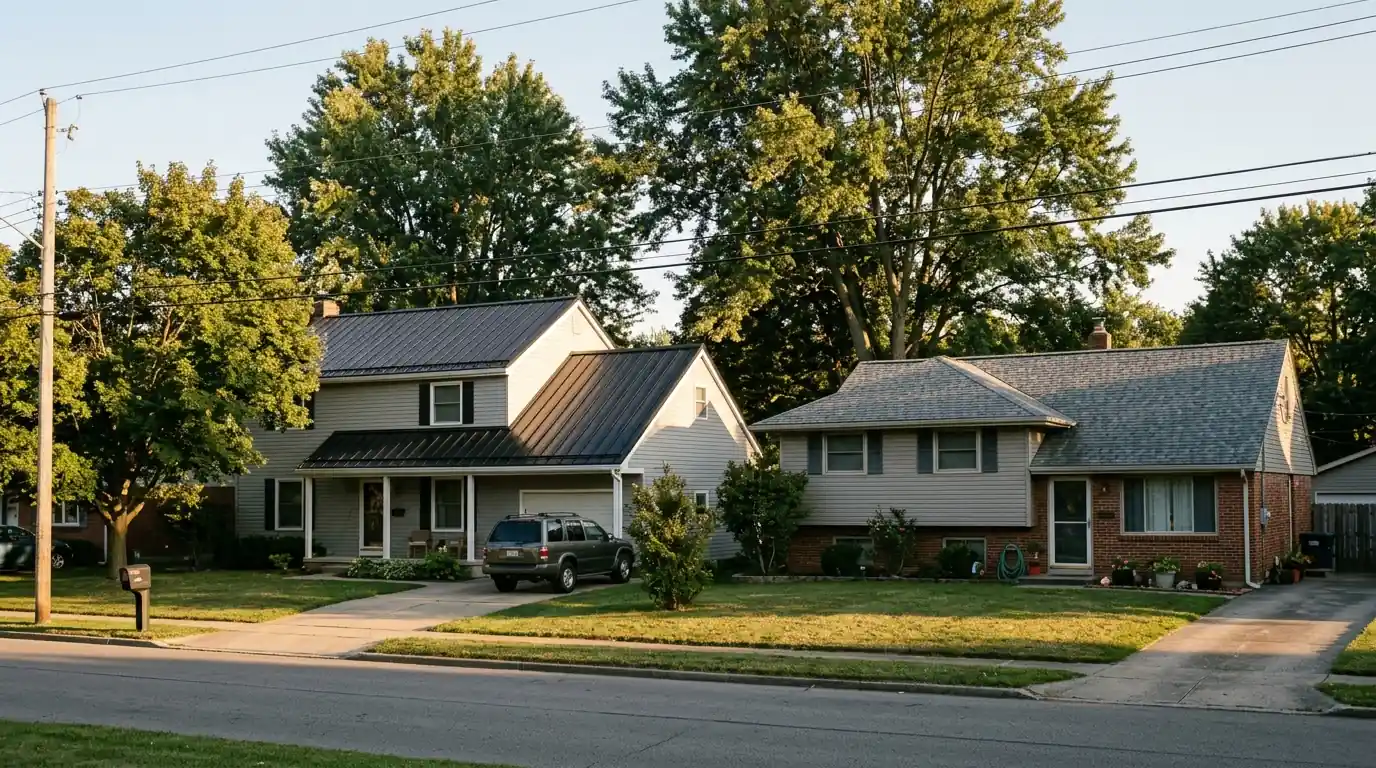
Architectural asphalt shingles cost far less upfront and suit most Dayton homes, typically lasting 22 to 30 years here. Standing seam metal usually costs two to two and a half times as much but can last 40 to 70 years, sheds snow and resists wind well. Metal pays off mainly for owners who plan to stay 20 years or longer.
The short answer for most Dayton homeowners
We install both, so we don't have a horse in this race. For the typical brick ranch in Kettering or the 1990s two-story in Centerville, architectural shingles remain the practical default. They're affordable, easy to repair, and a good installation will carry most families through the years they'll own the house.
Metal starts to make sense in specific situations. Long-term owners who never want to reroof again are the clearest fit. So are low-slope porch and addition roofs where shingles struggle, farmhouses and rural properties out toward Tipp City or Bellbrook where the look suits the setting, and homes surrounded by trees that drop limbs and debris every storm season.
What each option typically costs on a Dayton house
On a typical home with about 2,000 square feet of living space, a full tear-off with architectural shingles commonly runs $11,650 to $19,480 in the Dayton area. That works out to roughly $465 to $715 per roofing square (100 square feet of roof), depending on pitch, layers and decking repairs.
Exposed fastener steel panels, the ribbed style common on barns and outbuildings, typically run $14,380 to $22,760 on the same house. They cost less than standing seam, but the screws and their rubber washers need attention every 15 to 20 years. Standing seam panels with concealed clips usually land between $26,850 and $41,370. Complex roofs with lots of valleys, dormers and skylights push metal costs up faster than shingle costs, because each detail takes custom trim.
How each roof handles Dayton's hail, wind, snow and heat
Hail is where the comparison gets interesting. Moderate hail can dent metal panels, especially thinner gauges, but dents rarely cause leaks. The same hail can bruise a standard shingle and shorten its life, as we explain in our article on how hail damages shingles. Class 4 impact-resistant shingles narrow that gap at a much lower price than metal.
Both roofs resist ordinary wind when installed correctly. Shingles need the right nail count and placement, and their seal strips need a warm day to bond. Standing seam panels lock together along their full length, which gives wind very little to grab. Neither survives the kind of tornado that tore through Trotwood and Old North Dayton on Memorial Day 2019.
Snow slides off metal, often all at once. That's good for preventing ice dams but bad over a front walk, a deck or a driveway, so we add snow guards above those areas. In summer, a light-colored metal roof with a reflective finish keeps attic temperatures noticeably lower than dark shingles.
Running the 30-year math honestly
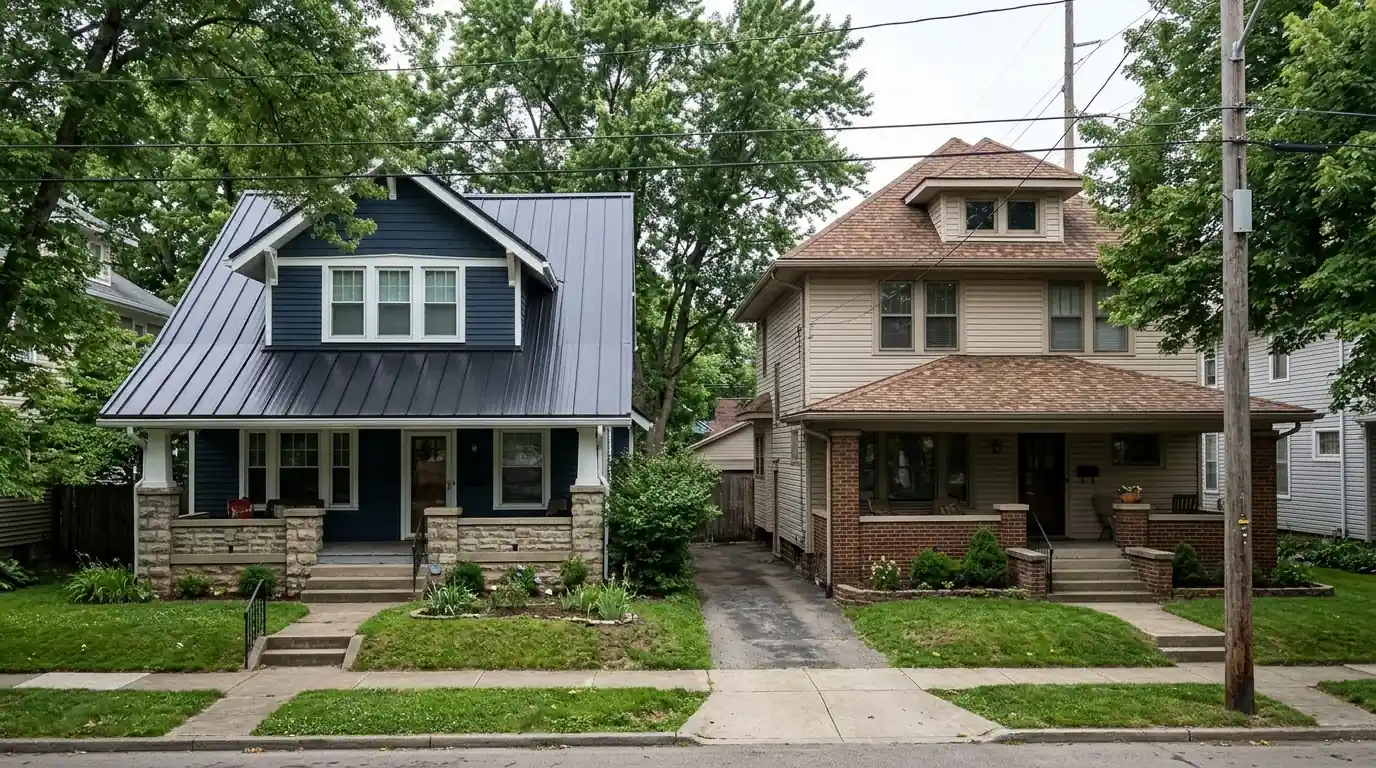
Over a long enough window, metal can cost less per year of service. A shingle roof installed today will likely need replacing once more within 30 years, and that second replacement will cost more than the first. A standing seam roof installed today could still be working in 2066.
The catch is that the math only pays off if you're there to collect. If you sell in eight years, you'll recover some of the cost in a higher asking price, but rarely all of it. Most buyers in the Dayton market value a newer roof without paying a big premium for the material. If you expect to stay put for 20 years or more, metal deserves a serious look.
- Staying under 12 years: architectural shingles almost always win.
- Staying 12 to 20 years: compare impact-resistant shingles against exposed fastener metal.
- Staying 20 years or longer: standing seam usually comes out ahead per year of use.
- Rental or flip: shingles, unless the roof shape makes metal unusually simple.
Neighborhood fit, historic rules and HOAs
Looks matter more than people admit. A dark standing seam roof can suit a modern farmhouse in Springboro and look out of place on a 1920s Colonial Revival in Oakwood. In Dayton's historic districts, such as St. Anne's Hill, the Oregon District and South Park, exterior material changes visible from the street generally go through design review, so check with the city before planning a switch.
Many homeowner associations in Centerville, Washington Township and Beavercreek have rules on roof materials and colors. Some allow metal, some allow only certain profiles, and some still say no. Read the covenants before you fall in love with a sample.
Installation details that make or break either roof
A great product installed poorly is still a bad roof. With architectural asphalt shingles, the details that matter most are ice barrier at the eaves and valleys, new flashing at walls and chimneys, correct nailing, and balanced attic ventilation. Skip any of those and the shingle warranty won't save you.
With metal roof installation, the panels must be allowed to expand and contract. Steel and aluminum move every day as Dayton swings from cold mornings to sunny afternoons, and panels fastened too tightly will eventually oil-can, pull fasteners or crack sealant. Trim at valleys, chimneys and walls is where most metal leaks begin. Ask any contractor how they handle those transitions, and ask to see photos of a finished roof with a chimney.
What upkeep and repairs look like over the years
Shingle roofs are easy and cheap to fix. When a spring storm lifts a few tabs, a roofer can replace them in an hour or two, and parts are available at any supply house in the Miami Valley. Expect to replace rubber pipe boots once or twice over a shingle roof's life and to recaulk or reseal a few flashing joints along the way.
Metal needs less routine attention but more specialized repair. A dented or creased standing seam panel often has to be replaced full length, from eave to ridge, and matching an older color can take some searching. Exposed fastener roofs need their screws checked and replaced as the washers harden in the sun. Either way, a quick look every couple of years and after major storms keeps small problems from turning into wet ceilings.