Chimney Flashing Repair in Dayton, OH
Chimney leaks are rarely fixed by another coat of tar. We reflash brick chimneys with step flashing, counterflashing cut into the mortar joints and, where needed, a cricket, and photograph each layer before it is closed.
- Answered 24/7
- Photo report on every visit
- Dayton and the Miami Valley
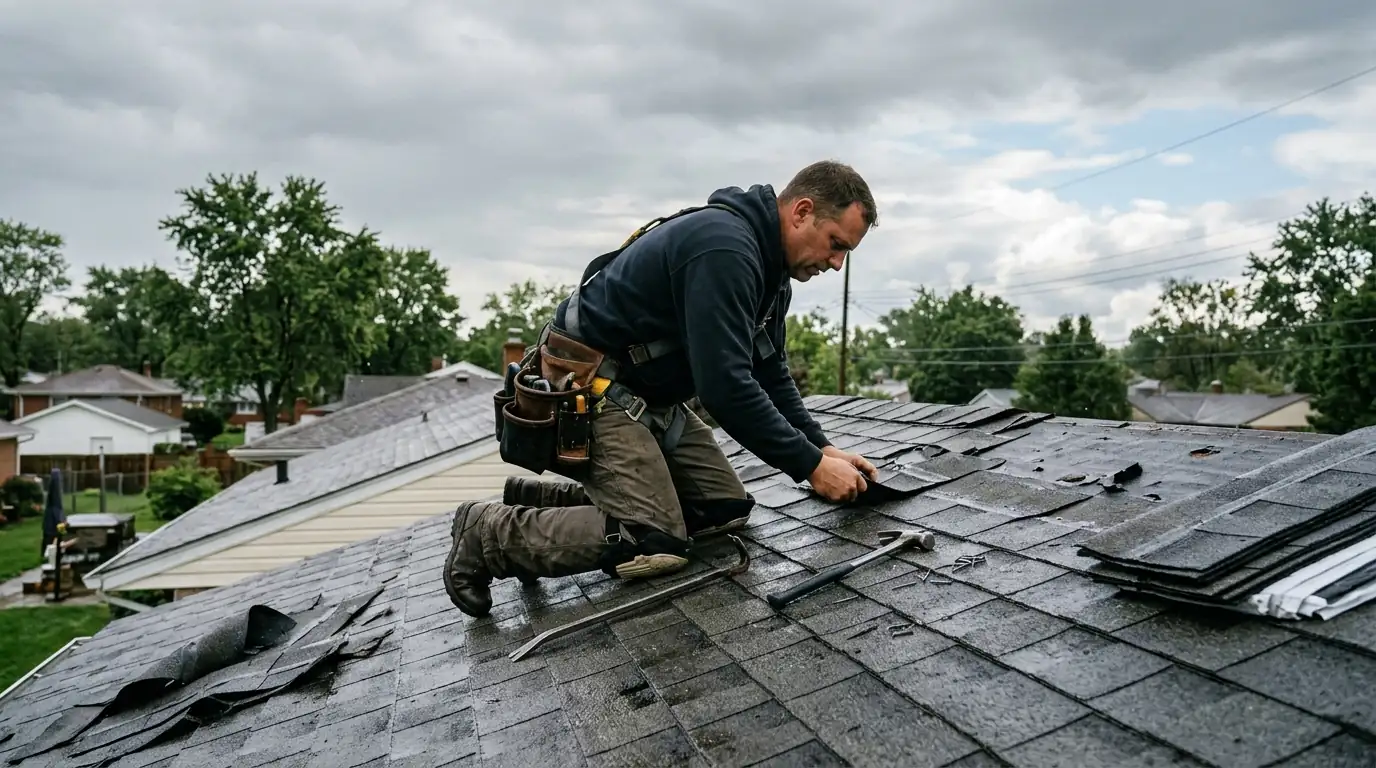
Chimney flashing repair in the Dayton area typically runs $295 to $640 for resealing and minor counterflashing fixes, $685 to $1,740 for a full reflash with new step flashing and reglet-cut counterflashing, and $1,290 to $2,860 when a cricket must be built behind a wide chimney. Most jobs take one day and don't require replacing the surrounding roof.
A brick chimney is a big masonry box punched through a wood roof, and the two materials move differently. Brick soaks up water and expands and contracts with every freeze and thaw, while the roof deck flexes with temperature and load. The flashing system has to bridge that gap and stay watertight for decades. When it doesn't, water runs down the inside of the chimney chase and shows up on the ceiling beside the fireplace or on the attic framing around the masonry.
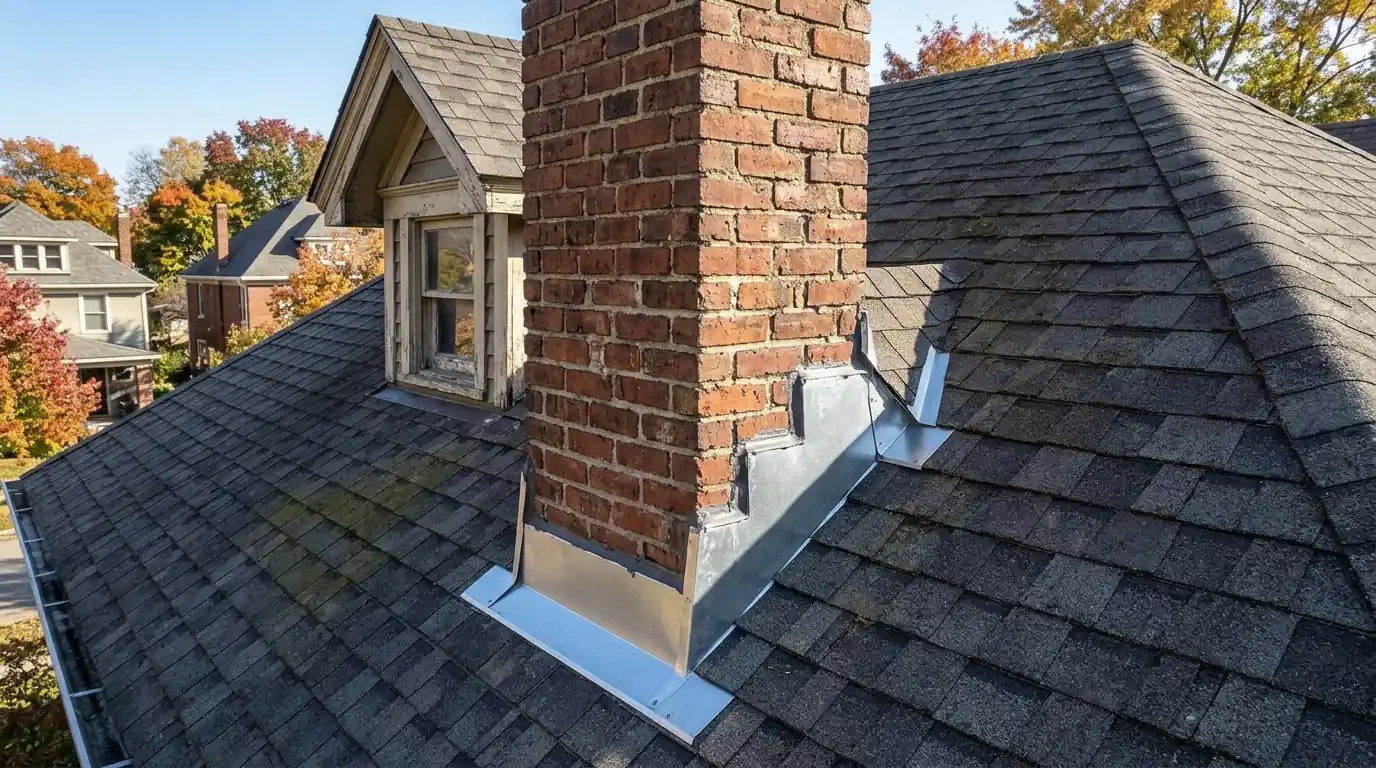
Proper chimney flashing has two parts. Step flashing weaves under each shingle course along the sides and turns up against the brick. Counterflashing laps down over the top of the step flashing, with its upper edge cut into a mortar joint. Together, they let the roof and chimney move independently without opening a gap. Most leaks we find come from one of these two parts missing, corroded or replaced with caulk. Masonry problems, like a cracked crown or spalling brick, belong to our chimney repair work and often get handled on the same visit.
Why chimneys wider than 30 inches need a cricket behind them
Picture all the rain that falls on the slope above a chimney. It runs down the roof until it hits the back of the chimney and has nowhere to go but sideways. On a narrow chimney, a formed metal back pan can move that water around the corners. On a wide one, water stacks up, along with leaves, snow and ice, and eventually finds its way under the flashing.
A cricket, sometimes called a saddle, is a small peaked roof built behind the chimney that splits the water and sends it around both sides. Residential building codes generally require one when a chimney is more than 30 inches wide across the slope, and many older Dayton chimneys were built without one long before that rule existed. We frame the cricket from lumber, cover it with decking and membrane, and flash it into the chimney and roof. On slate or steep roofs, a metal cricket is often the cleaner option.
If your chimney has wet framing on the uphill side or a history of winter leaks, a missing cricket is a likely cause.
When the leak comes through the brick, not the flashing
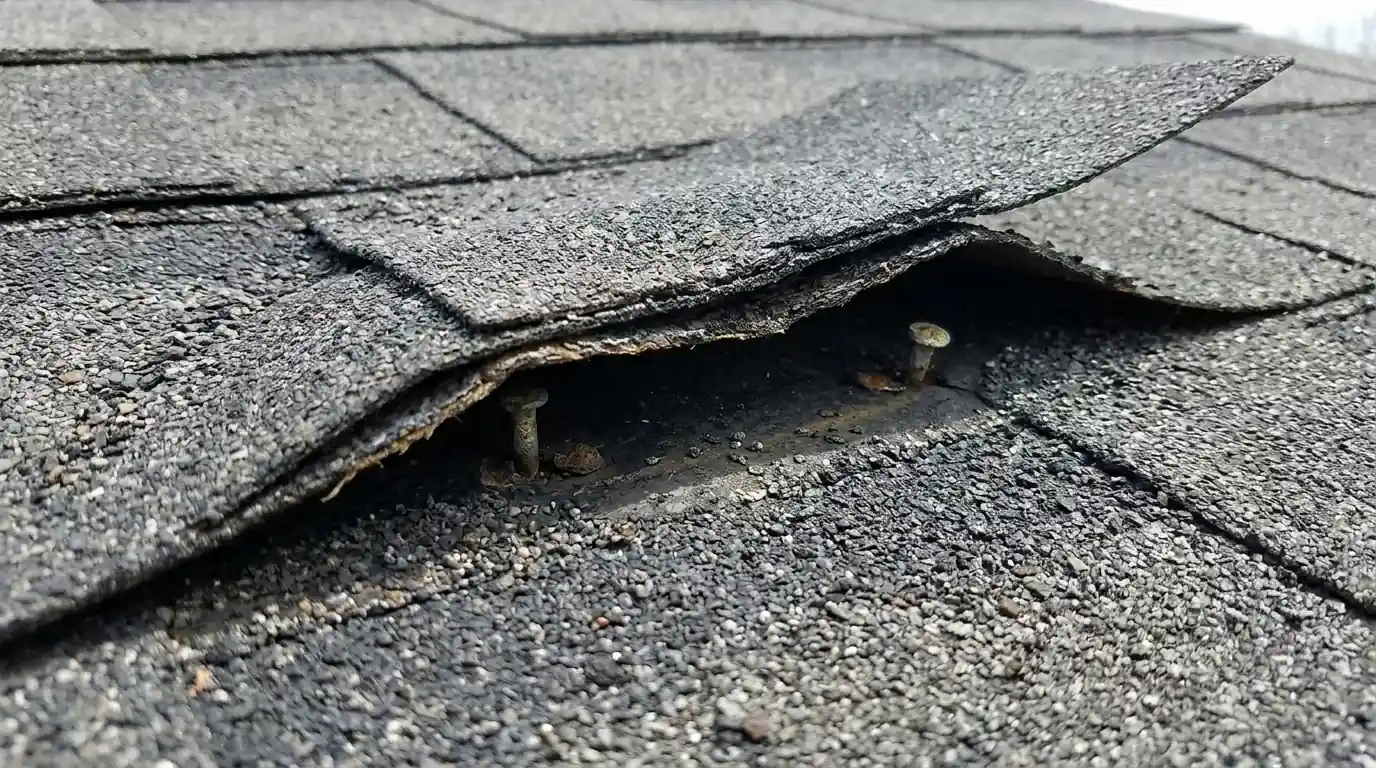
Not every chimney leak is a flashing problem. Brick and mortar are porous. A chimney with worn mortar joints, spalling brick or a cracked crown can absorb water through its face and let it run down inside, past perfectly good flashing. We see this often on older chimneys that haven't been repointed in decades.
To tell the difference, we look at where the water shows. Flashing leaks usually wet the deck and framing at the base of the chimney. Masonry leaks often show as damp brick higher up inside the attic, or water in the firebox. Sometimes it's both. Our roof leak tracing approach applies here too, with a hose test that isolates the flashing first and the brick second.
When the masonry is the problem, the fix may involve repointing, a new crown or cap, or a breathable water repellent. We'll explain the options and coordinate the work so the flashing and masonry repairs go in the right order.
Chimney flashing repair costs in Dayton, from reseal to full reflash with cricket
Most Dayton-area chimney jobs land in these ranges. Chimney size, roof pitch and what's under the old flashing drive the price.
| Job | Typical range | What it covers |
|---|---|---|
| Reseal and minor counterflashing repair | $295 to $640 | Reset loose metal into the reglet, replace short sections, reseal |
| Full chimney reflash | $685 to $1,740 | New apron, step flashing, back pan and reglet-cut counterflashing |
| Full reflash with new cricket | $1,290 to $2,860 | Framed and flashed cricket behind a wide chimney plus full reflash |
| Deck and framing repair at the chimney | $385 to $1,160 | Rotted decking or rafter ends replaced before reflashing |
These ranges are typical for Dayton-area homes in 2026 and are not a quote; your price is confirmed after we inspect the chimney and attic. See more on our Dayton roofing price guide.
- Chimney widthWide chimneys need a cricket, which adds framing, metal and shingle work on the uphill side.
- Roof pitchSteep pitches slow every step and need more safety setup around the chimney.
- Brick and mortar conditionSoft or crumbling mortar makes it hard to set counterflashing until the joints are repointed.
- Flashing metalCopper or lead-coated copper costs more but suits slate and historic brick better than aluminum or galvanized steel.
- Hidden rotLong-running chimney leaks often rot the deck and rafters on the uphill side, which adds to the job.
How we reflash a brick chimney with step flashing, counterflashing and a reglet
Reflashing a chimney means rebuilding both layers so each one covers the other. Here is the order our roofers work in.
Strip the old flashing and sealant
We remove the shingles around the chimney, pull old metal and scrape off tar and caulk from the brick. Any rotted deck or framing at the chimney gets replaced.
Seal the deck with membrane
Self-adhering membrane goes around the base of the chimney and turns up the brick a few inches. It's a backup layer under the new metal.
Install the apron and step flashing
A front apron goes on the downhill face. Step flashing pieces go up each side, one per shingle course, woven in as the shingles are laid back.
Build the back pan or cricket
On narrow chimneys, a formed back pan carries water around the uphill side. On chimneys wider than 30 inches, we frame and flash a cricket to split the water around the chimney.
Cut the reglet and set counterflashing
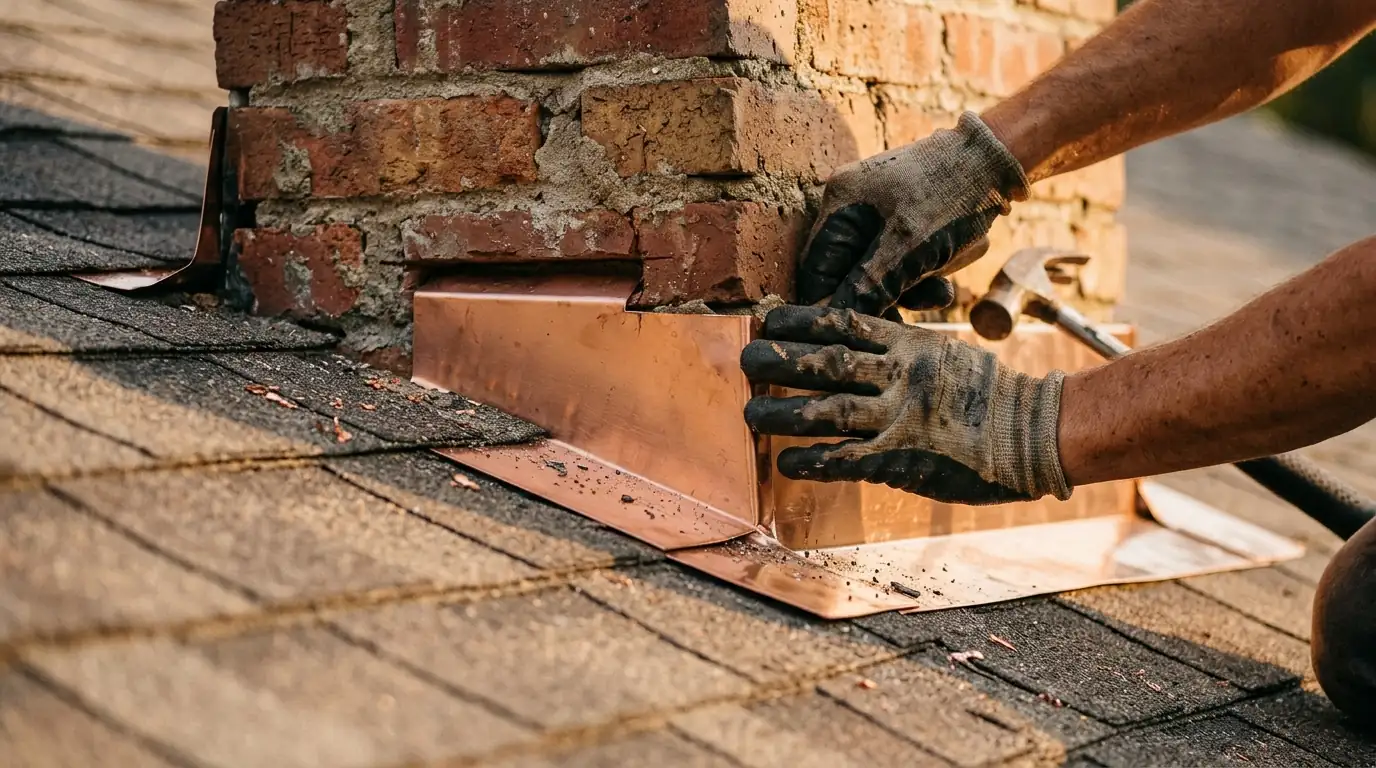
We grind a groove into a mortar joint around the chimney, bend counterflashing into it, and seal it with compatible masonry sealant. The counterflashing laps down over the step flashing on every side.
Photograph and water test
Each layer gets photographed before it's covered. When the work is done, we run water at the chimney and check the attic to confirm it's dry.
Is it the flashing or the chimney? Clues around your Dayton chimney
Chimney leaks can come from the flashing, the masonry or the top of the chimney. These clues help sort out which.
Water stains on the ceiling beside the chimney
Stains at the corners where the chimney meets the ceiling often trace to the side step flashing or the back of the chimney.
Tar or caulk smeared along the brick
Heavy sealant where the counterflashing should be is a sign of old patch work, and usually of a recurring leak.
Counterflashing pulled out of the mortar
If the metal's top edge has slipped out of its joint, water can run straight behind it into the roof.
Wet framing at the uphill side of the chimney
Water pools behind a wide chimney with no cricket. In the attic, the rafters and deck on the uphill side tend to rot first.
Damp brick inside the attic
Damp masonry in the attic, without stains on the flashing area, can point to a porous chimney or a cracked crown rather than flashing.
Rust stains streaking down the brick
Corroded steel flashing or old fasteners leave rust streaks below them, a sign the metal is near the end of its life.
Brick chimneys on Dayton's foursquares, bungalows and ranches
Dayton has a lot of brick chimneys, and most were built for coal or wood heat long before modern flashing standards. In Grafton Hill and the Dayton View Triangle, large homes from the early 1900s often have two or three chimneys, some wide enough to need crickets, and many on steep slate or tile roofs. Those chimneys have been through a century of freeze-thaw cycles, and their mortar joints are often too soft to hold a counterflashing without repointing first.
Post-war neighborhoods have their own chimney issues. In Moraine and similar suburbs, many 1950s ranches have a single brick chimney serving the furnace and water heater, or one left unused after a switch to high-efficiency equipment that vents through the wall. Those chimneys often have surface-mounted counterflashing that was caulked to the brick rather than cut into it, and the caulk has long since failed. Unused chimneys can sometimes be taken down below the roofline and decked over, which removes the leak point entirely.
Where we do chimney flashing repair most often
These neighborhoods, suburbs and cities make up most of our chimney flashing repair calls. Each link opens the local page with its ZIP.
Questions about chimney flashing repair in Dayton
How can I tell if my chimney leak is the flashing or the brick itself?
Look at where the water appears. Flashing leaks usually show on the ceiling or framing right at the base of the chimney, often after wind-driven rain. Masonry leaks tend to show as damp brick higher up in the attic or water in the firebox, sometimes after any steady rain. A hose test on the flashing first, then the brick, can confirm it.
Does a 24-inch-wide chimney need a cricket behind it?
Codes generally require a cricket only when the chimney is more than 30 inches wide across the slope, so a 24-inch chimney usually doesn't need one. A well-formed back pan normally handles the water. On a low-slope roof or a chimney that collects a lot of leaves and snow behind it, a small cricket can still be worth adding.
Can chimney flashing be replaced without replacing the whole roof?
Yes. We remove and replace only the shingles around the chimney, usually a few feet on each side, and weave them back in with the new step flashing. If your roof is close to replacement anyway, it can make sense to reflash at the same time, but a sound roof doesn't need to come off for a chimney reflash.
Should I reflash my chimney when I get a new roof, or reuse the old metal?
In most cases, reflash. The old step flashing has to come out to replace the shingles anyway, and older counterflashing is often surface mounted or corroded. New metal installed with the new roof costs far less than coming back later to fix a chimney leak. If the existing counterflashing is copper or in excellent shape and properly set in a reglet, we may reuse it.
Is surface-mounted counterflashing sealed with caulk an acceptable fix?
It can work for a short time but isn't a lasting fix on brick. Caulk along the top edge of surface-mounted metal shrinks and pulls away in Ohio winters, and water gets behind it. A reglet cut into the mortar joint holds the counterflashing mechanically and puts the sealant where it's protected. We use surface mounting only where a reglet isn't possible.
Can you take an unused chimney down below the roofline instead of reflashing it?
Often, yes, provided no furnace, water heater or fireplace still vents through it. We confirm that first, then remove the brick to below the roof deck, frame and deck over the opening, and shingle it in. It eliminates the leak point and the need for future flashing repairs there. Check whether your city requires a permit for the work.
Other roofing work that often goes with this job
Product lines we install on roofs around Dayton include shingles from GAF, Owens Corning and CertainTeed, metal from Englert, membranes from Carlisle SynTec and skylights from VELUX.
Need chimney flashing repair today?
Call any hour. A person answers, asks a few questions and sets a time for a roofer to come out.