Gutter Repair in Dayton, OH After Storms and Ice
When a gutter run is hanging off the house after a storm or a hard freeze, a person answers our line 24/7 and we can usually secure it the same day, then photograph the fascia and roof edge behind it.
- Answered 24/7
- Photo report on every visit
- Dayton and the Miami Valley
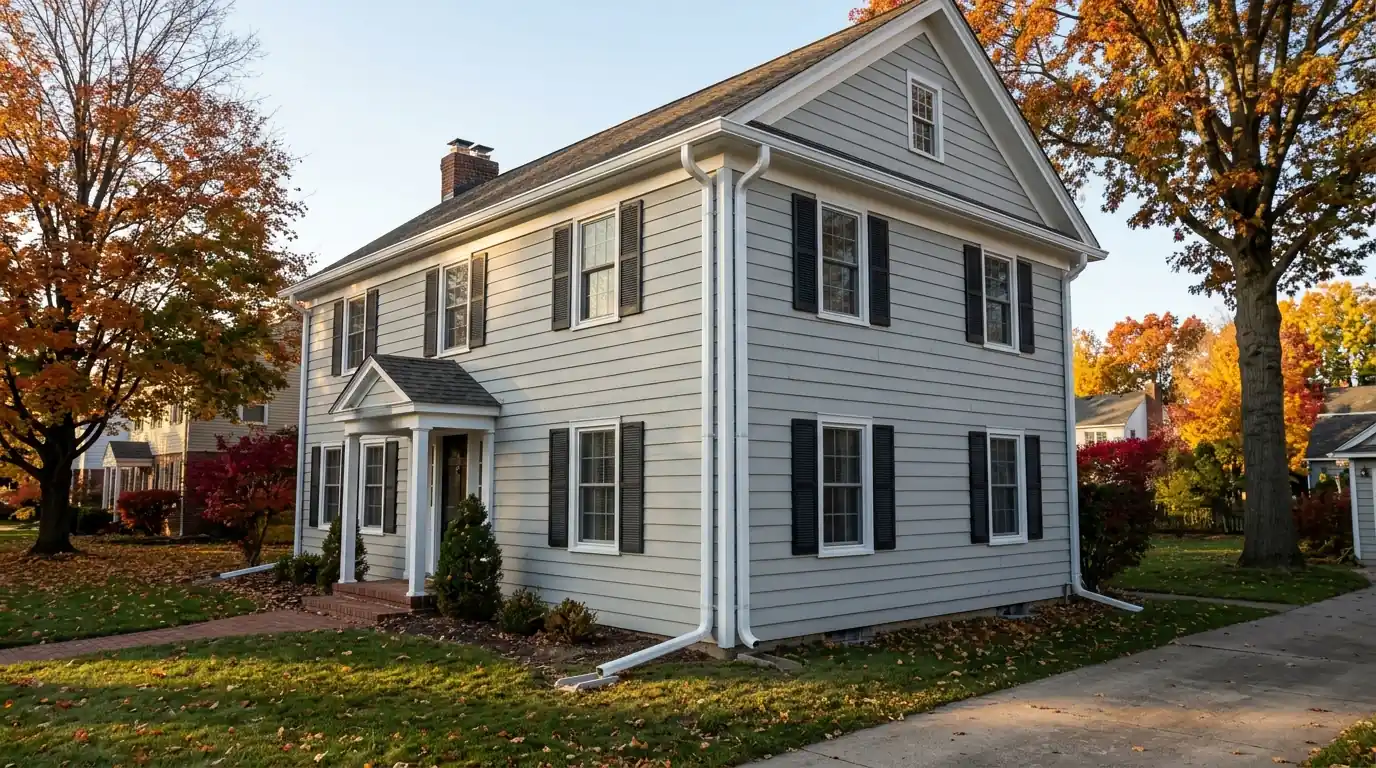
Gutter repair in the Dayton area typically costs $145 to $315 to reseal leaking seams and end caps, $215 to $585 to rehang and re-pitch a sagging run, and $265 to $890 to replace a damaged section or full run. A visit includes finding where water escapes, fixing hangers and outlets, checking the fascia and drip edge behind the gutter, and a hose test.
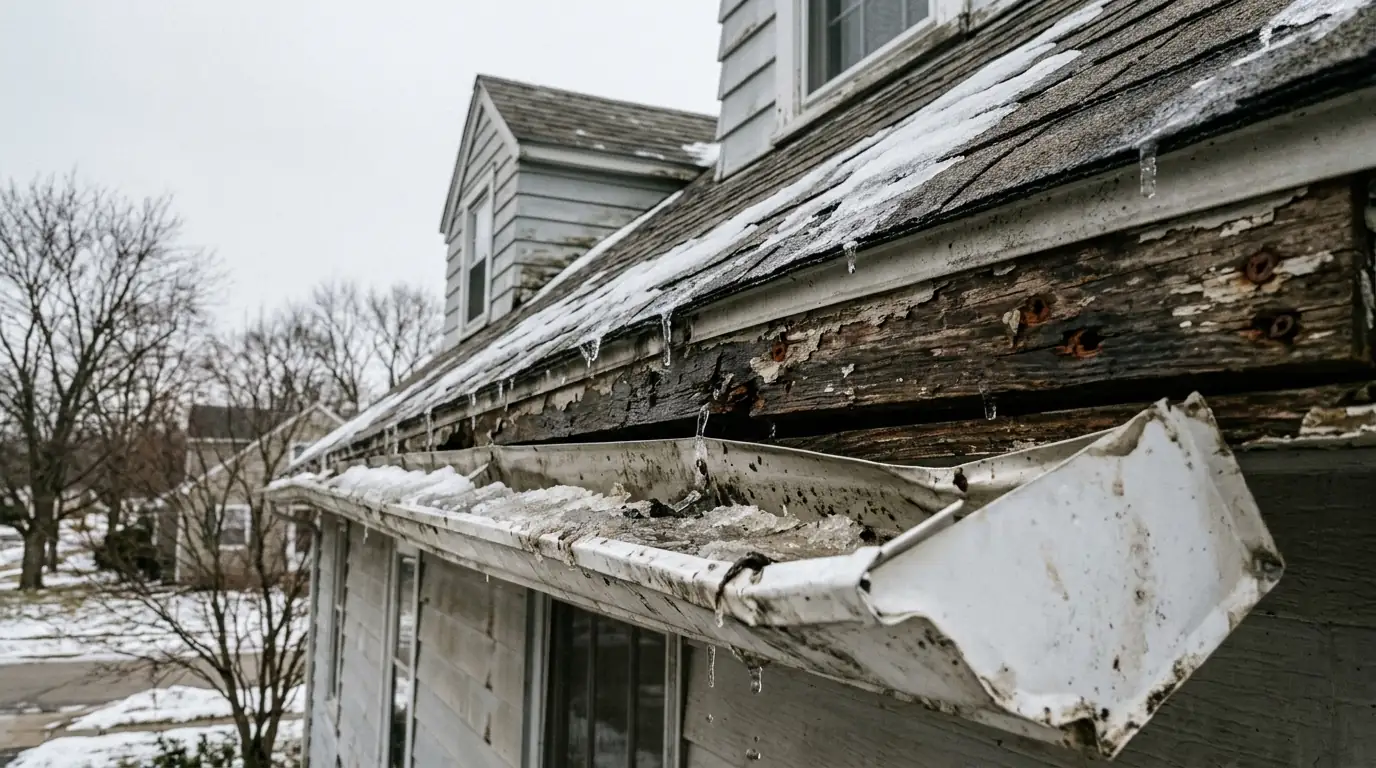
A broken gutter is rarely just a gutter problem. Water that escapes at a split seam or a sagging corner lands on the fascia, soaks the end of the roof decking, splashes against siding and pools beside the foundation. In winter it freezes on the eave and feeds ice dams that push water under the first courses of shingles. Most of the gutter calls we take in Dayton follow one of three events: a summer thunderstorm with straight-line wind, a heavy limb drop, or a February thaw when ice-packed gutters finally peel away from the house.
We start by finding out where the water is actually going, which isn't always where the drip shows. A leak at a downspout elbow can look like a seam failure, and an overflowing corner may be caused by a clogged outlet thirty feet away. Once we know the cause, we fix it with matching aluminum, new hidden hangers driven into sound wood, and fresh sealant on cleaned metal. If the gutter is fine but the board behind it isn't, we photograph it and tell you. Shingle or drip edge damage can be handled as roof repair on the same trip.
Gutter problems that tell you to call before the next rain
Some gutter trouble can wait for a dry weekend. These are the ones we'd fix soon, because each one sends water somewhere it shouldn't go.
A run hanging away from the house
Once a section pulls loose, wind gets behind it, and the next gust can tear it off along with a strip of fascia.
Drips at seams and end caps
Steady drips at joints mean the sealant has failed. Left alone, they stain siding and rot the board directly behind each joint.
Standing water a day after rain
If water sits in the trough, the pitch has flattened or reversed. That extra weight also pulls hangers loose over time.
Overflow at the same corner every storm
This usually points to a clogged outlet, an undersized downspout, or a valley dumping more water than that corner can take.
Crushed sections from hail or limbs
Crushed gutters lose capacity and often crack at the bend. Hail-dented gutters also help document storm damage to the roof above.
Downspouts dumping at the foundation
A loose elbow or missing extension sends roof water straight to the basement wall, which is often where homeowners first notice it.
What a gutter repair visit from our crew looks like
We fix the problem you called about, then check the parts of the roof edge that usually fail along with it.
Secure anything loose first
If a run is hanging or flapping, we strap or temporarily fasten it before anything else. That keeps the next gust from turning a repair into a replacement.
Trace the water path
We clear the outlets, run water through each gutter, and watch where it leaks or ponds. That separates seam failures from pitch, clog and downspout problems.
Check the fascia and drip edge
We probe the board behind the trouble spot and look at how the drip edge sits relative to the gutter. Soft wood or a gap at the roof edge goes on the photo report.
Rehang, re-pitch or splice
Loose sections get new hidden hangers into solid wood, and flat runs are re-pitched toward their outlet. Damaged pieces are spliced, or the full run is replaced with matching aluminum.
Reseal joints and fix outlets
Old caulk is scraped off and the metal cleaned before fresh gutter sealant goes on. Downspout elbows are screwed, strapped and extended away from the foundation.
Test and report
We run a hose through every repaired run. Then we send you photos of what we fixed and anything else we saw, including roof edge wear worth watching.
Typical gutter repair prices around Dayton
Most gutter repairs are small jobs, and the price depends on height, access and what we find behind the metal. These are typical 2026 ranges for the Dayton area.
| Job | Typical range | What it covers |
|---|---|---|
| Reseal seams and end caps | $145 to $315 | Clean and reseal several joints, then water test |
| Rehang and re-pitch a sagging run | $215 to $585 | New hidden hangers into sound fascia, corrected fall to the outlet |
| Replace a damaged section or single run | $265 to $890 | Matching aluminum, new hangers, outlet and end caps |
| Downspout repair or reroute | $115 to $295 | Reattach elbows and straps, add extensions or move the outlet |
| After-storm securing of a torn gutter | $185 to $465 | Same-day strapping or removal to protect fascia and siding |
Prices are typical Dayton-area ranges that vary by house and conditions. We give you a firm number only after seeing the gutter and the roof edge behind it. See more on our Dayton roofing price guide.
- Height and accessSecond-story gutters, steep lots, and decks or plantings under the eave take more setup than a ranch with a flat yard.
- Rot behind the gutterIf the fascia is soft, hangers have nothing to bite into. Board replacement is priced separately and shown on the photo report.
- Color and profile matchCommon white and brown K-style match easily. Discontinued colors or older profiles may mean replacing a full run instead of splicing.
- How many problems at onceOne leaking corner is a short visit. A system with failing seams, flat pitch and broken outlets costs more and may point toward replacement.
- Storm timingAfter a big wind event, demand spikes. We still answer 24/7 and secure the worst damage first, then schedule full repairs.
Repair or replace: where patching your gutters stops paying off
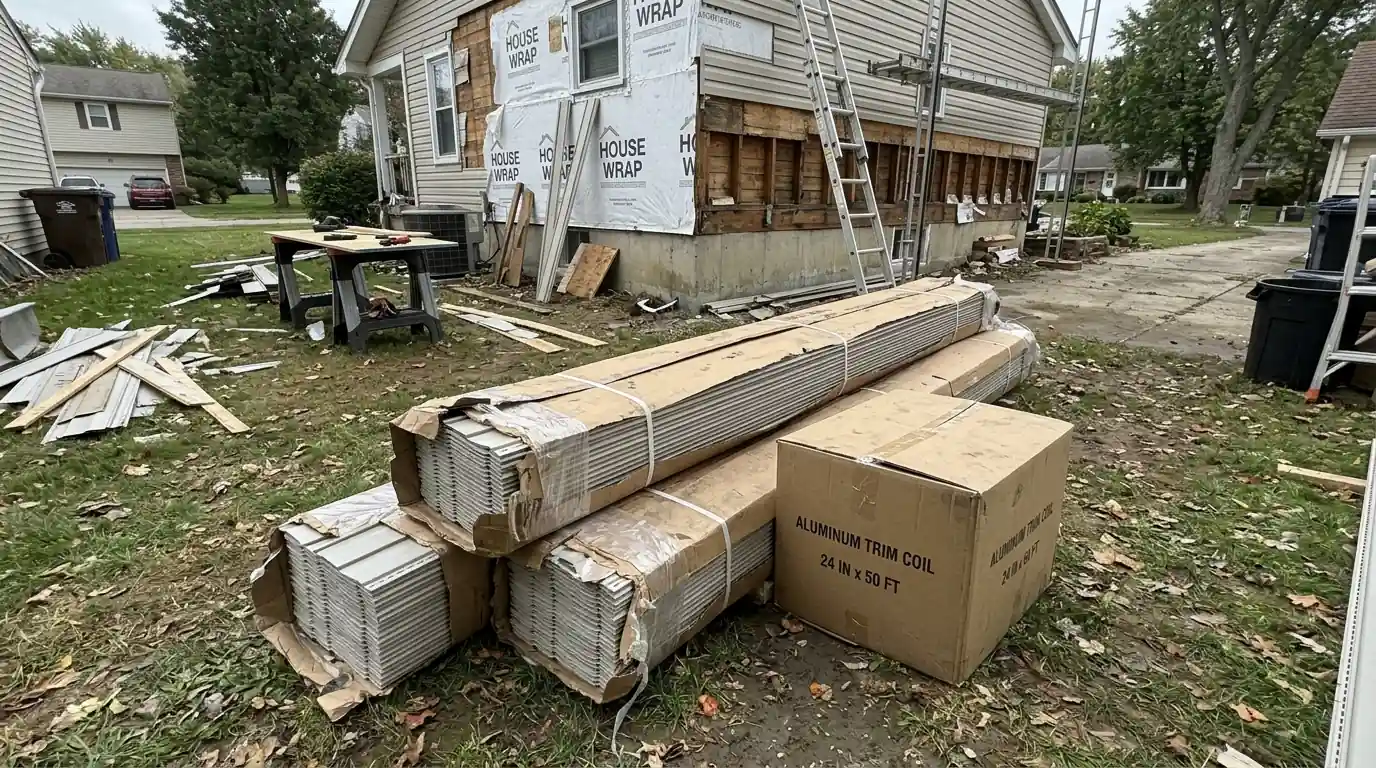
We'd rather fix a gutter than sell you a new one when the system still has life. A single sagging run, a few failed corners or a section crushed by a falling limb are classic repair jobs. The math changes when problems show up everywhere at once. Sectional gutters that leak at most joints, steel gutters rusted through the bottom, or runs too small for the roof above them will keep costing money every season.
Our rule of thumb is simple. If repairs would touch more than about a third of the system, or the gutters are undersized for the roof, we price both options side by side. We also look at what the roof itself needs. If the shingles are near the end of their life, it often makes sense to wait until the roof is replaced, then install seamless gutters once against the new drip edge.
- Repair: isolated leaks, one loose run, a crushed section, a disconnected downspout
- Replace: leaks at most seams, rusted steel, 4-inch gutters on a large roof, repeated pull-offs
- Wait and plan: shingles within a few years of replacement and gutters still mostly sound
How a leaking gutter quietly damages the edge of your roof
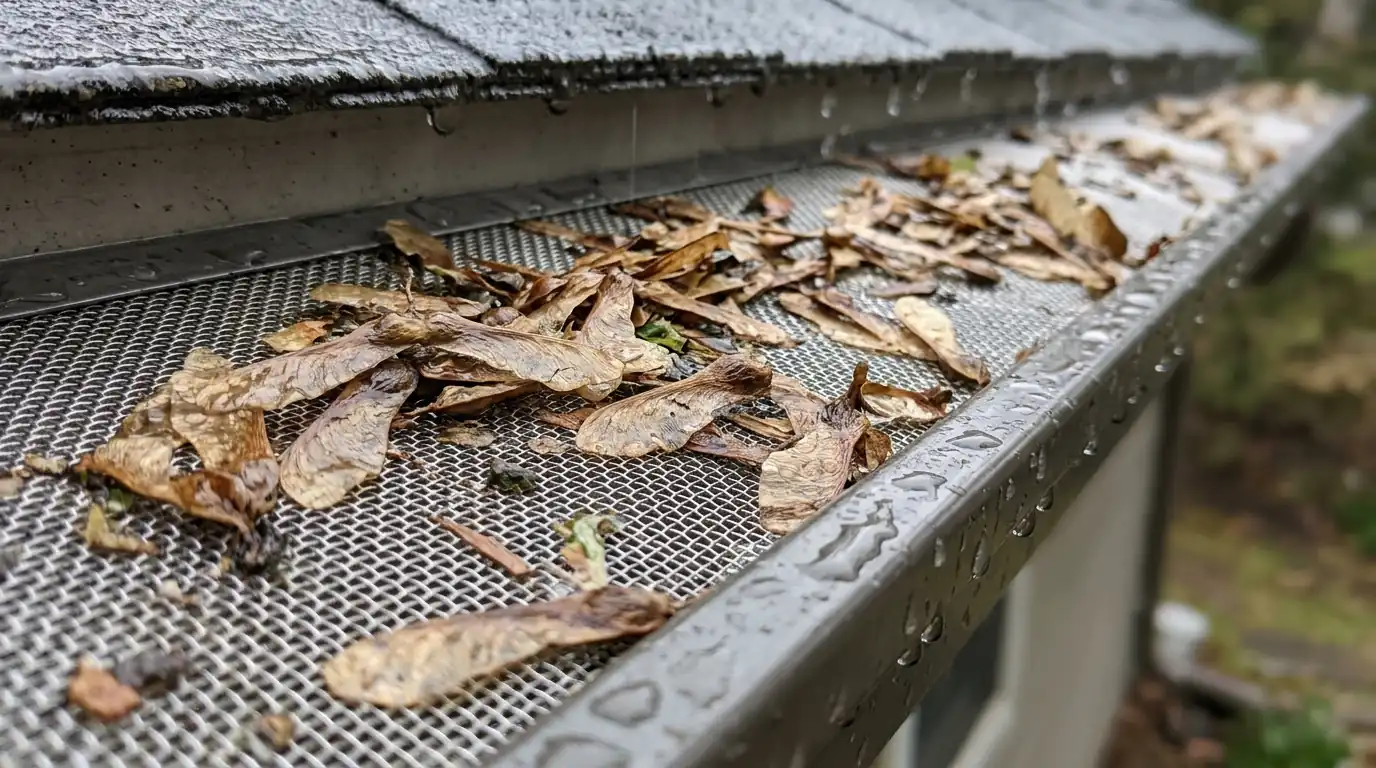
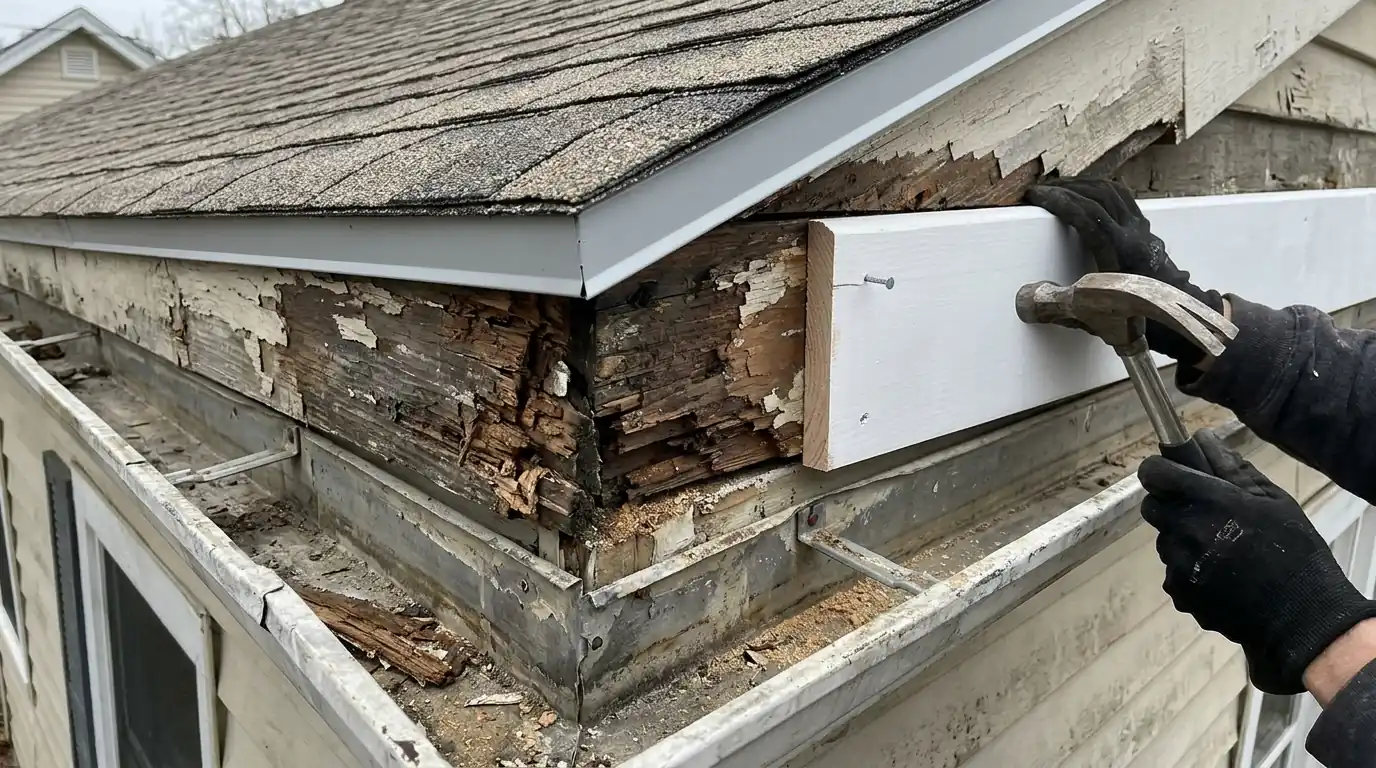
Water escaping a gutter doesn't just fall to the ground. At a failed back seam, or a gutter hung too low, it runs behind the trough and down the face of the fascia. Over a few years the board softens, the hangers loosen, and the gutter sags further, which sends even more water behind it. The same water can wick into the first row of roof decking, especially on older homes built without drip edge.
Winter makes it worse. A gutter that holds standing water freezes solid, and the ice backs up onto the shingles. As snow melts higher on the roof, that water hits the ice ridge and works up under the shingle tabs, showing up as stains on ceilings near exterior walls. Fixing the gutter's pitch and outlets is part of the answer. If you get ice every year, ice dam removal and repair along with better attic ventilation addresses the root cause.
Where storms, ice and old trees keep gutters failing around Dayton
Wind is the big gutter killer here. The Memorial Day 2019 tornado outbreak tore gutters off homes across Trotwood, Harrison Township, Old North Dayton and Northridge, and many of the quick fixes made that summer are now sagging or leaking at the splices. Straight-line winds from summer thunderstorms do similar damage every year on a smaller scale, especially to long runs on exposed ranch homes.
Trees matter just as much. In Five Oaks and Dayton View, big old maples and oaks drop limbs and fill gutters every fall, and full gutters are heavy gutters. In Kettering, where ranch and Cape Cod homes from the 1950s and 60s are common, we see a lot of original spike-hung gutters giving up after decades of freeze-thaw cycles. Late winter is our busiest stretch for gutter repair, once ice that has sat in the troughs for weeks finally lets go.
Where we do gutter repair most often
These neighborhoods, suburbs and cities make up most of our gutter repair calls. Each link opens the local page with its ZIP.
Questions about gutter repair in Dayton
Can you fix a gutter that pulled loose under ice this winter?
Yes, but we check the fascia first. Ice-packed gutters usually rip out because the weight pulls hangers through softened wood, so rehanging them in the same holes won't last. We replace any rotten board, install new hidden hangers into solid wood, and re-pitch the run so it drains instead of holding water that freezes again. If the metal is kinked, we replace that run with matching aluminum.
Why does water pour over the front of my gutter in a heavy Dayton thunderstorm?
Usually it's one of three things: a clogged downspout, too few outlets for the roof area, or a steep roof throwing water past the lip. We run a hose test to rule out a clog, then look at how much roof drains to that run. The fix may be clearing an outlet, adding a downspout, or switching that run to a 6-inch gutter.
Is a dripping gutter seam worth repairing on a 20-year-old aluminum system?
Often, yes. Aluminum gutters don't rust, so a 20-year-old system can have plenty of life left if the hangers are solid and the pitch is right. Resealing a handful of seams is a modest job. If most of the joints are dripping and the system is sectional, we'll show you the cost of resealing next to the cost of new runs.
Will homeowners insurance cover gutters dented by hail?
Many policies cover hail-dented gutters, often as part of a larger roof claim, but coverage depends on your policy and deductible. Dented gutters and downspouts are also useful evidence because they show hail size and direction, so we photograph them along with the shingles. Our Ohio storm claim guide walks through what to document before an adjuster visits.
Can a disconnected downspout really cause water in my basement?
It's one of the most common causes we see. A single downspout can carry hundreds of gallons in a summer storm, and if the elbow has fallen off, all of it lands against the foundation. Before paying for waterproofing, check that every downspout is attached and extended several feet from the house. We reattach, strap and extend them as part of a repair visit.
Will you repair gutters that another company installed?
Yes. Most of the gutters we fix were put up by someone else, sometimes decades ago. We match the profile and color as closely as current coil allows, and we'll tell you if a splice would look obviously different from the rest of the run. In that case, replacing one full run often looks cleaner and costs only a little more.
Other roofing work that often goes with this job
Product lines we install on roofs around Dayton include shingles from GAF, Owens Corning and CertainTeed, metal from Englert, membranes from Carlisle SynTec and skylights from VELUX.
Need gutter repair today?
Call any hour. A person answers, asks a few questions and sets a time for a roofer to come out.