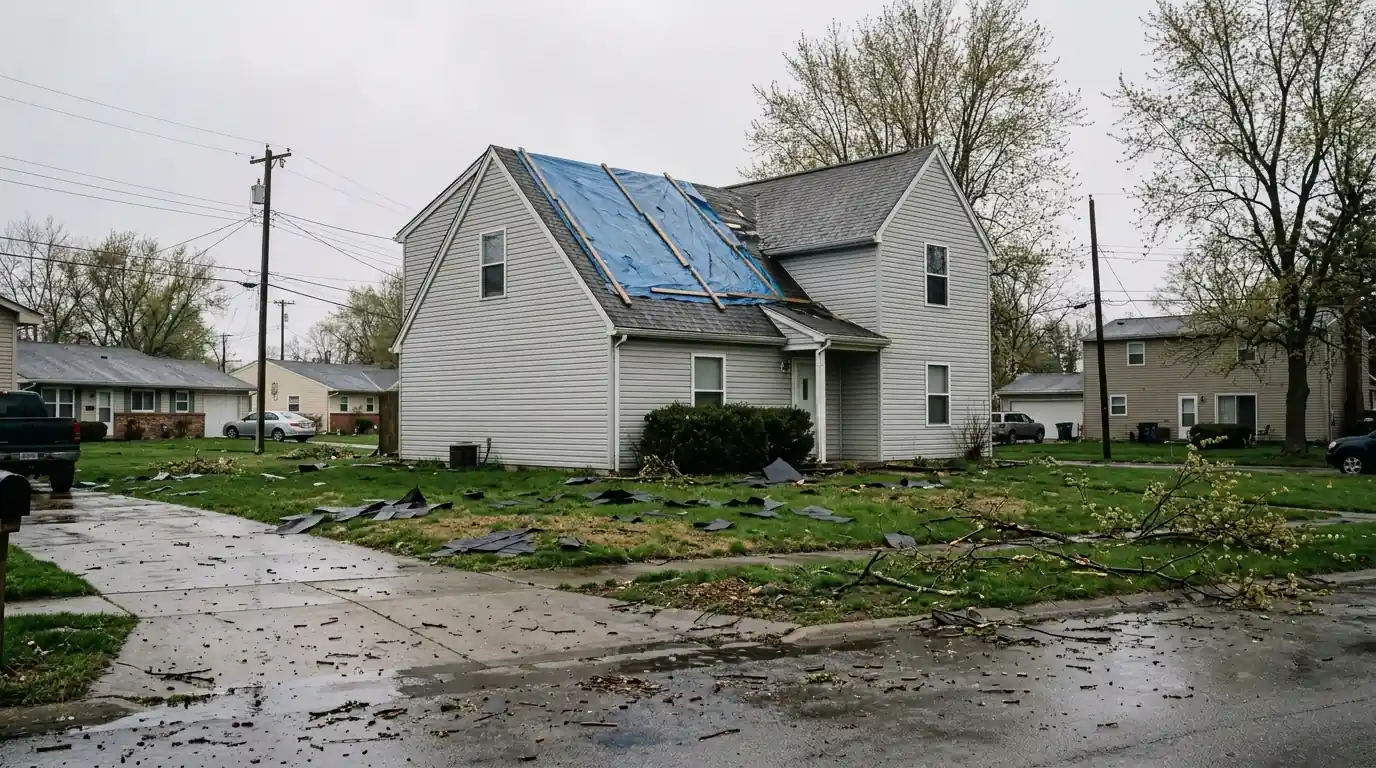
After storm damage in Ohio, stop further water damage first, then photograph everything with dates. Have a roofer inspect the roof so you know whether the damage likely exceeds your deductible. File the claim with your insurer, be present for the adjuster visit, review the estimate line by line, and keep receipts for every payment and repair.
Step one: stop the water and keep every receipt
Most homeowners policies expect you to take reasonable steps to prevent further damage after a storm. If shingles are missing or a limb punched through, the first job is getting the roof covered. An emergency tarping visit around Dayton typically runs $385 to $1,140, depending on the size of the opening and the roof's pitch, and it's usually a reimbursable part of a covered claim.
Inside, move belongings away from drips, set out buckets and pull back wet carpet if you can do it safely. Don't make permanent repairs before the adjuster sees the damage. Do keep every receipt, including tarps, fans, hotel nights and the plumber who came out to check the ceiling.
Step two: document the storm and the damage the same day
Memory fades fast, and a busy spring can bring three storms in two weeks. Photos tie your damage to a specific date. Take them before cleanup and keep the originals, since the file data holds the date and time.
- Hailstones next to a coin or ruler, photographed quickly before they melt.
- Dented gutters, downspouts, AC fins, mailboxes and window screens on each side of the house.
- Shingles, ridge caps or vent covers in the yard.
- Interior stains, wet insulation and any dripping, with a wide shot and a close-up.
- A screenshot of the National Weather Service or local news storm report for your area that day.
Step three: get a roofer's inspection before you file
Filing a claim isn't free, even when it's denied. Many insurers track claim history, and a small claim can affect future premiums. That's why we suggest a roofer's inspection before you call your carrier, so you have a realistic sense of whether the damage is likely to exceed your deductible.
Check your declarations page for the deductible. More Ohio policies now carry a percentage deductible for wind and hail, often 1 or 2 percent of dwelling coverage. If your dwelling coverage is $238,450, a 1 percent deductible comes to about $2,385, which can wipe out a modest repair. Our claim inspection documents each slope with photos and test squares, the same evidence an adjuster looks for. If the damage doesn't look claim-worthy, we'll tell you.
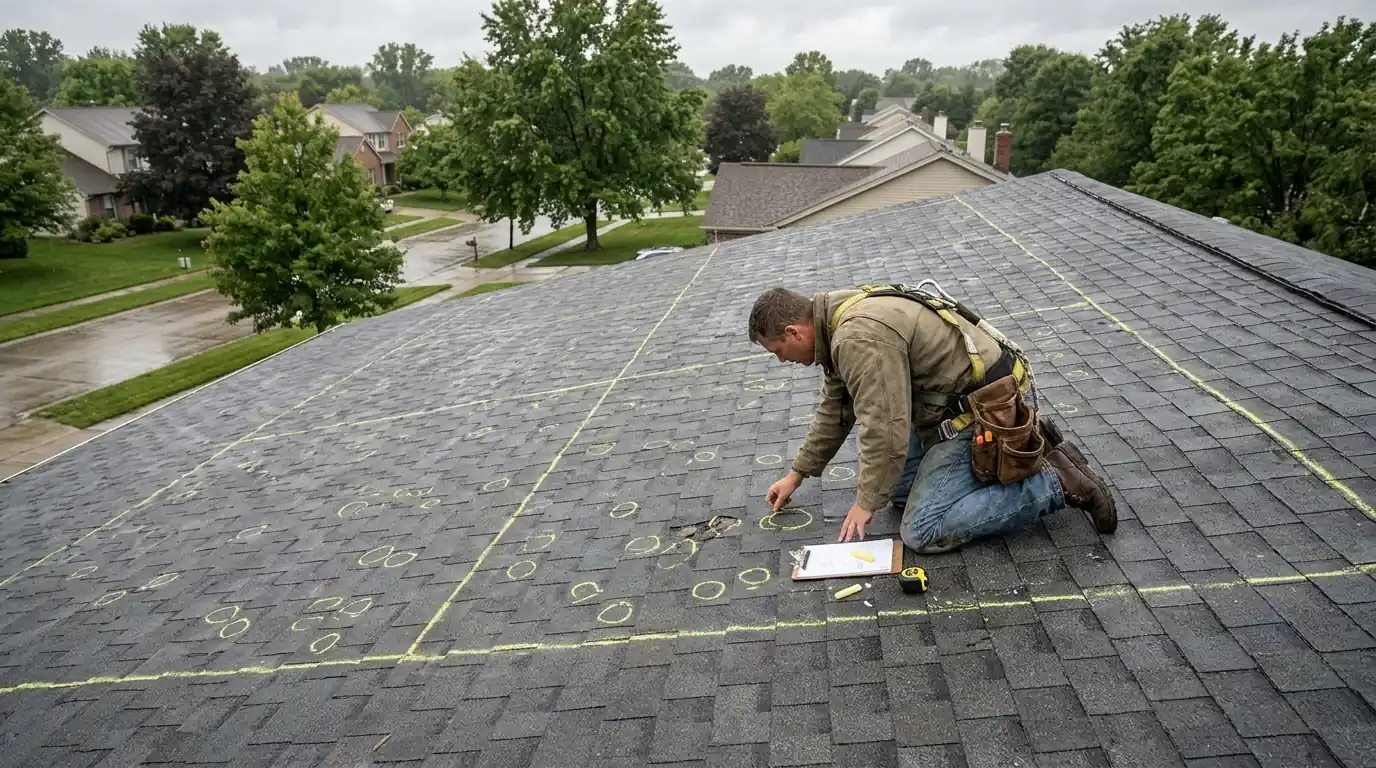
Step four: file the claim and prepare for the adjuster visit
Call your carrier or use its app to open the claim, and write down the claim number, the adjuster's name and every phone call with its date. Ohio has rules that set timeframes for insurers to acknowledge claims and respond to them. If things stall, the Ohio Department of Insurance has a consumer line that can explain what applies to your situation.
Be home for the adjuster's inspection, and ask your roofer to be there too. Adjusters cover a lot of roofs after a big storm, and a second set of eyes helps make sure they see every slope, every damaged vent and the interior stains. Hand over your photos. Point out soft metal damage on all sides of the house, which supports the hail's size and direction.
Step five: read the estimate line by line
The adjuster's estimate usually arrives within a few weeks. It's long and full of codes, but the key ideas are simple. Replacement cost value, or RCV, is what the work should cost new. Actual cash value, or ACV, is RCV minus depreciation for the roof's age. Many policies pay the ACV first, then release the held-back depreciation after the work is done and you send proof.
Look for missing items. Common gaps we see on Dayton estimates include drip edge, ice barrier at the eaves, starter strip, ridge cap, step flashing, pipe boots, a second layer tear-off and the city permit. If local code requires something your old roof didn't have, ordinance or law coverage on your policy may pay for it. Your roofer can prepare a supplement listing what was missed, with photos and measurements to back it up.
Check the measurements too. Estimates list the roof area in squares, plus a waste factor for cutting shingles around valleys and hips. A roof measured from aerial imagery can come up short on steep or cut-up roofs, like the dormered story-and-a-half homes common in older Dayton neighborhoods. If the square count looks low against your roofer's measurements, ask the adjuster to explain how it was calculated.
Step six: what to do if you disagree with the decision
Denials and lowball estimates happen, and they aren't always the final word. Start by asking for a reinspection, ideally with your roofer present. Send any new photos or measurements in writing and keep copies.
If you still disagree on the amount, most Ohio policies include an appraisal clause, where each side picks an appraiser and an umpire settles the difference. It costs money and takes time, so it fits larger disputes. For delays or handling problems, a complaint to the Ohio Department of Insurance is free, and the department asks the carrier to respond.
Step seven: choose your contractor and watch what you sign
In most cases you choose who does the work, even if your insurer suggests a preferred contractor. Get a written scope that matches the insurance estimate, a start window, and a clear payment schedule. Be cautious about anyone who asks you to sign over your insurance benefits or who offers to "cover your deductible," which can put your claim and your coverage at risk.
Expect the insurance check to list your mortgage company as well as you. Your lender may hold the funds and release them in stages after inspections, so call them early. Once storm damage repair is finished, send the final invoice to your carrier to release depreciation. For background on how hail damage develops, see our article on how hail bruises shingles. If you need a hand, call any hour.