Slate and Shingle Roof Repair in St. Anne's Hill, Dayton (45410)
On St. Anne's Hill (45410), we replace broken slates one at a time, rebuild copper and lead flashing, and repair the asphalt roofs on rear additions, with photographs of every slope sent to you before work starts.
- ZIP 45410
- Answered 24/7
- Montgomery County
Replacing a handful of broken slates on a St. Anne's Hill roof usually costs $520 to $1,690, with the roof's height, steepness and the count of slipped pieces setting the price. Rebuilding a valley or chimney flashing in copper typically runs $1,140 to $3,280. Asphalt shingle repairs on rear sections land lower. Treat these as typical Dayton-area figures; your own number comes only after we've seen the roof.
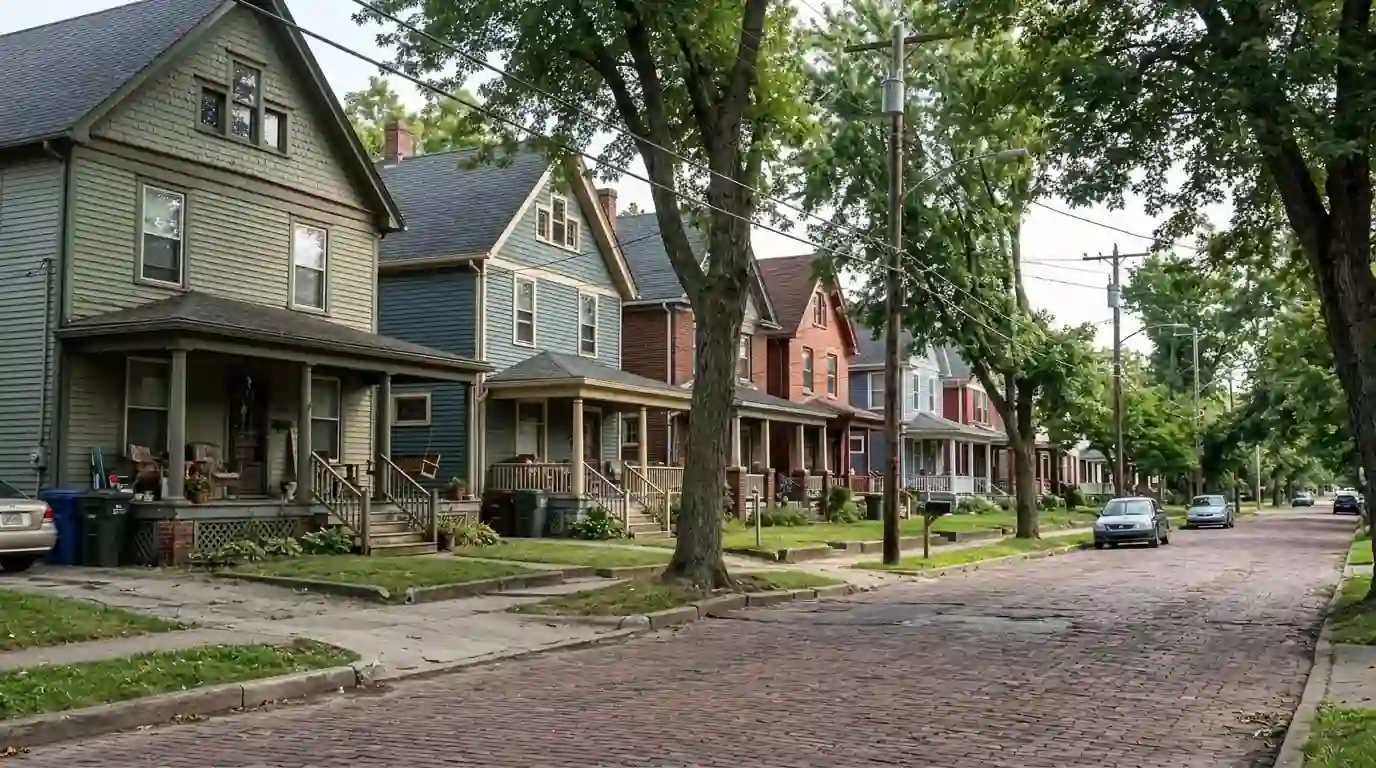
St. Anne's Hill rises just east of downtown near E 3rd St, a short walk from the Oregon District, and it holds some of the oldest houses in the city. Many date to the mid and late 1800s: Italianate brick homes with low hipped roofs and bracketed eaves, steep-gabled Gothic and Queen Anne houses, and small worker cottages on narrow lots. A surprising number still have slate on the main roof, often with copper or lead in the valleys. Rear kitchens and later additions are usually under asphalt or a low-slope membrane, so one house can mean three kinds of roof.
Slate is not a material you hurry. A good slate roof can outlast several generations of owners, but the nails that hold each slate eventually rust through, and a single slipped piece lets water in. Our roofers use a slate ripper to cut the old nail, slide a matching slate in, and secure it with a copper strap or hidden nail. We never walk on slate without padding or ladders hooked over the ridge, because a careless boot cracks more than it fixes. Our slate repair and restoration page goes deeper on the process.
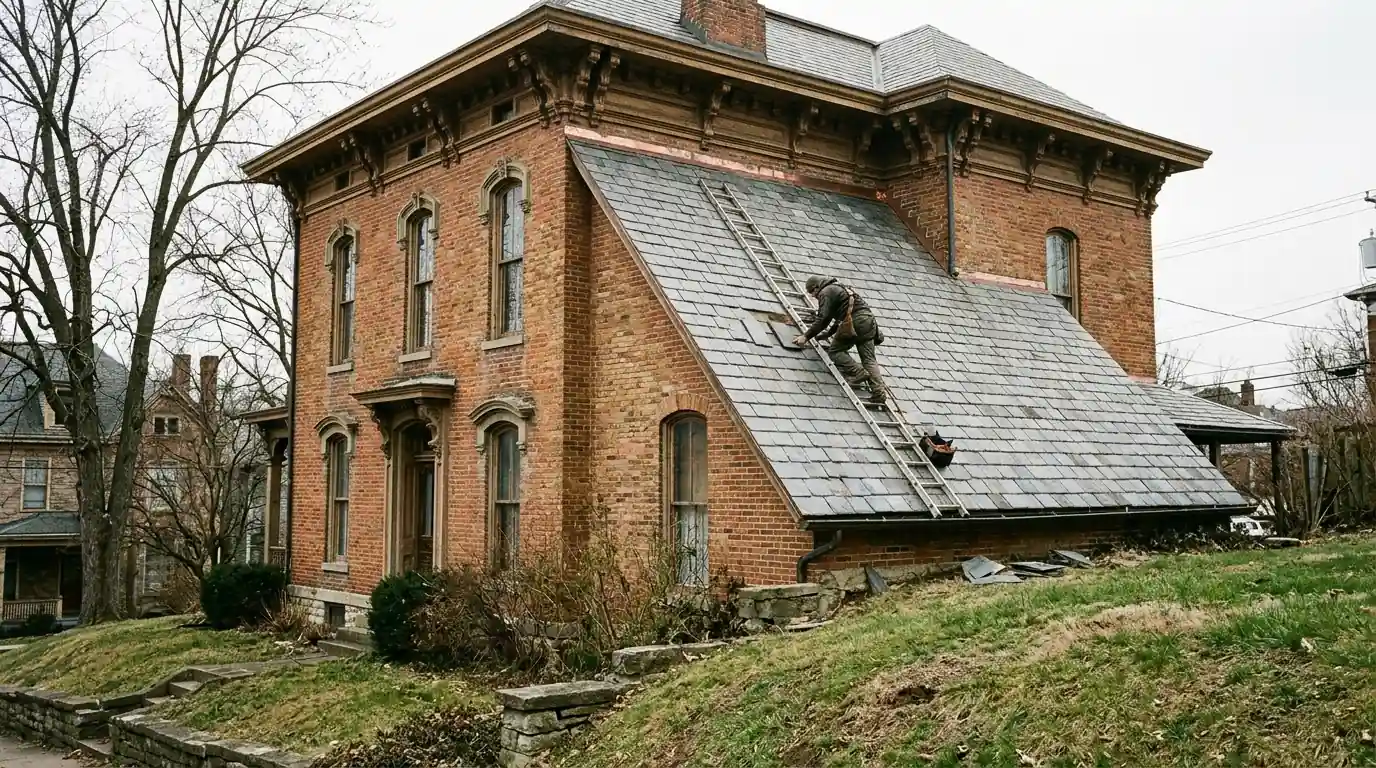
Italianate brick, Gothic gables and slate on St. Anne's Hill
Italianate homes here tend to have shallow hipped roofs partly hidden behind deep bracketed cornices. That low pitch means slate or metal on the main roof and, often, built-in gutters along the cornice. The steeper Gothic and Queen Anne houses show more of their roof, with pointed gables, ornamental slate patterns in a few cases and tall brick chimneys. Worker cottages are simpler, usually a plain gable now under asphalt, though some still have slate beneath the shingles.
The neighborhood is a locally designated historic district, so material changes on visible slopes usually go through the city's historic review before work begins. Like-for-like slate repair generally raises few questions. Swapping slate for asphalt on a front slope is a different conversation. When real slate is beyond saving, synthetic slate is one option worth asking the city about, since it keeps the scale and color of the original at a fraction of the weight. Rear slopes that can't be seen from the street often allow more flexibility.
Freeze-thaw cycles and the hilltop wind that loosen old slate
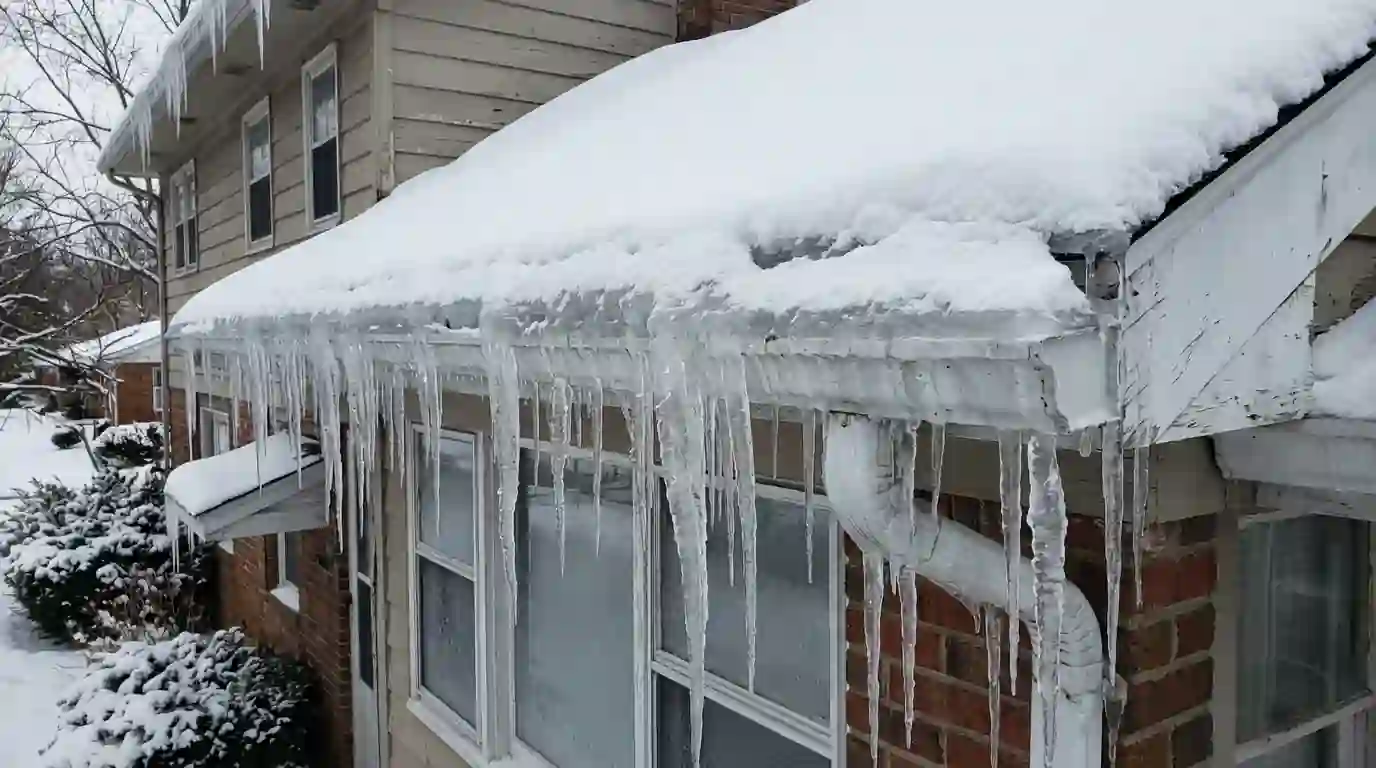
Water that seeps under a cracked slate freezes on cold nights and pries the crack open a little more each time. After enough Dayton winters, a hairline crack becomes a missing corner. Ice also builds in the built-in gutters on the Italianate cornices, splitting old metal linings. The hill itself catches wind from spring and summer storms, and a gust that gets under a slate with a rusted nail can pull it loose and send it sliding into the gutter. A quick look after each big storm, even from the sidewalk with binoculars, can catch a slipped slate before it turns into a leak.
Slate, flashing and shingle repairs for St. Anne's Hill homes
Old roofs here need a roofer comfortable with traditional materials and with the newer ones covering the back of the house.
Slate Roof Repair & Restoration
Rusted nails release individual slates, and swapping them one by one keeps a sound slate roof going for decades.
See slate roof repair & restorationChimney Flashing Repair
Tall 1800s chimneys often have lead or copper flashing that has cracked or pulled out of the mortar joints.
See chimney flashing repairRoof Flashing Repair
Valleys and wall joints on these roofs were often metal-lined, and patched valleys are a frequent leak source.
See roof flashing repairSynthetic Slate & Shake Roofing
Owners whose slate is past repair sometimes choose a synthetic product to keep the historic look.
See synthetic slate & shake roofingAsphalt Shingle Roofing
Rear kitchens and later additions are usually shingled, and those sections often wear out first.
See asphalt shingle roofingRoof Inspection
Buyers of older houses on the hill want to know how much life the slate and flashing have left.
See roof inspection
Our route up the hill and what we check once we're there
St. Anne's Hill is a couple of minutes east of our office on E 3rd St. Call any hour and a person answers. On the first visit, our crew lead studies the roof from the street and from neighboring vantage points, then goes up with hooked ladders and padding to look at slates, valleys and flashing up close. We photograph each problem, mark it on a roof sketch, and send it to you with prices. If you want to understand how we approach older homes, our about us page explains how we work.
Areas near St. Anne's Hill we also cover
Roofing questions from St. Anne's Hill
Where does replacement slate for a St. Anne's Hill house come from?
Much of the slate on older Midwest roofs came from quarries in Pennsylvania and Vermont, and salvaged slate in similar colors and thicknesses is still available from reclaimed roofs. New slate from active quarries is another source. We measure the exposed length and thickness and compare color in daylight. A close match matters more on a front slope than on a rear one, and we'll talk through that with you.
Is it safe to climb onto my St. Anne's Hill slate roof to clean the gutters?
We'd ask you not to. Slate cracks under a boot, especially older pieces or in cold weather, and the steep pitch on many houses here makes falls likely. Our roofers use hook ladders and padding to spread weight across the roof. If you need the gutters cleaned, it's usually safer to work from a ladder at the eave, or have us look at the roof at the same time.
Do I need permission to replace slate with shingles on St. Anne's Hill?
On visible slopes, probably. St. Anne's Hill is a Dayton historic district, and changing roofing material on a street-facing slope typically goes through the city's historic review. Repairs in matching slate are usually simpler. We help you figure out what applies before you commit to a plan, and we can price several options so you have something concrete to bring to the review.
Why are single slates sliding off my roof on St. Anne's Hill?
It's almost always the nails, not the slate. Roofs from the 1800s were often fastened with iron nails that rust through after a century or so, and once a nail fails, the slate slips. Freeze-thaw cycles and wind speed that up. A few slipped slates usually mean a repair, not a new roof. If dozens are going at once, we check whether a broader re-nailing or restoration makes more sense.
Roof trouble in St. Anne's Hill?
Call any hour and tell us your street. We will give you a time window before we hang up.