Asphalt Shingle Roofing in Dayton, OH: Grades, Colors, Details
We install architectural and designer asphalt shingles as a full matched system, from starter strip to ridge cap, nailed to the manufacturer's pattern. Bring us your color questions any hour; a person answers the phone 24/7.
- Answered 24/7
- Photo report on every visit
- Dayton and the Miami Valley
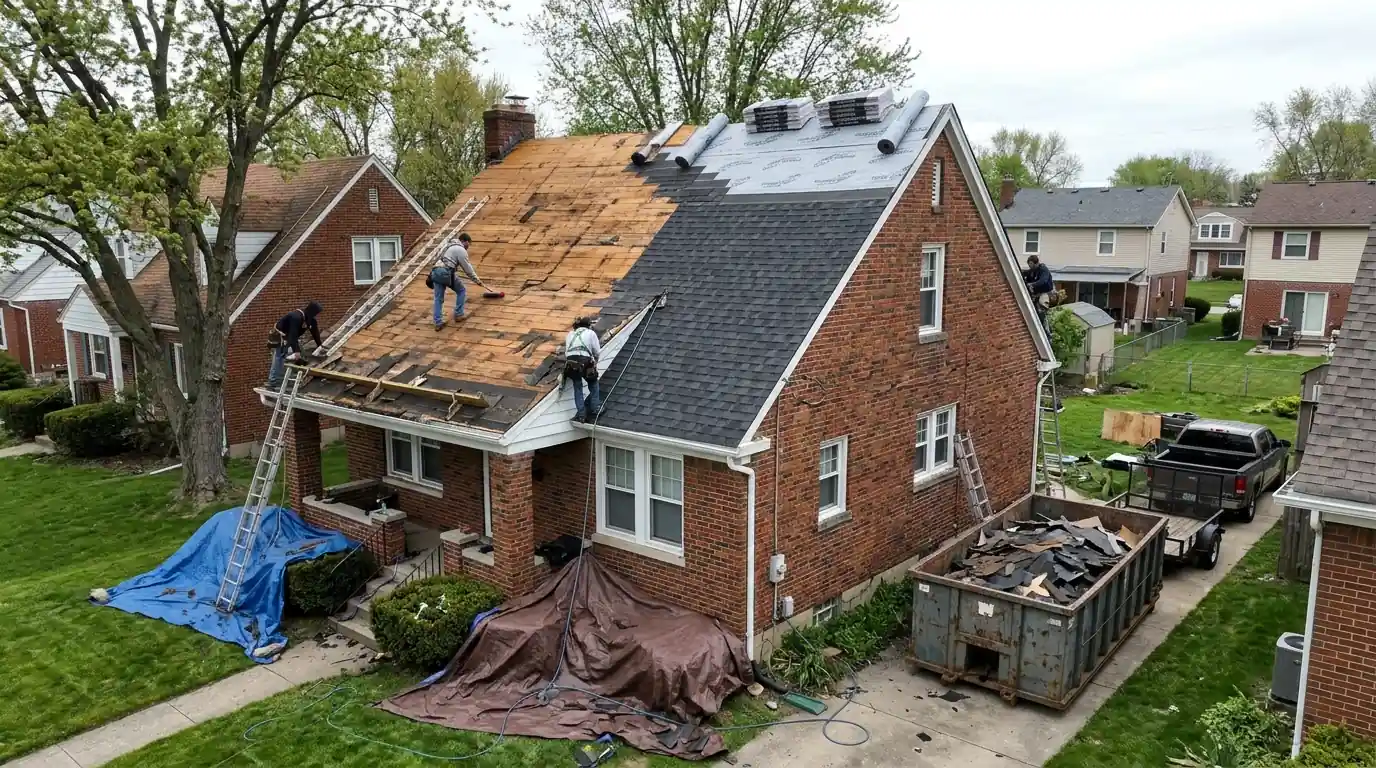
Asphalt shingles installed around Dayton typically cost $468 to $689 per square for architectural lines and $715 to $1,085 per square for designer lines, including underlayment, starter, ridge cap and labor. A typical house lands around $11,840 to $19,670. Grade, color, wind rating, algae resistance and roof complexity set where yours falls in that range.
Asphalt shingles cover most houses in the Miami Valley for good reasons: they're affordable, they suit nearly every architectural style from a 1920s bungalow to a 2010s two-story, and any decent roofer can repair them. The trouble is that shingle choices look identical on a sales sheet. Two lines with the same color name can differ in weight, wind rating, algae protection and how they look from the curb on a cloudy afternoon.
We help you sort that out with full-size boards held against your siding, not little chips under office lights. Then we install the shingle as a system: matching starter strip at eaves and rakes, the right underlayment, hip and ridge caps from the same family, and a nail pattern that keeps the wind rating honest. If you're still weighing materials, our metal versus asphalt comparison helps frame the decision before we start pulling samples.
Three-tab, architectural or designer: what you actually get
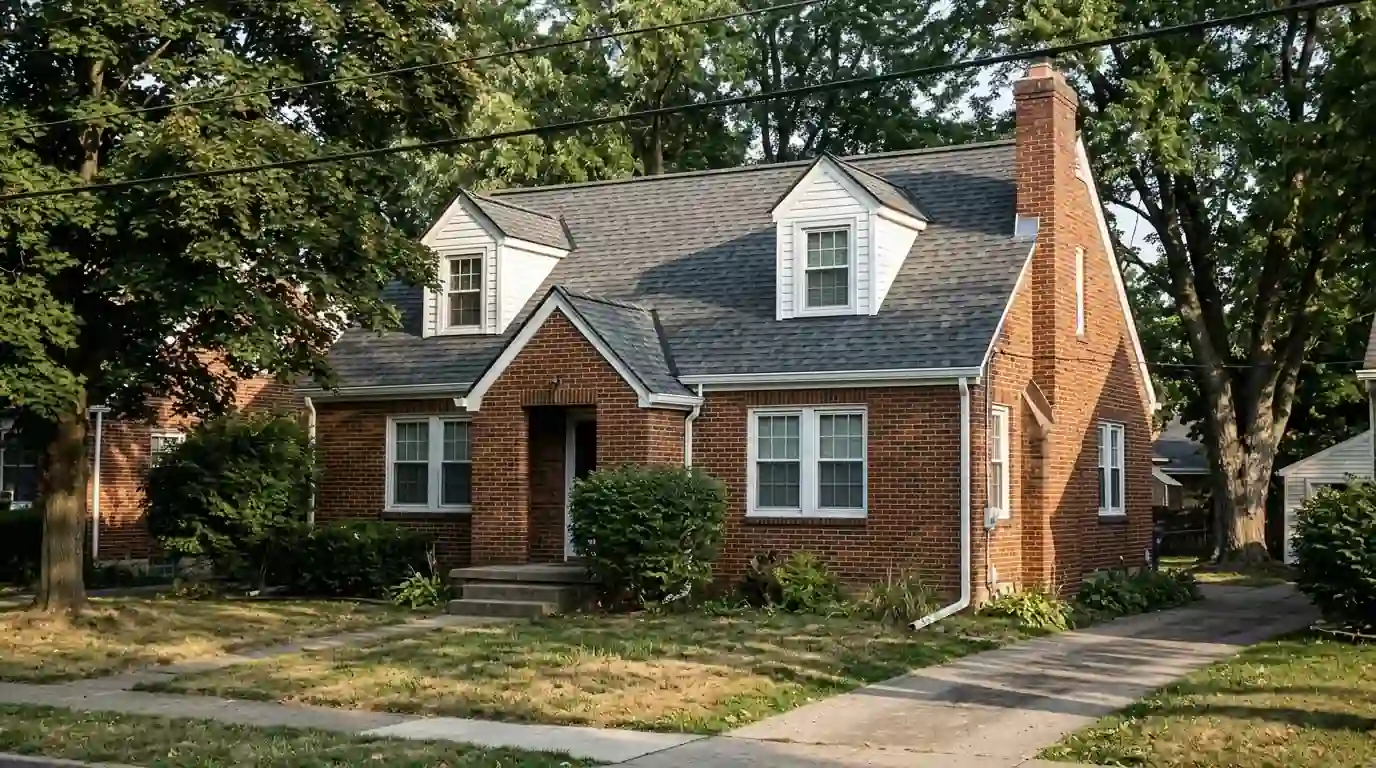
Three-tab shingles are a single flat layer cut into tabs. They were the default for decades, and plenty of Dayton houses still wear them, but most manufacturers have scaled them back. They're lighter, carry lower wind ratings, and show every wave in the deck. We mostly use them now for matching repairs and simple outbuildings.
Architectural shingles laminate two layers together, giving a dimensional look that hides minor deck variations. They're heavier, they resist wind better, and they're what we install on most houses. Designer lines go further, with thick cuts that mimic slate or wood shake. They suit Tudor and colonial revival homes where a flat roof would look cheap against the brick.
Within each grade, lines differ in weight per square, granule coverage, sealant strip width and algae protection. We'll show you the spec sheets side by side, then let you pick on looks within the grade that fits your budget.
- Three-tab: lightest, flattest, lowest cost, limited supply
- Architectural: dimensional, mid-weight, the everyday standard
- Designer: heaviest, deepest shadow lines, highest cost
Black streaks, color fade and how shingles age in Ohio humidity
Those dark streaks running down north-facing slopes aren't dirt or mildew. They're a blue-green algae that feeds on the limestone filler in asphalt shingles, and it spreads easily in humid Ohio summers, especially under trees. It rarely damages the shingle, but it looks bad and can hurt resale.
Most current architectural lines include copper-coated granules that slow algae growth. On older roofs, we never pressure wash, because it strips granules. A gentle cleaner, or a zinc or copper strip near the ridge, helps more.
Color also changes over time. Darker shingles absorb more heat, which can soften the asphalt on south and west slopes, while very light colors show streaking sooner. Mid-tone grays and weathered woods tend to age most evenly around here. If heat in the attic is already a problem, fixing ventilation does more than choosing a lighter color, and our attic ventilation work often rides along with a shingle job.
Asphalt shingle prices by grade for Dayton-area homes
These typical installed prices include underlayment, starter, ridge cap and labor on a single-layer tear-off.
| Job | Typical range | What it covers |
|---|---|---|
| Three-tab shingles (limited availability) | $412 to $538 per square | Flat single-layer look, lower wind rating, mostly for sheds and garages now |
| Architectural (laminated) shingles | $468 to $689 per square | Two-layer dimensional look, the standard choice on most houses |
| Designer or luxury shingles | $715 to $1,085 per square | Heavier, slate or shake profile, deeper shadow lines |
| Algae-resistant upgrade | $14 to $37 per square | Copper-infused granules where not already standard on the line |
| Typical whole house, architectural | $11,840 to $19,670 | About 20 to 26 squares, one-layer tear-off |
Prices are typical Dayton-area ranges for planning and vary with your roof. We confirm your number after measuring and inspecting. See more on our Dayton roofing price guide.
- Shingle grade and weightHeavier laminated shingles cost more to buy and take a little longer to install, but they usually carry higher wind ratings and look richer.
- Color availabilityPopular grays and browns are stocked locally. Less common colors may need ordering, and occasionally a premium.
- Wind rating requirementsHigher wind ratings sometimes require six nails per shingle and specific starter products, adding a modest amount of labor and material.
- Roof complexityValleys, dormers, skylights and walls all need flashing and cuts. A cut-up roof can cost 20 to 35 percent more per square than a simple gable.
- Tear-off conditionsMultiple layers, plank decking or rotten sheets change the base price, so we price those items separately.
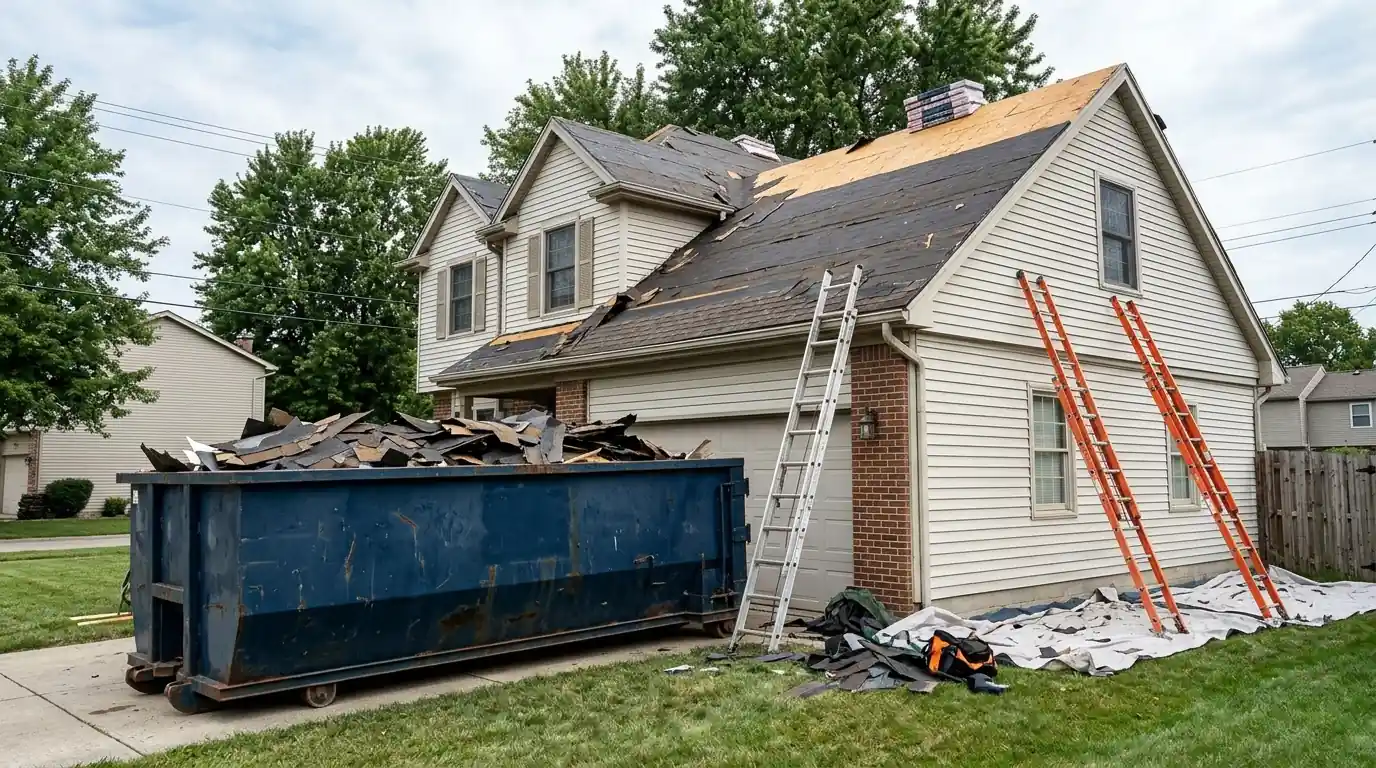
How an asphalt shingle system goes on, layer by layer
A shingle roof is only as good as the parts under and around the shingles. We install each layer like this.
Pick the line and color on site
We bring full-size boards of two or three lines and hold them against your brick, siding and trim in daylight. You see the shadow line and granule color the way neighbors will see them.
Set drip edge and ice barrier at the eaves
Metal drip edge goes on first at the eaves, then self-adhering ice and water membrane runs up the roof past the warm wall line. Valleys get a full-width strip of membrane too.
Lay synthetic underlayment across the field
Synthetic underlayment is lighter and tougher than felt, holds up better to foot traffic, and gives a second barrier if a shingle ever blows off.
Install starter strip at eaves and rakes
Factory starter strips have a sealant line placed right at the edge. That bond is what stops wind from peeling the first course, which is where most blow-offs begin.
Nail field shingles to the line
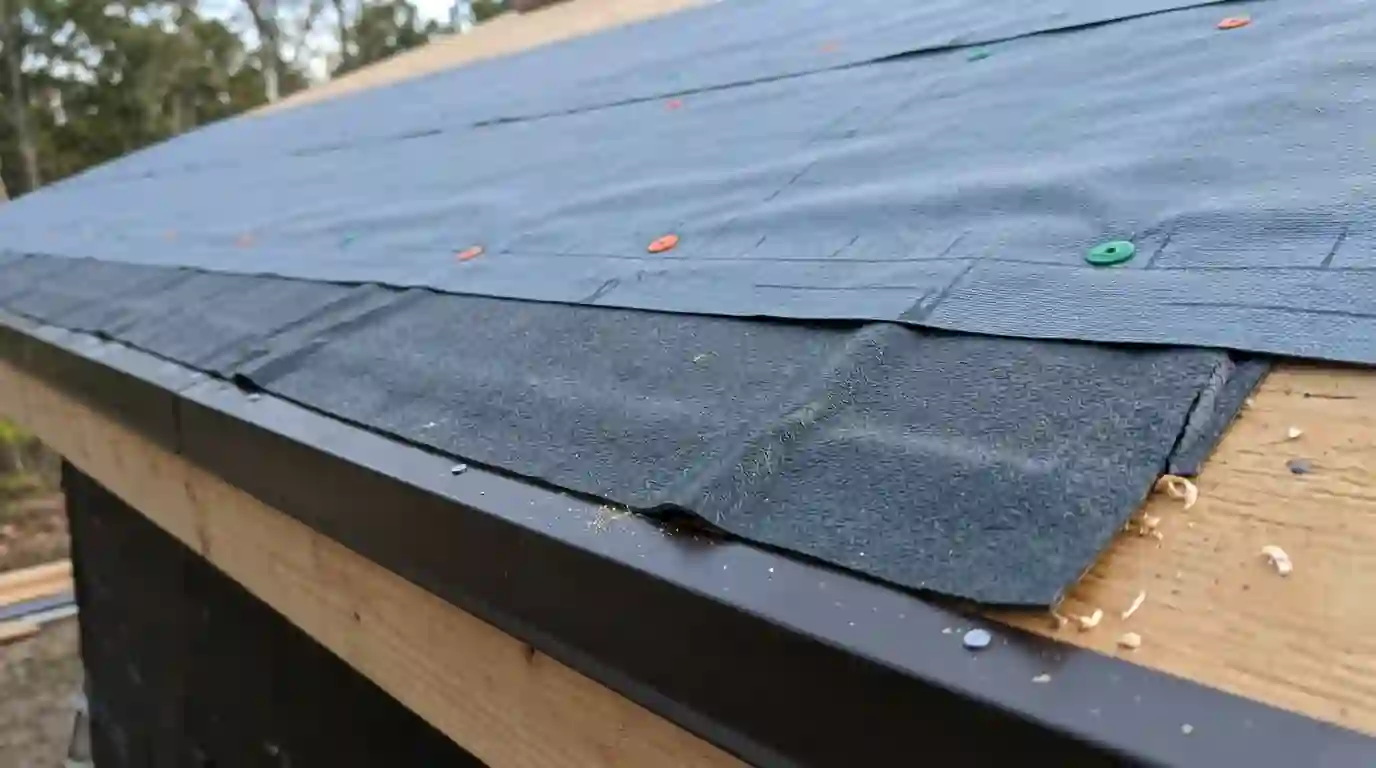
Nails go in the manufacturer's nailing zone, flush and straight, with the count the wind rating requires. High nails or overdriven nails are the most common hidden defect we find on other roofs.
Finish hips, ridges and valleys
Matching hip and ridge caps go over the ridge vent, and valleys are woven, closed cut or open metal depending on the roof. Our crew lead photographs each valley before and after shingles go on.
Is asphalt the right shingle for your house and plans?
Asphalt suits most Dayton homes, but it fits some situations better than others. It's a strong choice when these apply.
You plan to stay ten to twenty-five years
A well-installed architectural roof matches that horizon without paying for a material that outlasts your ownership by decades.
Your roof pitch is 4/12 or steeper
Shingles shed water by gravity and overlap. On lower slopes we add extra underlayment, and below 2/12 we recommend a membrane instead.
You want to match neighboring houses
In established neighborhoods and HOAs, asphalt in a common color keeps the street consistent and avoids architectural review headaches.
Budget matters more than lifespan
Per square, asphalt costs roughly a third to a half of standing seam metal, which frees money for decking, ventilation and gutters done right.
Your roof has lots of valleys and dormers
Shingles bend into valleys and around dormers easily. Complex roofs that would need custom-bent metal are often simpler and cheaper in asphalt.
Repairs need to be easy later
A storm-torn shingle can be replaced in an hour by any competent roofer, and parts are on every supply shelf in the region.
Asphalt shingle roofs across Dayton's older and newer neighborhoods
Asphalt covers nearly every era of house in the region, but the details change by neighborhood. The 1920s to 1950s homes in Belmont and along the streets near Smithville Road often have steep front gables, plank decking under several old layers, and tight driveways for the dumpster. Getting a flat, clean shingle line on those roofs usually means a plywood overlay.
Midcentury ranch neighborhoods in West Carrollton and Englewood have simpler, lower-slope roofs where a well-chosen architectural shingle gives the house more curb appeal than the flat three-tabs it was built with. Lower pitches there mean we pay extra attention to underlayment and ice barrier at the eaves.
Weather across the Miami Valley is hard on asphalt from several directions. Spring hail bruises the mat, summer heat bakes south slopes, and January freeze-thaw cycles crack brittle shingles and drive ice dams up under the first courses. That mix is why we push for full ice barrier at eaves and in valleys, not just the minimum, and why we suggest impact-rated lines to homeowners who've already filed a hail claim.
Where we do asphalt shingle roofing most often
These neighborhoods, suburbs and cities make up most of our asphalt shingle roofing calls. Each link opens the local page with its ZIP.
Questions about asphalt shingle roofing in Dayton
Are three-tab shingles still worth installing on a Dayton house?
For a whole house, usually not. Supply is shrinking, wind ratings are lower, and the price gap to architectural shingles is small once labor is counted. Three-tabs still make sense for patching an existing three-tab roof, or for a shed or detached garage where budget is tight and looks matter less.
What causes the black streaks on my north-facing shingles?
It's an airborne algae that feeds on limestone filler in the shingles and thrives in humid, shaded spots, which describes a lot of Ohio north slopes under maple trees. It's mostly cosmetic. A soft wash with the right cleaner removes it, and algae-resistant granules on new shingles slow its return considerably.
Which shingle colors age best under Miami Valley sun and humidity?
Mid-tone grays, weathered woods and blended browns tend to hide algae streaks, granule wear and color fade best. Very dark black shingles run hotter on south slopes, and pale colors show streaks sooner. We bring full-size samples so you can see them against your house in daylight before deciding.
How much wind can architectural shingles handle in an Ohio storm?
Many architectural lines carry wind ratings of 110 mph or more, and some reach higher with enhanced nailing and matching starter strips. Those ratings assume the shingle is installed exactly to the manufacturer's instructions. Ratings don't cover every gust in a severe thunderstorm or tornado, but correct nailing makes a real difference in how many shingles stay put.
Should hip and ridge caps match the brand of my field shingles?
We recommend it. Matching caps blend in color, seal properly with the field shingles, and keep the manufacturer's system warranty options available. Cutting caps from three-tab shingles is cheaper but they crack over the ridge in cold weather and often look mismatched within a few years.
Can you install asphalt shingles on my low-slope back porch roof?
Shingles can go on slopes down to about 2/12 with a double layer of underlayment or full ice barrier, but they perform better at 4/12 and steeper. Below 2/12, water backs up under the laps, so we'd recommend a membrane like modified bitumen or EPDM for the porch and shingles on the main roof.
Other roofing work that often goes with this job
Product lines we install on roofs around Dayton include shingles from GAF, Owens Corning and CertainTeed, metal from Englert, membranes from Carlisle SynTec and skylights from VELUX.
Need asphalt shingle roofing today?
Call any hour. A person answers, asks a few questions and sets a time for a roofer to come out.