Flat Roof Replacement in Dayton, OH, Rebuilt to Drain
We tear the old low-slope roof down to the deck, photograph every board before it's covered, and rebuild the slope so water actually leaves. Call any hour and a person answers, day or night.
- Answered 24/7
- Photo report on every visit
- Dayton and the Miami Valley
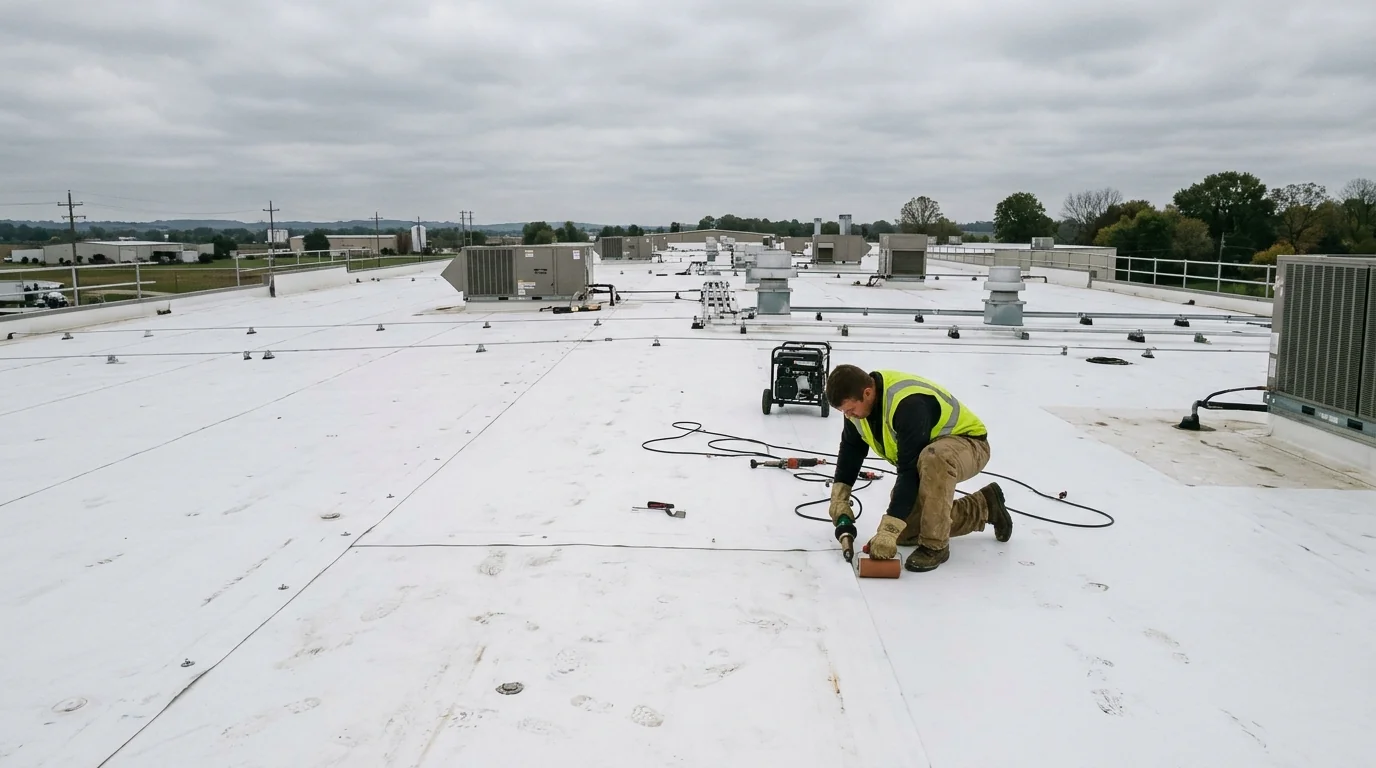
Replacing a residential flat roof in the Dayton area typically costs $2,140 to $4,690 for a small porch roof and $4,860 to $11,740 for a rowhouse rear roof or room addition. The job involves tearing off old layers, replacing bad decking, adding tapered insulation where water ponds, and installing a new EPDM, TPO or modified bitumen membrane with fresh flashings and edge metal.
Most flat roofs we replace around Dayton didn't fail all at once. They wore out from the bottom up: a little ponding, a few repairs, then wet insulation that never dried, and finally decking soft enough to feel through the membrane. By the time you're looking at replacement, the real question is less about which membrane to buy and more about how to fix the conditions that killed the last one.
That's how we approach the work. A new membrane laid over the same sags and clogged scuppers will pond in the same places and age the same way. So our crew lead starts with the structure and the drainage, then picks the membrane that suits the roof's shape, its exposure and how you use it. If there's a deck or a rooftop condenser up there, we plan around it. If the roof is visible from a bedroom window, appearance gets a vote too.
Picking the right membrane for the roof you have
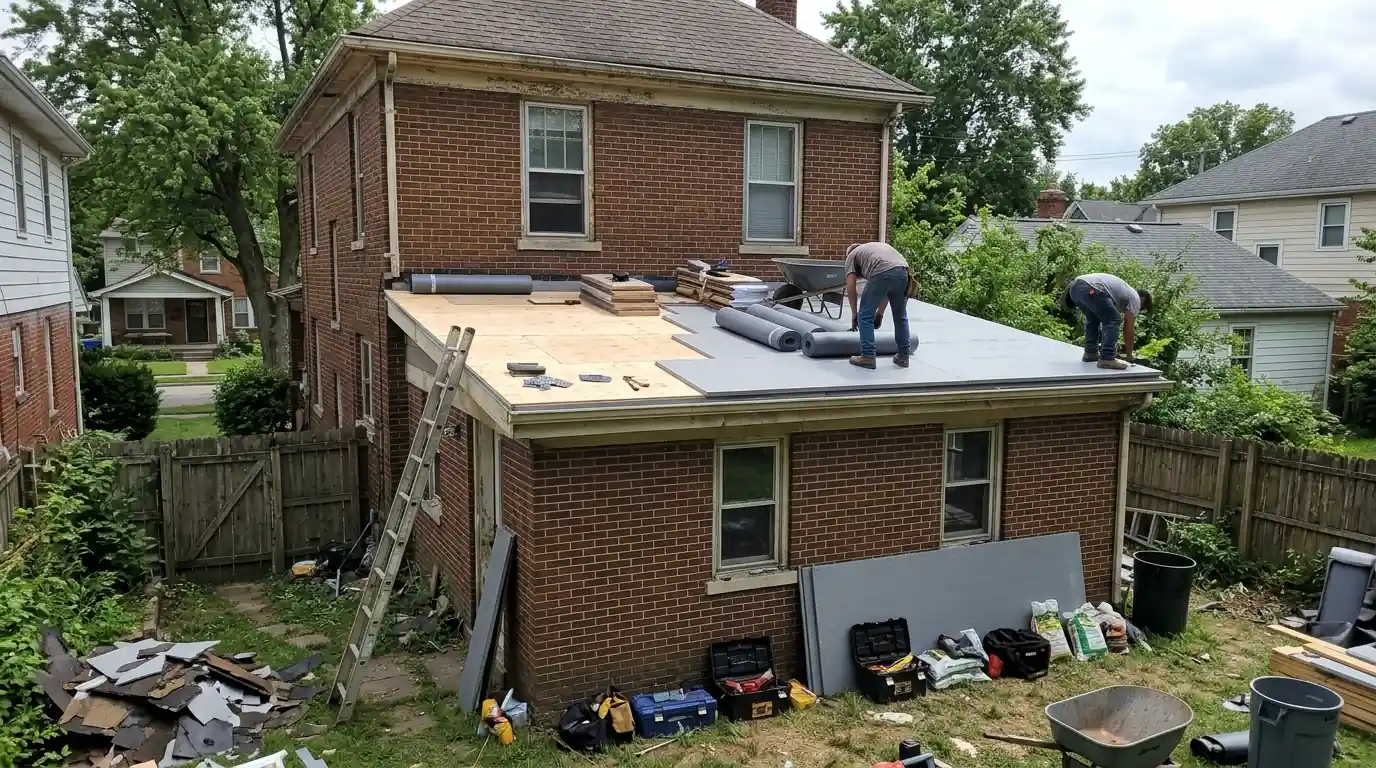
There's no single best flat roof material, but there's usually a best one for a given roof. We look at sun exposure, foot traffic, the shape of the roof and what sits on top of it, then recommend one membrane and tell you why. Here's how the three main options tend to sort out on Dayton homes.
If you want to compare them in more depth, our pages on EPDM rubber roofs and modified bitumen systems go through installation methods, seams and upkeep. For larger buildings, our article on flat roof options for commercial buildings covers the same choices at a bigger scale.
- EPDM: flexible black rubber, simple to repair, a good fit for garages, porches and simple rectangles with few penetrations
- TPO: white and reflective with heat-welded seams, a strong choice over bedrooms and offices that get hot in summer
- Modified bitumen: tough multi-ply asphalt sheets with a granulated surface, best where people walk on the roof or it's visible from above
Tear-off or recover: what Ohio code and common sense allow
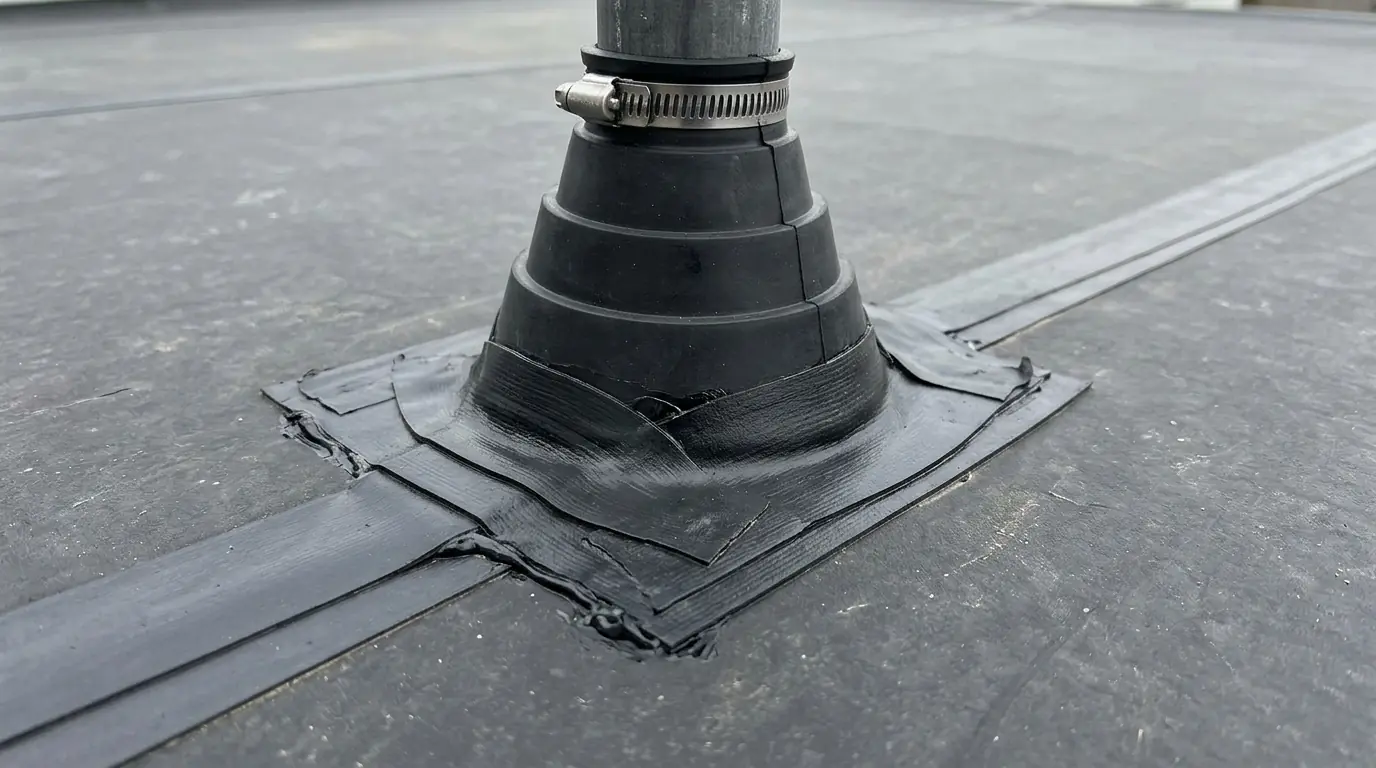
Laying a new roof over an old one saves tear-off labor, and sometimes it's a reasonable choice. Building codes used in Ohio limit when it's allowed, though. A new covering generally can't go over a roof that is water-soaked or deteriorated, or over a roof that already has two or more coverings. On many older Dayton houses, we find exactly those conditions once we probe the surface.
Even when a recover is technically permitted, we rarely recommend it on houses. Trapped moisture in the old layers can blister the new membrane, the added weight sits on framing that may already be tired, and nobody gets to see the deck. A full tear-off costs more up front, but it lets us fix the slope and replace rot, which is usually why the old roof failed. Permit requirements also vary between the City of Dayton, its suburbs and the townships, so we check with the building department covering your address before the work starts.
Typical flat roof replacement prices for Dayton homes
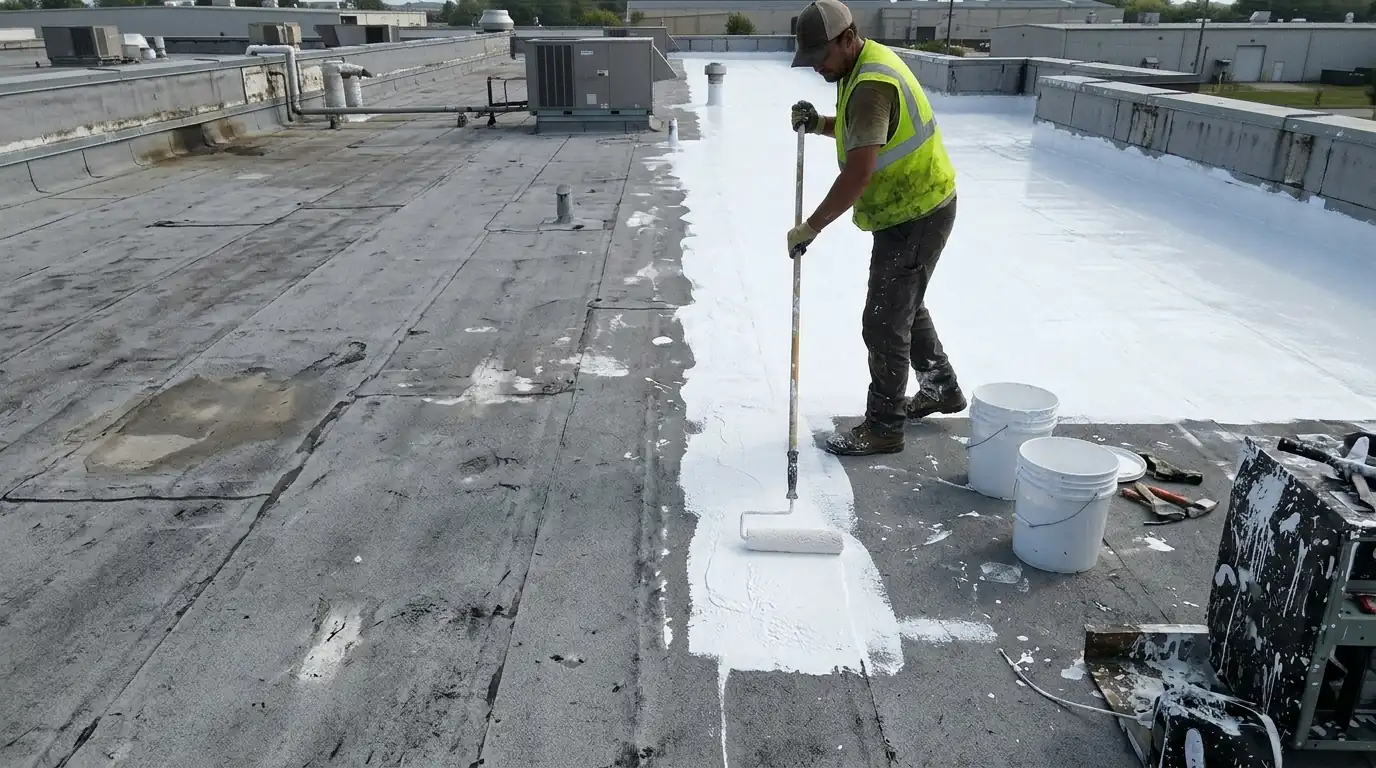
These ranges cover full tear-off and replacement on houses and small mixed-use buildings in the Dayton area. Size, layers and deck condition move the number most.
| Job | Typical range | What it covers |
|---|---|---|
| Porch or breezeway roof | $2,140 to $4,690 | Roughly 80 to 220 square feet, tear-off, new membrane and edge metal |
| Rowhouse rear roof or room addition | $4,860 to $11,740 | Roughly 300 to 850 square feet, including wall flashings |
| Larger residential flat roof | $9.15 to $15.85 per sq ft | Full tear-off, insulation, membrane, flashings, cleanup |
| Tapered insulation upgrade | $2.35 to $4.65 per sq ft | Builds slope toward drains to stop ponding |
| Decking replacement | $5.65 to $9.35 per sq ft | Remove rotted boards, install new sheathing |
| Each extra old layer removed | $1.15 to $2.45 per sq ft | Buried built-up or rolled roofing under the top layer |
These are typical Dayton-area ranges for 2026 and will vary with your roof; we price your job in writing after we measure it and check the deck. See more on our Dayton roofing price guide.
- How many layers come offA single EPDM layer tears off quickly. Three generations of tar, gravel and rolled roofing take much longer and fill more dumpsters.
- Deck conditionWe can't see the deck until the roof is open, so decking is priced per square foot and shown to you in photos first.
- Membrane choiceEPDM, TPO and two-ply modified bitumen fall in overlapping ranges, with thicker membranes and reflective cap sheets at the top end.
- Walls, curbs and parapetsA roof boxed in by brick walls on three sides needs far more flashing work than an open porch roof with one wall tie-in.
- Rooftop featuresDeck sleepers, AC condensers, skylights and roof hatches each need curbs or flashing and add time.
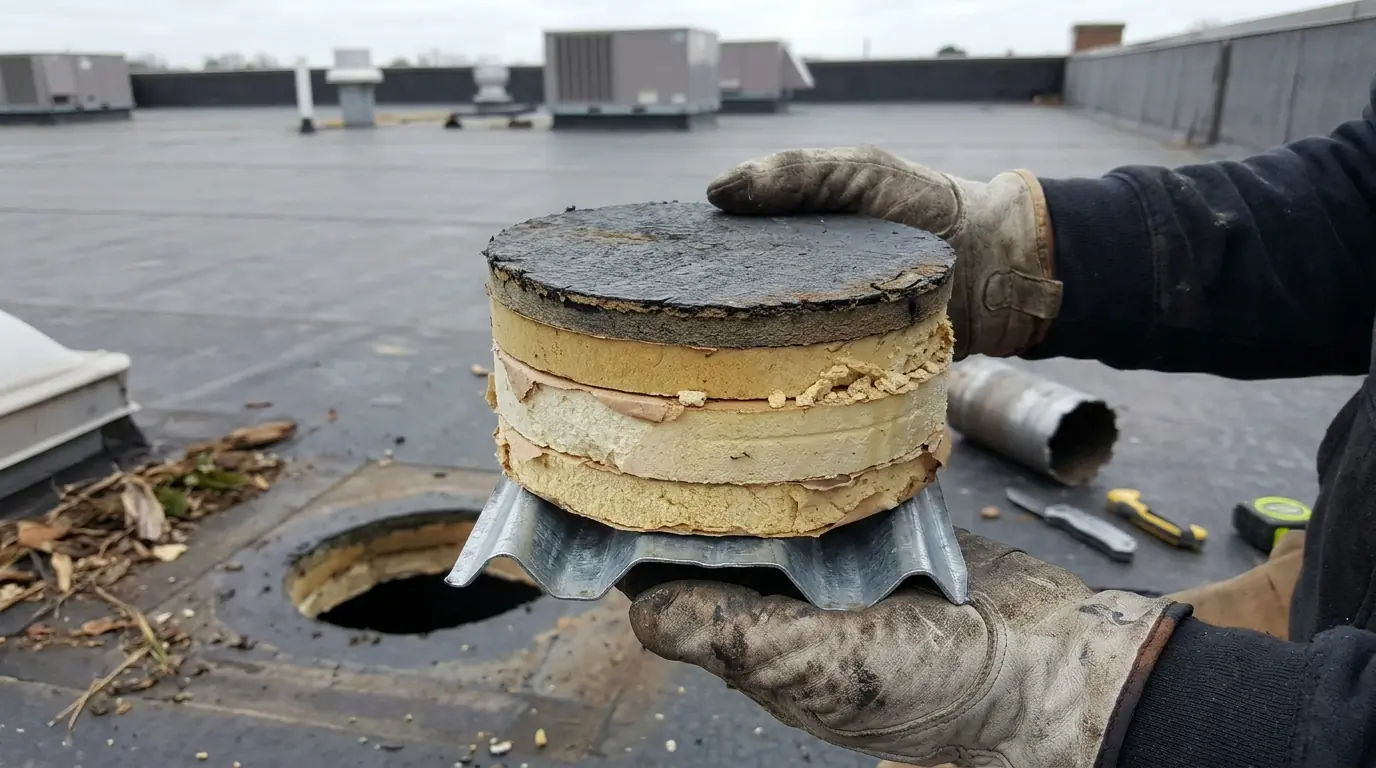
What happens on replacement day, from tear-off to final edge metal
Most residential flat roofs are torn off and dried in on the same day, so the house is never left open overnight.
Protection and staging
We cover landscaping, set a dumpster or trailer where it won't block the alley, and protect the walls below the roof edge. On attached rowhouses we also talk with you about the neighbor's side.
Tear-off to the deck
Every old layer comes off, including buried built-up roofing and wet insulation. Our crew photographs the bare deck before anything new goes on.
Deck repair
Soft or rotted boards are cut out and replaced with new sheathing fastened to the joists. If a joist has sagged, we show you and talk through sistering it before we cover it up.
Tapered insulation and cover board
We lay tapered insulation that slopes toward the drains or scuppers, then a cover board that gives the membrane a firm, smooth base. This step is where ponding problems actually get solved.
Membrane and flashings
The new membrane goes down with flashings run up walls, curbs and parapets, finished with termination bars and counterflashing. Pipes and vents get new boots made for the membrane.
Edge metal, drainage and cleanup
New drip edge, gutters or scupper boxes go on, we magnet-sweep the yard and alley, and you get a full photo report of the deck, the layers and the finished roof.
Is your low-slope roof ready for replacement instead of another patch?
Any one of these problems can be repaired by itself. Two or three together usually mean the roof has reached the end of its service life.
Repairs every year
If you've paid for a flat roof repair two seasons running, the membrane is probably failing faster than it can be patched.
Soft or bouncy decking
A deck that flexes underfoot has usually been wet for a long time, and the insulation above it is saturated.
Two or more roofs already in place
Older Dayton homes often have layers of built-up roofing stacked up over decades, which adds weight and hides rot.
Permanent ponds
Water that sits for days after every rain means the slope is gone, and only a rebuild with tapered insulation brings it back.
Brittle, shrinking membrane
Old EPDM that pulls away from walls and edges, or modified bitumen cracking across the field, can't be patched reliably.
Planning an interior remodel
If you're about to finish a room under the roof, replacing a tired roof first protects the new drywall and flooring.
Where flat roof replacements come up most around the Miami Valley
In older city neighborhoods like Five Oaks and Dayton View Triangle, early 20th-century homes often have flat-roofed sunrooms, sleeping porches and rear kitchens. Many of those roofs have been patched and re-covered several times, so we budget extra time for layer removal and deck repair. Shade from mature trees keeps them damp longer after a storm, which ages the membrane and invites moss along the edges. Gutters on those houses also tend to clog with leaves every fall, backing water onto the low-slope section.
Small commercial buildings with apartments above are another regular job, the kind found in historic downtowns like Miamisburg. Those roofs usually sit behind parapets with internal drains or scuppers, and the parapet flashing matters as much as the membrane. Across the region, the driver is the same: freeze-thaw cycles, heavy spring rain and hot summers that punish any spot where water lingers. A roof rebuilt to drain lasts noticeably longer in this climate.
Where we do flat roof replacement most often
These neighborhoods, suburbs and cities make up most of our flat roof replacement calls. Each link opens the local page with its ZIP.
Questions about flat roof replacement in Dayton
How many days does a flat roof replacement on a Dayton rowhouse take?
Most rowhouse rear roofs and room additions take one to three working days. Tear-off and dry-in usually happen on day one so the house isn't left open overnight. Extra layers of old built-up roofing, heavy deck repair or tight alley access can add a day. We'll give you a realistic schedule after we've seen the roof, and we watch the forecast closely before starting.
Do I need to cover furniture in the room under my addition while you replace its flat roof?
It's a good idea to move valuables and cover furniture in that room. Tear-off creates vibration and some dust can drop through gaps in old plank decking, especially in older homes without drywall seams taped tight. We protect the roof opening as we go, but a drop cloth over a bed or a piano costs nothing and saves cleanup.
Can a new flat roof be built with more slope so water stops ponding?
Yes, and that's often the most valuable part of the job. We install tapered insulation boards that create a gentle slope toward the drains, scuppers or gutters. Where the problem is a sagging joist, we may also shim or sister the framing. The new roof still looks flat from the ground, but water moves off it within a day of rain.
Does replacing a flat roof in Dayton require a building permit?
It depends on the scope and the jurisdiction. Re-covering a house is treated differently from work that replaces structural framing, and commercial buildings almost always need a permit. Rules also vary between the City of Dayton, its suburbs and the surrounding townships. We check with the building department that covers your address before the job starts and take care of any permit the work requires.
What's the best season to replace a flat roof in the Miami Valley?
Late spring through early fall is ideal, because adhesives cure faster and the deck stays dry. That said, we replace flat roofs year-round. TPO welding and some modified bitumen systems handle cold days well, and we schedule around freezing rain and snow. If your roof is leaking now, waiting for summer usually costs more in interior damage than it saves.
Can you replace the flat roof that sits under my second-floor deck?
Yes. We remove the deck boards or sleepers as needed, replace the roof beneath, and add protection so the deck can go back on without damaging the new membrane. Modified bitumen or a thicker membrane with walkway protection usually works best there. If your deck is due for replacement anyway, it's a good time to coordinate both projects.
Other roofing work that often goes with this job
Product lines we install on roofs around Dayton include shingles from GAF, Owens Corning and CertainTeed, metal from Englert, membranes from Carlisle SynTec and skylights from VELUX.
Need flat roof replacement today?
Call any hour. A person answers, asks a few questions and sets a time for a roofer to come out.