Modified Bitumen Roofing in Dayton, OH for Walkable Flat Roofs
We install two-ply modified bitumen roofs, torch-applied where it's safe and self-adhered where open flame doesn't belong, on rowhouses, porch roofs, churches and storefronts. You get a photo report of each layer, and a person answers 24/7.
- Answered 24/7
- Photo report on every visit
- Dayton and the Miami Valley
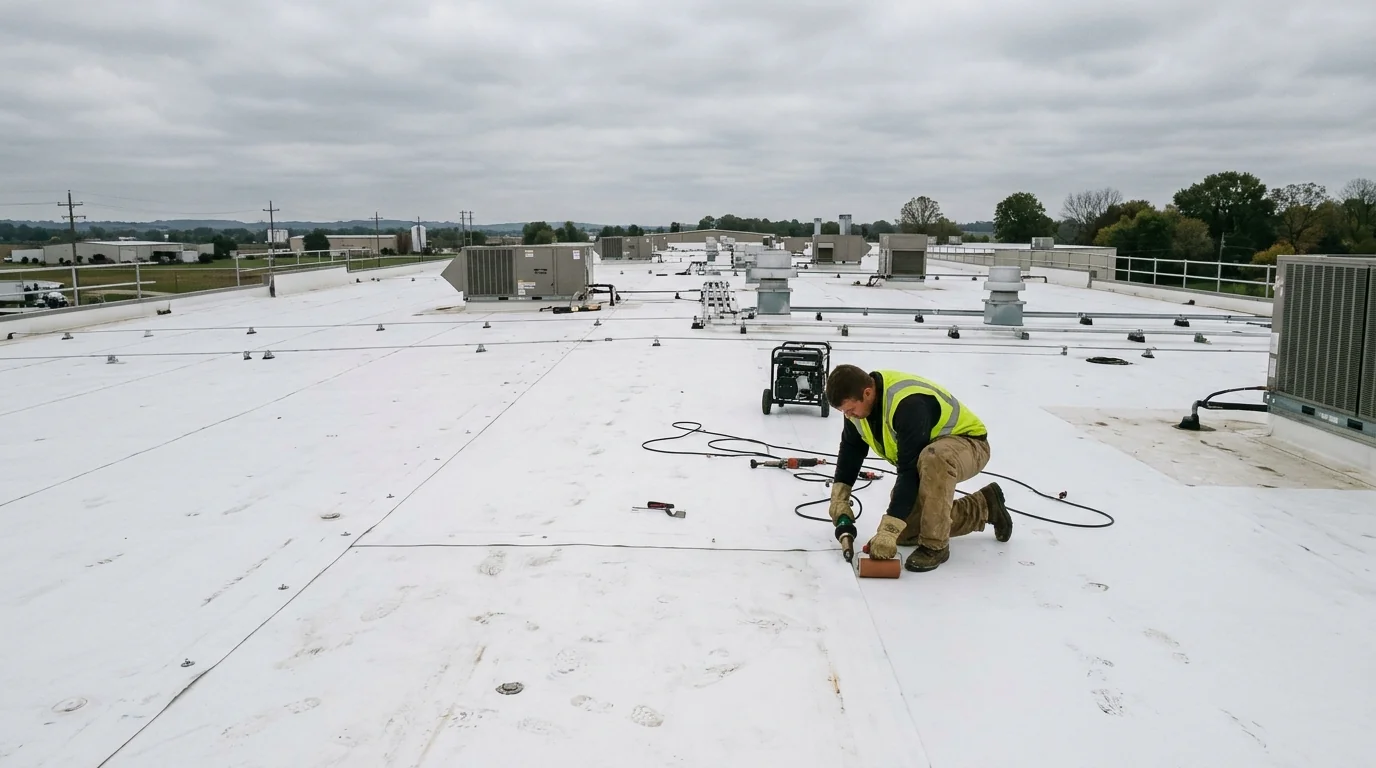
A two-ply modified bitumen roof in the Dayton area typically costs $8.65 to $13.95 per square foot on homes and $7.35 to $11.85 on larger commercial roofs, including tear-off. A small porch roof usually runs $2,390 to $5,160. The job includes a base sheet, a granulated cap sheet, flashings at walls and penetrations, and new edge metal or scuppers.
Modified bitumen is the modern descendant of the old tar and gravel roof. Instead of mopping hot asphalt between layers of felt, we install factory-made sheets of asphalt blended with rubber or plastic polymers, reinforced with polyester or fiberglass. Two plies, a smooth base and a granulated cap, give you a thick, tough roof that shrugs off foot traffic, branch drops and summer heat better than most single-ply membranes, and it's the system we reach for most often on roofs that see real use.
Toughness is why we often recommend it on Dayton rowhouses, porch roofs visible from upstairs windows, and church and school roofs where staff walk to rooftop equipment. The granulated surface looks more finished than bare rubber, and it's easy to repair years later. How it's installed matters, though. Torching is fast and strong, but it's not the right method near old wood framing, tight neighboring walls or occupied spaces, and that's where self-adhered and cold-applied versions earn their keep.
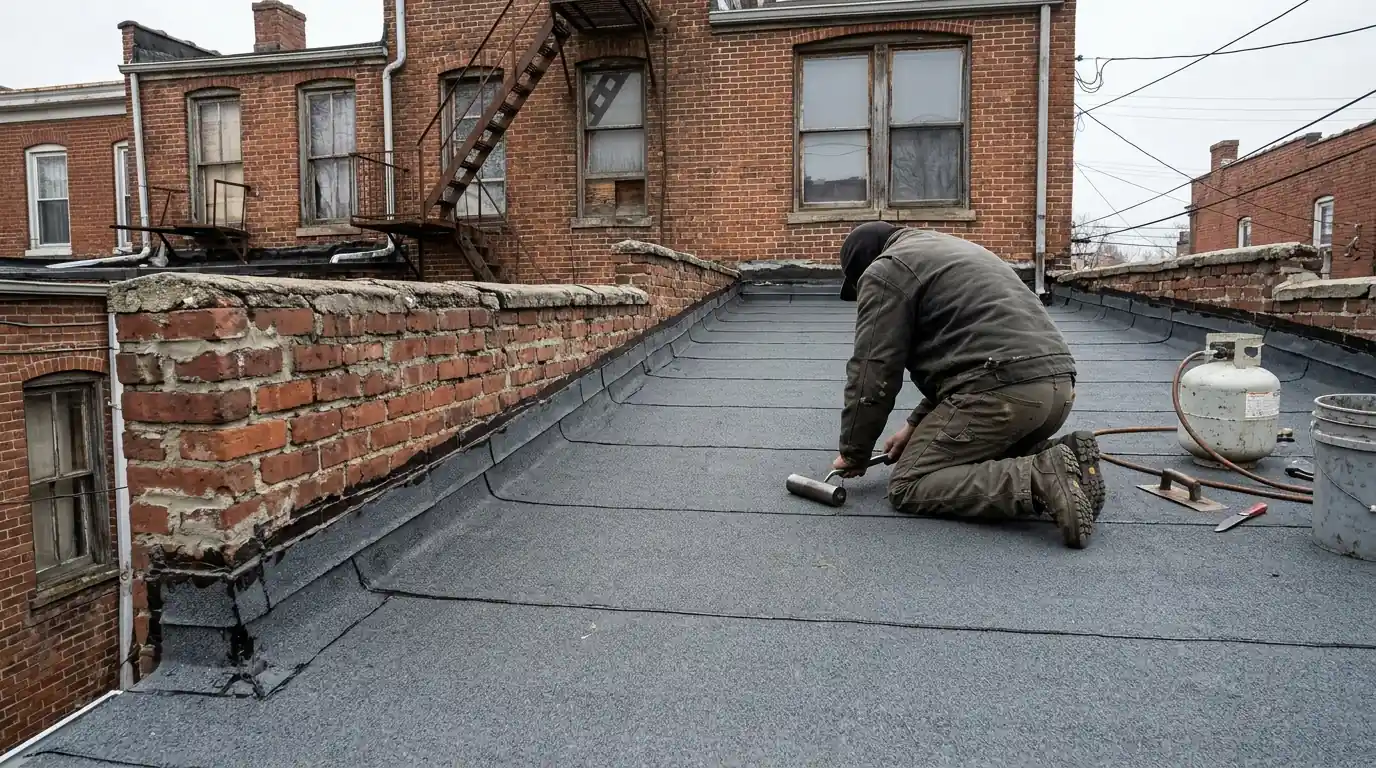
Torched, self-adhered or cold-applied: choosing an installation method
Torch-applied modified bitumen uses a propane torch to melt the back of each sheet as it unrolls. It's fast and produces strong laps, and on concrete decks or large commercial roofs with noncombustible details, it's often the best choice. The risk is fire, especially around wood nailers, gaps in old framing and walls where heat can reach hidden debris. Many roofing fires have started that way.
Self-adhered sheets have a factory-applied adhesive layer that bonds when the release film is peeled away and the sheet is rolled. They're our usual choice on Dayton homes and wood-framed buildings, and they produce no fumes. Cold-applied systems use a solvent-based or water-based adhesive troweled or sprayed between plies, which suits complex roofs but needs warmer weather to cure. We decide on method roof by roof and explain the reasoning in your estimate.
- Torch-applied: fastest, strongest laps, best on noncombustible decks
- Self-adhered: no flame or fumes, ideal for homes and occupied buildings
- Cold-applied: flexible for complex details, best in mild temperatures
SBS versus APP modified bitumen in a freeze-thaw climate
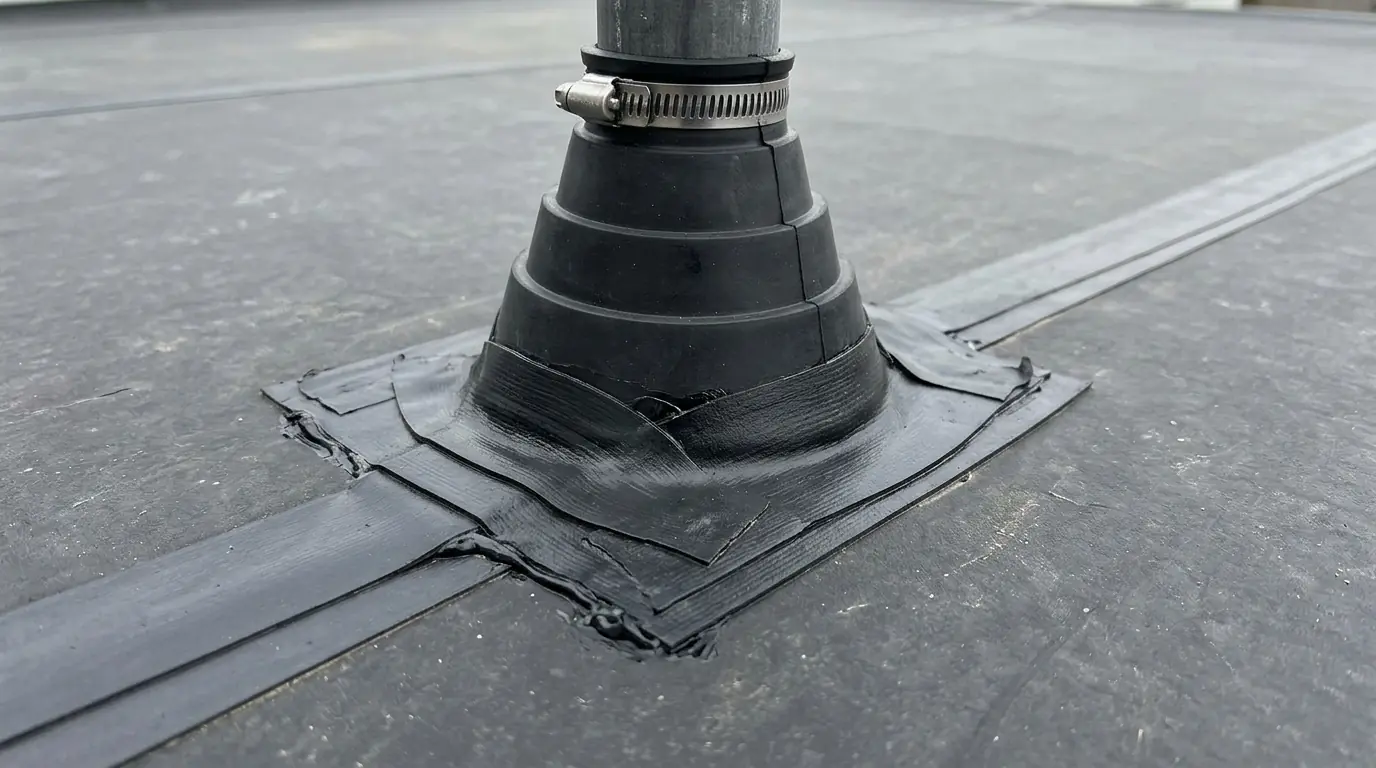
Modified bitumen comes in two main families. SBS sheets are modified with a rubber-like polymer that keeps them flexible in cold weather, and they're commonly self-adhered, mopped or torched. APP sheets use a plastic polymer that stays stiffer and holds up well to heat and UV, and they're almost always torch-applied.
For most Dayton-area roofs, we lean toward SBS. Our winters bring repeated freeze-thaw cycles, and SBS handles roof movement in the cold without cracking at laps and flashings. APP can be a good fit on large, sun-exposed commercial roofs where torching is safe and heat aging is the bigger concern. Mixing the two on one roof is a mistake we sometimes find on older repairs, since SBS and APP sheets don't always bond reliably to each other. Either way, the cap sheet's granules or a reflective roof coating protect the asphalt from sunlight, and both systems can be maintained for decades with regular checks and timely low-slope roof repairs.
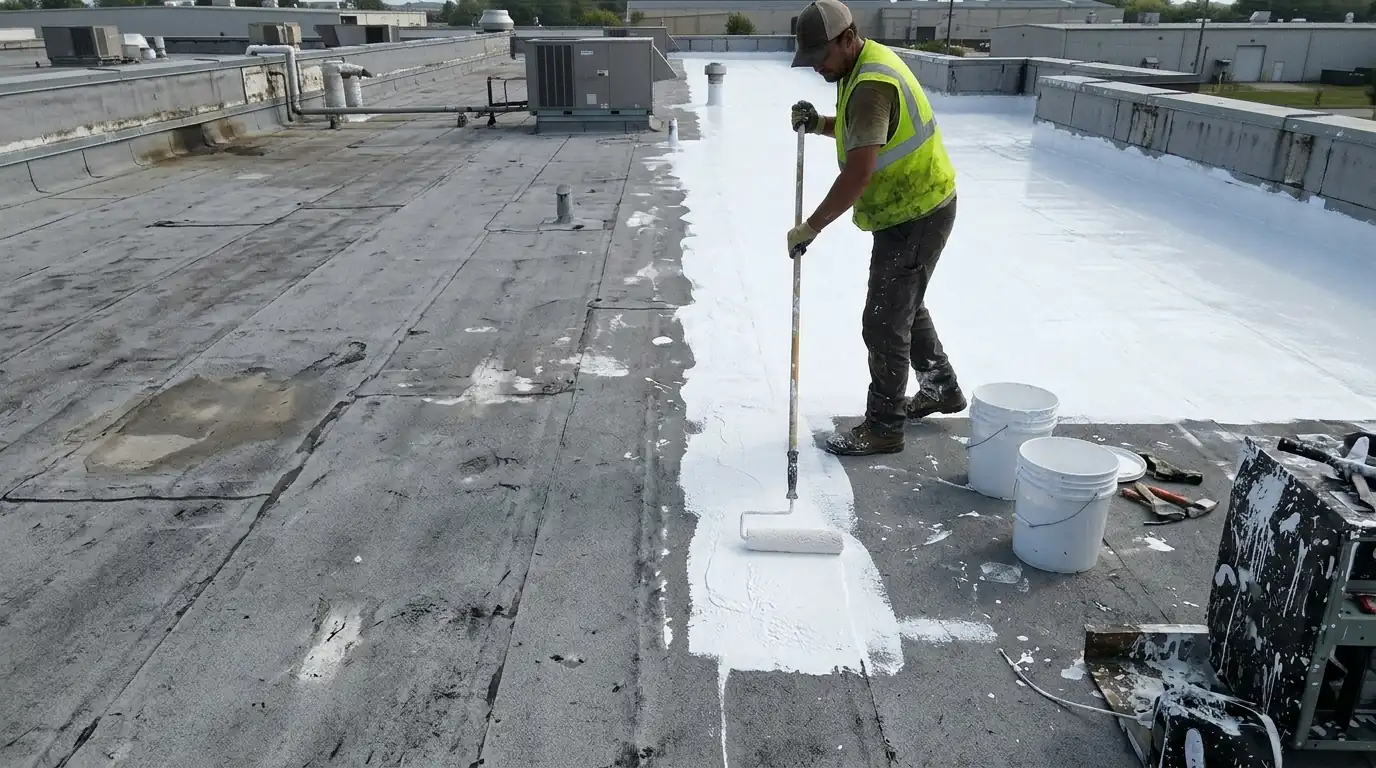
Modified bitumen roof costs on Dayton homes and buildings
Typical Dayton-area ranges for modified bitumen are below. Installation method, number of plies and flashing work set most of the price.
| Job | Typical range | What it covers |
|---|---|---|
| Porch or breezeway roof, two-ply | $2,390 to $5,160 | Tear-off, base and cap sheet, edge metal |
| Residential roof, self-adhered two-ply | $8.65 to $13.95 per sq ft | Torch-free install, flashings, cleanup |
| Commercial roof, torch-applied two-ply | $7.35 to $11.85 per sq ft | Larger areas, insulation, flashings, fire watch |
| Cap sheet repair or patch | $295 to $845 | Blister, split or seam repair with matching sheet |
| Reflective coating over a cap sheet | $1.45 to $2.85 per sq ft | Cleaning, primer and white coating |
These are typical Dayton-area ranges for 2026, not a quote; your price depends on the roof's size, layers and details, which we confirm on site. See more on our Dayton roofing price guide.
- Installation methodSelf-adhered and cold-applied sheets cost more in material but avoid open flame, which matters on wood-framed homes and occupied buildings.
- Number of pliesTwo plies is our standard, though some commercial roofs or warranty programs call for a three-ply system.
- Tear-off complexityRemoving heavy gravel-surfaced built-up roofs takes more labor and disposal than tearing off a single rolled roof.
- Walls and parapetsRowhouse roofs with brick parapets on several sides need a lot of two-ply flashing work, which adds time.
- Cap sheet colorWhite and reflective granule colors can cost a bit more than standard gray or black.
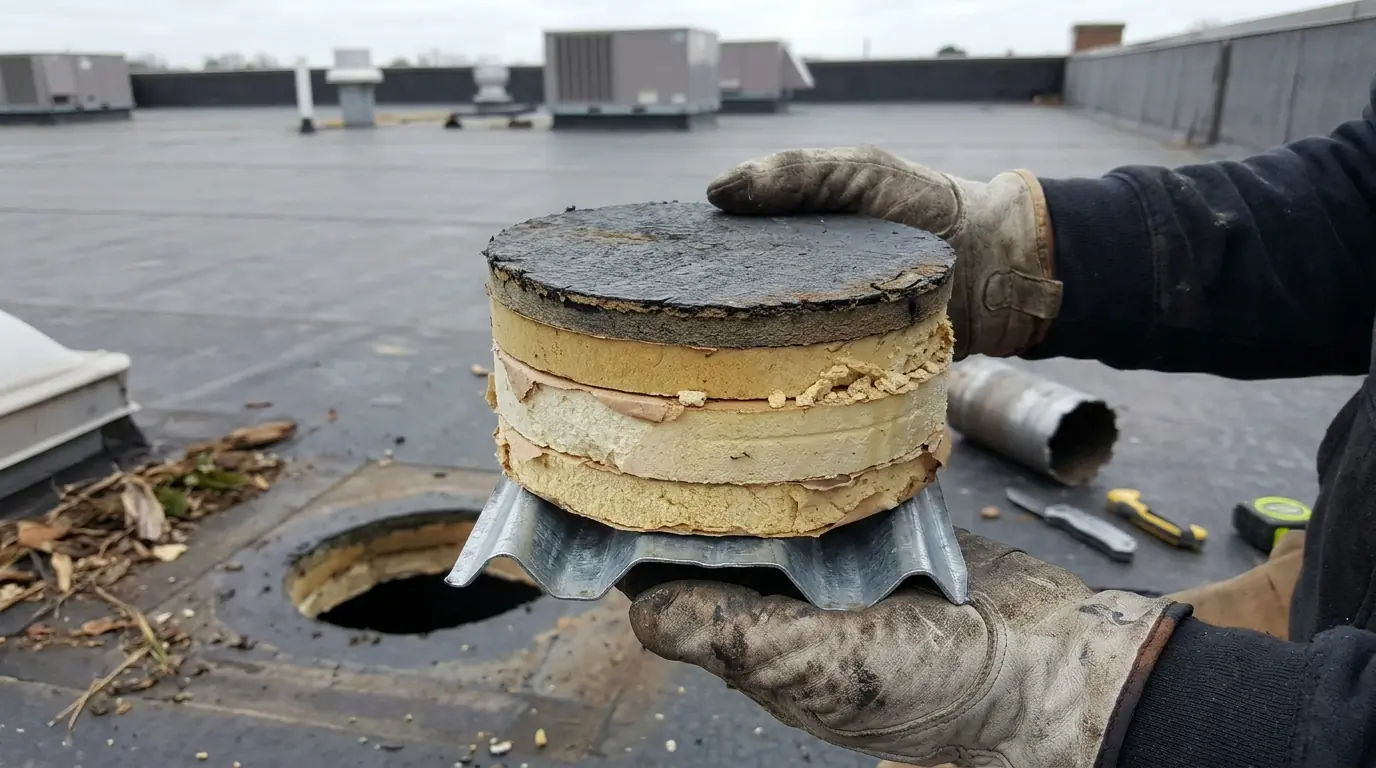
How our roofers build a two-ply modified bitumen roof
We pick the installation method before we pick the color, because flame, heat and fumes matter on occupied buildings and old wood framing.
Fire-safety and method review
Our crew lead walks the roof to check for wood nailers, combustible walls and neighboring buildings. Where open flame isn't appropriate, we specify self-adhered or cold-applied sheets.
Tear-off and deck repair
We remove the old roof down to the deck, replace damaged boards and photograph the substrate. Old gravel and debris are cleared so the new base sits flat.
Base layer and insulation
Where needed, we add insulation or a cover board, then install a smooth base sheet as the first waterproof layer. Laps are staggered so seams in the two plies never line up.
Granulated cap sheet
The cap sheet goes on over the base with sealed laps, and its granules protect the asphalt from UV. Torched laps show a small bead of melted asphalt that confirms a good seal.
Flashings at walls, curbs and drains
We build flashing in two plies up parapets, chimneys and curbs, then add counterflashing or termination bars. Drains and scuppers get new lead or metal flanges set into the plies.
Fire watch and closeout
On torched jobs, we keep a fire watch after the last flame goes out and check concealed areas with a thermal tool. You get a photo report of each layer and the finished details.
When modified bitumen is the smart pick for a low-slope roof
We weigh modified bitumen against EPDM and TPO on every low-slope job. These are the conditions that usually tip the choice toward it.
Roofs people walk on
Rooftop decks, AC service paths and roofs reached through a window or hatch hold up better with a two-ply asphalt system.
Roofs you can see from above
A granulated cap sheet in gray, tan or white looks tidier from a second-floor window than black rubber or bare membrane.
Replacing old built-up or tar roofs
Buildings with existing asphalt-based details often transition most easily to modified bitumen flashings and edge work.
Complex roofs with many details
Parapets, internal gutters, chimneys and skylights are easier to flash with flexible modified bitumen sheets and compatible mastics.
Areas with branch and debris impact
Two plies plus granules resist punctures from falling limbs better than single-ply membranes under mature trees.
Owners who want easy future repairs
Modified bitumen can be patched with compatible sheet, mastic or torch work for decades, which helps on older buildings with tight budgets.
Modified bitumen on Dayton rowhouses, storefronts and older churches
Many of the 19th-century homes in South Park and nearby neighborhoods have low-slope rear roofs, porch roofs and bay roofs that once carried built-up tar and gravel. Those roofs sit tight against brick walls and wood trim, so we typically install self-adhered modified bitumen there rather than torching near old framing. The gray or tan cap sheet also looks right next to historic slate and brick.
Older downtown commercial blocks in places like Troy and Xenia often have flat roofs behind parapets, with storefronts below and apartments or offices above. Modified bitumen handles the foot traffic from HVAC service and roof hatch access, and its flashings work well with masonry parapets. Churches across the region use it too, often on low-slope wings around a steeper main roof. Our freeze-thaw winters and summer heat favor its flexibility and its thick, two-ply build, and when a branch or a dropped tool does damage it, a matching patch blends in without a full tear-off.
Where we do modified bitumen roofing most often
These neighborhoods, suburbs and cities make up most of our modified bitumen roofing calls. Each link opens the local page with its ZIP.
Questions about modified bitumen roofing in Dayton
Is torch-applied modified bitumen safe on an old wood-framed rowhouse?
It can be done safely in some conditions, but on most wood-framed rowhouses we prefer self-adhered sheets. Old framing often has gaps, dry wood and hidden debris where heat can travel. Self-adhered and cold-applied systems avoid that risk entirely while giving you the same two-ply protection. Where we do torch, we follow strict fire-safety practices, including a fire watch after work stops.
Can I walk on a modified bitumen roof to reach my rooftop deck or air conditioner?
Yes, that's one of its strengths. The two-ply build and granulated cap sheet handle regular foot traffic better than single-ply membranes. For frequent use, we add walkway pads along the path to the deck or AC unit to protect the surface. Avoid dragging heavy items across the roof or using sharp-legged furniture, which can still damage the cap sheet.
What's the difference between SBS and APP modified bitumen for Ohio winters?
SBS stays flexible in cold weather, which helps it handle freeze-thaw cycles and roof movement without cracking. APP is stiffer and very resistant to heat and UV, and it's almost always torch-applied. For most Dayton homes and many commercial roofs, we lean toward SBS because of our winters. APP can make sense on large, sun-exposed roofs where torching is safe.
Why do modified bitumen roofs develop blisters, and should I worry about them?
Blisters develop when air or moisture gets trapped between plies or under the base sheet, then expands in summer heat. Small, firm blisters may stay stable for years, but large or soft ones can split and let water in. We cut and repair blisters that look active, and we check whether wet insulation underneath is feeding them.
Can modified bitumen go over my existing tar and gravel roof?
Sometimes, but only when the existing roof is dry and there's only one roof layer in place. Gravel has to be removed, and the surface must be smooth enough for the new sheets. In practice, many older tar and gravel roofs around Dayton already have multiple layers or wet spots, so a full tear-off is usually the better and code-compliant choice.
What colors can a granulated modified bitumen cap sheet come in?
Most manufacturers offer cap sheets in shades like gray, black, tan, brown and white, with white or reflective granules helping keep the roof cooler. Selection varies by product line, so we'll show you samples available for your system. On historic homes, we often match the cap sheet to nearby slate, shingles or trim so the low-slope section blends in.
Other roofing work that often goes with this job
Product lines we install on roofs around Dayton include shingles from GAF, Owens Corning and CertainTeed, metal from Englert, membranes from Carlisle SynTec and skylights from VELUX.
Need modified bitumen roofing today?
Call any hour. A person answers, asks a few questions and sets a time for a roofer to come out.