Leak Detection and Roof Repair in Walnut Hills, Dayton (45420)
When a ceiling stain shows up in Walnut Hills (45420), we follow the water back to its source, whether that's a cracked pipe boot, a worn valley or loose flashing, and fix that spot instead of guessing.
- ZIP 45420
- Answered 24/7
- Montgomery County

Most leak repairs we handle on Walnut Hills homes cost $345 to $1,160, and the price depends on what failed and how hard it is to reach. A pipe boot sits at the low end, while rebuilt valleys or chimney flashing land higher. If water has soaked the decking, add the wood. Those are typical Dayton-area ranges, and your price comes after we've traced the leak.
Walnut Hills is one of the older residential pockets on Dayton's southeast side, with much of its housing built in the first half of the 1900s. The streets roll more than you might expect, and the houses follow suit: two-story foursquares with hipped roofs, bungalows with shed dormers, and a scattering of brick cottages with steep front gables. Big shade trees line many blocks. That combination makes for tricky leaks, because water on these roofs has a lot of places to wander before it shows up as a brown ring on your ceiling.
Leaks rarely appear directly below their cause. Water slips through a gap near a dormer, runs along a rafter, and drips onto drywall six feet away. So our roofers start in the attic with a light, look for stained sheathing and wet insulation, and then match that to what's on the roof. We check the usual suspects first, like pipe boots, valleys and the chimney, then the quieter ones, like a nail pop under a shingle or a gap where the porch roof meets the wall. Our page on tracing and fixing roof leaks walks through the method.
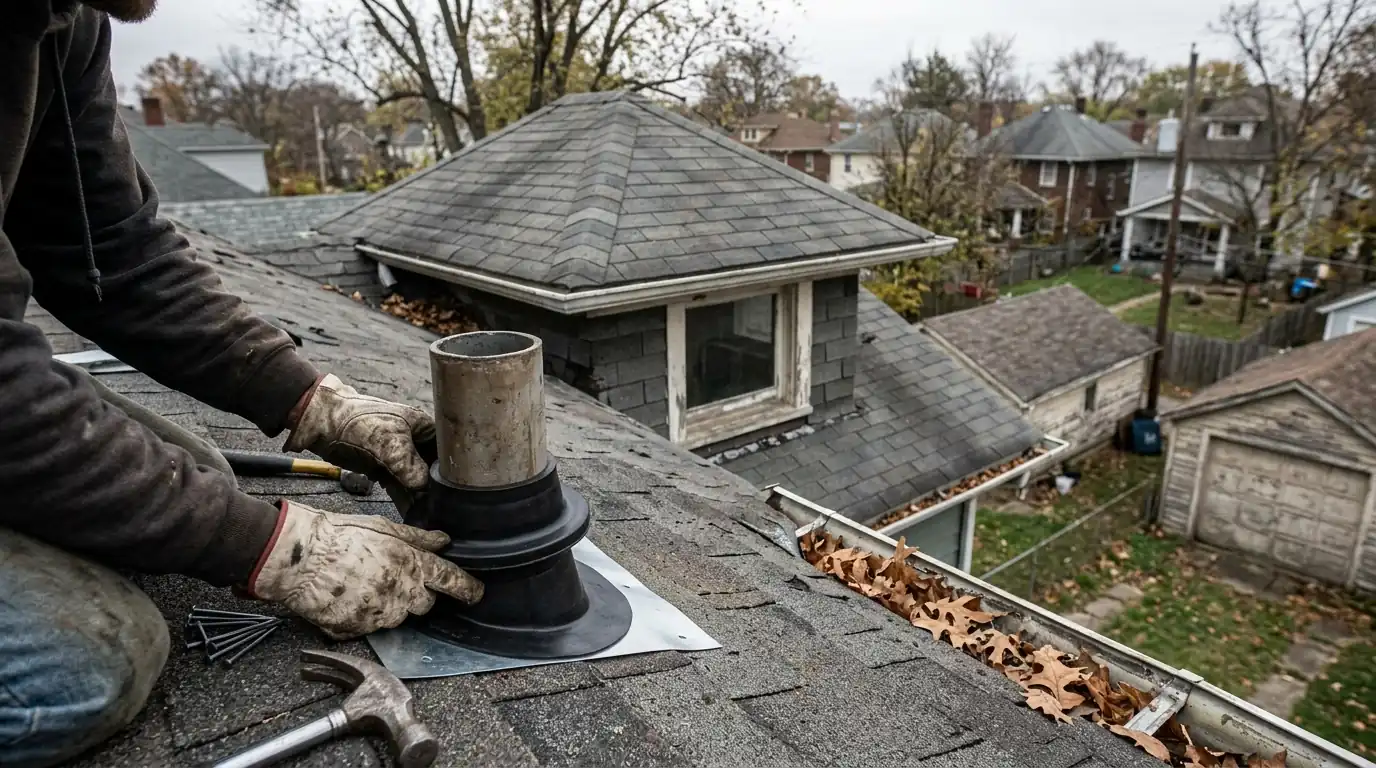
Foursquares, dormers and old trees: where Walnut Hills roofs let water in
A foursquare's hipped roof has four sloped faces meeting at hip ridges, often with a small dormer on one or more sides. The hips themselves rarely leak, but the dormer cheeks and the flashing around them do, especially where earlier repairs used tar instead of metal. Bungalows bring long shed dormers, and the joint where the dormer's low roof meets the main slope is a classic weak point because the pitch drops and water slows down. Similar bungalows and foursquares turn up in neighboring Belmont.
Then there are the trees. Oaks and maples drop leaves, seeds and twigs that pack into valleys and gutters every fall. When a valley fills with debris, water backs up sideways under the shingles instead of running off. Branches that rub the roof in the wind scrape granules away and eventually wear through the mat. We'll point out which limbs are doing damage so an arborist can deal with them, and our photo report shows the worn areas so you can decide what to do next.
Summer downpours and fall leaves: the Walnut Hills leak calendar
Heavy July and August thunderstorms dump a lot of water in a short time, and that's when a cracked boot or a clogged valley finally overflows. Wind-driven rain from storms rolling in from the west pushes water sideways under flashing that stays dry in a gentle shower. Fall adds leaf-packed gutters and valleys. By winter, any water that got under the shingles freezes and expands, opening small gaps a little wider each cycle. If you've had a slow drip for a while, it's worth getting it looked at before the freeze-thaw months make it worse.
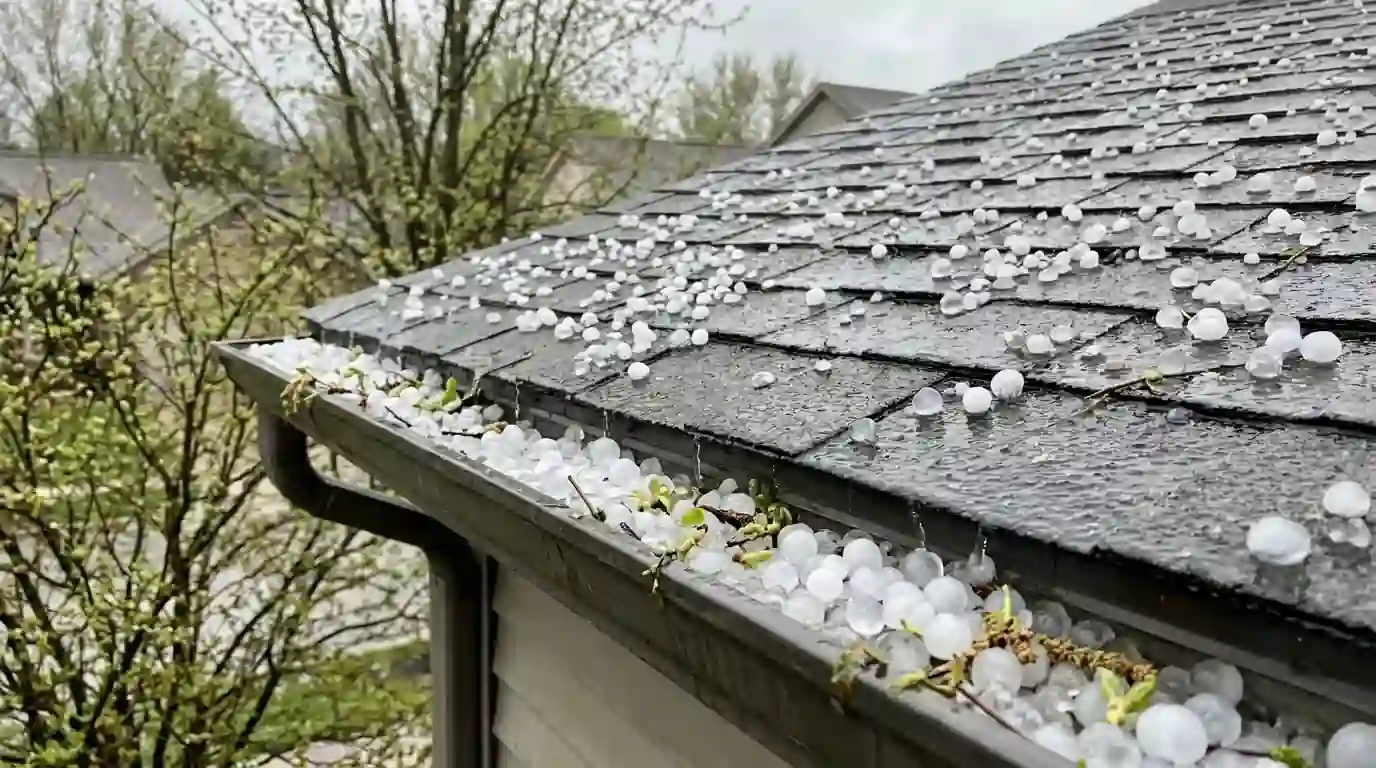
Leak-related repairs we're called for in Walnut Hills
Here's where most of the water comes from on this neighborhood's older roofs, and the repair that usually stops it.
Roof Leak Repair
Stains that move or reappear after a storm need the source traced, not another dab of caulk.
See roof leak repairPipe Boot & Roof Vent Repair
Rubber boots around plumbing vents crack after years of sun and rank among the leak sources we find most.
See pipe boot & roof vent repairRoof Flashing Repair
Dormer cheeks, porch tie-ins and sidewalls on foursquares often still rely on old tarred flashing.
See roof flashing repairGutter Guards
Heavy leaf fall from mature street trees clogs gutters fast, so guards cut down the overflow.
See gutter guardsTree Damage Roof Repair
Limbs that rub or drop onto roofs in summer storms leave punctures and scraped shingles.
See tree damage roof repairRoof Repair
Lifted or missing shingles after a windy week are a quick fix that heads off a much bigger leak.
See roof repair
A leak call from Walnut Hills, start to finish
Walnut Hills is a quick trip for us, usually out of downtown on US-35 east or down Wayne Ave toward the southeast side. When you call, day or night, the person who answers asks where the stain is, when it appears and whether it's actively dripping. Active leaks get a temporary fix as fast as we can get there. Then we come back in daylight, trace the source from attic to roof, photograph what we find, and send you the photos with a repair price. If you'd like the whole roof checked on the same trip, here's what a full inspection covers. And if the roof is past patching, we'll say so plainly.
Areas near Walnut Hills we also cover
Roofing questions from Walnut Hills
Why does water only come through my Walnut Hills ceiling when storms blow in from one direction?
Leaks that come and go usually depend on wind direction. A gap in sidewall or dormer flashing may stay dry in a straight-down rain, then let water in when a storm drives rain sideways from the west. Ice dams cause a similar on-and-off pattern in winter. We look for staining in the attic that points to one side of the house, then check the flashing on that face first.
Can you fix a leak around a foursquare dormer in Walnut Hills without reroofing the whole house?
In most cases, yes. We remove the shingles around the dormer, pull the old tarred flashing, install new step flashing and counterflashing, and weave in matching shingles. Matching color exactly on a faded roof is not always possible, but we bring close options and show you before we start. If the surrounding shingles are too brittle to work with, we explain that and price the alternatives.
How can I tell whether the stain on my Walnut Hills ceiling is old or still active?
Mark the edge of the stain lightly with a pencil and watch it after the next rain. If the ring grows or feels damp, the leak is active. Old stains feel dry and stay the same size. We also check from the attic with a moisture meter, which tells us whether the wood and insulation above the stain are wet right now.
What tree damage should I watch for on a roof under the big oaks in Walnut Hills?
Look for bare patches where branches rub, small punctures after windy nights, and valleys or gutters packed with leaves and twigs. Moss and dark streaks on shaded slopes also tell you the roof stays wet too long. After a storm drops a big limb, check the attic for daylight or fresh drips. We document any damage with photos, which also helps if you file an insurance claim.
Roof trouble in Walnut Hills?
Call any hour and tell us your street. We will give you a time window before we hang up.