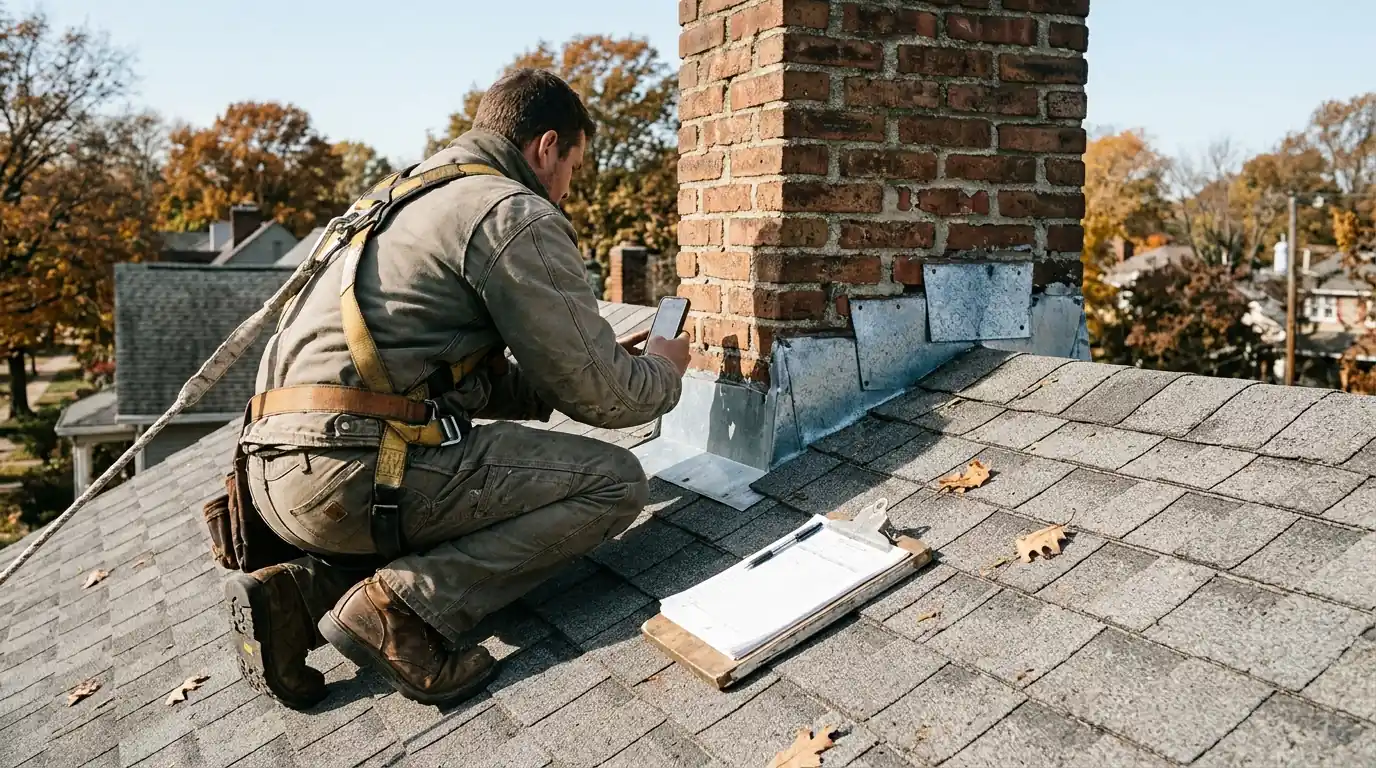
A real roof inspection covers the shingle field on every slope, all flashing and penetrations, the edges and gutters, and the attic underneath. It should end with a photo report that separates urgent repairs from things to watch, estimates remaining life as a range, and gives typical repair costs. Around Dayton, a standalone inspection commonly costs $185 to $395.
Why a five-minute look from the ladder falls short
Plenty of roofs get "inspected" by someone who props a ladder against the gutter, glances across the nearest slope and heads back to the truck. That view misses most of what matters. You can't see the back slopes, the chimney's uphill side, the valleys or anything happening under the roof deck.
A useful inspection takes time, usually 45 minutes to an hour and a half on a typical Dayton house. We walk every slope that's safe to walk, use binoculars or a camera pole on the ones that aren't, and spend real time in the attic. The goal is a clear answer you can act on, not a sales pitch dressed up as a checkup.
What we check across the shingle field
We start with the big picture: are the shingles lying flat, holding their granules and still sealed to each other? Then we look closer, slope by slope, because each side of a house ages differently. South and west slopes bake in July. North slopes under big oaks and maples stay damp and grow moss and algae.
On each slope, we look for granule loss and bare spots, curled or cupped edges, cracked or missing tabs, nail heads backing out, and blisters. We check for hail bruises, which feel soft under a thumb, and for scuffs from earlier foot traffic or satellite installs. We also note any spot that feels spongy underfoot, since that usually means the decking below has taken on water.
Age matters to how we read all of this. A few loose granules on a two year old roof are normal shedding. The same amount on a 17 year old three-tab roof suggests it is near the end. We try to read the roof against its age and type, not against a brand new one.
Flashing, penetrations and edges, where most leaks begin
In our experience, the joints leak long before the shingles do. That's why our roofers spend more time on flashing than on anything else. We check each spot where the roof meets something that isn't roof:
- Chimneys: counterflashing, step flashing, the cricket on the uphill side and the mortar joints above.
- Sidewalls and dormers: step flashing tucked behind siding, and kickout flashing where the roof ends at a wall.
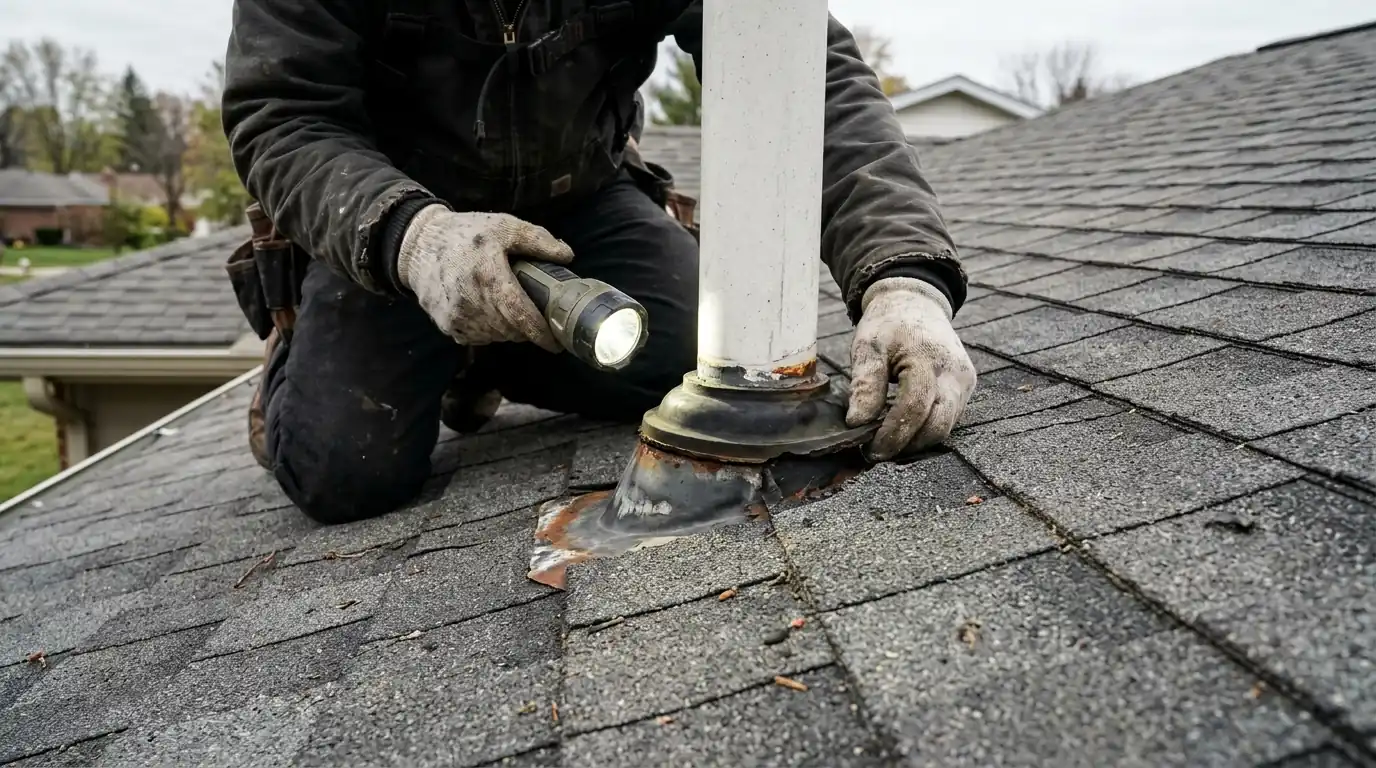
- Pipe boots and vents: cracked rubber collars, rusted bases and missing fasteners.
- Skylights: the curb flashing, the glazing seal and any staining on the interior well.
- Valleys: worn shingles, debris buildup and exposed nails.
- Drip edge and eaves: rot at the first course and gaps where water reaches the fascia.
What the attic tells us that the roof can't
The attic is where a roof's history shows up. On older homes in Dayton View, South Park and Oakwood, we often find decades of patched leaks visible on the board decking, along with insulation added in layers by different owners. On newer homes in Beavercreek and Washington Township, the attic usually reveals ventilation problems more than leaks.
We look for water trails and dark spots on the decking, especially around chimneys and pipes. We check for daylight where it shouldn't be, rusty or frosted nail tips, damp or compressed insulation, and mold on the north side of the sheathing. We also confirm that soffit vents aren't buried under insulation, that the exhaust vents are clear, and that bathroom fans actually vent outdoors rather than into the attic.
Gutters, fascia, soffits and the ground below
Water management finishes the picture. Gutters packed with leaves or pulling away from the fascia send water behind the trim and into the wall. We look at downspout outlets for heavy granule deposits, which often show a roof shedding its protection faster than it should.
We also check the fascia boards for rot, the soffit for gaps that let in squirrels and birds, and the ground for signs that water is pooling against the foundation. Those aren't strictly roof items, but they're tied to how the roof drains, and fixing them early keeps a small problem from becoming a basement problem.
What a good inspection report should hand you
When we finish, you get a photo report organized by area of the roof. Each photo has a short caption that says what it shows and why it matters. Then we sort the findings into three groups: fix now, plan for within a year or two, and watch. A cracked pipe boot is a fix-now item. Light granule loss on a 12 year old roof is usually a watch item.
We give a remaining life estimate as a range, not a single number, because no one can predict the next hailstorm. Where repairs are needed, we list typical cost ranges. A failed pipe boot, for example, usually lands in the $245 to $485 range for pipe boot repair. If the roof is near the end, we say so plainly, and our guide to deciding between repair and replacement can help you weigh the options.
When to schedule one, and what it typically costs
Good times to book a roof inspection are after any storm with hail or high wind, before buying or selling a home, every two or three years once a shingle roof passes about 12 years old, and in early fall before freeze-thaw season. If you're listing a home, our roof condition paperwork for a home sale builds on the same inspection.
A standalone inspection in the Dayton area typically costs $185 to $395, depending on roof size, pitch and whether we need lift equipment or extra time for slate or tile. Some contractors offer free storm inspections. Those can be fine, but ask what you'll actually receive, and whether you get photos of every slope or only the damage that supports a sale.