Emergency Roof Tarping in Dayton, OH
A loose tarp flapping on a roof does more harm than good. We install heavy reinforced tarps wrapped over the ridge and screwed down with wood battens, often the same day you call, and photograph the work for your insurer.
- Answered 24/7
- Photo report on every visit
- Dayton and the Miami Valley
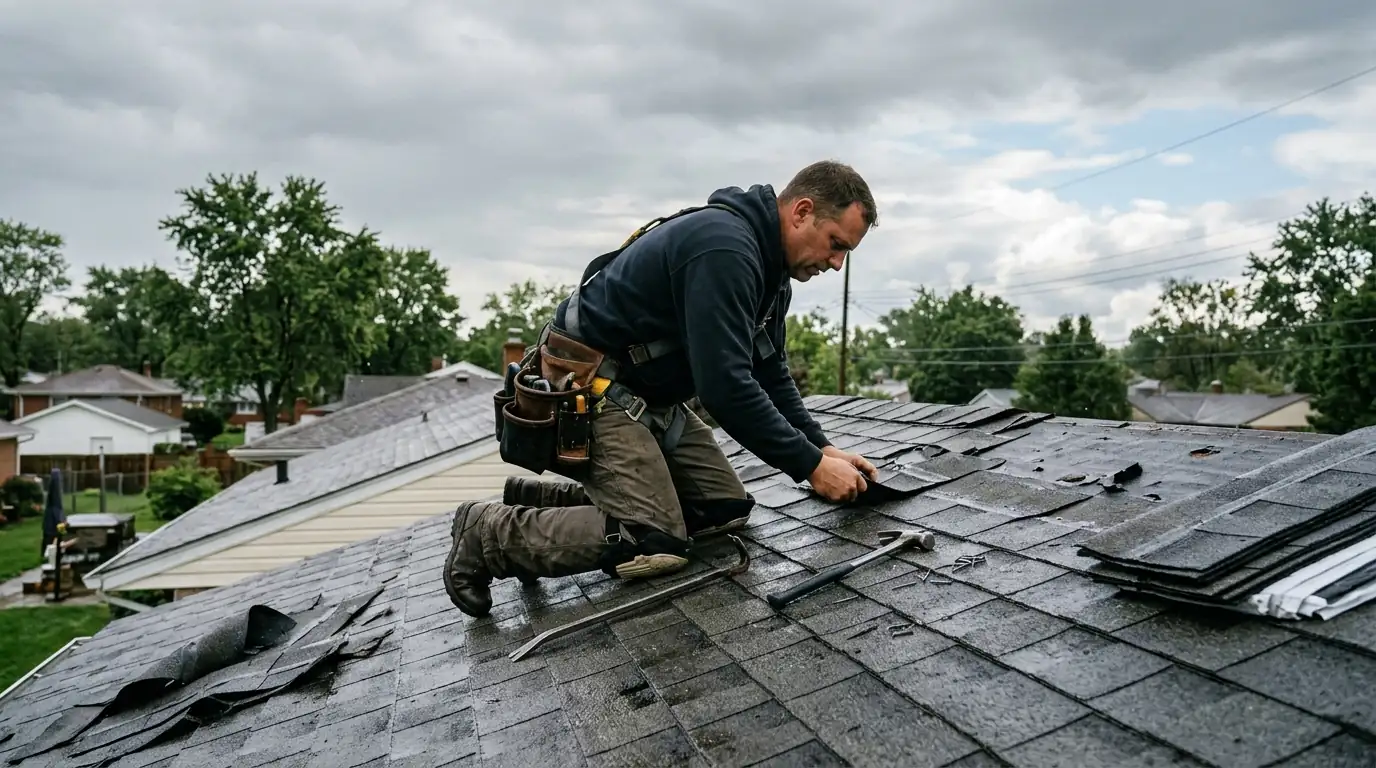
Emergency roof tarping in the Dayton area typically costs $345 to $1,960, depending on the size of the damaged area, roof pitch and height. A proper job uses a heavy reinforced tarp, wraps it over the ridge, and secures it with screwed wood battens rather than loose nails or sandbags. A well-installed tarp usually holds for 60 to 90 days of normal weather.
After a storm, blue tarps go up all over town, and a lot of them come down again in the next windy afternoon. The usual reasons are thin hardware-store tarps, a few nails punched through the grommets, or sandbags that slide down the slope. Wind gets under the edge, the tarp turns into a sail, and it either tears free or rips up the shingles it was nailed to. Then you're back where you started, with more damage.
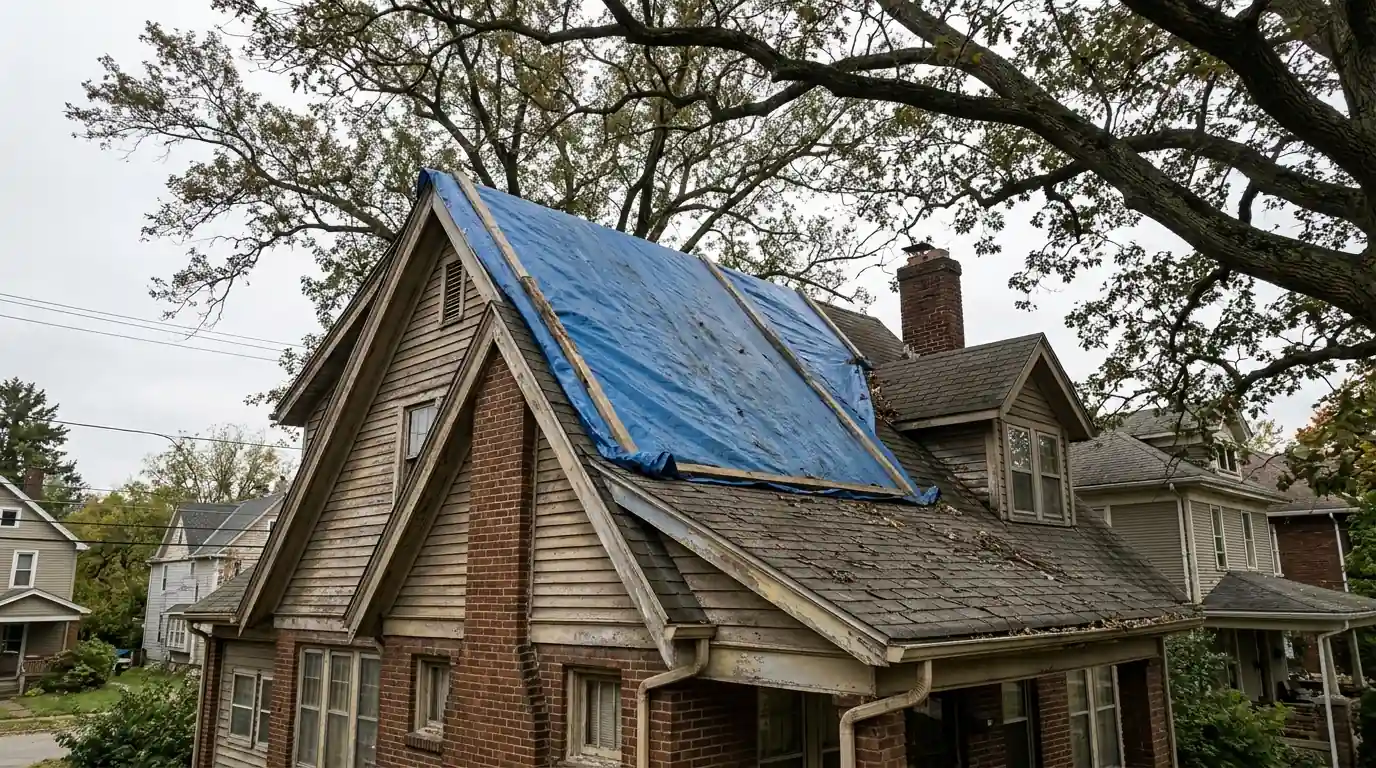
Our tarping method is built to avoid that. We use heavy reinforced polyethylene, size it to extend well past the damage on every side, and run it up and over the ridge so water can't get under the top edge. Then we roll the edges around 2x4 battens and screw the battens to the deck. It is slower than throwing a tarp up, but it stays put until your permanent emergency repair can be scheduled.
When a tarp is the right call, and when it isn't
A tarp is a temporary bridge, not a repair. These are the situations where it makes sense, and a few where something else works better.
Broken decking or a hole to the sky
When decking is broken or gone, a tarp over plywood keeps rain out until the framing and deck can be rebuilt.
Widespread shingle loss before more rain
If wind stripped a large area and storms are forecast, tarping now prevents water from soaking the underlayment and deck.
Waiting on an adjuster or a claim decision
Insurers often want to see damage before permanent repairs, and a tarp holds the roof in the meantime.
Material backorders after a big storm
When shingle supply runs short across the region, a secure tarp bridges the gap until the right product arrives.
Small, isolated damage on a walkable roof
For a few torn shingles, a peel-and-stick membrane patch is often better than a tarp. It is less visible and holds longer.
Damage on a flat or low-slope roof
Tarps don't shed water well on flat roofs. A temporary membrane patch is usually the better choice there.
How we install a roof tarp that stays put in Ohio wind
A tarp that holds through the next storm takes about an hour or two longer than one that doesn't. Here is how our crew installs one.
Clear and inspect the area
We sweep off debris, remove loose shingle pieces and check the decking from above and below. Broken decking gets a plywood cover screwed down before the tarp goes on.
Size the tarp past the damage
The tarp should extend at least three to four feet beyond the damage on each side and run over the ridge. Too small a tarp lets water run under the edges.
Wrap over the ridge
We drape the top edge over the ridge and down the opposite slope a few feet. That way, rain running down from the peak lands on top of the tarp instead of under it.
Roll edges around battens and screw them down
Each edge rolls around a 2x4 batten, which is then screwed through the tarp into the roof deck. Battens spread the holding force so wind can't tear the tarp at a single point.
Add intermediate battens on large covers
On large tarps, we add battens across the middle so wind can't balloon the plastic. This keeps the tarp quiet and tight against the roof.
Photograph and check the attic
We photograph the tarp from several angles and confirm the attic is dry below it. The dated photos go to you for your insurer, along with notes for the permanent repair.
What emergency roof tarping costs in Dayton by size and pitch
Tarping prices depend mostly on area, height and pitch. These are typical figures we see on Dayton-area homes.
| Job | Typical range | What it covers |
|---|---|---|
| Small tarp on a walkable roof | $345 to $690 | Up to about 10 by 12 feet of damage, battened over the ridge |
| Medium tarp | $585 to $1,240 | Up to about 20 by 30 feet, with intermediate battens |
| Large, steep or two-story tarp | $920 to $1,960 | Large covers, steep pitch or high eaves needing extra safety setup |
| Peel-and-stick temporary patch | $285 to $640 | Self-adhering membrane over small torn areas instead of a tarp |
| Tarp check and re-secure visit | $135 to $285 | Inspect, tighten or re-batten an existing tarp after high winds |
These ranges are typical for Dayton-area homes in 2026, not a quote, and the final cost depends on what we find on the roof. See more on our Dayton roofing price guide.
- Size of the damaged areaBigger openings need larger tarps, more battens and more labor to secure them properly.
- Pitch and heightSteep roofs and two-story eaves require roof jacks, harnesses and more setup time.
- Broken decking underneathIf the deck is punctured, we cover it with plywood first, which adds material and time.
- Roofing materialSlate, tile and metal need special care to avoid causing new damage while securing the tarp.
- Timing and storm volumeNight and weekend work, or tarping right after a widespread storm, typically costs more.
Battens, ridge wraps and peel-and-stick: picking the right temporary cover
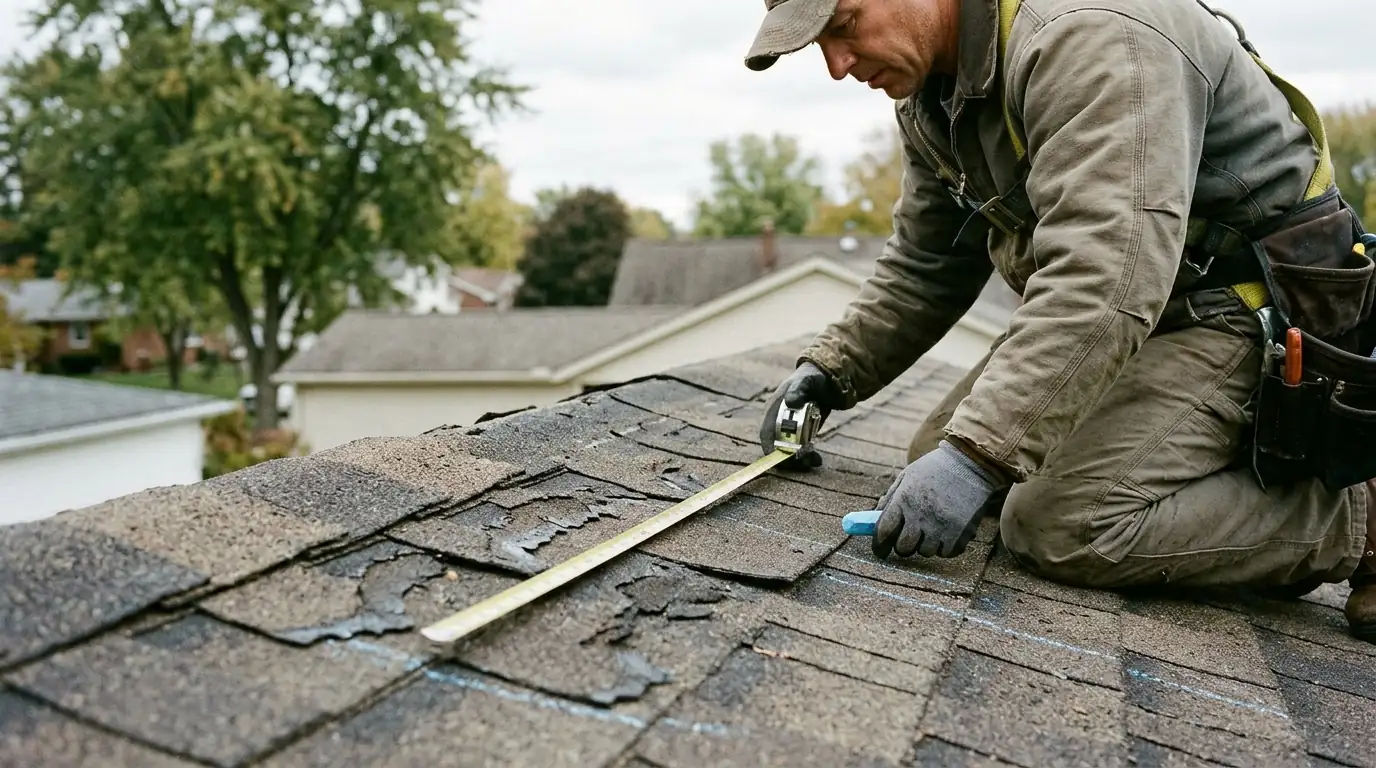
Not every temporary cover is a blue tarp. The right choice depends on the damage, the roof and how long the cover needs to last. We pick the method that holds best with the least added damage to your roof.
Battened tarps are the workhorse for large or open damage. Peel-and-stick membrane, the same self-adhering underlayment used under shingles at the eaves, works better for small torn areas because it seals tight and sits flat. On a slate or tile roof, we avoid screwing through the roofing at all where we can, and instead anchor battens at the eaves or to existing fasteners. Our slate roof repair crews take extra care here, since a careless tarp can crack more slate than the storm did.
- Battened tarp: large openings, widespread shingle loss, broken decking with plywood beneath
- Peel-and-stick membrane: small torn areas, lifted flashing, short-term protection on walkable roofs
- Plywood plus tarp: holes through the deck from limbs or debris
- Membrane patch: punctures or split seams on flat and low-slope roofs
How long a roof tarp lasts and what to watch while it's on
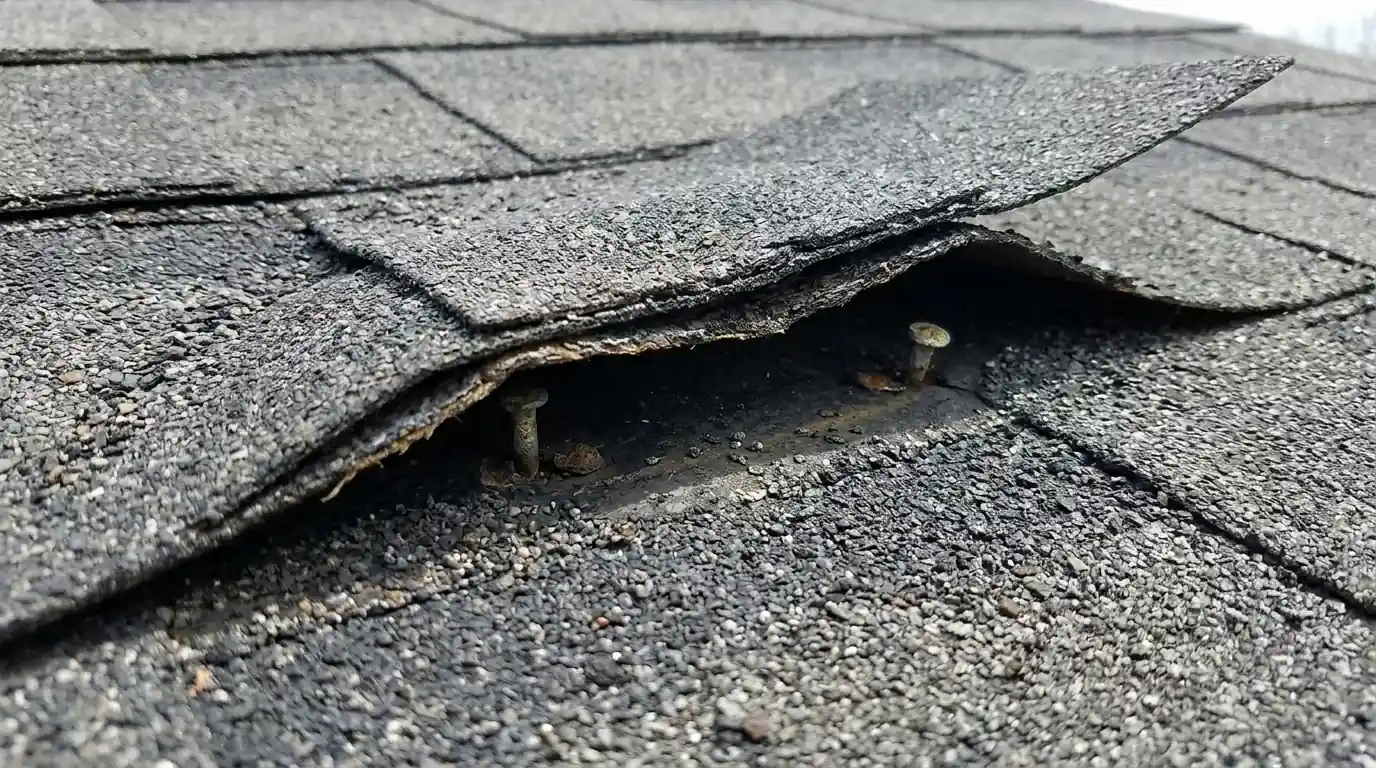
A heavy, well-installed tarp usually holds for 60 to 90 days of normal weather. UV light slowly breaks down the plastic, and every windstorm tests the battens. After about three months, most tarps start to fray at the edges or develop pinholes, and summer sun can shorten that. Winter is easier on the plastic but harder on the battens, since ice and snow load add weight and freeze-thaw cycles can loosen screws in the deck.
While a tarp is on your roof, keep an eye on it after strong winds. Look for flapping edges, a sagging middle that collects water, or a batten that has come loose. Check the ceiling below the tarped area after heavy rain. If anything changes, give us a call and we'll come re-secure it. Leaving a failing tarp in place can trap moisture against the deck and lead to mold or rot that adds to the final repair.
Tarping after Dayton storms: tree canopy, steep pitches and long waits
The Miami Valley's older neighborhoods are both beautiful and hard on tarps. In Oakwood and Walnut Hills, many homes from the 1910s through the 1930s have steep main roofs, dormers and slate or clay tile, along with mature oaks and maples overhead. Tarping those roofs safely takes roof hooks, careful batten placement and more time than a ranch house would need.
After a widespread storm, the wait for permanent repairs can stretch for weeks because every crew and supply house is busy at once. That happened across the region after the Memorial Day 2019 tornadoes, when blue tarps stayed on roofs well into the summer. A tarp installed with battens and a ridge wrap holds through that kind of wait. In river towns like Miamisburg, where hillside lots and older homes along the Great Miami River make access tricky, we plan ladder placement before we arrive so the cover goes on safely in one trip.
Where we do emergency roof tarping most often
These neighborhoods, suburbs and cities make up most of our emergency roof tarping calls. Each link opens the local page with its ZIP.
Questions about emergency roof tarping in Dayton
How quickly can your crew tarp a roof in Dayton once I call?
On a normal day, we can often have a crew on site within a few hours, and usually the same day. After a widespread storm, we work active leaks and open roofs first, so a damaged roof that isn't leaking may wait until the next morning. A person answers 24/7 and will give you a realistic arrival window when you call.
How long can a tarp stay on my roof before it starts causing problems?
Plan on 60 to 90 days for a heavy, battened tarp. Past that, sunlight weakens the plastic, edges start to fray, and small holes can let water collect underneath. A tarp left on for many months can trap moisture against the deck. If your permanent repair is delayed, we can check the tarp and replace it rather than letting it fail.
Do the battens and screws used for tarping damage my shingles?
They leave small screw holes, which get sealed or replaced during the permanent repair. That's far less damage than a tarp torn loose by wind or nails ripped through shingles. Where possible, we place battens in the area that will be reshingled anyway, and we note every fastener location in the photo report so nothing is missed later.
Will my insurer pay for tarping before the claim is settled?
Most homeowners policies expect you to take reasonable steps to prevent further damage after a covered loss, and tarping is the standard example. Many insurers reimburse that cost as part of the claim, though policies differ. Keep our invoice and photos, and tell your adjuster the roof was tarped. Our insurance claim inspection can document the rest of the damage.
Is it a good idea to tarp my own roof to save money?
We'd advise against it, especially on a wet or steep roof. Falls during DIY tarping are a common storm injury. If you must protect the house before we arrive, work from inside: catch water in the attic and move belongings. A tarp held down with a few nails or bricks is also likely to tear loose in the next wind and cause more damage.
Can you tarp around a fallen tree limb still lying on the roof?
Only once the limb is safely removed or stabilized. Tarping around a large limb leaves gaps where water runs in, and a shifting limb can tear the tarp. Small limbs we remove ourselves. Large limbs or trunks need a tree service first, and our tree damage roof repair page explains how we coordinate the timing.
Other roofing work that often goes with this job
Emergency Roof Repair
Roof Repair & Storm Damage
See emergency roof repairTree Damage Roof Repair
Roof Repair & Storm Damage
See tree damage roof repairStorm Damage Roof Repair
Roof Repair & Storm Damage
See storm damage roof repairInsurance Claim Roof Inspection
Inspections, Ventilation & Skylights
See insurance claim roof inspection
Product lines we install on roofs around Dayton include shingles from GAF, Owens Corning and CertainTeed, metal from Englert, membranes from Carlisle SynTec and skylights from VELUX.
Need emergency roof tarping today?
Call any hour. A person answers, asks a few questions and sets a time for a roofer to come out.