Hail Damage Roof Repair in Dayton, OH
Hail damage hides in plain sight. We check every slope for bruised shingles, granule loss and dented vents, chalk test squares the way adjusters count them, and send you a photo report the same day.
- Answered 24/7
- Photo report on every visit
- Dayton and the Miami Valley
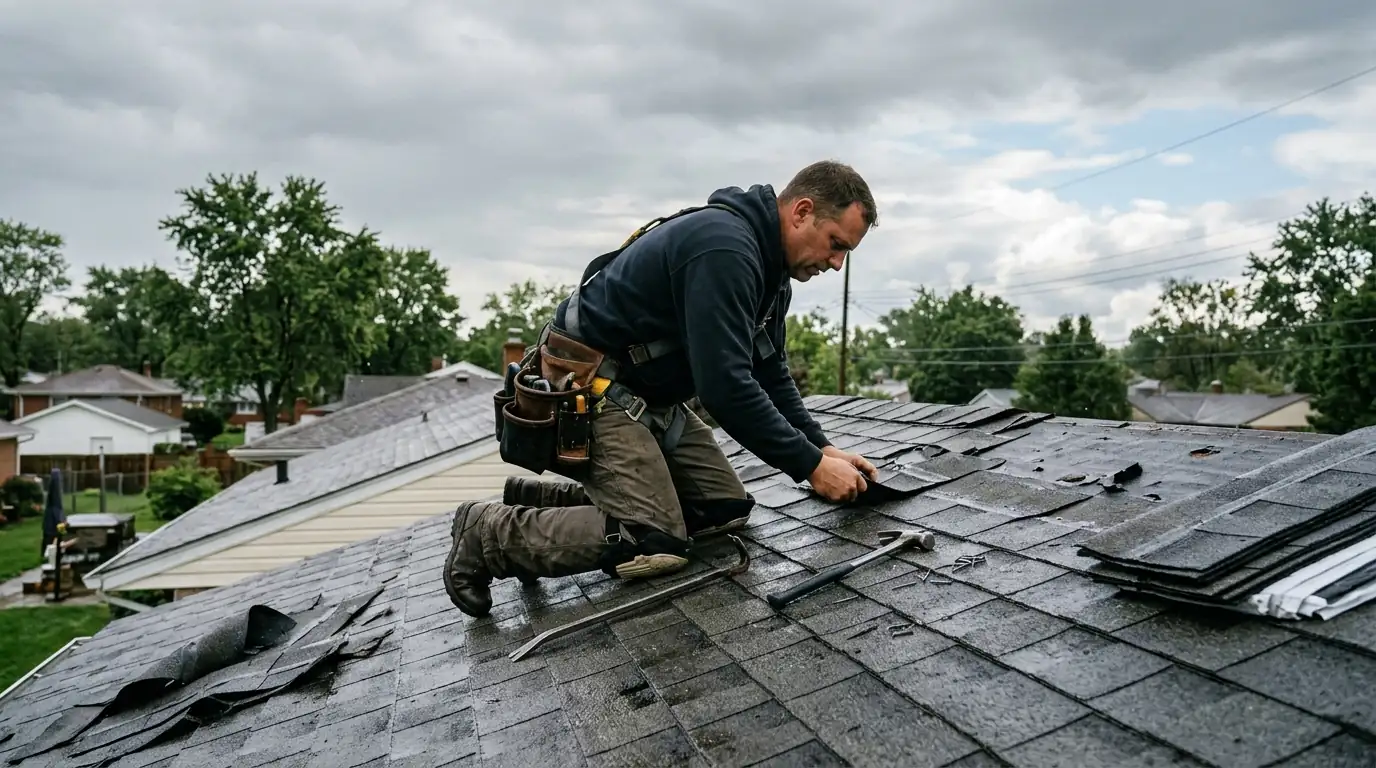
Hail repair in the Dayton area runs from $85 to $245 per dented vent or cap, to $2,940 to $6,180 for replacing a damaged slope, to roughly $12,380 to $21,760 for a full architectural shingle roof when damage covers most slopes. Most hail work runs through insurance, so the inspection, test squares and photo documentation matter as much as the repair.
Hail rarely leaves a dramatic hole. What it does is quieter: it bruises the shingle, cracks the fiberglass mat underneath, and knocks loose the granules that shield the asphalt from sunlight. From the driveway, the roof can look exactly the same as it did the day before. Six months later, those bruises have lost their granules, the asphalt is baking in the sun, and the first leaks start showing up after a hard rain.
That delay is why hail inspections need a trained eye and a methodical approach. Our crew works slope by slope, looking for the soft, dark spots that give under thumb pressure, the circular granule loss pattern, and the dents on vents, flashing and gutters that confirm hail size and direction. We document all of it so your adjuster can see exactly what we found. If the storm also brought wind or a fallen limb, our insurance claim roof inspection covers the whole property in one visit.
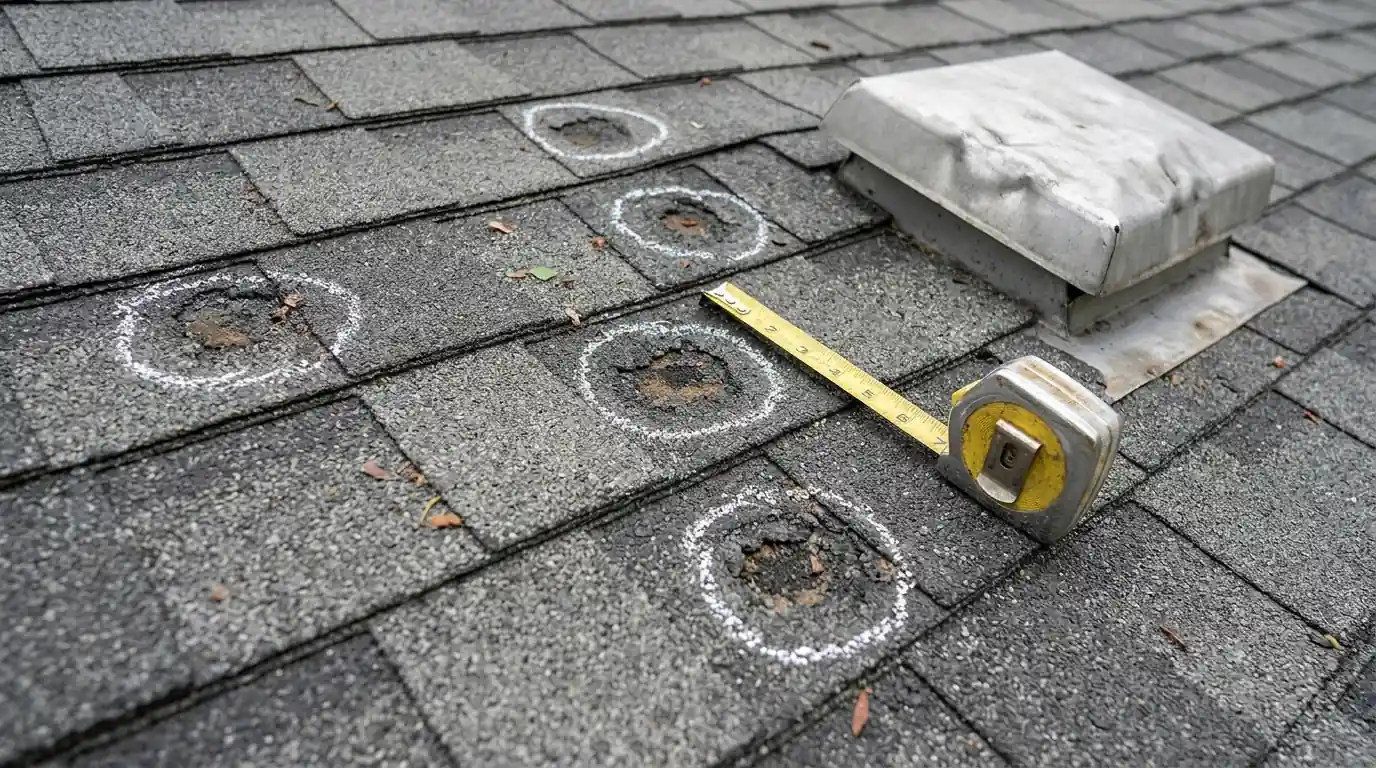
How hail damage shows up on Dayton shingles, gutters and vents
Some of these are visible from the ground; others need someone on the roof. Together they tell the story an adjuster needs to see.
Dark, round spots on shingles
Hail knocks granules off in roughly circular patches, exposing black asphalt. Fresh hits look shiny; older ones dull over a few months.
Soft bruises under thumb pressure
A hailstone can fracture the mat without breaking the surface. The spot feels spongy, like a bruise on an apple, and fails sooner than the rest of the shingle.
Dented gutters, downspouts and vent caps
Aluminum and thin steel show hail hits as clean round dents. Their size and spacing tell us how big the stones were.
Spatter marks on siding, decks and fences
Hail strips oxidation and dirt off surfaces, leaving fresh light spots. These fade within weeks, so photograph them early.
Heavy granule wash at downspouts
A thick pile of granules after one storm, more than the usual sprinkle, often means hail knocked them loose across the roof.
Cracked skylight domes or chipped ridge caps
Brittle plastic domes and the folded ridge shingles crack under impacts that the field shingles might survive.
How we inspect a roof for hail, one test square at a time
Hail inspection follows a consistent method, because insurers evaluate it the same way. Here's what our roofers do on a hail call.
Read the soft metals first
We start with gutters, downspouts, vent caps, flashing and the AC condenser. Dents on soft metal establish that hail fell, how large it was and which direction it came from.
Mark test squares on each slope
On every slope, we chalk a 10-by-10-foot square and count the hits inside it. Insurers commonly use this count to decide whether a slope is damaged enough to replace.
Check each hit by touch
A true hail bruise feels soft and shows a fractured mat. Blisters, scuffs from foot traffic and manufacturing flaws look similar but feel different, and we note which is which.
Photograph with chalk circles and a scale
Every confirmed hit inside a test square gets a chalk circle and a close-up next to a tape measure. Wide shots show the square's location on the roof.
Inspect the attic and skylights
We look for fresh water entry and check skylight domes and flashing for cracks. Any interior damage goes into the same report.
Deliver the report and plan the repair
You get the full photo set, hit counts by slope, and our honest read on whether this is a repair or a replacement claim. Then we schedule the work once the claim is settled.
Hail damage roof repair and replacement prices in the Dayton area
Hail work ranges from swapping a few dented vents to a full new roof. These are typical figures on Dayton-area homes before insurance.
| Job | Typical range | What it covers |
|---|---|---|
| Hail inspection with test squares and photo report | $165 to $315 | Every slope, soft metals, attic, hit counts and photos |
| Soft metal replacement | $85 to $245 | Per vent cap, box vent or pipe jack, installed and sealed |
| Single slope replacement | $2,940 to $6,180 | Tear-off and reshingle of one slope with new underlayment |
| Full architectural shingle replacement | $12,380 to $21,760 | Typical Dayton home, tear-off, underlayment, shingles, vents |
| Full replacement with impact-resistant shingles | $14,350 to $25,860 | Class 4 rated shingles in place of standard laminates |
Ranges are typical for Dayton-area homes in 2026, not quotes; your price depends on roof size, materials and the approved claim scope. See more on our Dayton roofing price guide.
- Hits per test squareThe count on each slope often decides whether an insurer approves a slope repair or a full replacement.
- Shingle age and typeOlder, more brittle shingles bruise and crack from smaller hail than a newer roof would.
- Roof size and pitchLarger and steeper roofs need more material and more labor per square, especially above an 8/12 pitch.
- Matching on partial repairsIf the original shingle is discontinued, repairing only one slope can leave a visible mismatch.
- Your deductible structurePercentage deductibles for wind and hail can leave a larger share with you than a flat-dollar deductible would.
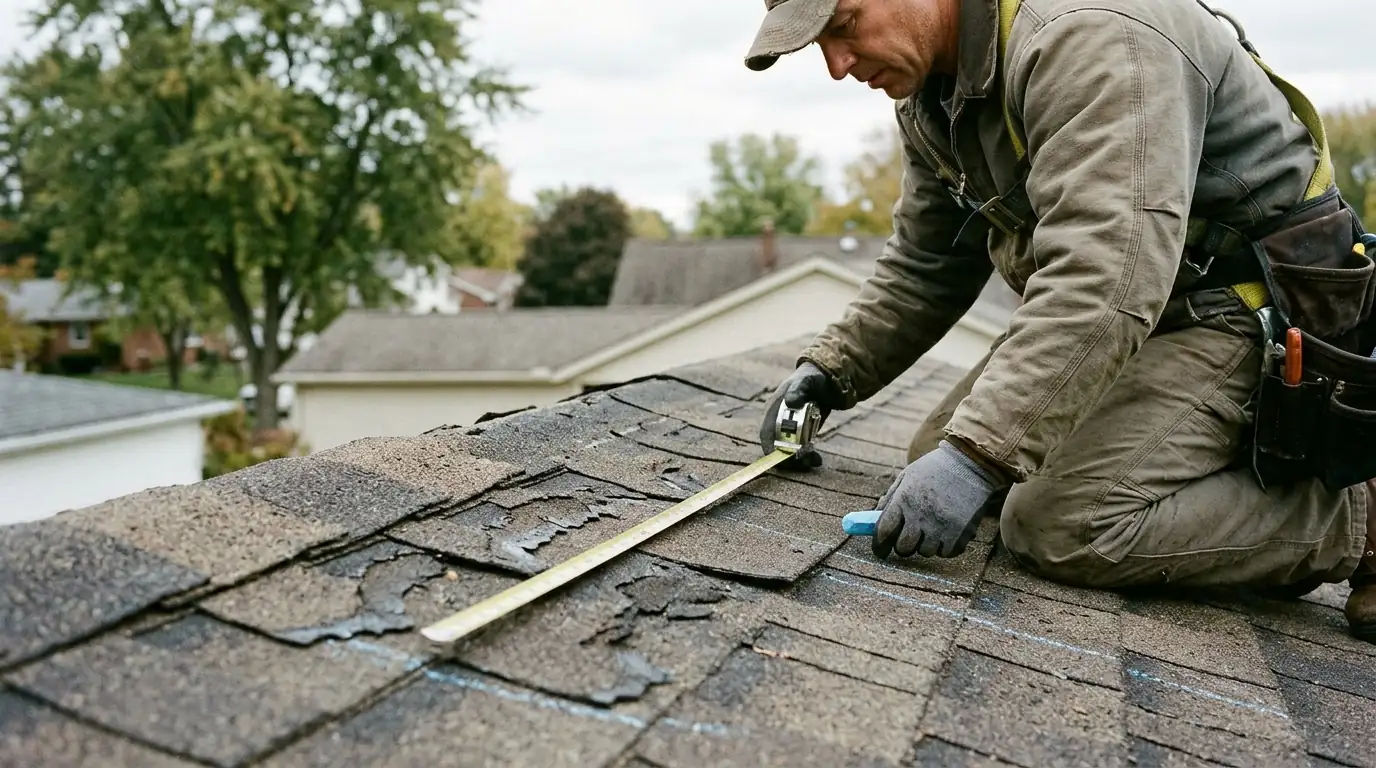
Bruises, cracks and granule loss: what counts as real hail damage
Adjusters separate functional damage, which shortens the roof's life or lets water in, from cosmetic marks that don't. On asphalt shingles, a bruise that fractured the mat is functional. So is a hit that knocked granules down to the asphalt, because that spot will degrade in the sun much faster than the shingle around it.
What doesn't count is just as important to know. Blisters from manufacturing or poor attic ventilation, scuffs from foot traffic, and general granule wear from age can all look like hail at a glance. We separate them in our notes so the claim rests on solid evidence. Our article on how Dayton hail season damages shingles has photos of each type.
- Functional: fractured mat, granule loss to the asphalt, cracked or broken shingles, punctured vents
- Usually cosmetic: small dents in thick metal panels, shallow marks with granules intact
- Not hail: blisters, foot scuffs, age wear, algae streaks
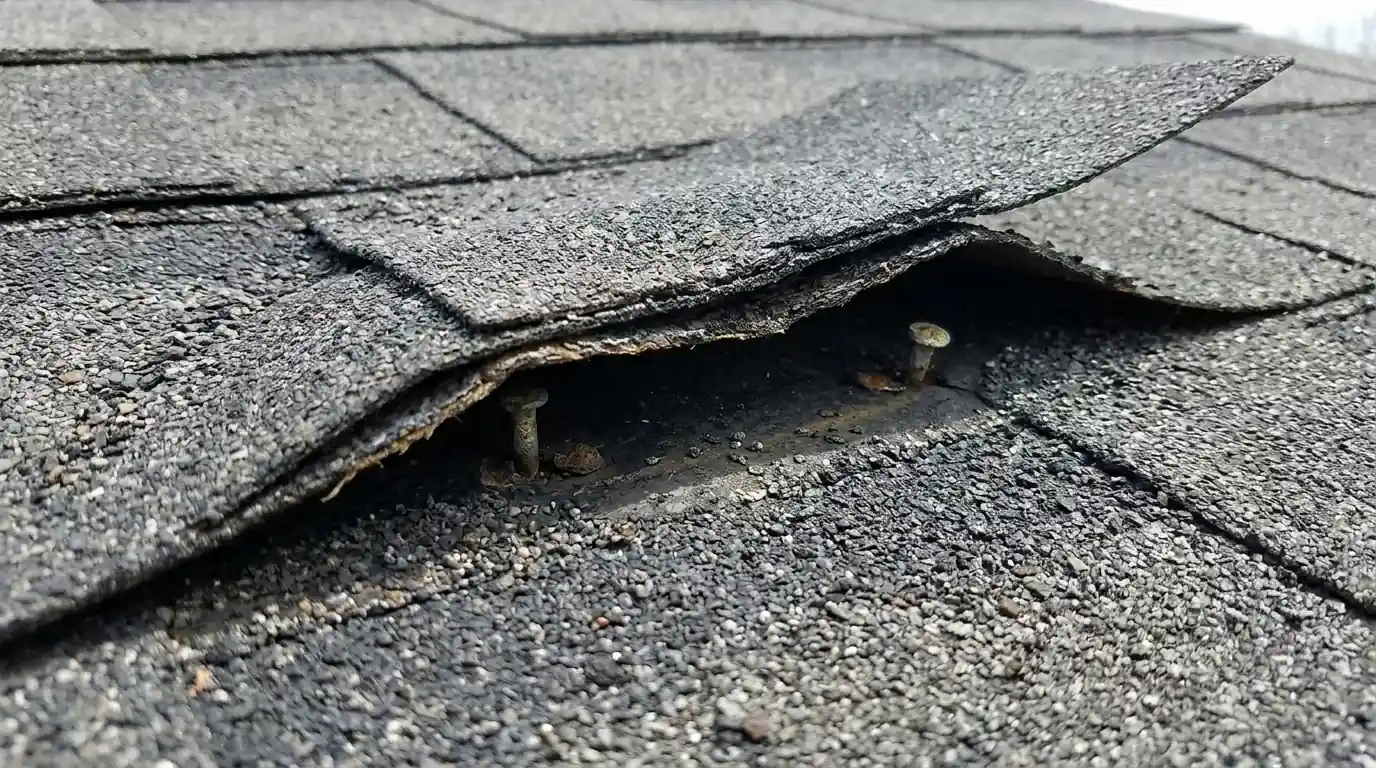
Should you upgrade to impact-resistant shingles after a hail claim?
When hail forces a full replacement, it's a natural time to ask whether a tougher shingle makes sense. Impact-resistant shingles carry a Class 4 rating under the UL 2218 test, which drops steel balls onto the shingle to simulate hail. They use a rubberized asphalt or reinforced mat that flexes instead of cracking.
The upgrade usually costs more than a standard architectural shingle, and insurers typically pay for like-kind replacement, not the upgrade. Some insurers offer a premium discount for Class 4 roofs, but that varies widely by company, so ask your agent before deciding. For a home on a street that has been hit more than once, the extra cost can be worth it. For a house you plan to sell next year, it may not be. We'll lay out both prices side by side. Either way, the new roof gets the same tear-off, underlayment and flashing work; only the shingle itself changes.
Hail season across the Miami Valley, and the roofs it finds
Most Dayton-area hail falls between April and July, when warm, humid air meets cold fronts crossing from Indiana. Hail paths are narrow. One subdivision can take golf-ball stones while the next one over sees only rain, which is why neighbors on the same street sometimes have very different claims.
The roofs that suffer most are the large, multi-slope roofs on newer homes in Centerville, Springboro and Fairborn, where a single storm can damage many squares of shingle at once, along with older roofs anywhere in the region whose shingles have already gone brittle. Many 1990s and 2000s subdivisions also used similar builder-grade shingles that are now discontinued, which makes matching a partial repair harder. Skylights, aluminum gutters and box vents on these homes take a beating too. If your neighborhood had hail, a quick inspection within the first few weeks gives you the clearest evidence, before spatter marks fade and fresh hits weather over.
Where we do hail damage roof repair most often
These neighborhoods, suburbs and cities make up most of our hail damage roof repair calls. Each link opens the local page with its ZIP.
Questions about hail damage roof repair in Dayton
What size hail is big enough to damage asphalt shingles?
As a general rule, hail around one inch across, about the size of a quarter, starts causing functional damage to typical architectural shingles. Older, brittle shingles can be damaged by smaller stones, and wind-driven hail hits harder than hail falling straight down. Smaller hail can still dent gutters and vents. The size of dents on soft metals helps us confirm what fell on your roof.
Why does my roof look fine from the ground after a hailstorm?
Because most hail damage is a bruise, not a hole. The granules may be knocked loose in a small circle and the mat cracked underneath, but from 30 feet away the shingle color looks the same. The damage becomes visible as granules wash off over the following months. A close inspection on the roof is the only reliable way to know.
Can hail damage cause roof leaks months after the storm?
Yes. A bruised shingle with a fractured mat can hold for a while, then crack through after a few freeze-thaw cycles. Spots that lost their granules let sunlight break down the asphalt faster. The leak may show up the next spring, long after you've forgotten the storm, which is why documenting damage early helps tie it to the right event.
Do dented gutters prove my shingles have hail damage too?
Not by themselves, but they're strong supporting evidence. Gutter dents confirm that hail fell and show its size and direction. Shingles are tougher than thin aluminum, though, so an adjuster still looks for hits on the roof itself. We document both, and if the gutters need work we can handle gutter repair as part of the same claim.
Will my insurance pay to match shingles on slopes the hail didn't damage?
That depends on your policy and your insurer's approach to matching. When the original shingle is discontinued and a repair would leave an obvious mismatch, some insurers extend the scope to adjacent slopes or the whole roof. Others don't. We document shingle identification and availability so you can raise the question with your adjuster with the facts in hand.
Is a hail dent in a metal roof covered as damage?
It depends on whether the dent affects function. A puncture, split seam or bent panel that lets water in is functional damage. Small dents that only change appearance are often treated as cosmetic, and some Ohio policies include a cosmetic damage exclusion for metal roofs. Check your declarations page for that language before you file.
Other roofing work that often goes with this job
Impact-Resistant Shingles
Roof Replacement & New Roofs
See impact-resistant shinglesInsurance Claim Roof Inspection
Inspections, Ventilation & Skylights
See insurance claim roof inspectionStorm Damage Roof Repair
Roof Repair & Storm Damage
See storm damage roof repairSkylight Repair
Inspections, Ventilation & Skylights
See skylight repair
Product lines we install on roofs around Dayton include shingles from GAF, Owens Corning and CertainTeed, metal from Englert, membranes from Carlisle SynTec and skylights from VELUX.
Need hail damage roof repair today?
Call any hour. A person answers, asks a few questions and sets a time for a roofer to come out.