Historic and Flat Roof Repair in the Oregon District, Dayton (45402)
In the Oregon District (45402), we repair slate and shingle roofs on 1800s homes and the flat, parapet-walled roofs over E 5th St storefronts and rear additions, starting with a walk of every roof surface and a photo report.
- ZIP 45402
- Answered 24/7
- Montgomery County
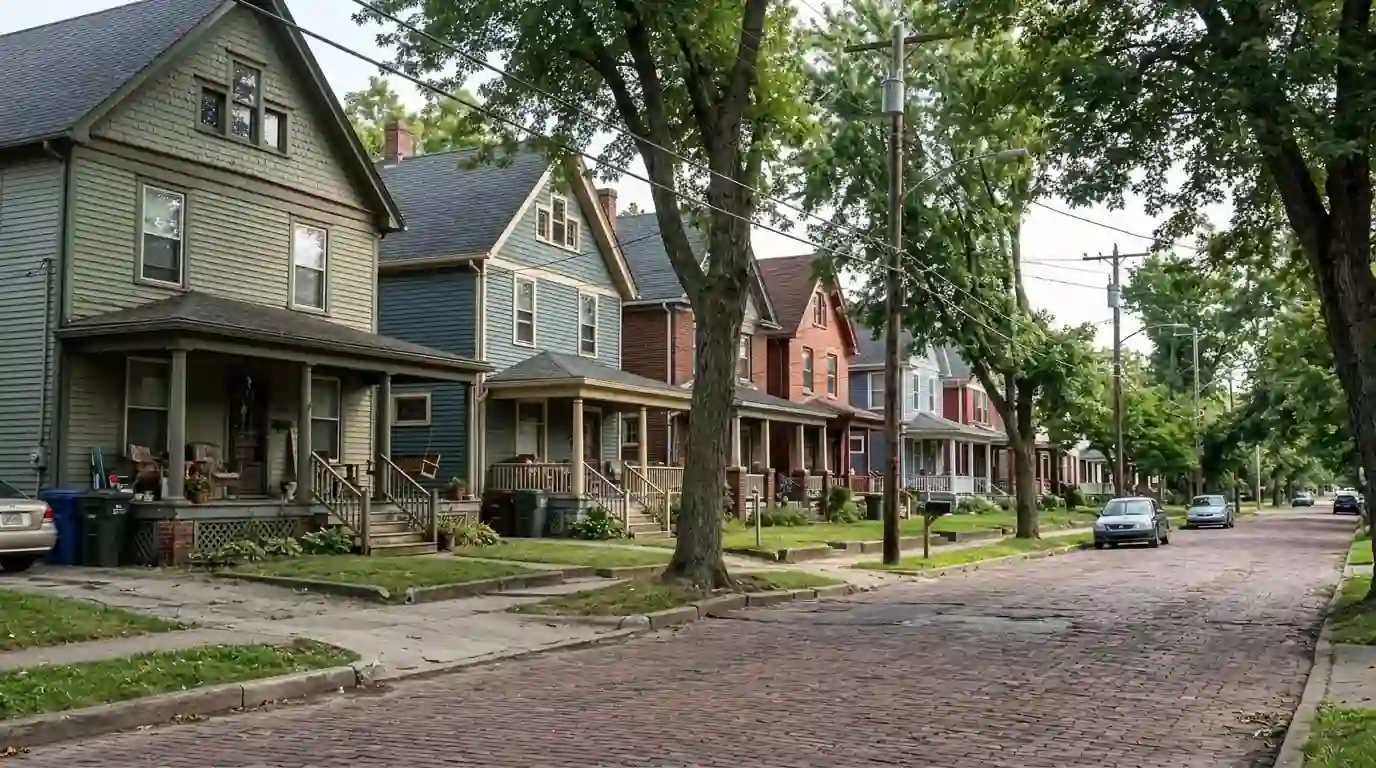
Flat roof repairs on Oregon District rowhouses and storefronts usually cost $465 to $1,890 for patching seams, flashing and parapet joints, while full membrane replacement on a small rear roof often runs $5,630 to $12,470. Slate or shingle repairs on the steep front slopes fall in a separate range. These are typical Dayton-area figures, and we price your building after an inspection.
The Oregon District is one of Dayton's oldest neighborhoods, a compact grid of streets just southeast of downtown with E 5th St running through its commercial heart. The homes date mostly to the 1800s: Federal and Greek Revival townhouses, Italianate brick rows, and later Queen Anne houses with more ornament. Many sit wall to wall, sharing a party wall and a roofline with their neighbors. Along E 5th St, the storefronts and mixed-use buildings carry flat or nearly flat roofs tucked behind brick parapets, with restaurants, bars and apartments below them.
That mix means most buildings here have at least two roofs: a pitched front slope you can see from the sidewalk and a low-slope section in back that almost nobody looks at. The back section usually causes the trouble. Water ponds behind a parapet, the coping lets moisture into the brick, and a scupper clogs with leaves. We repair low-slope roofs with EPDM, modified bitumen or TPO depending on what's there and how the building drains. If you own or manage one of the commercial buildings, our page on commercial roof repair covers how we schedule around businesses.
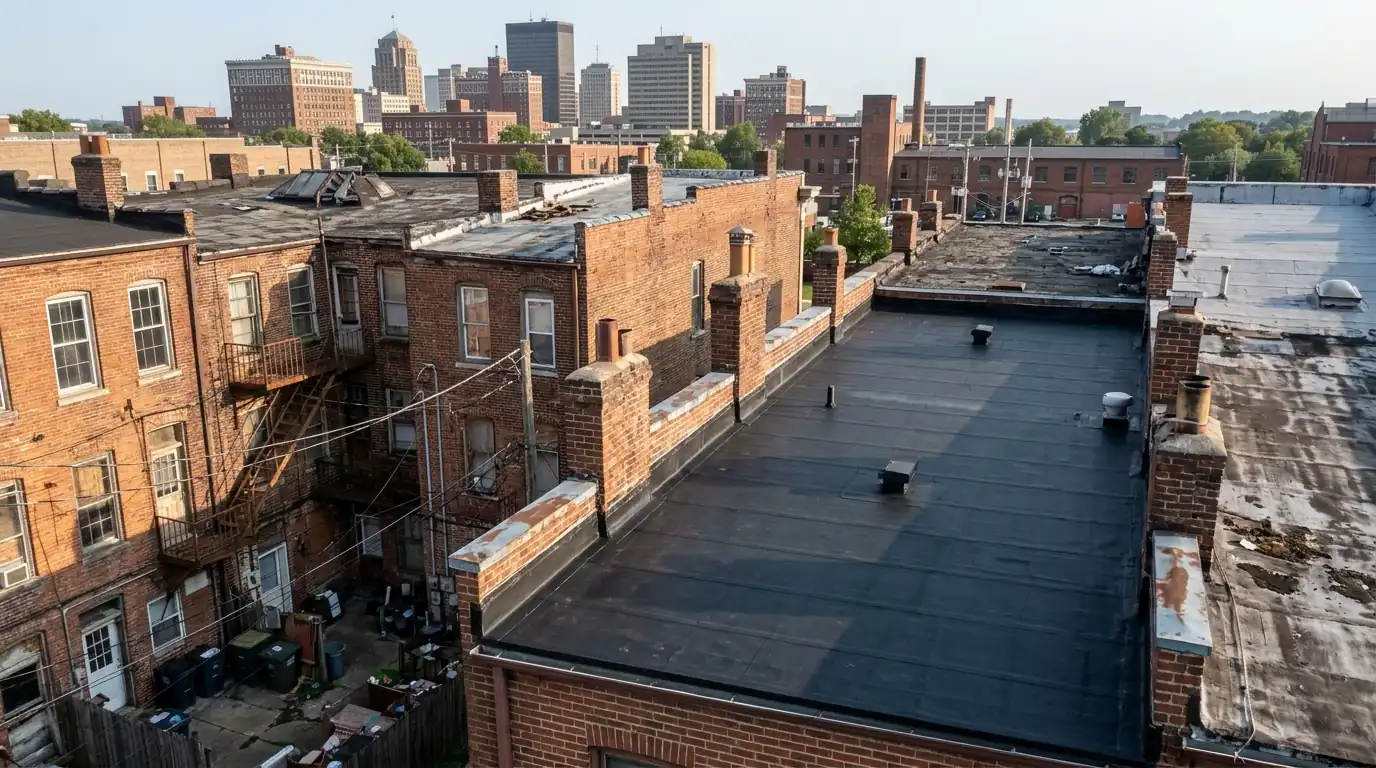
Rowhouses, parapets and party walls in the Oregon District
Attached rowhouses bring a roofing problem detached houses don't have: the joint between your roof and your neighbor's. When one owner reroofs and the other doesn't, the flashing at the shared wall becomes the weak link. We tie new work into the adjoining roof carefully and photograph the condition of the neighbor's side so everyone knows where things stand. On the front slopes, slate and standing seam tin survive on some houses, while others have shingles over the original boards. The same 1800s housing continues east into St. Anne's Hill.
Parapet walls deserve their own attention. The brick or stone caps on top, called coping, crack and lose mortar over time, and water then runs down inside the wall and appears as a stain on an interior wall a floor below. The base of the parapet, where the flat roof turns up the wall, needs a proper membrane flashing and a metal counterflashing set into the mortar. Many older repairs used tar and fabric that has long since dried out. We also check the scuppers and downspouts that carry water off these roofs, since a single clog can turn a small roof into a shallow pond.
Ponding water and winter freeze on low-slope roofs near E 5th St
Low-slope roofs don't shed water the way a steep roof does, so every heavy summer rain tests their drainage. Water that sits more than a couple of days ages the membrane faster and finds any open seam. In winter, ponded water freezes, and the ice expands against seams and flashing, especially along the base of a parapet. Spring thaws then push meltwater through whatever opened up. Our article on flat roof options for commercial buildings explains how different membranes hold up to that cycle.
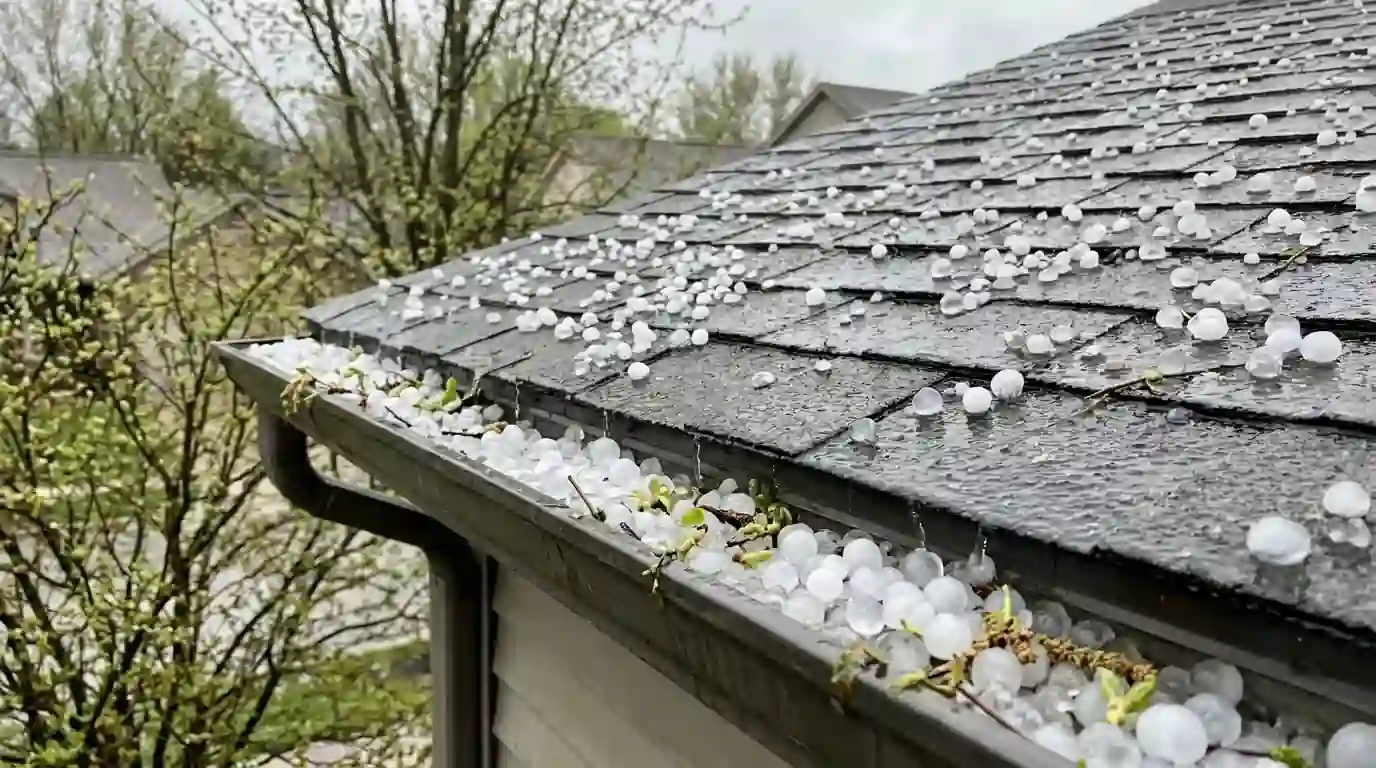
Roof repairs Oregon District homes and storefronts need
The requests here split between historic front slopes and the flat roofs behind them, with flashing tying the two together.
Flat Roof Repair
Rear additions and rowhouse back roofs pond water and open at seams after a few freeze-thaw winters.
See flat roof repairModified Bitumen Roofing
Many low-slope sections were originally rolled roofing, and modified bitumen is a durable replacement that suits them.
See modified bitumen roofingEPDM Rubber Roofing
EPDM tolerates standing water better than rolled roofing, which makes it a common pick behind parapets.
See epdm rubber roofingCommercial Roof Repair
Storefronts and mixed-use buildings along E 5th St need repairs scheduled around restaurants and tenants.
See commercial roof repairRoof Flashing Repair
Parapet bases and party walls between rowhouses are where most leaks in the district actually start.
See roof flashing repairSlate Roof Repair & Restoration
Front slopes on some 1800s homes still carry slate that can be repaired piece by piece.
See slate roof repair & restoration
A few blocks from our office: Oregon District visits
From 40 N Main St, the Oregon District is barely a drive at all: over to E 5th St and east past the edge of downtown. The tighter challenge is access, with narrow streets, alleys, parked cars and businesses that need their doors open. We plan ladder placement and material drop-off before we arrive. A person answers your call any hour, and for leaks we get a temporary seal on that day when we can. For planned repairs, our crew lead walks every roof surface, including the hidden back sections, and sends you a photo report with a scope and prices. See all roofing services if you're planning more than one project.
Areas near Oregon District we also cover
Roofing questions from Oregon District
Who pays when the leak is at the party wall between two Oregon District rowhouses?
That depends on where the water is getting in and on any agreement between the owners, so we can't settle it for you. What we can do is document it. We photograph both sides of the joint, note which roof's flashing has failed, and give each owner a clear write-up. Often neighbors split the cost of a shared repair because fixing only one side rarely holds.
How do you get roofing materials onto a flat roof behind a parapet on E 5th St?
Usually by ladder or a material hoist from the alley side, and on some buildings by carrying through a roof hatch. We look at access during the inspection and plan around delivery times, parking and any business hours below. For bigger jobs, we may need a short-term permit for a lift or dumpster on the street, which we sort out before work begins.
What roof problems do kitchen exhaust fans cause on Oregon District restaurant buildings?
Grease from kitchen exhaust settles on the roof around the fan and breaks down many membranes, leaving soft, blistered spots that eventually leak. Heat from the unit adds stress too. We look for that damage on every restaurant roof, repair the affected membrane, and recommend a grease containment pad or tray under the fan. Most of that work happens without interrupting service below.
Why does my Oregon District townhouse leak on an inside wall when it rains?
When water shows up on an interior wall rather than the ceiling, the parapet or party wall is a likely source. Cracked coping or a dried-out base flashing lets water into the brick, and it travels down inside the wall. We check the coping, mortar joints and flashing from the roof side and photograph what we find, so you know whether you need a roofing fix or a masonry one.
Roof trouble in Oregon District?
Call any hour and tell us your street. We will give you a time window before we hang up.