Silicone Roof Coating in Dayton, OH to Extend a Sound Roof
We apply silicone coatings to aging metal, single-ply and modified bitumen roofs that are still mostly dry. Every coating job starts with a moisture survey and adhesion test, and a person answers our phone 24/7.
- Answered 24/7
- Photo report on every visit
- Dayton and the Miami Valley
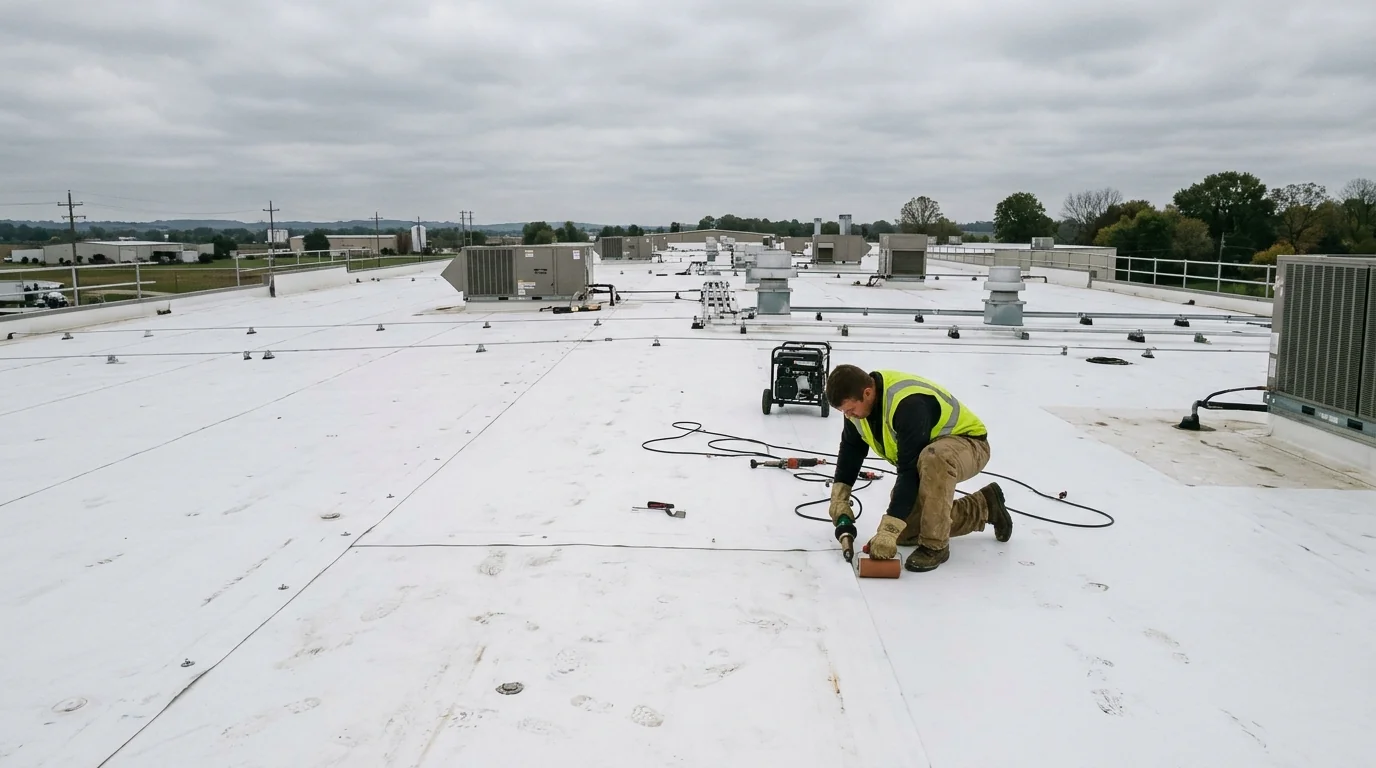
Silicone roof coating in the Dayton area typically costs $3.15 to $5.85 per square foot over sound single-ply or modified bitumen roofs, and $3.65 to $6.45 on metal roofs that need fastener and seam treatment. The work includes cleaning, repairs, seam reinforcement and a fluid-applied silicone layer. Coatings only make sense when the existing roof is largely dry and structurally sound.
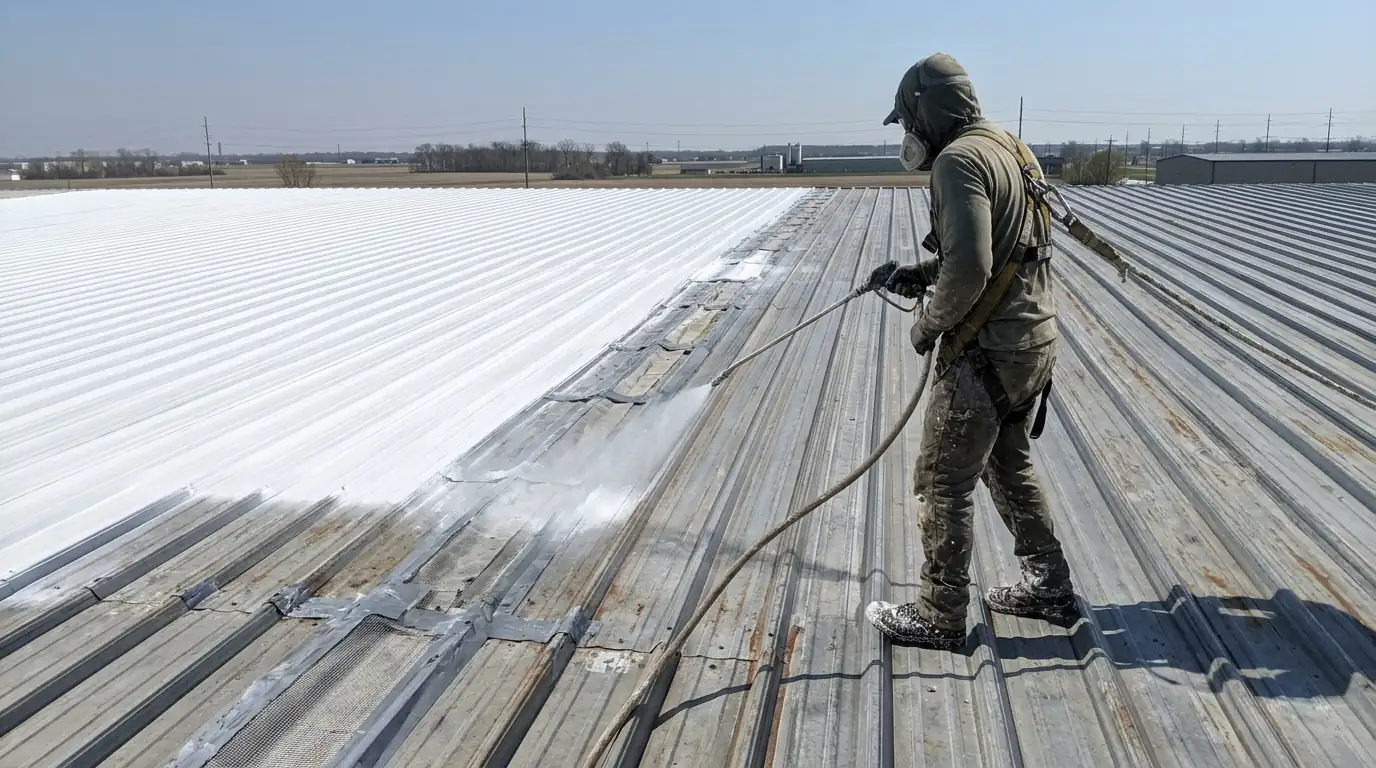
A silicone coating is a liquid-applied membrane sprayed or rolled over an existing roof. Once cured, it creates a continuous, flexible, white surface that sheds water, reflects sunlight and protects the old roof from UV. For many low-slope commercial and residential roofs that are worn but not wet, coating can push back a full tear-off by years at a fraction of replacement cost. It also keeps the old roof out of the landfill and avoids opening the building to the weather during a tear-off, which matters to owners with tenants or equipment below.
The catch is that coating only works on the right roof. Silicone doesn't fix wet insulation, rotted deck or a roof that's already failing structurally. It bonds to the existing surface, so if that surface is dirty, chalky or coming apart, the coating will fail with it. That's why every project starts with a moisture survey, test cores and an adhesion test patch. If the roof isn't a good candidate, we'll tell you plainly and explain what makes more sense.
Is your roof a good candidate for a silicone restoration?
These are the conditions we look for before recommending silicone over repair or replacement.
Mostly dry insulation
Moisture surveys should show only small, isolated wet areas that can be cut out and replaced before coating.
Sound deck and structure
Soft decking, rusted-through steel or sagging framing need repair or replacement, not coating.
Surface aging but still attached
Chalky TPO, weathered EPDM, granule loss on modified bitumen and rusting metal can often be cleaned, primed and coated.
Ponding in a few areas
Silicone tolerates standing water better than acrylic coatings, though severe ponding should still be corrected.
Leaks at seams and fasteners
Metal roofs with loose fasteners and seams, or single-ply roofs with seam wear, benefit from reinforced coating details.
Owners looking to defer replacement
Coating can extend service life and smooth out capital spending, particularly for strip centers, warehouses and churches.
Silicone versus acrylic coatings for Ohio low-slope roofs
Silicone and acrylic are the two most common roof coating families, and both can reflect sunlight and protect old roofs. The big difference is how they handle water. Silicone resists ponding water and doesn't break down when water sits on it, which makes it a better fit for many flat roofs in Dayton, where spring rain and snowmelt can linger in low spots.
Acrylic coatings are water-based and generally cost less, but they can soften, lose adhesion or wear faster under standing water. They're better suited to well-drained roofs with steeper slopes, like some metal buildings. Silicone does have tradeoffs. It collects dirt more readily, which can reduce reflectivity over time, it can be slippery when wet, and only silicone adheres well to silicone, so future recoats need to stay with the same chemistry. We'll explain which coating fits your roof and why, rather than defaulting to one product for every building.
- Silicone: best for ponding-prone roofs, high UV and long-term weathering
- Acrylic: lower cost, best on well-drained roofs and some metal buildings
- Either way: preparation and adhesion testing decide the outcome
When a coating is the wrong answer for your roof
Coatings are often oversold as a cure-all, and we won't recommend one when it won't last. If moisture surveys show widespread wet insulation, a coating traps that moisture and can blister or let go. If the deck is soft or rusted through, coating won't restore structural strength, and the roof may fail beneath the new surface.
Roofs with severe ponding, failed drains or serious structural sagging also need corrective work first. And if a roof is nearing the end of its life across the board, the money may be better spent on a full commercial roof replacement or a residential flat roof rebuild. In those cases, we'll show you the survey data and explain the tradeoffs so you can make a clear decision. Sometimes the right plan is to repair the worst areas now, coat a sound section and schedule replacement for the rest when budgets allow. That kind of split approach is common on churches and schools with roof sections of very different ages.
How we test, prepare and coat an existing roof with silicone
Silicone coatings succeed or fail on preparation. We spend more time cleaning and repairing than spraying.
Moisture survey and cores
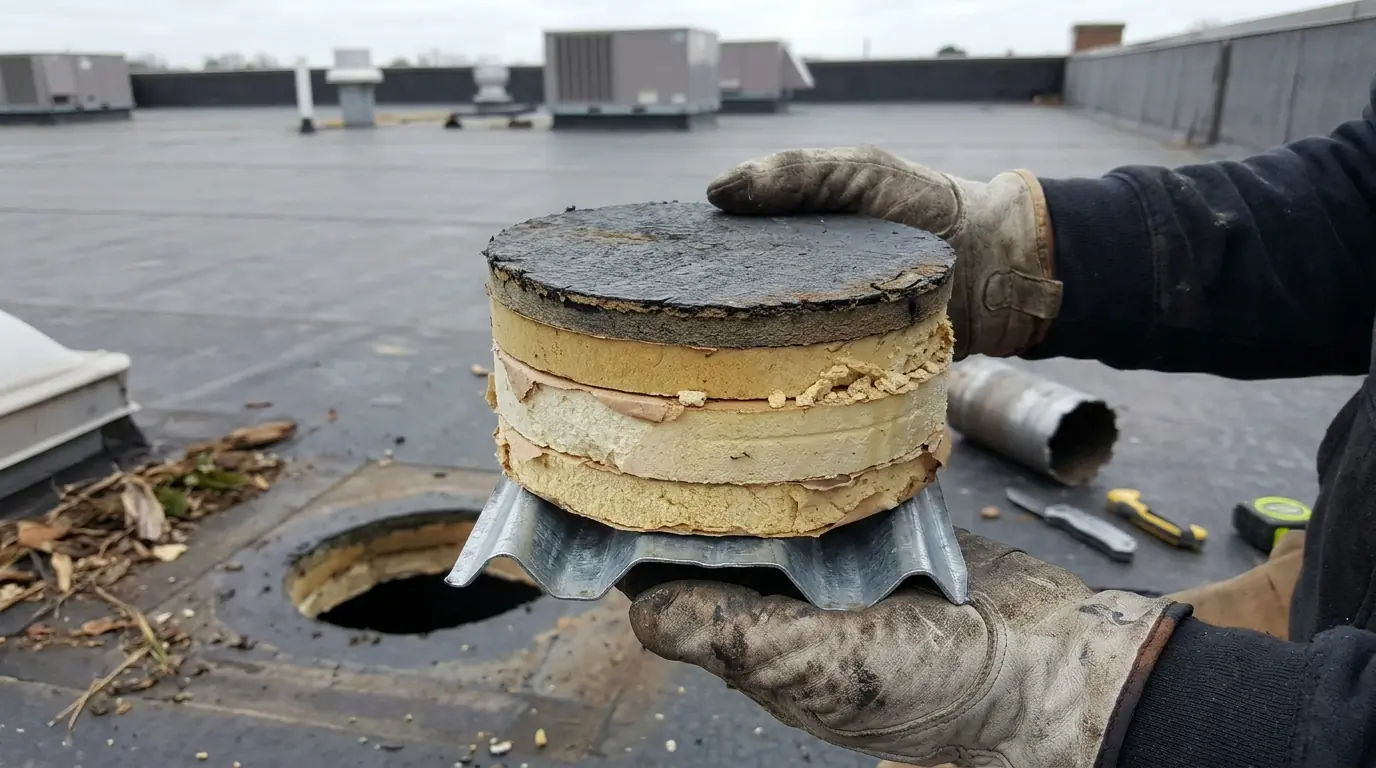
We use infrared or moisture meters and cut test cores to confirm the insulation is mostly dry. Wet areas are mapped for removal before coating.
Adhesion test patch
We clean a test area and apply sample coating, then perform a pull test after curing to confirm the silicone bonds to your roof surface.
Cleaning
The roof is power washed with appropriate cleaners to remove dirt, chalking, biological growth and loose granules. It must dry fully before coating.
Repairs and reinforcement
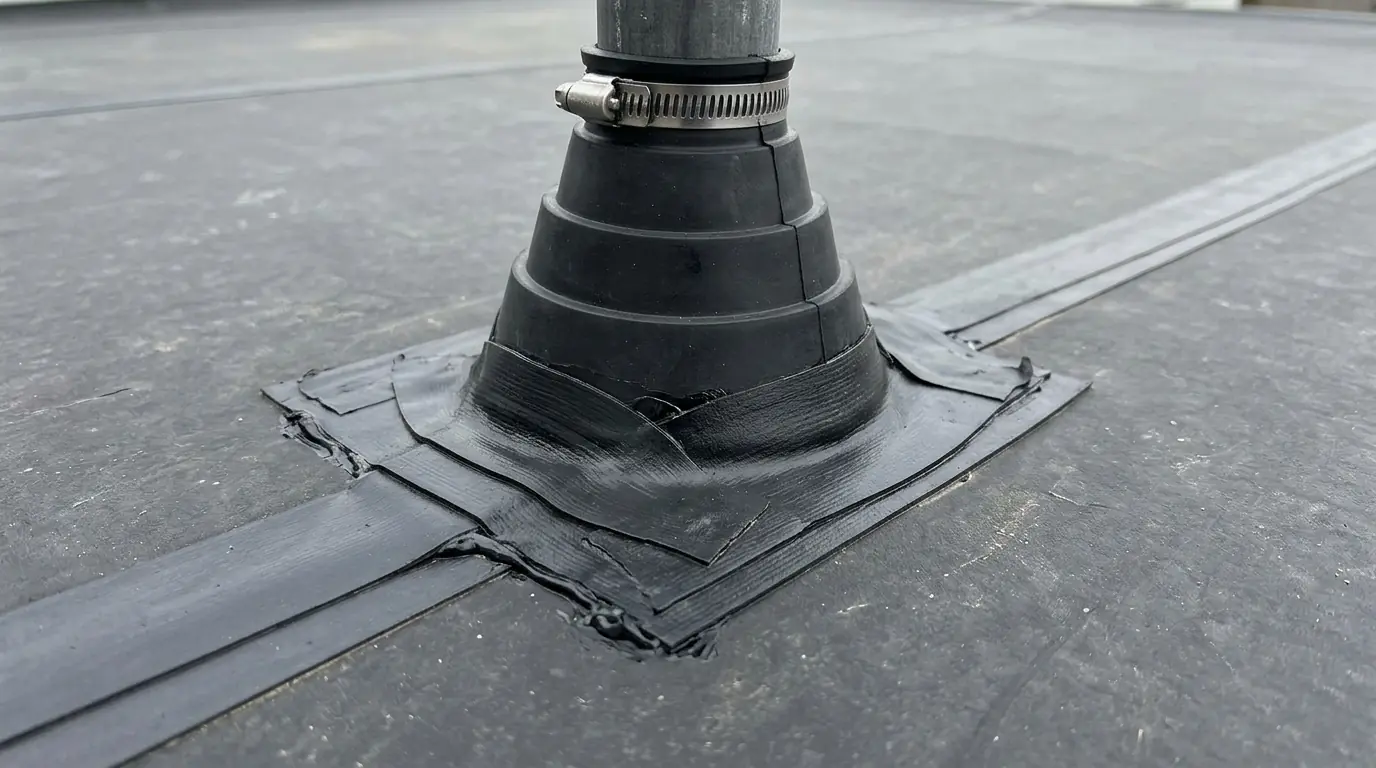
We replace wet sections, repair blisters and splits, tighten or replace metal fasteners and reinforce seams and penetrations with fabric or seam tape.
Primer where needed
Some surfaces, like EPDM or bleeding asphalt, need a primer or base coat to help adhesion and prevent discoloration.
Silicone application
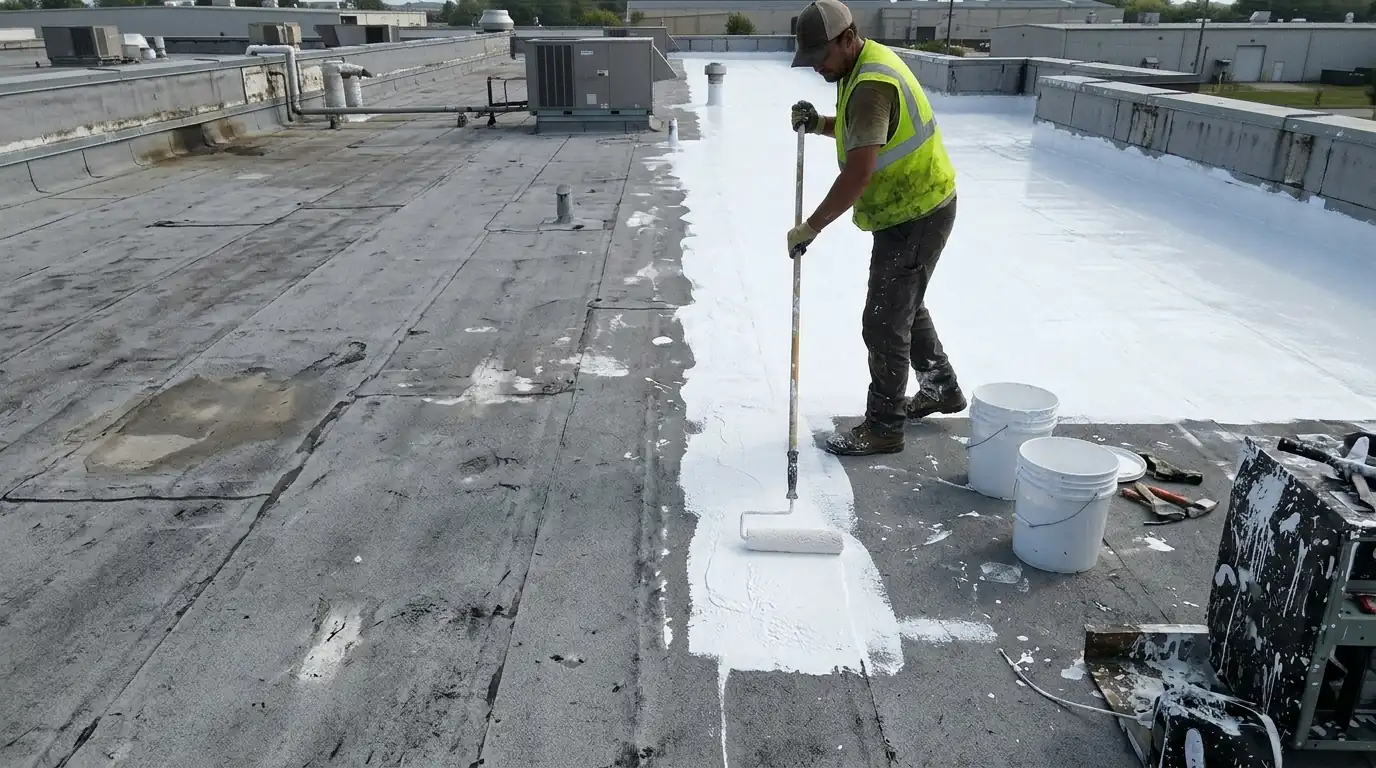
We spray or roll the silicone at the manufacturer's specified thickness, checking wet mil readings as we go, then document the finished roof with photos.
What a silicone roof coating costs compared to replacement
Typical Dayton-area ranges for silicone coating projects are below. Surface condition, repairs and required thickness drive most of the cost.
| Job | Typical range | What it covers |
|---|---|---|
| Silicone over single-ply or modified bitumen | $3.15 to $5.85 per sq ft | Cleaning, minor repairs, seam reinforcement, silicone |
| Silicone over metal roof | $3.65 to $6.45 per sq ft | Fastener and seam treatment, rust primer, silicone |
| Moisture survey and adhesion testing | $485 to $1,260 per roof | Infrared or meter survey, cores, adhesion pull test |
| Wet area removal before coating | $8.85 to $15.35 per sq ft | Remove and replace wet insulation and membrane |
| Recoat of an existing silicone roof | $1.85 to $3.35 per sq ft | Cleaning and new silicone layer over old silicone |
These are typical Dayton-area ranges for 2026, not a quote; your pricing depends on survey results, adhesion testing and the scope of repairs. See more on our Dayton roofing price guide.
- Roof surface typeMetal, EPDM, TPO, modified bitumen and built-up roofs each need different cleaning, primers and reinforcement.
- Amount of repairMore wet areas, blisters or damaged seams mean more prep work before coating.
- Coating thicknessManufacturer warranty programs often specify minimum dry mil thickness, which affects material quantity.
- Ponding areasSevere ponding may need tapered insulation or drain work before coating.
- Access and stagingTall buildings, limited staging space and sensitive surroundings affect setup and overspray control.
Silicone coatings on Miami Valley metal buildings, strip centers and churches
Metal buildings are a common coating candidate across Greene County and Miami County, from farm shops and light industrial buildings to warehouses and storage facilities. Those roofs often leak at fasteners, laps and penetrations long before the panels themselves wear out. Treating seams and fasteners with reinforced silicone details can stop those leaks and protect the panels from rust.
Strip centers, office buildings and churches with aging TPO, EPDM or modified bitumen roofs are also frequent candidates, including many low-slope buildings around West Carrollton and the I-75 corridor. Dayton's climate tests coatings hard: summer heat and UV, freeze-thaw cycles and spring storms. Silicone handles UV and ponding well, but it needs dry, mild conditions to cure, so most of our coating work happens between late spring and early fall. We also check dew point each morning, since a damp surface at sunrise can delay the start of spraying even on a clear summer day. Overspray control matters on tight commercial lots, so we mask rooftop units and watch the wind before every pass.
Where we do silicone roof coating most often
These neighborhoods, suburbs and cities make up most of our silicone roof coating calls. Each link opens the local page with its ZIP.
Questions about silicone roof coating in Dayton
Will a silicone coating stop the ponding water on our flat roof?
No. Silicone tolerates ponding water better than most coatings, but it doesn't change the roof's slope or drainage. Water will still sit in low spots. If ponding is severe, we recommend fixing drains, adding tapered insulation or correcting deck sags before coating. Coating can then protect the roof while proper drainage keeps water moving. We'll mark the worst low spots on your roof sketch so you can see where the corrective work is needed.
Can silicone be applied over a leaking metal warehouse roof?
Often, if the panels are structurally sound. We first identify the leak sources, which are usually fasteners, laps, skylights or penetrations. Those areas get cleaned, repaired and reinforced with seam tape or fabric before coating. Rust is treated with primer. If panels are badly corroded or deformed, replacement may be the better choice.
How long does silicone need to cure before a summer thunderstorm hits?
Many silicone coatings become rain-resistant within a few hours under good conditions, but full cure takes longer depending on temperature, humidity and thickness. We watch forecasts closely and schedule application when there's enough dry time. If a storm threatens, we stop work early and protect completed areas.
Can a different coating go over silicone later on?
Generally, no. Only silicone adheres well to silicone. That means future recoats should use a compatible silicone product. Planning for recoating is part of the long-term strategy, and we note the product used in your closeout report so the next crew knows exactly what's up there. The good news is that recoating an existing silicone roof is usually simpler and less expensive than the first application.
Is a silicone-coated roof slippery for our HVAC technicians?
It can be, especially when wet or frosty. We recommend adding walkway pads or textured walkways along service routes to rooftop units, hatches and drains. That protects both the technicians and the coating. Making sure contractors know the roof has been coated helps prevent slips and damage, and a sign at the roof hatch is a simple reminder for anyone heading up in winter.
Does a silicone coating count as a new roof for insurance purposes?
It depends on the insurer and the policy. A coating is considered a restoration rather than a full replacement. Some carriers treat coated roofs differently from new roofs, so it's worth checking with your agent. We provide documentation of the work, including photos and product details, which can help in conversations with insurers.
Other roofing work that often goes with this job
Product lines we install on roofs around Dayton include shingles from GAF, Owens Corning and CertainTeed, metal from Englert, membranes from Carlisle SynTec and skylights from VELUX.
Need silicone roof coating today?
Call any hour. A person answers, asks a few questions and sets a time for a roofer to come out.