Emergency Roof Repair in Dayton, OH, Day or Night
When water is coming through the ceiling at midnight, a person answers our line, talks you through protecting the room, and dispatches a crew to dry in the roof. You get a dated photo report before we leave.
- Answered 24/7
- Photo report on every visit
- Dayton and the Miami Valley
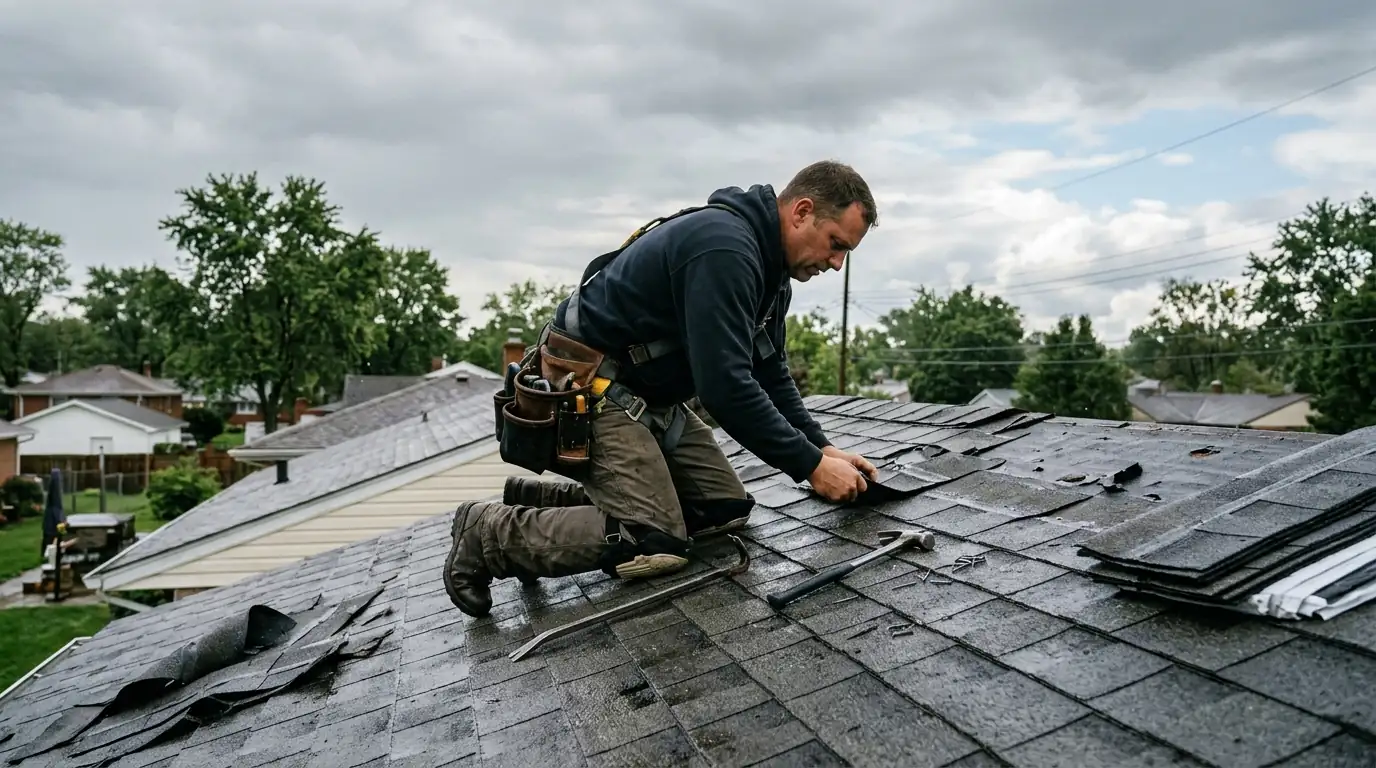
Emergency roof repair in Dayton usually means two visits. The first, an after-hours dispatch to stop water with a tarp, membrane or board-up, typically runs $395 to $1,180. The permanent repair follows once weather allows and depends on the damage, often $485 to $3,960. Both visits include photo documentation you can hand to your insurance adjuster.
A roof emergency rarely arrives at a convenient hour. It's the thunderstorm that rolls through after dinner, the limb that drops during a winter ice storm, or the slow leak that suddenly turns into a stream across the living room carpet on a Sunday. What you need in that moment is a person on the phone who knows roofs, a clear next step, and a crew that shows up with the right materials to stop the water tonight.
That is how we run emergency calls. Our line is answered 24/7 by someone who will ask where the water is showing, whether the ceiling is sagging, and whether anything is open to the sky. From there we dispatch a crew, dry in the roof temporarily, and come back for the permanent fix when conditions are safe. If the damage came from a named storm, our page on storm damage roof repair covers the claim side in more depth.
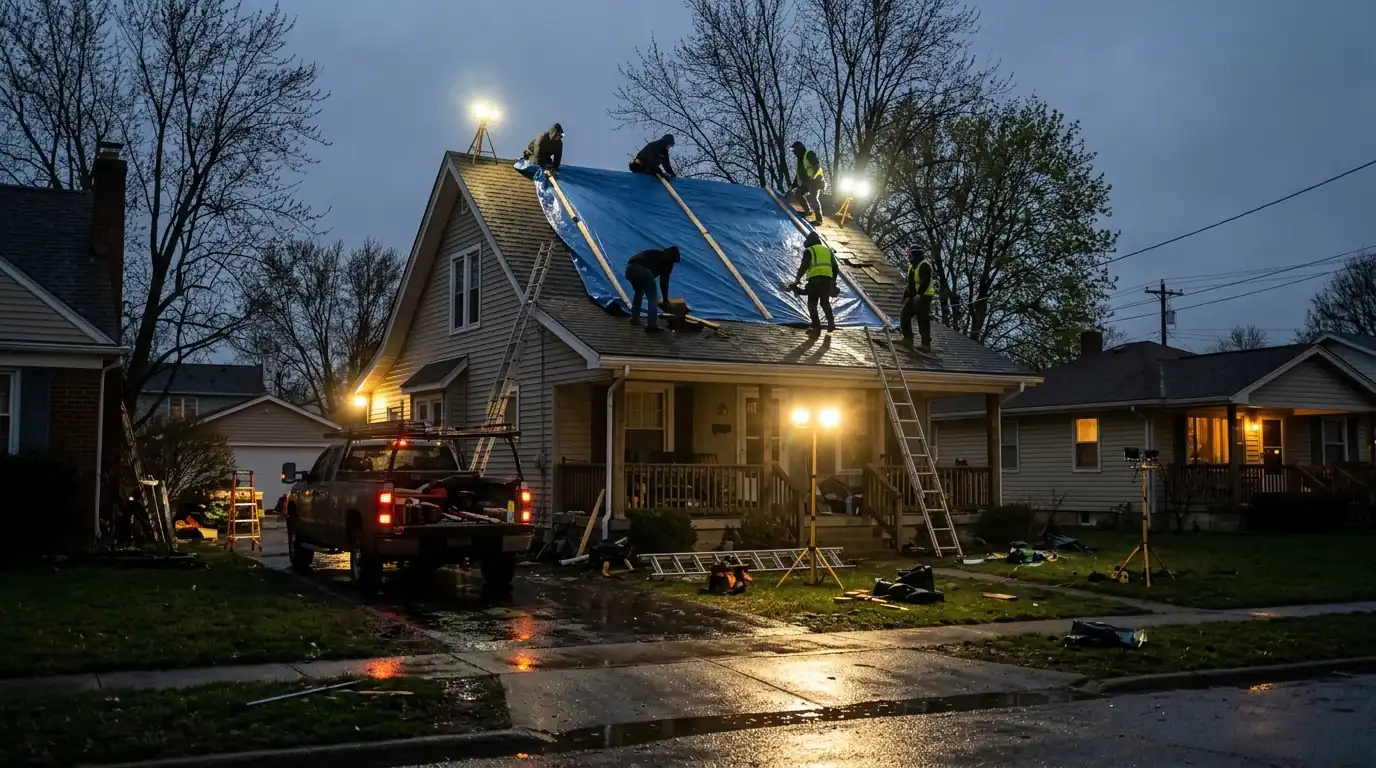
When a roof problem in Dayton can't wait until morning
Plenty of roof issues can wait for a scheduled repair. These can't, because every hour lets more water into the framing, insulation and ceilings below.
Water actively dripping or streaming inside
Running water means a direct path from the roof surface to your living space. It will keep spreading along joists and drywall until the roof is closed.
A ceiling that bulges or sags
Trapped water makes drywall heavy and can bring it down. This is a safety issue first and a roofing issue second.
An open hole or missing roof section
Wind, a limb or debris can tear through shingles and decking. An opening to the sky lets rain, snow and animals straight in.
Water near light fixtures or outlets
Shut off that circuit at the panel and stay clear. Then call, because the leak above it needs to be stopped before the circuit goes back on.
Shingles or flashing flapping after a storm
Loose material keeps prying more shingles up with every gust. A quick secure tonight prevents a much larger repair tomorrow.
Heavy rain forecast on an already damaged roof
If last week's storm left damage and more rain is on the way, getting a temporary dry-in on before it arrives is the cheapest repair you'll make.
What happens after you call us at 2 a.m. with water coming in
An emergency visit has one goal: stop the water safely, document everything, and set up the permanent repair. This is how our crews handle it.
A person answers and triages
We ask where water is showing, whether ceilings are sagging, and what you can see from outside. Then we tell you what to move, what to shut off, and roughly when the crew will arrive.
Dispatch with dry-in materials
The truck rolls with heavy tarps, 2x4 battens, peel-and-stick membrane, plywood and lighting. That kit lets us handle most openings without a second trip for supplies.
Safety check before anyone climbs
Our crew lead checks for downed lines, lightning and wind before putting a ladder up. If it's unsafe to go on the roof, we work from inside and go up the moment it clears.
Locate the entry point
We trace the leak from the attic and the roof surface so the temporary cover goes over the actual source, not just the wet spot on the ceiling.
Temporary dry-in
Depending on the damage, we tarp and batten the area, apply membrane over torn shingles, or board up an open hole with plywood before covering it. The goal is a watertight roof that holds until the permanent repair.
Photo report for your records and insurer
Before we leave, we photograph the damage, the temporary work and the attic. You get a dated report you can share with your adjuster the next morning.
Schedule the permanent repair
Once weather allows, we return to replace damaged decking, underlayment, shingles and flashing. If the claim needs an adjuster visit first, we leave the dry-in in place until then.
Emergency roof repair costs in Dayton, from dispatch to permanent fix
Emergency work costs more than scheduled work because of night hours, weather and urgency. These are typical ranges on Dayton-area homes.
| Job | Typical range | What it covers |
|---|---|---|
| After-hours dispatch and temporary dry-in | $395 to $1,180 | Tarp or membrane over the damaged area, battens, attic check, photo report |
| Board-up of an open roof hole plus dry-in | $865 to $2,240 | Plywood over the opening, tarp and battens, interior protection advice |
| Emergency assessment and documentation only | $165 to $345 | Roof and attic photos, written damage notes, no repair performed |
| Permanent repair after the emergency visit | $485 to $3,960 | Decking, underlayment, shingles and flashing, depending on extent |
Ranges are typical for Dayton-area homes in 2026 and depend on conditions; they are not a quote, and your price is confirmed on site. See more on our Dayton roofing price guide.
- Time of the callOvernight, weekend and holiday calls carry higher labor costs than a weekday daytime visit.
- Size of the openingA torn section of shingles is quicker to dry in than a hole through the decking that needs plywood first.
- Roof pitch and heightSteep roofs and two-story eaves need more safety setup, which matters even more in the dark or rain.
- Storm volumeAfter a widespread storm, crews prioritize active leaks and openings, so a non-urgent cover may move to the next day.
- Material on the roofSlate, tile and metal roofs need different dry-in methods than asphalt, and some take longer to secure without causing more damage.
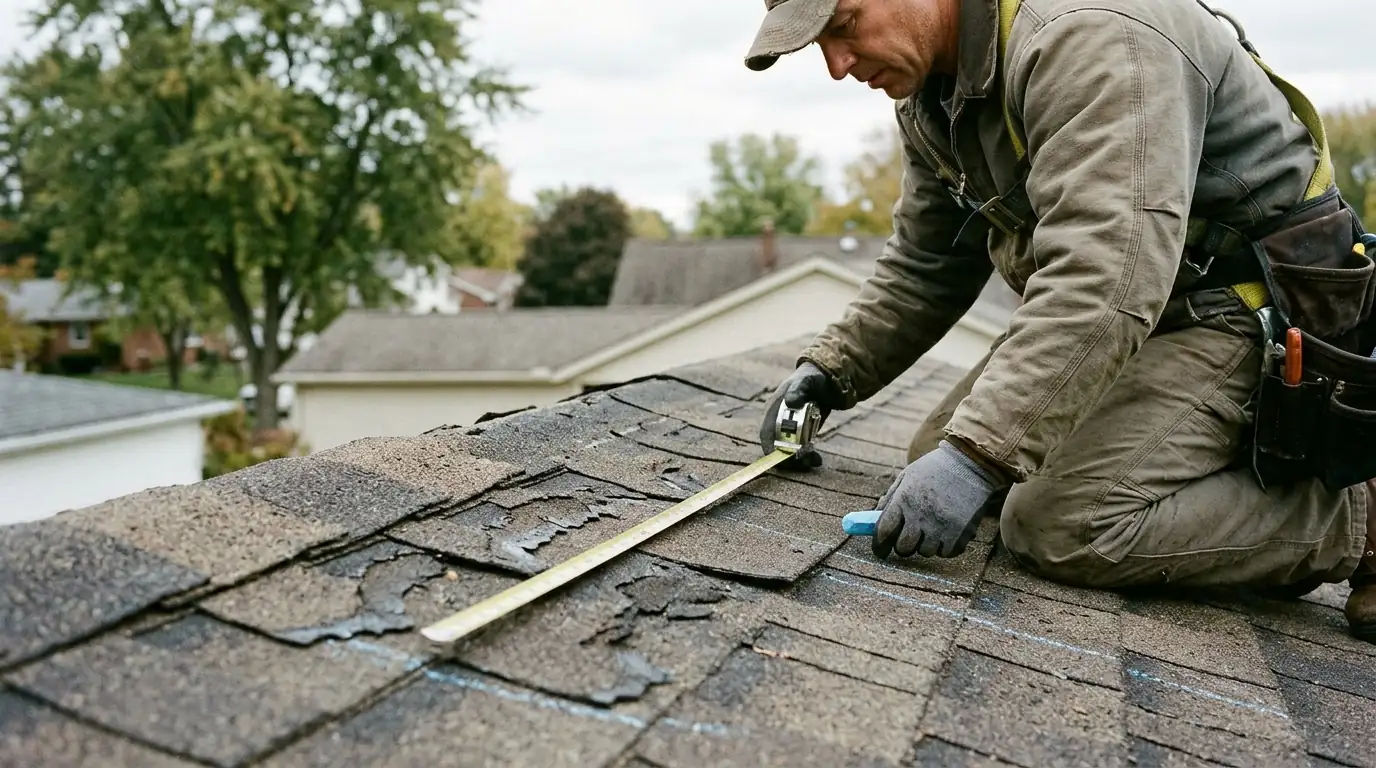
What to do inside the house while our crew is on the way
The first hour matters more than people think. Water that's caught in a bucket costs nothing; water that soaks into carpet pad, insulation and drywall can turn into a separate restoration bill. A few simple steps limit the damage while we drive over.
Don't go on the roof yourself, especially in rain, wind or darkness. Wet shingles are slick, and most emergency injuries happen to homeowners trying to throw a tarp up alone.
- Move furniture, electronics and rugs out from under the leak, and put down towels and a bucket or storage tote
- If water is near a light or outlet, switch off that breaker and keep people out of the room
- If a ceiling bulges with water, keep everyone out from under it and wait for our crew to relieve it safely
- Take your own phone photos of interior damage before you clean up, with timestamps
- Check the attic only if you can do so safely, and place a tote under any drip you can see
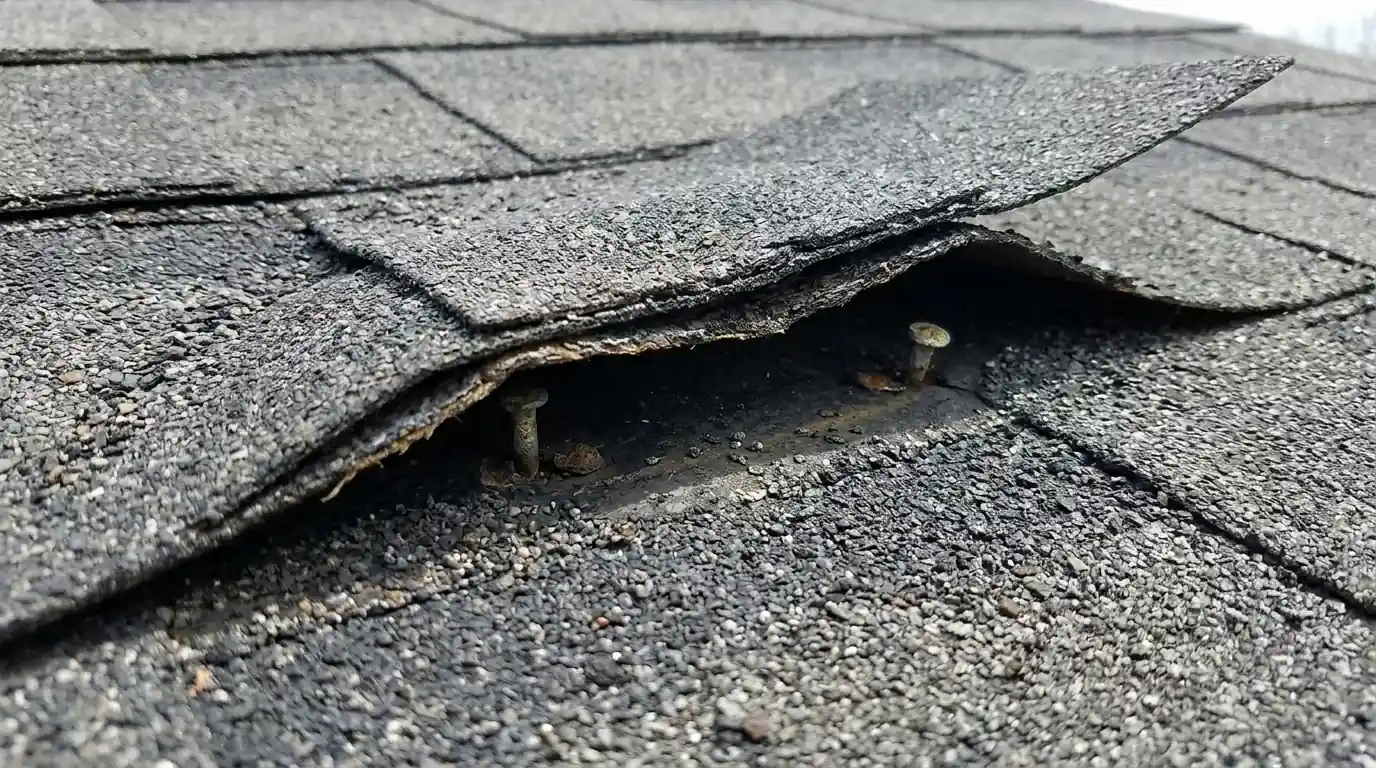
Why an emergency fix and a permanent repair are two separate visits
We get asked why we don't just do the full repair that night. The short answer is that good roofing work needs dry decking, daylight and temperatures where shingles seal. Installing new shingles over wet wood in the dark traps moisture and leads to the same leak a season later.
A temporary dry-in buys time. A properly battened tarp or membrane patch will hold through several weeks of normal weather, which gives you time to call your insurer and lets an adjuster see the damage before anything is removed. Our emergency roof tarping page explains how we secure covers so they don't blow loose. When we return, we tear out what was damaged, let the deck dry if needed, and repair it to match the rest of the roof. Splitting the work this way also keeps the price honest, because the permanent repair is quoted in daylight once we can see the full extent of the damage instead of guessing at it by flashlight.
Storm nights we plan for across Dayton and its suburbs
Dayton's worst roof nights tend to come in late spring and summer, when fast-moving thunderstorms and the occasional tornado sweep across the Miami Valley in the evening. The Memorial Day 2019 tornado outbreak struck after dark, tearing roofs in Trotwood, Harrison Township, Old North Dayton, Northridge and Riverside. Homeowners there learned how much a fast, safe dry-in matters while you wait weeks for permanent work.
Winter brings a different kind of emergency. Ice storms drop heavy limbs on older neighborhoods with mature trees, and freeze-thaw cycles open up flashing that was already tired. In Huber Heights, where so many homes went up in the same era with similar roofs, a single storm can damage dozens of houses on one street. We stage materials ahead of severe weather warnings so the trucks are loaded before the first call comes in, and we work those calls in order of active water first.
Where we do emergency roof repair most often
These neighborhoods, suburbs and cities make up most of our emergency roof repair calls. Each link opens the local page with its ZIP.
Questions about emergency roof repair in Dayton
What counts as a roofing emergency worth calling about in the middle of the night?
Active water inside, a sagging ceiling, an opening to the sky, or loose roofing that's tearing more material off in the wind. Those get worse by the hour. A stain that appeared and dried, a few granules in the gutter or one missing shingle with no rain coming can usually wait for a daytime visit. If you're unsure, call anyway; the person who answers will help you decide.
Will your crew climb a roof during lightning or high wind?
No. Nobody goes on a roof with lightning nearby or wind strong enough to catch a tarp like a sail. In those conditions we work from the attic and the interior: catching water, finding the entry point and protecting belongings. As soon as the cell passes and it's safe, we go up and dry in the roof. Most Dayton storms clear quickly enough that this delay is short.
Does homeowners insurance usually cover an emergency roof dry-in after a storm?
Most homeowners policies expect you to take reasonable steps to prevent further damage after a covered loss, and the cost of that temporary work is commonly included in the claim. Coverage depends on your policy and the cause of damage, so check with your agent. Keep our invoice and dated photo report; our Ohio storm claim walkthrough explains what to do next.
How long after the emergency visit will the permanent roof repair happen?
On a single-home call, often within a few days once the deck is dry and the weather cooperates. After a widespread storm, it can take longer because every crew in the region is busy, and some insurers want an adjuster to see the damage first. The temporary dry-in is built to hold through that wait, and we check it if strong weather moves through in the meantime.
Can you do an emergency repair on a slate or flat roof?
Yes, though the method changes. On slate we avoid walking the field, which can crack more pieces, and instead work from ladders and roof hooks to cover the area. On a flat roof we can often patch a puncture or split seam with compatible membrane that night. Both get a photo report and a follow-up visit for the permanent repair.
Other roofing work that often goes with this job
Emergency Roof Tarping
Roof Repair & Storm Damage
See emergency roof tarpingStorm Damage Roof Repair
Roof Repair & Storm Damage
See storm damage roof repairRoof Leak Repair
Roof Repair & Storm Damage
See roof leak repairInsurance Claim Roof Inspection
Inspections, Ventilation & Skylights
See insurance claim roof inspection
Product lines we install on roofs around Dayton include shingles from GAF, Owens Corning and CertainTeed, metal from Englert, membranes from Carlisle SynTec and skylights from VELUX.
Need emergency roof repair today?
Call any hour. A person answers, asks a few questions and sets a time for a roofer to come out.