Standing Seam Metal Roofing in Dayton, OH, Clips and Seams Done Right
We install standing seam panels on concealed clips that let the steel move with Ohio's temperature swings, from a single porch roof to a whole house. Our crew lead photographs every clip row and seam. A person answers 24/7.
- Answered 24/7
- Photo report on every visit
- Dayton and the Miami Valley
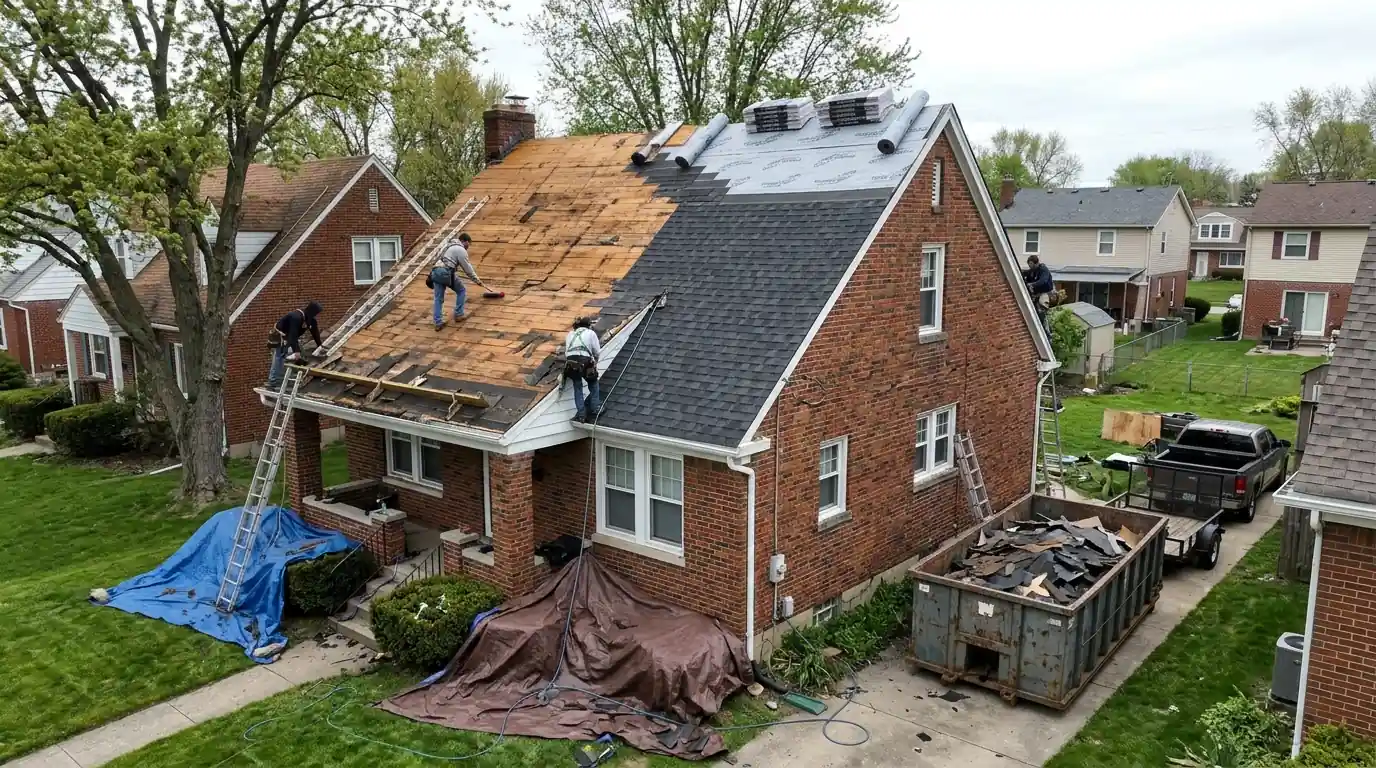
Standing seam metal roofing around Dayton typically runs $13.65 to $18.40 per square foot for snap-lock panels and $16.85 to $23.70 for mechanically seamed panels, installed with underlayment and trim. A porch or accent roof often lands between $2,860 and $6,940. Seam type, gauge, finish, panel width and roof complexity set the price.
Standing seam is the metal roof with no screws showing. Each panel runs from eave to ridge, its edges rise into a vertical seam, and the seam locks over a clip fastened to the deck below. Because the fasteners sit under the seam, out of sun and weather, there are no rubber washers to dry out and no screw holes in the flat of the panel where water lies. What you see from the street is a clean set of vertical lines.
That design is why standing seam lasts as long as it does, but it's also why the details matter so much. Clips have to allow panels to expand and contract as a July roof cools after a thunderstorm. Seams have to suit the pitch. Panels have to be flat enough that the roof doesn't show wavy oil canning in low sun. We spend more time on panel and clip choices at the estimate than on anything else, because they're hard to change later.
Snap-lock or mechanically seamed panels for your roof pitch
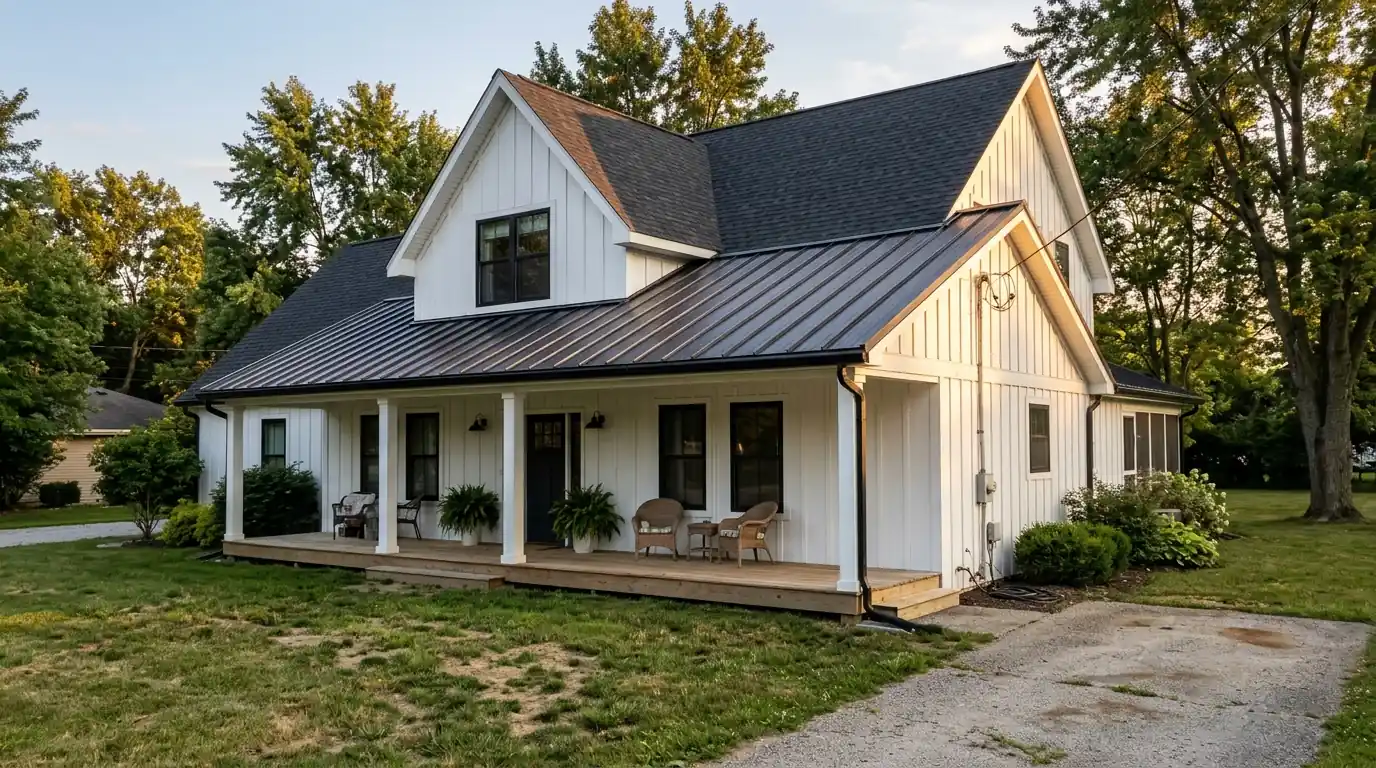
Snap-lock panels have one edge that clicks over the next without special tools. They install faster and cost less, and they're a solid choice on houses pitched about 3/12 and steeper. Mechanically seamed panels are crimped with a hand or electric seamer into a single 90-degree fold or a double 180-degree fold. That locked seam holds better against wind uplift and against water creeping sideways at low slopes.
For a typical Dayton two-story with a 6/12 to 10/12 roof, snap-lock usually does the job. For a low porch roof, a shed-roof addition, or a long run exposed to west winds, we'll often suggest mechanically seamed. Your pitch, location and the manufacturer's specs for each system decide the final choice.
Seam height matters too. Taller seams, around 1.5 to 2 inches, carry more water and hold snow guards and solar clamps more securely. Shorter seams look sleeker on small accent roofs.
- Snap-lock: faster, lower cost, about 3/12 and steeper
- Single lock: added uplift resistance, moderate slopes
- Double lock: best for low slopes and exposed runs
Oil canning, finishes and clip spacing explained in plain terms
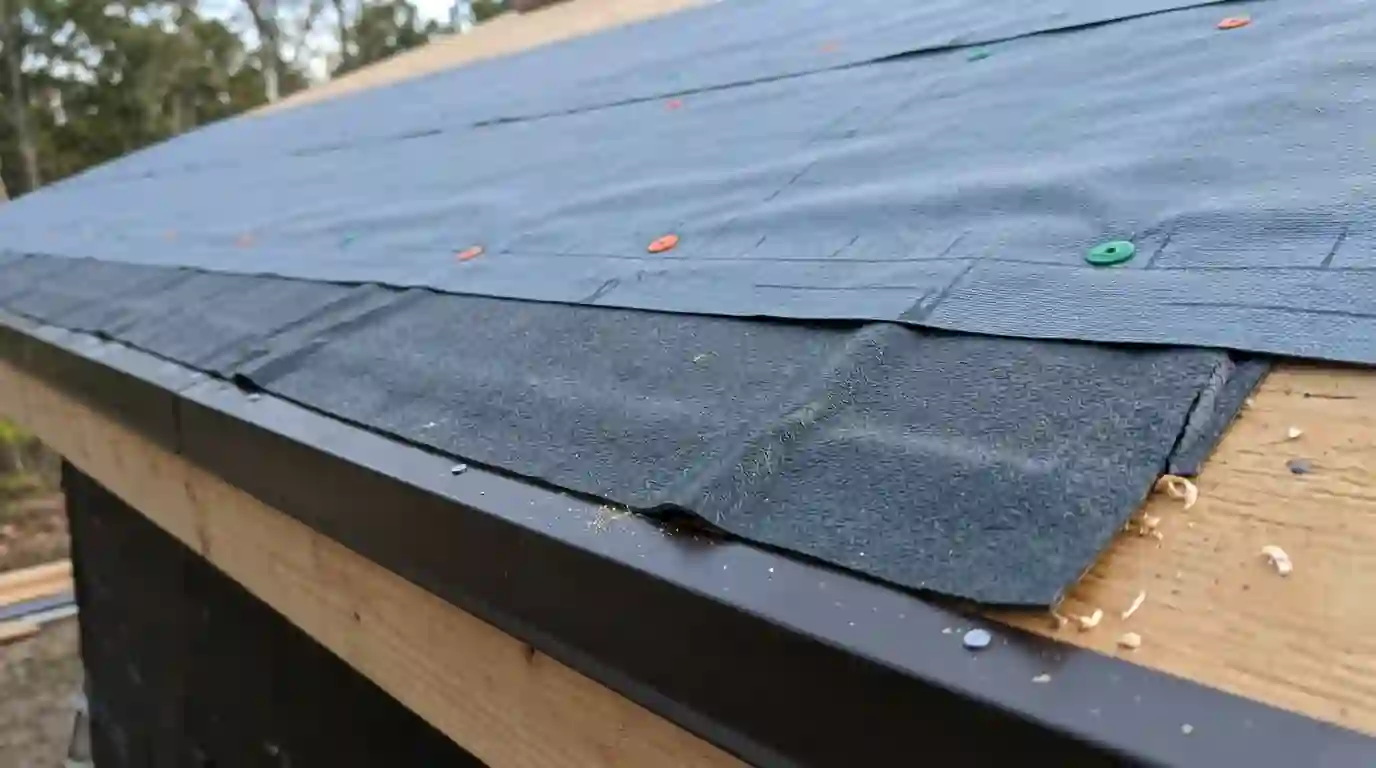
Oil canning is the wavy look you sometimes see on flat sections of metal panels, especially in low morning or evening sun. It's a cosmetic issue that comes from steel's internal stresses and from panels being fastened too tight to move. We reduce it with narrower panels, striations or pencil ribs in the flat, a flat deck, and floating clips that let each panel slide as it heats and cools.
Finishes vary widely. PVDF resin paints, often sold under trade names like Kynar 500, hold color and resist chalking far longer than SMP paints, especially in strong sun. Most standing seam on houses here uses PVDF over galvalume steel, which resists rust at cut edges.
Clip spacing depends on panel type, wind exposure and manufacturer specs, and it's tighter near eaves, rakes and ridges where wind uplift is highest. Getting clip spacing and fixed-versus-floating clip placement right is what keeps a standing seam roof quiet and tight through decades of freeze-thaw cycles.
Standing seam metal roof prices you'll typically see in Dayton
Typical Dayton-area installed ranges, including underlayment, trim and clips. Deck repairs after tear-off are priced separately.
| Job | Typical range | What it covers |
|---|---|---|
| Snap-lock standing seam, 24 gauge | $13.65 to $18.40 per sq ft | Concealed clips, PVDF finish, slopes about 3/12 and steeper |
| Mechanically seamed, 24 gauge | $16.85 to $23.70 per sq ft | Single or double lock, suits low slopes |
| Porch or accent roof | $2,860 to $6,940 | Roughly 120 to 360 sq ft, tie-in to main roof |
| Whole house, simple gable | $29,450 to $44,860 | Roughly 22 squares, one or two simple planes |
| Whole house, hips and dormers | $36,780 to $53,920 | Custom cuts, valleys and extra trim |
Treat these Dayton-area numbers as budgeting ranges. Your price depends on the roof and panel system, and we confirm it in writing after measuring. See more on our Dayton roofing price guide.
- Seam typeMechanically seamed panels cost more because they need a seaming tool and extra labor, but they're rated for lower slopes and higher wind.
- Finish qualityPVDF finishes resist fade and chalking for decades. SMP paints cost less but show color change sooner on south and west slopes.
- Panel width and profileNarrower panels and striated profiles reduce oil canning but use more panels and clips. Wider flat panels cost less and show more waviness.
- Roof geometryHips, valleys, dormers and skylights each need tapered cuts and custom trim. Long simple gables are the most efficient.
- Deck prepOut-of-plane decking or plank boards may need plywood overlay so the panels lie flat.
How a standing seam roof is built, clip by clip
A standing seam roof depends on prep, layout and seaming. Here's how we approach each step.
Choose seam type, width and finish
We review snap-lock versus mechanically seamed panels for your pitch, panel width from 12 to 18 inches, and finish options. Narrower panels with striations or pencil ribs hide oil canning better.
Prepare a flat, solid deck
After tear-off we replace soft sheathing and correct high spots. Standing seam shows every bump in the deck, so flatness matters more here than under shingles.
Lay high-temp underlayment and set trim
High-temperature synthetic underlayment goes down with ice barrier at eaves and valleys. Then eave trim, drip edge and valley pans are fitted so panels lock to them cleanly.
Lay out panels and fasten clips
Panels are squared to the eave and laid out so the roof ends with even widths at each rake. Clips go in at the spacing the manufacturer specifies, with fixed and floating clips placed so panels move without buckling.
Lock or crimp the seams
Snap-lock panels press together by hand. Mechanically seamed panels are folded with a seaming tool into a single or double lock. Our crew lead checks each seam for full engagement along its length.
Flash penetrations, ridge and rakes
Pipe flashings for metal, chimney crickets and wall transitions are formed to fit. Vented ridge closures go under the ridge cap. We photograph every stage and send you the full set.
Roofs and owners that are a natural match for standing seam
Standing seam isn't the cheapest metal option, but it's the right one in these situations.
Low-slope sections where shingles leak
Mechanically seamed panels work on slopes down to about 1/12 or 2/12 depending on the system, making them a strong fix for shallow porch and addition roofs.
Porch roofs and bump-outs on farmhouse-style homes
Accent roofs of standing seam over a front porch or bay window give a crisp look and outlast the shingles on the main roof.
You plan to put solar panels on the roof
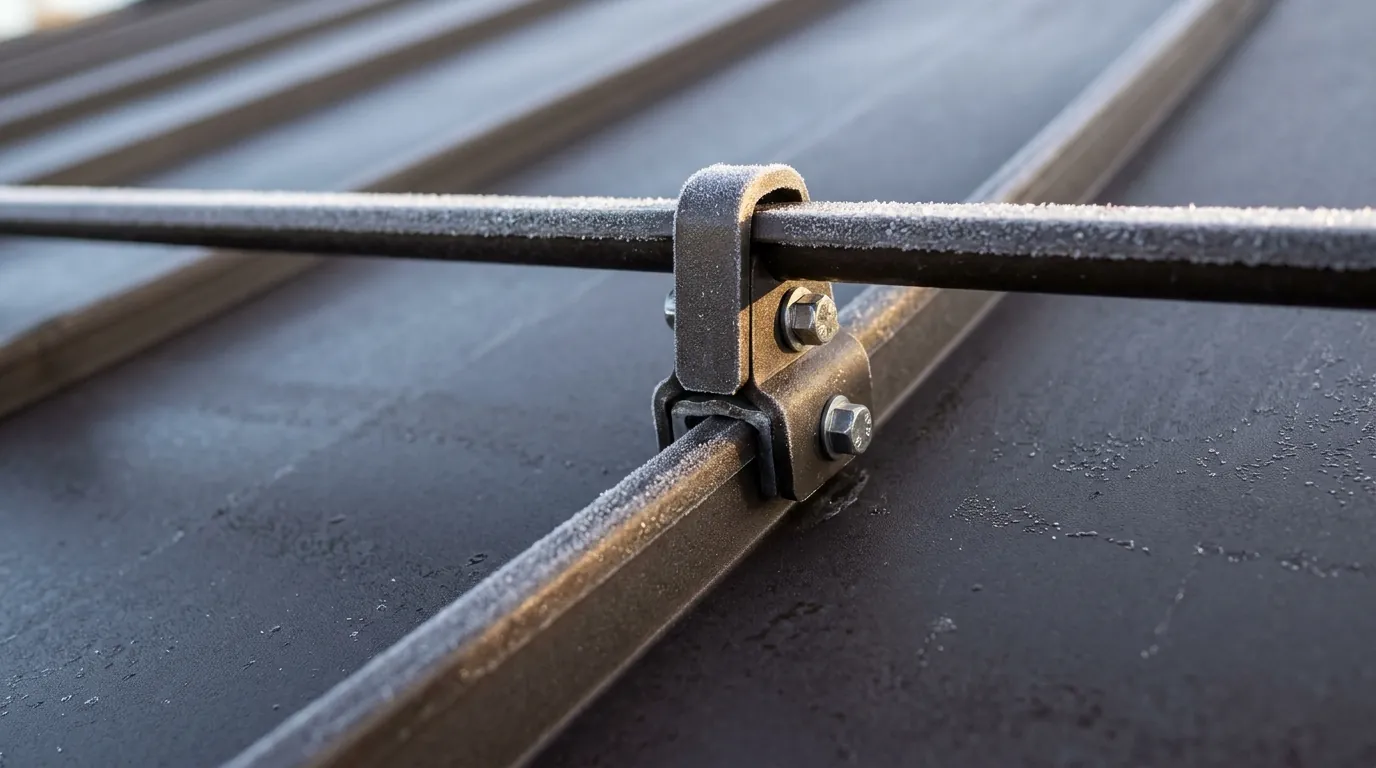
Solar racking can clamp directly to the seams without drilling holes through the roof, which avoids extra penetrations to maintain.
You want the longest-lasting metal option
With hidden fasteners and a quality finish, standing seam typically outlasts exposed-fastener metal by a wide margin with far less upkeep.
Your roof has long, simple runs
Long gable and shed roofs suit standing seam because a single panel can run eave to ridge with no end laps.
Modern or contemporary architecture
Flat, clean lines and narrow seams fit modern homes and additions better than ribbed panels or shingle textures.
Standing seam on Miami Valley farmhouses, porches and additions
New homes in Washington Township and the growing edges of Bellbrook often use standing seam on front porches, bay windows and garage bump-outs, with shingles on the main roof. That mix gives a modern farmhouse look without the full-roof cost.
On older homes, standing seam often solves a specific problem. Low-slope back porch roofs and 1960s additions on ranch houses in Kettering have a habit of leaking at the shingle laps because the pitch is too shallow. Replacing just that section with mechanically seamed panels, tied into the main roof with proper flashing, ends the cycle of patches.
The local climate tests panel movement. A dark roof can swing more than 100 degrees between a January night and a July afternoon, and that movement is why clip design matters more here than in milder places. Freeze-thaw cycles also mean we're careful with ice barrier under low-slope panels and with snow guards above entries. Spring hail can mark softer finishes, so 24 gauge steel and a quality paint system are the norm on homes we roof here. For other metal options, see our metal roof installation page.
Where we do standing seam metal roofing most often
These neighborhoods, suburbs and cities make up most of our standing seam metal roofing calls. Each link opens the local page with its ZIP.
Questions about standing seam metal roofing in Dayton
What's the difference between snap-lock and mechanically seamed standing seam panels?
Snap-lock panels click together by hand and suit roofs about 3/12 and steeper. Mechanically seamed panels are crimped with a seaming tool into a single or double lock, which resists wind uplift and water better on low slopes. Mechanically seamed costs more because of the extra labor and tooling, but it's the safer choice on shallow porches.
Why do some standing seam roofs look wavy in the morning sun?
That's oil canning, a cosmetic waviness in the flat part of metal panels. It comes from stresses in the steel, uneven decking and panels fastened too tight to move. Narrower panels, striations or pencil ribs, a flat deck, and floating clips all reduce it. It doesn't affect how the roof sheds water.
Can solar panels mount on standing seam without drilling into my roof?
Yes. Solar racking can attach with clamps that grip the raised seams, so no holes go through the panels. That's a big advantage over shingles or exposed-fastener metal. Taller seams hold clamps more securely. If solar is in your plans, tell us early so we can pick a compatible seam profile.
Is standing seam a good fix for my leaking low-slope porch roof in Dayton?
Often it is. Shingles struggle below about 4/12 because water backs up under the laps. Mechanically seamed standing seam can work down to around 1/12 or 2/12 depending on the system. We'll check your pitch and how the porch ties into the house, then recommend the seam type that fits.
Can standing seam go on just one section of my house while the rest stays shingled?
Yes, and it's common. Porches, bay windows, low additions and dormer faces are often done in standing seam while the main roof stays asphalt. The key is the transition: where metal meets shingles, we use membrane, formed flashing and the right overlap so water from the upper roof always lands on top of the lower material.
Should I choose PVDF or SMP paint on a standing seam roof?
For a house you plan to keep, PVDF is usually worth it. It holds color and resists chalking much longer, especially on sunny south and west slopes. SMP finishes cost less and work fine on barns, sheds or accent pieces where some fading over the years is acceptable. We'll bring color samples in both.
Other roofing work that often goes with this job
Product lines we install on roofs around Dayton include shingles from GAF, Owens Corning and CertainTeed, metal from Englert, membranes from Carlisle SynTec and skylights from VELUX.
Need standing seam metal roofing today?
Call any hour. A person answers, asks a few questions and sets a time for a roofer to come out.