Commercial Roof Replacement in Dayton, OH, Planned Around You
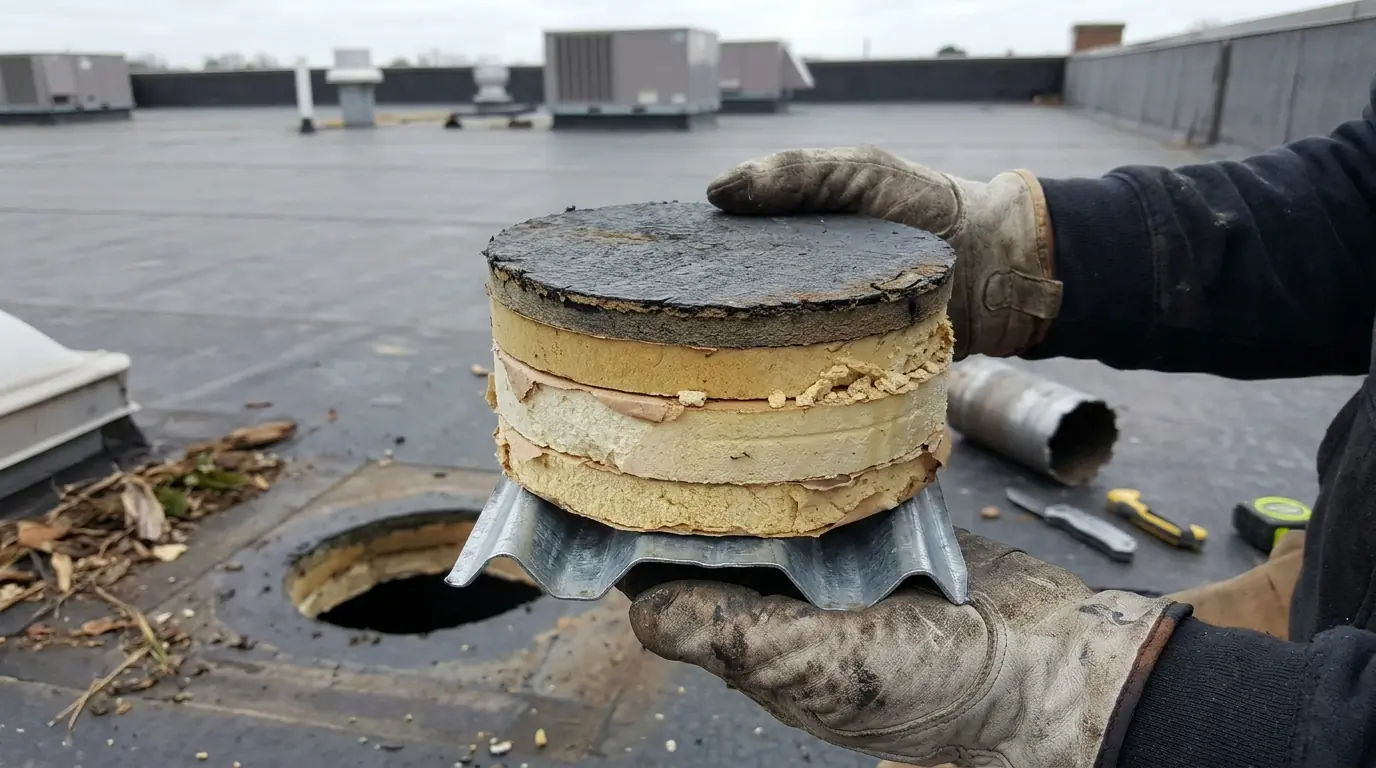
We plan commercial reroofs around your tenants, students or congregation, starting with core samples so the scope is based on what's really under the membrane. Daily photo updates keep owners informed, and a person answers 24/7.
- Answered 24/7
- Photo report on every visit
- Dayton and the Miami Valley
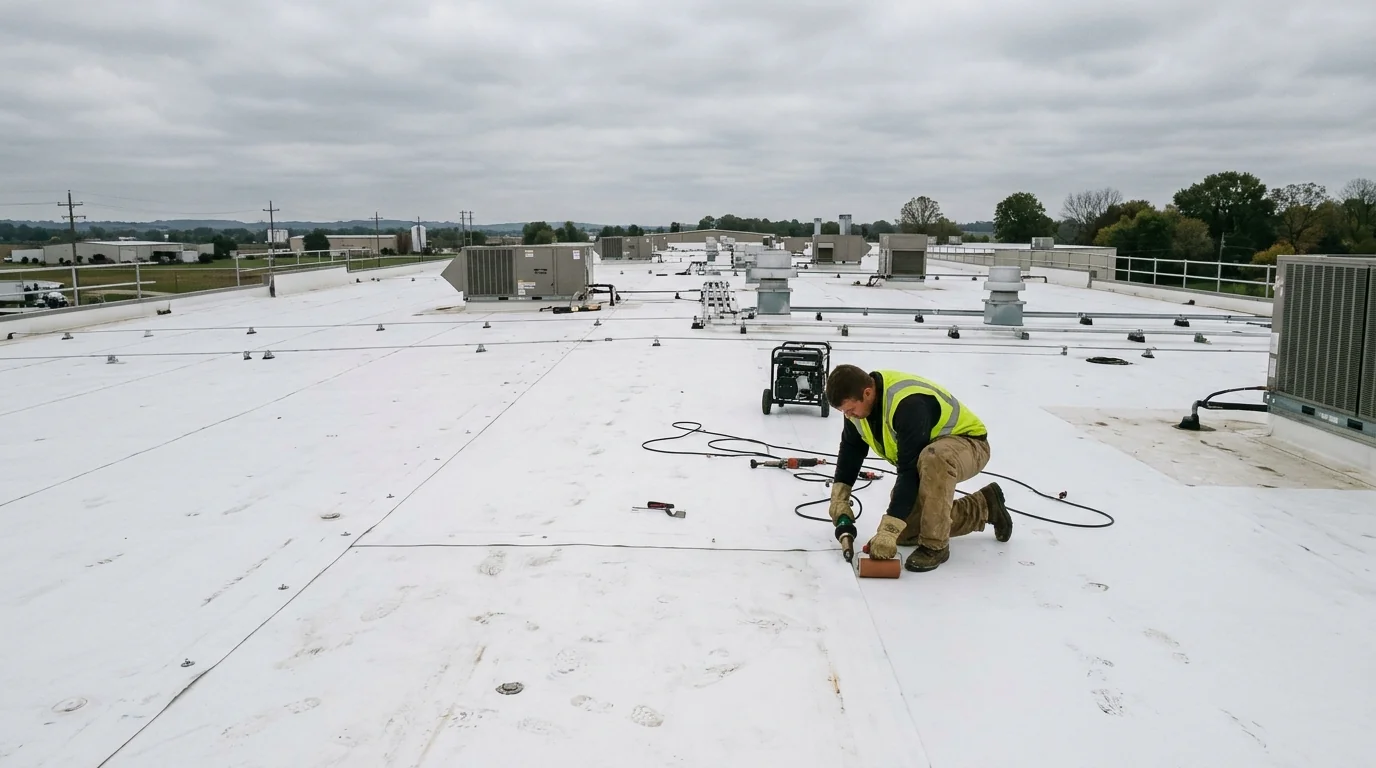
Replacing a commercial flat roof in the Dayton area typically costs $8.35 to $13.65 per square foot for a full tear-off with new insulation and TPO, EPDM or modified bitumen. A recover over a dry existing roof usually runs $5.95 to $9.25 per square foot. Wet insulation, deck repairs, rooftop equipment and energy code insulation requirements are the biggest cost drivers.
A commercial roof replacement is a capital project, and it deserves the same planning as a parking lot or HVAC replacement. The decisions made at the start, such as tear-off or recover, which membrane, how much insulation and how to phase the work, set the cost and the building's next 20 or more years of roof performance. Getting those decisions right depends on knowing what's really under the existing roof.
That's why our process starts with a roof survey and core samples rather than a quick measurement. We find out how many layers are up there, whether the insulation is wet and what condition the deck is in. From there, we build a scope and schedule that works for the building, whether it's a strip center with tenants who can't close, a warehouse with forklifts underneath, a school with a summer window or a church that needs its sanctuary dry for Sunday.
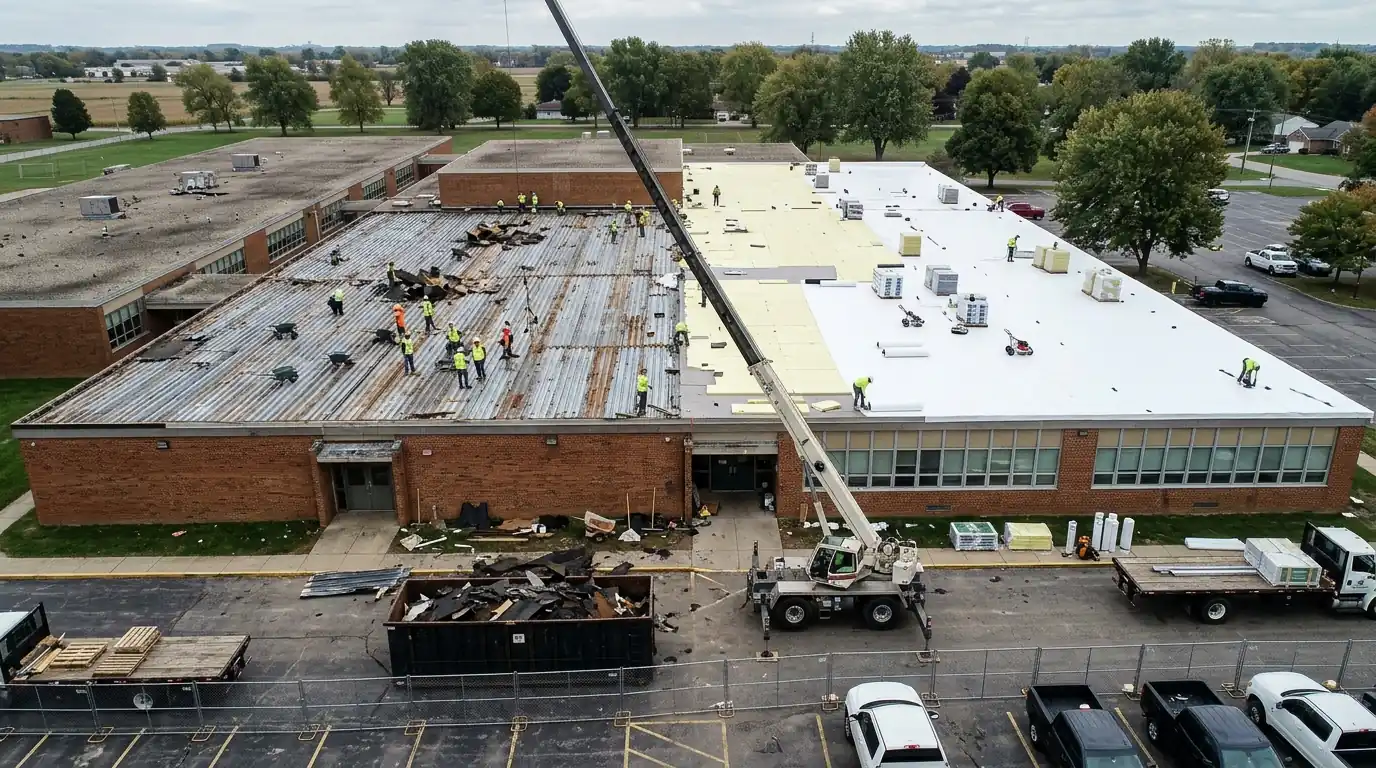
Tear-off, recover or restore: choosing the right reroof scope
A full tear-off removes everything down to the deck, lets us repair decking, and allows insulation and drainage to be rebuilt. It costs the most upfront, but it's often the right move when insulation is wet, the roof has multiple layers or drainage problems are significant.
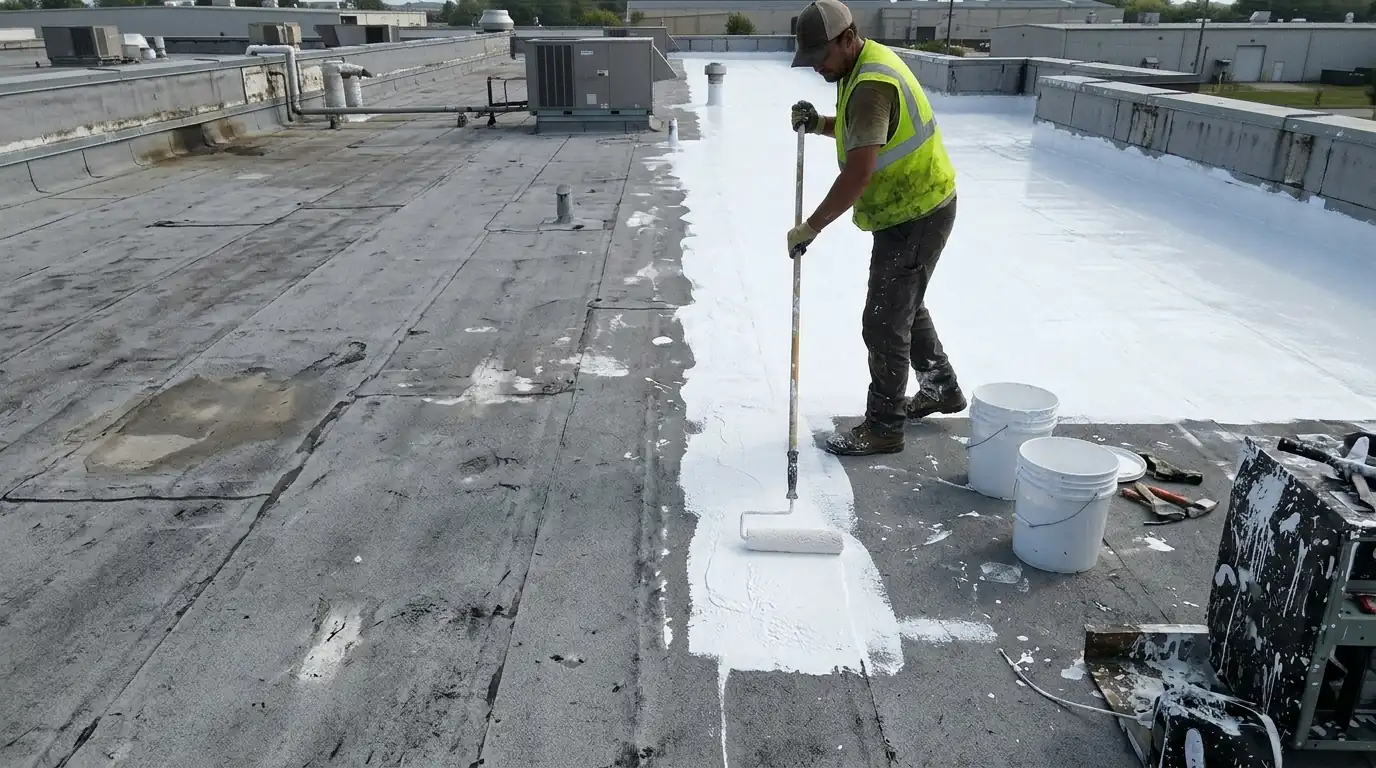
A recover places new cover board and membrane over the existing roof. It saves tear-off and disposal costs, and it can work well when the existing roof is dry, structurally sound and has only one layer. Building codes generally don't allow a recover over a wet roof or one that already has two coverings, and some manufacturers limit warranties on recovers. Restoration with a silicone roof coating is a third option for roofs that are aging but still largely dry. Our moisture survey and cores tell us which of these makes sense, and we'll show you the data behind the recommendation.
- Tear-off: wet insulation, multiple layers or drainage problems
- Recover: single dry layer, sound deck, budget pressure
- Restore: aging but mostly dry roof, goal of extending service life
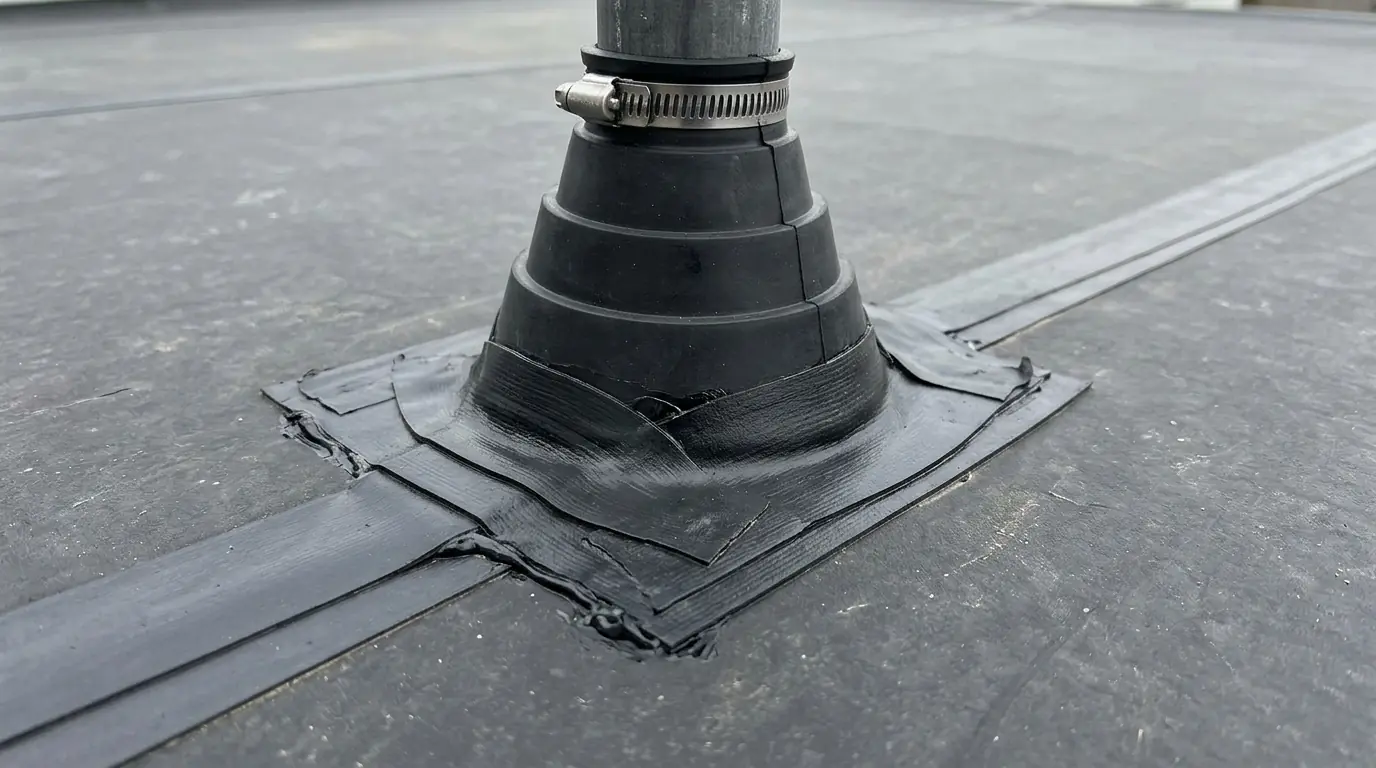
Scheduling a reroof around tenants, students and Sunday services
The best commercial roof schedule is one your building users barely notice. For strip centers and offices, we phase work so each tenant's roof area is opened and closed within a defined window, often starting early to finish noisy tear-off before business hours. We communicate with tenants through the property manager so they know when crews will be above them.
Schools usually benefit from summer replacement between the last day of classes and the start of fall sports and teacher prep. That means planning and contracting by early spring, since summer schedules fill quickly. For churches, we avoid weekend work over sanctuaries and plan around weddings, funerals and major services. Warehouses and industrial buildings often need coordination around shipping docks, forklift traffic and sensitive equipment. Whatever the building, we provide a schedule, a staging plan and daily updates with photos, and if weather changes the plan, you hear about it from us first.
Commercial reroof budgets for Dayton-area buildings
These are typical Dayton-area ranges for commercial roof replacement. Roof size, condition of the existing roof and access shape every number below.
| Job | Typical range | What it covers |
|---|---|---|
| TPO tear-off and replacement | $8.35 to $13.65 per sq ft | Tear-off, insulation, 60-mil TPO, flashings, edge metal |
| EPDM tear-off and replacement | $8.15 to $12.85 per sq ft | Fully adhered or mechanically fastened, insulation, flashings |
| Modified bitumen two-ply replacement | $8.65 to $13.45 per sq ft | Base and cap sheet, insulation, flashings |
| Recover over existing dry roof | $5.95 to $9.25 per sq ft | Cover board and new membrane, where code allows |
| Wet insulation removal and replacement | $2.45 to $4.85 per sq ft added | Remove saturated insulation, install new |
| Moisture survey and core sampling | $685 to $2,940 per building | Infrared or moisture meter survey, cores, report |
These are typical 2026 Dayton-area ranges, not a quote; your project pricing depends on the survey, core samples and final scope. See more on our Dayton roofing price guide.
- Existing roof layersRemoving multiple old roofs, especially heavy built-up and gravel, adds labor and disposal costs.
- Insulation requirementsReplacing insulation to meet current energy code requirements can add significant material cost on older buildings.
- Deck conditionRusted steel deck or deteriorated wood plank must be repaired before new insulation and membrane go down.
- Rooftop equipmentHVAC units may need to be lifted, curbs raised or equipment disconnected, often requiring coordination with mechanical contractors.
- Phasing and accessWorking around tenants, school schedules and limited staging areas can add time and equipment costs.
- Membrane and warranty choiceThicker membranes, fully adhered systems and longer manufacturer warranties increase upfront cost.
How we plan and run a commercial reroof from survey to closeout
Every commercial reroof follows a plan built around the building's use, the owner's budget and the weather window.
Roof survey and core samples
We measure the roof, document every penetration and cut cores to see layers, insulation and deck. On larger roofs, an infrared or moisture survey maps wet areas.
Scope and options
You get a written scope with options, such as tear-off versus recover, membrane choices and insulation levels, with pricing and tradeoffs for each.
Scheduling and phasing
We plan the work in phases to keep occupied areas dry and open, coordinating with tenants, school calendars or church schedules.
Tear-off and dry-in daily
Each day, we remove only what we can replace and seal by the end of the shift, so the building is never left open overnight.
Insulation, membrane and details
We install insulation to meet code and design requirements, then the membrane, flashings, drains, coping and walkway pads.
Closeout and warranty registration
At completion, you get a photo record of the project, roof layout drawing and maintenance guidance, and we register the manufacturer's material warranty where the product allows.
Signals that your commercial roof belongs in this year's capital plan
Commercial roofs usually announce their decline through a pattern rather than a single failure. These are the signals we look for.
Repair costs climbing year over year
When annual repair invoices start approaching a meaningful share of replacement cost, the roof is usually past its economic life.
Large areas of wet insulation
Moisture surveys showing wet insulation across a quarter or more of the roof usually make repairs and coatings poor investments.
Membrane aging across the whole roof
Brittle EPDM, crazed TPO, cracking built-up surfacing or modified bitumen losing granules point to roof-wide aging.
Repeat leaks at the same details
When curbs, drains and walls keep failing despite repairs, the underlying system may no longer support durable fixes.
Planned tenant or use changes
New tenants, added rooftop equipment or interior renovations are good times to replace a tired roof before new finishes go in.
Storm damage across many sections
Hail, wind or debris damage spread across the roof can make replacement more practical than repairing dozens of areas.
Commercial reroofing across the Miami Valley's industrial parks, schools and main streets
The Dayton area's commercial building stock spans decades. Older industrial buildings along the Great Miami River and near I-75 often have built-up or EPDM roofs over steel or wood decks, many of them reroofed once or twice already. In Miamisburg and nearby business parks, newer offices and warehouses typically have TPO or EPDM over polyiso insulation.
Around Fairborn and the Wright-Patterson Air Force Base area, defense contractor offices, labs and retail buildings along Colonel Glenn Highway and nearby corridors have a mix of roof systems. Across Montgomery County, schools, churches and community buildings often have several roof sections from different expansions. Our climate shapes every reroof: freeze-thaw cycles stress flashings and drains, summer heat favors reflective membranes and good insulation, and spring storms bring hail and wind that test edge details. We design each reroof for those conditions, not a generic spec, and we set the work calendar around the region's wet spring and the short daylight of December.
Where we do commercial roof replacement most often
These neighborhoods, suburbs and cities make up most of our commercial roof replacement calls. Each link opens the local page with its ZIP.
Questions about commercial roof replacement in Dayton
How far ahead should a school district schedule a summer roof replacement?
Ideally, start planning the fall or winter before. That allows time for roof surveys, board approvals, bidding and material ordering, so work can start as soon as classes end. Summer is the busiest season for school roofing, and waiting until late spring can mean shorter windows or delays. We help districts set realistic timelines based on roof size and complexity.
Can a commercial roof be replaced in sections over two budget years?
Often, yes. Many buildings have natural divisions such as expansion joints, firewalls or separate roof levels that make phased replacement practical. We plan phases so each section is fully completed and properly tied into the remaining roof. This approach can work well for churches, schools and multi-tenant buildings that need to spread costs across budget cycles.
Does a new commercial roof need more insulation under the current Ohio energy code?
In many cases, yes. When a commercial roof is fully replaced, energy code requirements often apply to the new insulation layer, which can mean adding more insulation than the old roof had. Requirements depend on the building type and scope. We factor this into the design and pricing and explain how it affects the project budget.
Will tenants need to close during the reroof of our strip center?
Usually not. Most strip centers can stay open while we work one tenant bay at a time, with loud tear-off finished early in the day and the parking lot kept clear in front of storefronts. Restaurants with rooftop exhaust and medical offices with sensitive equipment may need extra coordination. We give the property manager a bay-by-bay schedule to share with each tenant.
What is a roof moisture survey, and why do you want one before pricing our reroof?
A moisture survey uses infrared imaging, moisture meters or both, along with core samples, to find wet insulation under the membrane. It tells us whether a recover or coating is possible, or whether a full tear-off is needed, and how much insulation must be replaced. Without it, pricing is guesswork and change orders are more likely.
Is recovering our old commercial roof worth it instead of tearing it off?
It can be, when the existing roof is dry, structurally sound and has only one covering. A recover saves tear-off and disposal costs and can be faster. But if insulation is wet or there are already two roofs in place, codes generally prohibit a recover, and it's a poor investment anyway. Our survey results guide that decision.
Other roofing work that often goes with this job
Product lines we install on roofs around Dayton include shingles from GAF, Owens Corning and CertainTeed, metal from Englert, membranes from Carlisle SynTec and skylights from VELUX.
Need commercial roof replacement today?
Call any hour. A person answers, asks a few questions and sets a time for a roofer to come out.