Ice Dam Removal and Repair in Dayton, OH
We remove ice dams with low-pressure steam that melts through ice without gouging shingles, then find the heat loss that built the dam. A person answers 24/7 through the winter, and every visit ends with photos.
- Answered 24/7
- Photo report on every visit
- Dayton and the Miami Valley
Steam removal of an ice dam in the Dayton area typically costs $465 to $890 for the first couple of hours, and $1,140 to $2,380 for larger jobs. Repairing water-damaged eaves with new ice barrier often runs $1,280 to $3,460. The lasting fix is usually in the attic: sealing air leaks, adding insulation and balancing ventilation so snow melts evenly.
An ice dam starts with a warm roof and a cold edge. Heat escaping from the house melts snow on the upper part of the roof, the water runs down to the overhang, which sits outside the heated space, and it freezes again. Day after day that ridge of ice grows, until meltwater pools behind it with nowhere to go. Shingles are built to shed water, not hold it, so the pool works its way up under the tabs and into the house.
When that happens, the first job is getting the water moving again safely. We use commercial steamers that melt through ice at low pressure, cutting channels and then clearing the dam in sections without damaging the shingles underneath. The second job is figuring out why the roof is warm. That's usually a mix of attic air leaks, thin insulation and weak ventilation, and fixing it is what keeps the next winter from repeating the same story. Our guide to ice dams in Dayton winters covers the science in plain terms.
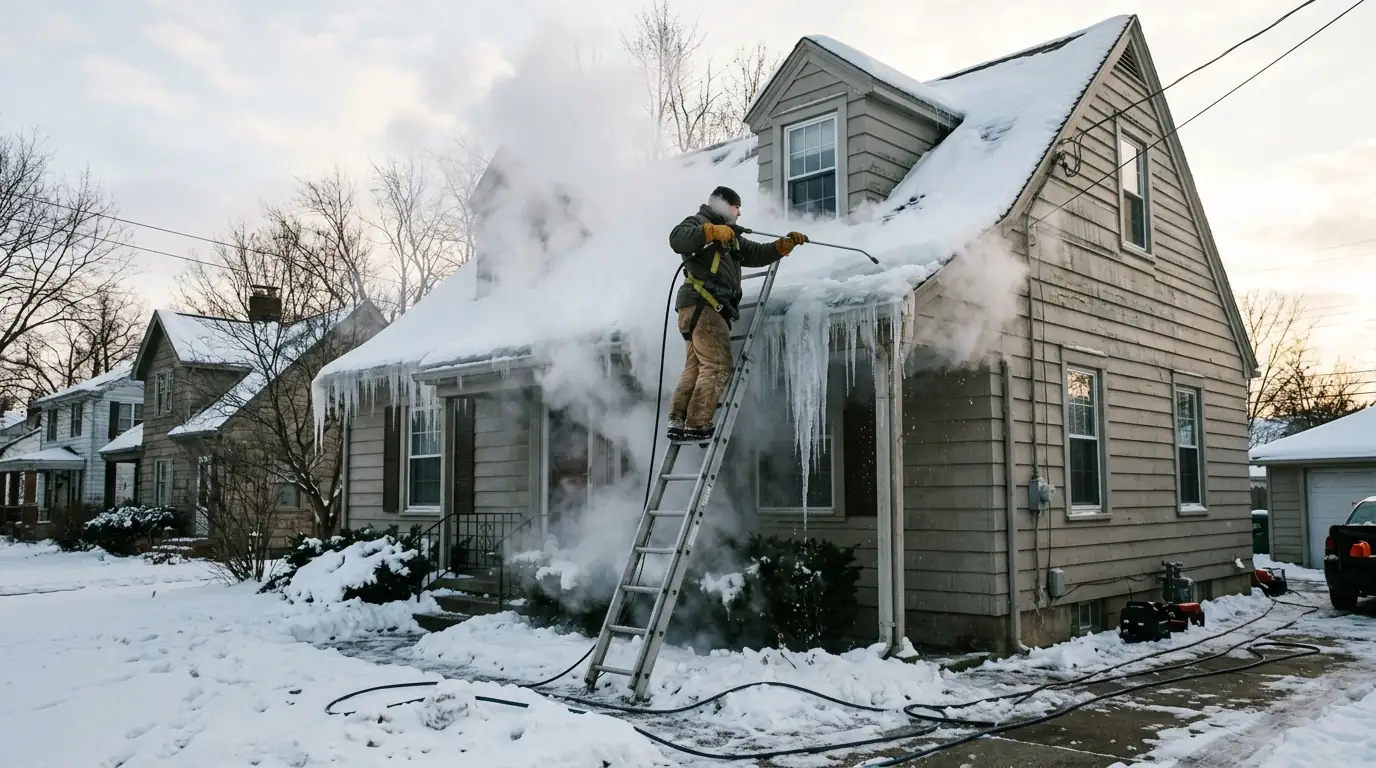
Icicles, wet ceilings and other signs an ice dam is backing up water
A few icicles are normal in an Ohio winter. These signs mean the ice has started to hold water against your roof.
A thick ridge of ice along the eaves
Ice built up several inches high at the roof edge, often with snow still on the roof above it, is the dam itself.
Heavy icicles hanging from gutters
Long icicles mean a lot of meltwater is flowing off a warm roof and refreezing at the cold edge. Gutters full of ice are often the base of the dam.
Water stains on ceilings near exterior walls
Ice dam leaks usually show up in the first few feet inside an outside wall, right below where the eaves meet the house.
Wet or frosty insulation at the eaves
In the attic, damp insulation or frost on the deck near the eaves shows water is already getting past the shingles.
Bare stripes in roof snow
Melted stripes or patches over certain rooms reveal where heat is escaping, and those spots often line up with the worst dams.
Gutters pulling away from the fascia
Ice is heavy. Gutters bending or detaching under its weight mean the dam has grown large enough to cause damage outside too.
How we steam an ice dam off without damaging your shingles
Removing ice safely takes patience and the right equipment. Here is how our crew handles an ice dam call.
Check inside first
We look at where water is showing and check the attic for wet insulation or frost. That tells us which section of the dam to clear first.
Clear snow above the dam
We remove snow from the lower part of the roof above the ice, so new meltwater stops feeding the dam while we work.
Cut drainage channels with steam
Using low-pressure steam, we cut channels through the dam so trapped water can drain off the roof right away. That often stops the interior leak within minutes.
Clear the dam in sections
We then work along the eaves, melting the ice off in blocks without hammers, picks or high-pressure water. Shingles, gutters and flashing stay intact.
Clear gutters and downspouts
Ice packed in gutters and downspouts gets melted out so water can drain properly when the next thaw comes.
Photograph and note the cause
Your photo report shows the dam, the cleared roof and any damaged shingles or gutters. We also note the likely heat-loss spots we saw from the attic and the roof.
Plan permanent repairs if needed
If water damaged the decking, underlayment or fascia, we schedule repairs once the weather allows. We'll also outline fixes for the heat loss that caused the dam.
Ice dam steaming and repair costs in the Dayton area
Steam removal is usually billed by time, since the amount of ice varies so much. Here is what homeowners across the Dayton area typically pay.
| Job | Typical range | What it covers |
|---|---|---|
| Steam removal, first two hours | $465 to $890 | Snow cleared above the dam, drainage channels, sections cleared |
| Extended steam removal | $1,140 to $2,380 | Half day or more for long eaves, multiple dams or two-story homes |
| Roof edge snow clearing | $195 to $435 | Lower roof snow removed to prevent a dam from forming |
| Eave repair with new ice barrier | $1,280 to $3,460 | Shingles and underlayment removed at eaves, ice barrier and new shingles installed |
| Heat cable installation | $640 to $1,580 | Roof and gutter heat cable in a zigzag pattern on problem eaves |
Ranges are typical for Dayton-area homes in 2026 and depend on conditions on the day; they are not a quote. See more on our Dayton roofing price guide.
- Amount and thickness of iceA thin ridge clears quickly; a foot-thick dam along a long eave takes several hours of steaming.
- Roof height and pitchTwo-story eaves and steep slopes need more setup and slow the work down for safety.
- Length of affected eavesDams that run the full length of the house cost more than a single problem corner.
- Water damage underneathWet or rotted decking at the eaves adds repair work once the ice is gone.
- Timing during a cold snapCalls spike during long freezes, which can affect scheduling and after-hours rates.
Why ice dams build up on Dayton homes: heat, insulation and airflow
An ice dam is really an attic problem that shows up on the roof. The roof surface over the heated house gets warm enough to melt snow even when it's well below freezing outside, while the overhang stays cold. The bigger the temperature difference, the faster the dam grows.
Three things usually drive that heat loss. Air leaks around light fixtures, bath fans, attic hatches and plumbing chases let warm, moist house air pour straight into the attic. Thin or settled insulation, common in older Dayton homes, lets heat conduct up through the ceiling. And weak attic ventilation can't flush that warm air out, so the deck heats up instead of staying near outdoor temperature.
Gutters play a supporting role. Gutters full of leaves freeze solid and give the dam a base to build on, but clean gutters alone don't prevent dams on a warm roof. Long, unbroken eaves on the north side tend to stay coldest and grow the thickest ice.
Stopping the next one: ice barrier, ventilation and heat cable
The best long-term fix is a cold roof deck, and that comes from the attic, not the shingles. We look for the big air leaks and recommend sealing them, then check insulation depth and whether intake vents at the soffits are blocked. Those changes usually make the largest difference for the money.
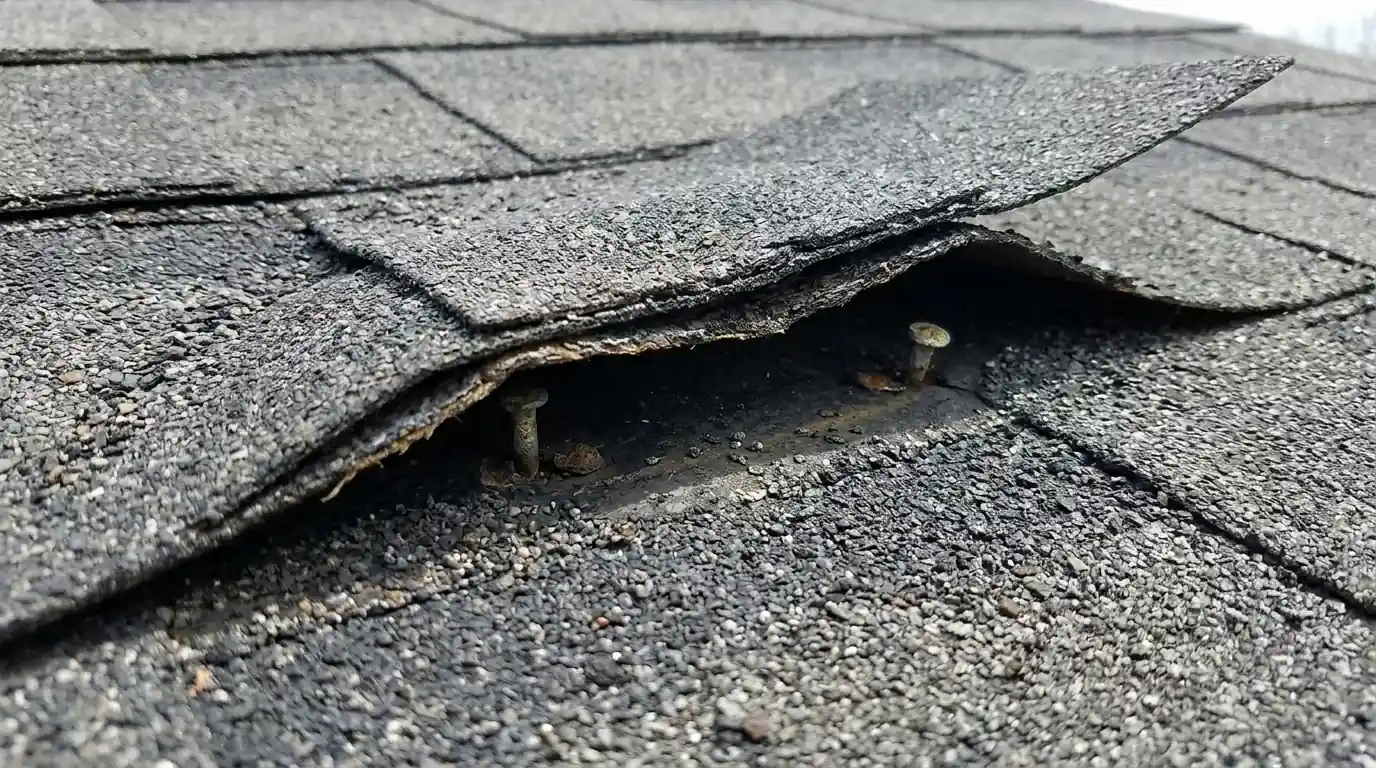
On the roof, self-adhering ice barrier membrane at the eaves acts as a backup. It seals around nails and stops water that does get under the shingles from reaching the deck. If your roof is due for replacement, extending ice barrier at least two feet inside the warm wall line is standard practice in our climate. Heat cables are a fallback for spots that can't be fixed any other way, such as a low-slope porch roof meeting a wall. They help, but they use electricity, need seasonal checks and don't address the cause. We'll tell you plainly which of these your house actually needs.
Where Dayton houses build the worst ice dams
Dayton winters are made for ice dams. Snow totals are moderate, but the region bounces above and below freezing constantly, which gives rooftop snow plenty of chances to melt and refreeze. The worst stretches come when a solid snowfall is followed by a week of single-digit nights and sunny afternoons.
House shape matters as much as weather. Cape Cods and story-and-a-half homes with finished upper rooms, common in neighborhoods like Belmont and North Riverdale, have sloped ceilings with little room for insulation, and the knee walls behind them leak heat badly. Older bungalows often have attic access hatches and recessed fixtures that were never air sealed. In Englewood and other suburbs with 1950s through 1970s ranches, low-slope rear additions and porch roofs tied into the main house are frequent problem spots. Each of these designs needs a slightly different fix, which is why we look at the attic on every ice dam call. If ice has already bent or pulled loose your gutters, our gutter repair crew can rehang them once the thaw arrives.
Where we do ice dam removal & repair most often
These neighborhoods, suburbs and cities make up most of our ice dam removal & repair calls. Each link opens the local page with its ZIP.
Questions about ice dam removal & repair in Dayton
Is it safe to chip an ice dam off with a hammer or ice pick?
No. Shingles are brittle in freezing weather, and a hammer or pick will crack, gouge or tear them, often along with the gutters and flashing. It's also dangerous on a ladder over ice. Steam melts through the dam without impact. If you need to do something before we arrive, focus on catching water inside rather than attacking the ice.
Do calcium chloride socks actually work on ice dams?
They can help as a stopgap. A nylon stocking filled with calcium chloride laid across the dam melts a channel so water can drain. They don't remove the dam and can stain siding or harm plants below. Never use rock salt, which damages shingles and metal. Treat socks as a short-term measure until the dam is steamed off.
Will heat cables stop ice dams on my house for good?
Not on their own. Heat cables melt channels for water to escape, so they can prevent leaks in specific trouble spots. But they don't stop the heat loss that builds the dam, and they need to be turned on and checked each winter. We usually recommend air sealing and ventilation fixes first, with cables only where those can't solve the problem.
Why does an ice dam build up on just one part of my roof?
Because that section is losing more heat. Common culprits include a bathroom with an unsealed exhaust fan, recessed lights in a vaulted ceiling, a kitchen or furnace chase, or a finished room with poorly insulated knee walls. Looking at the bare spots in the snow and checking the attic usually pinpoints the cause.
Should I rake snow off my roof to prevent ice dams?
A roof rake used from the ground can help by clearing the first few feet of snow above the eaves, which reduces the meltwater feeding a dam. Use a rake with a plastic blade or rollers, stay clear of power lines, and don't scrape down to the shingles. Never climb onto a snow-covered roof to shovel it.
Does homeowners insurance cover interior damage from an ice dam leak?
Many policies cover sudden water damage inside the home caused by an ice dam, though the cost of removing the ice itself may not be included. Coverage varies widely, so check your policy or call your agent. Our photo report documents the dam, the leak path and any damage, which helps if you decide to file.
Other roofing work that often goes with this job
Product lines we install on roofs around Dayton include shingles from GAF, Owens Corning and CertainTeed, metal from Englert, membranes from Carlisle SynTec and skylights from VELUX.
Need ice dam removal & repair today?
Call any hour. A person answers, asks a few questions and sets a time for a roofer to come out.