Slate Roof Repair and Roofing in Dayton View Triangle, Dayton (45406)
The Dayton View Triangle (45406) is full of big early 1900s homes with complex roofs, and we repair their slate, chimneys and valleys, or replace worn roofs with slate-look materials, after photographing every slope.
- ZIP 45406
- Answered 24/7
- Montgomery County
Slate repairs on Dayton View Triangle homes usually run $590 to $2,370, depending on height and how many pieces need replacing. When a slate roof is beyond repair, replacing it with a synthetic slate system on one of these larger houses often costs $27,460 to $49,830. These are typical Dayton-area ranges, and your price depends on roof size, pitch and flashing.
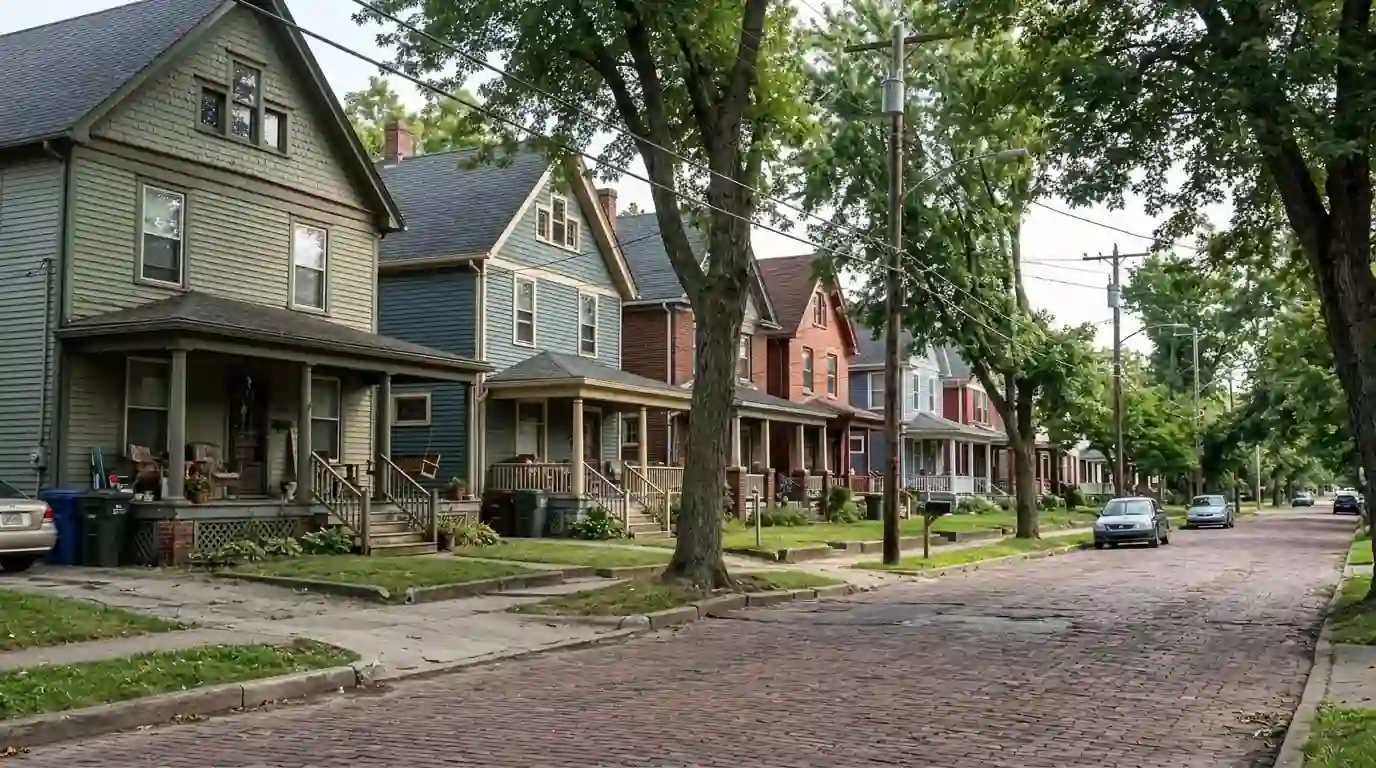
On Dayton's northwest side, the Dayton View Triangle sits near Salem Ave, not far from Five Oaks, and it's a neighborhood of large brick, stucco and frame homes built mostly in the 1910s, 1920s and 1930s. These were substantial houses for their day: Tudor Revival homes with steep cross gables and half-timbering, Colonial Revivals with symmetrical hipped or gambrel roofs, and Craftsman-influenced houses with wide eaves. Many still have slate, and others have slate under a later shingle layer. Lots are larger than in the older districts near downtown, and mature trees shade many of them.
Size and complexity drive everything here. A Tudor with six gables, three chimneys and a dozen valleys has many more places to leak than a simple ranch, and each one needs careful flashing. Repair often makes more sense than replacement when the slate is sound, because a full new roof on a house this size is a major expense. Our crew lead looks at the slate itself, the condition of the nails and the flashing before suggesting either path. Our article on how long Ohio roofs last compares life spans by material.
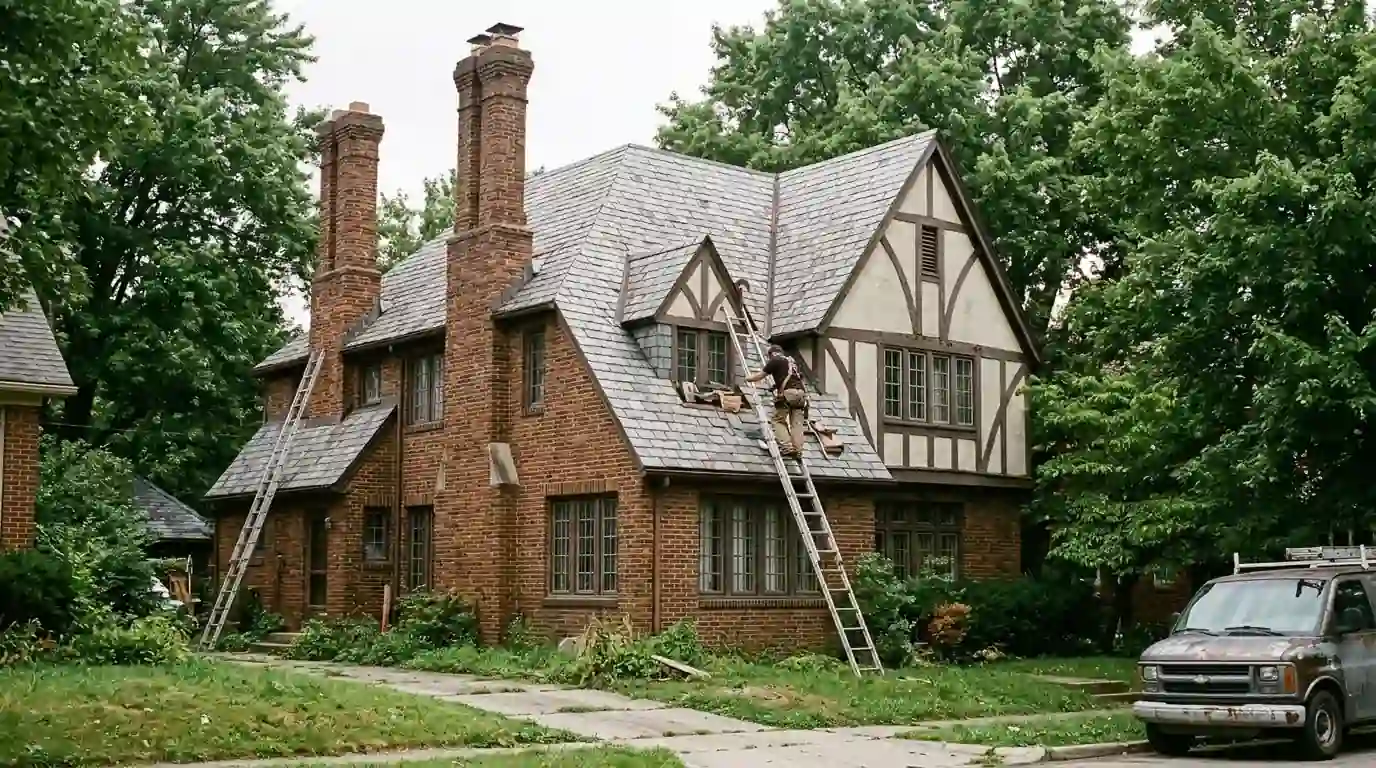
Tudors, Colonials and big chimneys in the Dayton View Triangle
Tudor Revival roofs are the steepest and most complicated. Cross gables intersect at sharp angles, creating valleys that carry a lot of water, and the half-timbered gable walls meet the roof with flashing that was often hidden behind stucco or trim. When that flashing fails, water gets behind the stucco and shows up as cracking or staining on the wall rather than inside. Some Tudors also have rolled eaves meant to mimic thatch, which take patient hand work to repair.
Colonial Revival homes are calmer, with long, regular slopes and dormers set in a row. Dutch Colonials bring gambrel roofs, where the steep lower slope meets a flatter upper one at a break line that needs good flashing. Nearly every house in the Triangle has at least one large brick chimney, and many have two or three. Their crowns, mortar and flashing are where we find most leaks on these homes, and our chimney repair work covers the masonry side. Copper gutters survive on some houses, and we repair them with copper rather than mixing metals.
Shade, moss and winter melt on northwest side slate
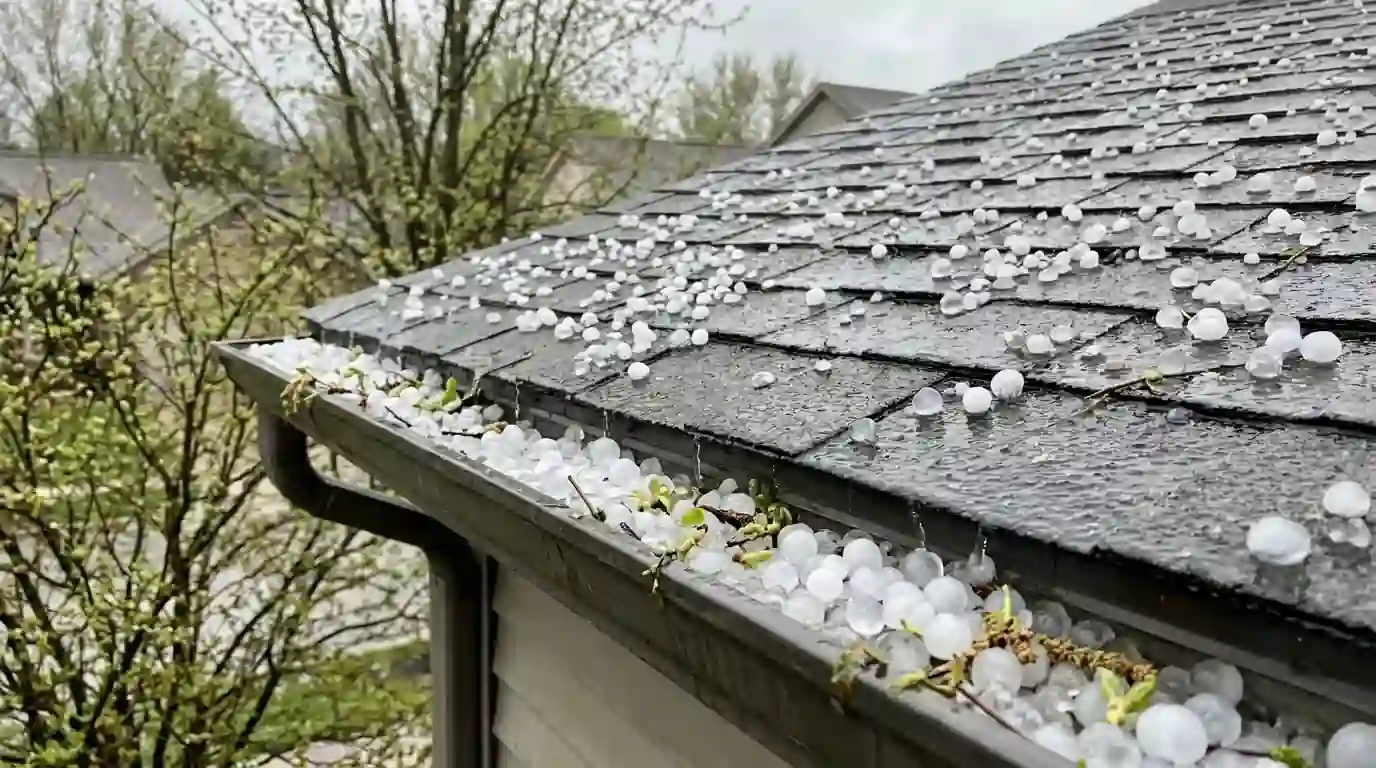
The big trees that make the Triangle pleasant also keep roofs shaded and damp. North-facing slopes stay wet longer after rain, which encourages moss and lichen that hold moisture against slate and shingles. In winter, the shaded sides hold snow for days while sunny sides melt, and that uneven melt feeds ice at the eaves and in valleys. Spring and summer storms bring wind that finds slates with rusted nails, and hail that cracks thinner slate or bruises shingles on additions. Leaves packing into valleys each fall slow drainage right when freeze-thaw season begins.
Roof work the Dayton View Triangle's larger homes call for
With complex roofs and older materials, the requests here lean toward careful repair and long-term planning.
Slate Roof Repair & Restoration
Many Triangle homes still have sound slate that only needs broken or slipped pieces replaced.
See slate roof repair & restorationChimney Repair
Multiple large brick chimneys per house mean crowns and mortar wear out on a regular cycle.
See chimney repairSynthetic Slate & Shake Roofing
When original slate is spent, synthetic slate keeps the look on a big Tudor or Colonial at lower weight.
See synthetic slate & shake roofingRoof Inspection
Buyers of these larger, older homes want a clear read on the roof before closing.
See roof inspectionRoof Maintenance
Clearing valleys, resetting slipped slates and checking chimneys each year extends the life of an expensive roof.
See roof maintenanceSeamless Gutter Installation
Houses that lost their original gutters often need new ones sized for long, steep slopes.
See seamless gutter installation
Our drive out Salem Ave and what the first visit covers
Starting downtown, we cross the Great Miami River and head northwest on Salem Ave, which puts the Triangle within a short drive. Call at any hour and a person answers. For leaks, we stop the water first. For repair planning, our crew lead looks at the roof from the ground with binoculars, goes up where it's safe, checks the attic, and photographs every chimney, valley and problem area. You get a report that separates urgent repairs from ones that can wait, with prices for each. Our price guide gives typical ranges for comparison.
Areas near Dayton View Triangle we also cover
Roofing questions from Dayton View Triangle
Should I repair or replace the slate on my large Dayton View Triangle home?
If most of the slate is still hard and rings when tapped, and the problems are slipped pieces and worn flashing, repair is usually the better value. If slate is flaking, soft or breaking across large areas, replacement starts to make sense. We test samples from several slopes and hand over close-up photos, letting you judge the slate yourself rather than taking our word for it.
Why is the stucco cracking under the gables of my Tudor in the Triangle?
Cracked or stained stucco below a gable often means water is getting behind it from the roof. The usual culprit is flashing where the roof meets the half-timbered wall, or a valley that overflows onto the wall. We check those joints from the roof and look for soft wood behind the trim. Fixing the roof side first keeps a stucco repair from failing again.
Which chimney problems on a Dayton View Triangle house should be fixed before winter?
Cracked crowns, open mortar joints and loose flashing are the ones to handle in the fall, because freeze-thaw cycles widen them fast once cold weather arrives. Missing caps also matter, since they let rain and snow straight into the flue. Small mortar repairs and crown sealing cost far less than rebuilding a chimney top after water has worked into the brick for years.
Can you repair the copper gutters on my Triangle house instead of switching to aluminum?
Yes, when the copper is still sound. We solder small splits and seams, replace damaged sections with new copper and reset hangers. Mixing aluminum or galvanized parts with copper causes corrosion, so we keep repairs in copper. If the gutters are badly worn, new copper costs more than aluminum, and we'll price both so you can choose.
Roof trouble in Dayton View Triangle?
Call any hour and tell us your street. We will give you a time window before we hang up.