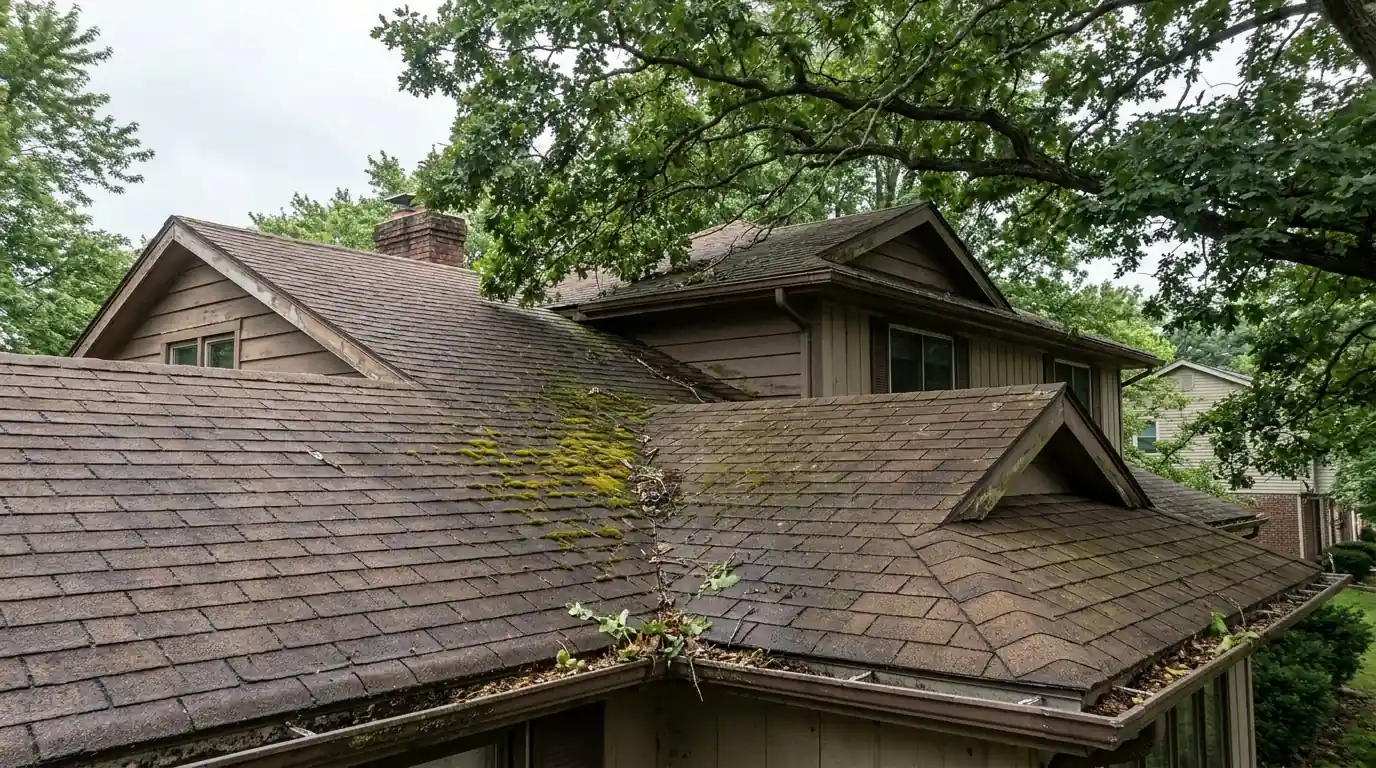
In southwest Ohio, architectural asphalt shingles typically last 22 to 30 years, three-tab shingles 15 to 20, standing seam metal 40 to 70, and natural slate 75 to 150. Flat roof membranes usually run 15 to 30 years. Ventilation, sun exposure, trees, hail and installation quality can add or subtract years from any of those ranges.
Typical lifespans we see on Ohio roofs, by material
These ranges come from what we see on actual roofs around Dayton and the Miami Valley, not from marketing brochures. A roof can beat these numbers with good ventilation and a shaded north exposure, or fall short of them after a couple of hard hail seasons.
- Three-tab asphalt shingles: 15 to 20 years.
- Architectural asphalt shingles: 22 to 30 years.
- Class 4 impact-resistant shingles: 25 to 32 years, with better odds against hail.
- Exposed fastener metal panels: 25 to 40 years, with screws replaced along the way.
- Standing seam metal: 40 to 70 years.
- Cedar shakes: 20 to 35 years, depending heavily on shade and upkeep.
- Natural slate: 75 to 150 years, depending on the quarry and the care it gets.
- Low-slope membranes: TPO 15 to 25, EPDM 20 to 30, modified bitumen 15 to 20 years.
Why Ohio roofs rarely match the number on the bundle
Shingle packaging talks about warranties, not lifespans, and many architectural lines now carry a "lifetime" label. That word describes the warranty's terms, which are usually prorated after an early full-coverage period and often exclude wind, hail and installation problems. It isn't a promise the shingles will last as long as you own the house.
Our climate is part of the gap. Dayton sees dozens of freeze-thaw cycles in a typical winter, which work moisture into every small crack and flex the shingles at their nails. Spring hail bruises the mat, summer UV bakes the asphalt, and humid summers feed the black algae streaks that show up on north slopes. None of that is extreme, but it adds up over 20 years in a way a test lab can't fully copy.
What shortens a roof's life in the Dayton area
When a roof fails early, we can usually point to one or two of the same causes. Most of them have nothing to do with the brand of shingle:
- Poor attic ventilation that cooks shingles from below in summer and traps moisture in winter.
- South and west slopes in full sun, which often age years ahead of the north side.
- Heavy tree cover that keeps slopes damp, grows moss and drops limbs.
- Repeated hail, even storms that didn't cause leaks at the time.
- Shingles installed on a pitch too low for them, common on porch and addition roofs.
- A second layer laid over the first, which holds heat and hides decking problems.
- Shortcuts during installation, such as high nailing, reused flashing or no ice barrier.
What actually helps a roof last longer
You can't change the weather, but you can control the things that wear a roof out early. Clean gutters twice a year so water doesn't back up under the first course of shingles. Trim branches that touch or overhang the roof. Get the attic's intake and exhaust balanced, which helps both the roof and your energy bills.
Small parts deserve attention too. The rubber collars on plumbing vent pipe boots often crack after 10 to 15 years, well before the shingles around them give out, and they're one of the most common leak sources we find. Sealant at flashing joints dries out on a similar schedule. A short check every couple of years, plus a look after major storms, catches those before they rot the decking. Routine roof maintenance covers exactly that kind of work.
Choosing the right material at replacement time matters as well. On a home you plan to keep for decades, our comparison of metal and asphalt walks through when the higher upfront cost of metal pays off.
How to estimate how much life your roof has left
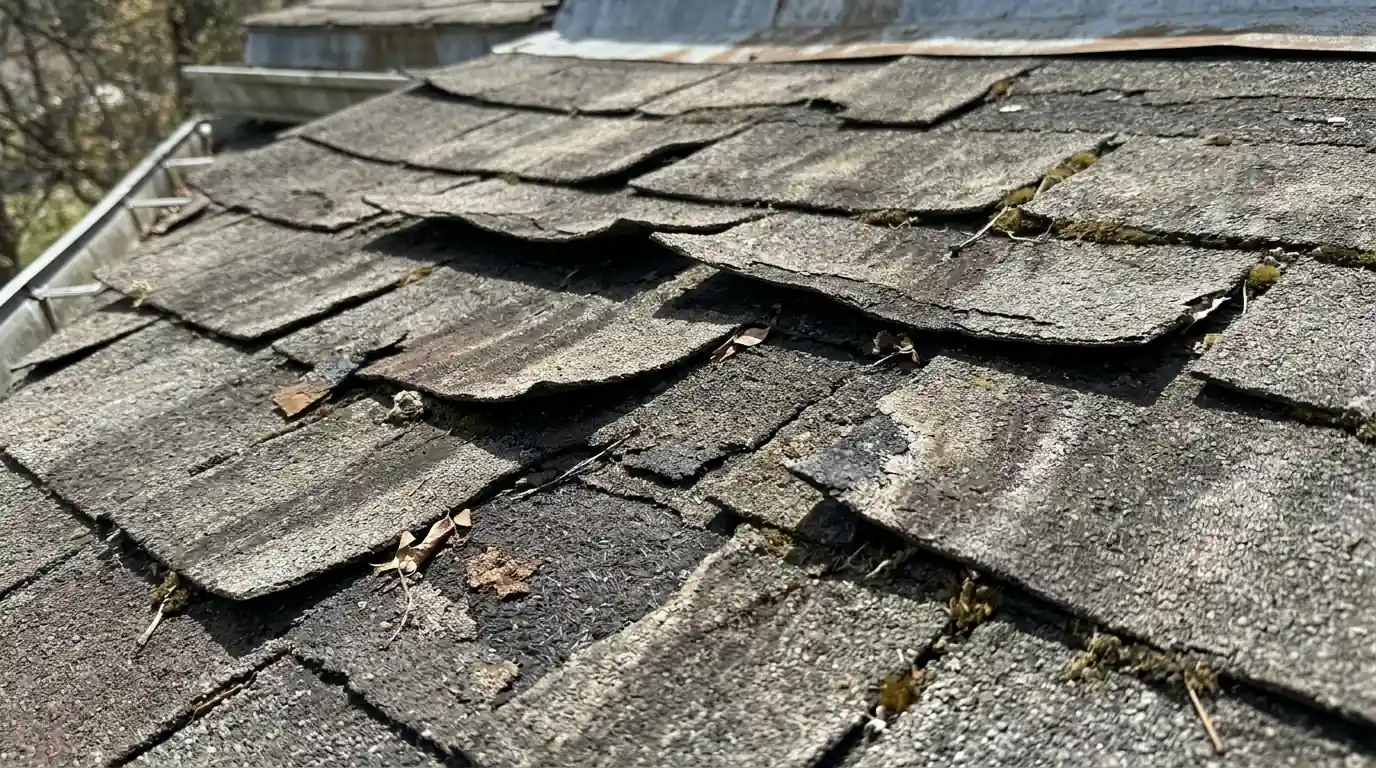
Start with the install date. Closing documents, a seller's disclosure, or a permit search through your city's building department can usually pin it down. Then look at the roof from the ground with binoculars. Curled edges, bare patches, cracked tabs and heavy granule piles at the downspouts all point toward the end of the range.
Age and appearance only go so far, though. Two roofs of the same age on the same street in Centerville can be in very different shape because of sun, trees and ventilation. An inspection gives you a remaining life estimate as a range, along with photos of every slope. If repairs are already piling up, our article on whether to repair or replace can help you decide what to do next.
The parts around the roof have their own clocks
A roof is more than its top layer, and the pieces around it rarely wear out on the same schedule. Aluminum gutters commonly last 20 to 30 years in our area, though hail dents and ice loads can pull them loose sooner. Skylights often need new seals or flashing at 15 to 25 years, and many owners replace older skylights during a reroof so the two don't fall out of sync.
Wood fascia and soffit boards depend almost entirely on how well the gutters and drip edge keep water off them. Plywood decking can last as long as the house if it stays dry, but repeated leaks or a poorly vented attic can delaminate it in a decade. When we plan a replacement, we look at all of these together, so you aren't paying for a ladder and a crew twice in five years.
Planning and budgeting for the next roof
Roof replacement is easier to absorb when it isn't a surprise. Once a shingle roof passes about 18 years in our area, it's worth starting a dedicated savings line. A full tear-off of asphalt shingle roofs on a typical Dayton home commonly runs $11,650 to $19,480, depending on size, pitch, layers and decking. Our roof estimate tool gives a rough starting figure for your own house.
Timing also helps your budget. Planned replacements in late spring or early fall avoid the emergency scheduling that follows a big storm, and give shingles warm days to seal properly. If you're on the edge, a repair can usually carry a roof through one more winter while you compare bids.